

You searched “therapy vs psychiatry” because you are trying to figure out who to call. That is already a brave step. Most of us stall here for months.
They are not sure if they need someone to talk to or someone to prescribe something. They pick the wrong one, feel it didn’t work, and give up.
Here is what this post covers: the real differences between therapy and psychiatry, who each provider is, what they actually do in a session, and how to figure out which one fits where you are right now.
What Is Therapy?
Therapy, also called psychotherapy or talk therapy, is a treatment where a licensed mental health professional helps you work through your thoughts, emotions, and behavioral patterns using structured conversation.
It does not involve medication. A therapist might use methods such as Cognitive Behavioral Therapy (CBT), Dialectical Behavior Therapy (DBT), or general talk-based sessions, depending on what you are dealing with.
People seek help from counselors and therapists for everything from everyday anxiety and relationship struggles to grief, trauma, and diagnosed mental health conditions.
The goal is to help you understand yourself better, build healthier coping patterns, and actually feel different over time, not just talk about your problems in circles.
What Is Psychiatry?
Psychiatry is a branch of medicine. A psychiatrist is a fully trained medical doctor (MD or DO) who completed medical school and then specialized in mental health. Because they are physicians, psychiatrists can prescribe and manage psychiatric medication.
Their appointments tend to look more clinical than a therapy session. They review your symptoms, medical and family history, and current medications.
Initial evaluations usually run 45 to 60 minutes, while follow-up visits are often much shorter, sometimes 15 to 30 minutes, because the focus is on how your medication is working and whether anything needs adjusting.
Psychiatrists treat conditions like depression, bipolar disorder, schizophrenia, PTSD, and severe anxiety disorders where medication is part of the treatment plan.
Therapy vs Psychiatry: What’s the Difference?
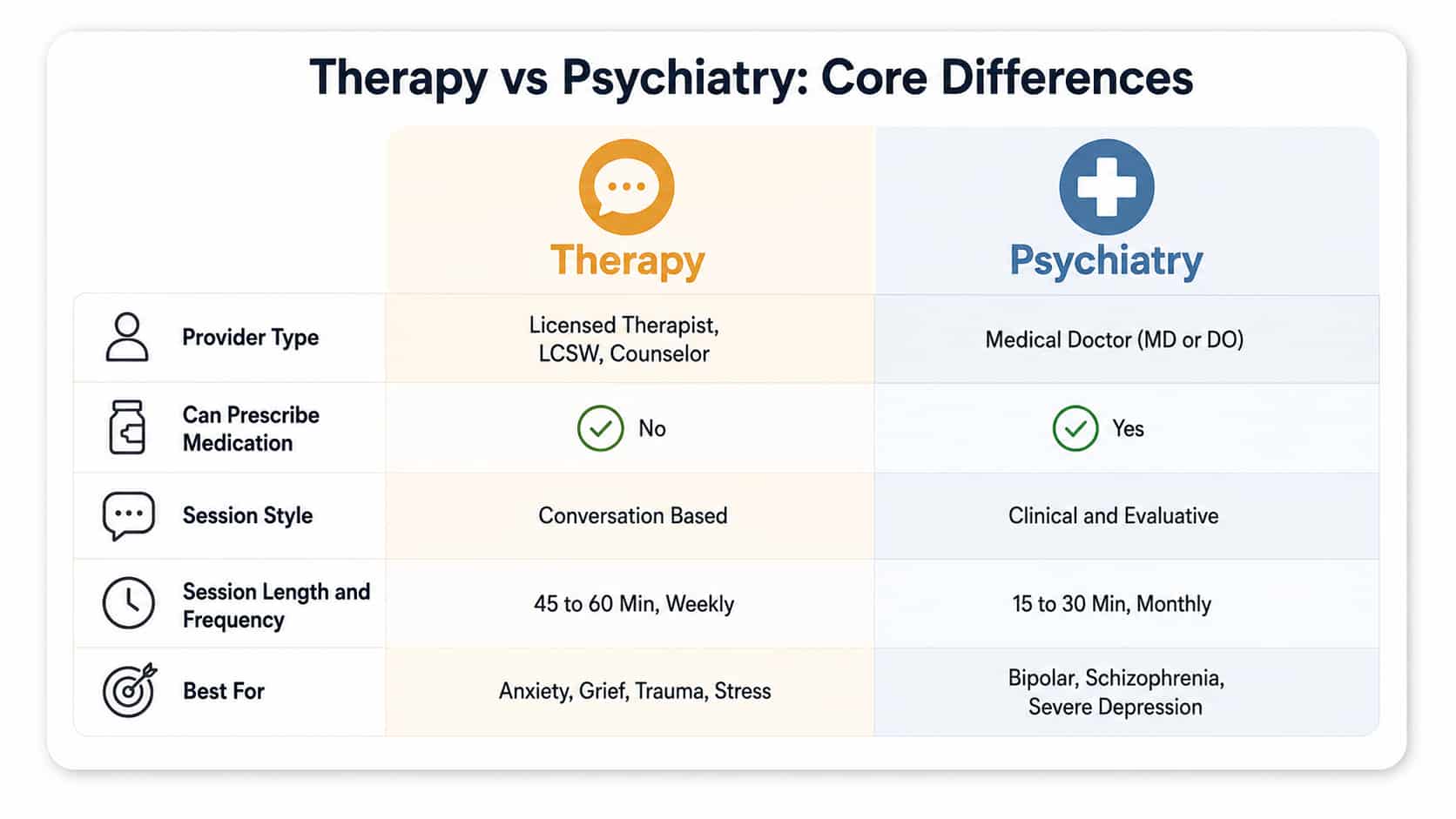
People often walk into this comparison thinking one is simply “talking,” and the other is “pills.” The reality is more layered than that. Here is what actually sets them apart.
1. Who Can Prescribe Medication
Therapy: A therapist cannot prescribe medication in almost all U.S. states. If you bring up medication in a therapy session, your therapist will refer you to a psychiatrist or your primary care doctor.
Psychiatry: A psychiatrist is a medical doctor and can prescribe, adjust, or stop psychiatric medication based on how your symptoms are responding. This is one of the biggest things that separates them from every other mental health provider.
2. How Sessions Feel
Therapy: Sessions are conversational and paced to your needs. You talk, reflect, and work through thoughts, emotions, and patterns with someone who is trained to help you make sense of them.
Psychiatry: Appointments feel more structured and clinical. The psychiatrist is listening for specific symptoms, tracking your diagnosis, and evaluating whether your current treatment plan is actually working.
3. How Long You Meet and How Often
Therapy: Sessions typically run 45 to 60 minutes and happen weekly, at least when you are starting out. Consistency matters a lot in therapy, and skipping sessions often significantly slows progress.
Psychiatry: Follow-up visits can be as short as 15 to 30 minutes once you are stable on a medication. Many people see their psychiatrist only once a month, or less frequently, after the initial evaluation.
4. What They Are Best At
Therapy: Best suited for anxiety, grief, trauma, relationship issues, low self-esteem, and behavioral patterns that keep showing up no matter how hard you try to change them on your own.
Psychiatry: Best suited for conditions like bipolar disorder, schizophrenia, and severe depression where the brain chemistry piece needs to be addressed before talk-based work can really take hold.
5. Who Has Shorter Wait Times
Therapy: Generally easier to access than psychiatry. More providers are available, and most areas have therapists with shorter wait times, especially those offering telehealth appointments.
Psychiatry: Significantly harder to book quickly. According to the National Institute of Mental Health, the psychiatrist shortage in the U.S. is a real barrier, and wait times in many states can stretch from several weeks to a few months.
Cost and Insurance Differences Between Therapy and Psychiatry
Knowing who to see is only half the decision. What you actually pay, what your insurance covers, and how long you will wait to get an appointment all play a real role in which path makes sense for you right now.
Here is a clear breakdown so there are no surprises when you start making calls.
| Factor | Therapy | Psychiatry |
|---|---|---|
| Average cost per session (without insurance) | $100 to $200 | $300 to $500 (initial evaluation) |
| Average follow-up cost (without insurance) | $100 to $200 | $150 to $300 |
| Insurance coverage | Covered by most plans under the Mental Health Parity and Addiction Equity Act | Covered by most plans, but fewer psychiatrists accept insurance |
| Typical wait time | Days to a few weeks | Several weeks to a few months |
| Telehealth availability | Widely available | Available but less common |
| Low-cost options | Sliding scale fees, community mental health centers, university training clinics | Community mental health centers, federally qualified health centers |
| Free referral resource | SAMHSA National Helpline 1-800-662-4357 | SAMHSA National Helpline 1-800-662-4357 |
What Does a Therapist Do?
A therapist’s job is not just to listen while you vent. There is a method behind every good session, even when it feels like a conversation.
Here is what a therapist actually does during and between sessions:
- Conducts an intake assessment to understand your history, current concerns, and what you want to get out of treatment
- Uses structured techniques from evidence-based therapy models like CBT, DBT, EMDR (for trauma), or motivational interviewing
- Tracks your progress across sessions and adjusts the approach based on what is and is not working
- Helps you identify patterns in your thinking and behavior that may be keeping you stuck
- Teaches coping skills you can use outside of sessions, not just inside the therapy room
- Cannot prescribe medication in most U.S. states, and cannot order lab tests or physical exams
What Does a Psychiatrist Do?
Many people expect a psychiatrist appointment to feel like therapy. It often does not, and that surprises them. Understanding what a psychiatrist actually does helps you prepare for what to expect.
Here is the core of a psychiatrist’s clinical work:
- Performs full psychiatric evaluations that include reviewing your mental status, medical history, family psychiatric history, and current symptoms
- Diagnoses mental health conditions using the DSM-5 (Diagnostic and Statistical Manual of Mental Disorders, published by the American Psychiatric Association)
- Prescribes psychiatric medication and explains how it works, what side effects to watch for, and how long it typically takes to show results
- Manages and adjusts medications over time based on how you respond
- Coordinates with your therapist when both are involved in your care, with your permission
- Does not typically provide regular talk therapy, though some do (more on that below)
Do Psychiatrists Do Therapy?
Some psychiatrists do provide therapy, but most in the United States today focus primarily on medication management rather than regular talk-based treatment.
This shift happened over several decades, driven largely by insurance reimbursement structures that favor shorter medication-management visits and by the fact that there simply are not enough psychiatrists to meet demand.
Some psychiatrists, especially those in private practice, academic settings, or specializing in child and adolescent psychiatry, do incorporate talk therapy into their sessions. If having a psychiatrist who also does therapy matters to you, ask directly before booking.
Most patients who want both talk therapy and medication management see a therapist and a psychiatrist separately, and their providers communicate when needed.
Therapist vs Psychologist vs Psychiatrist: How They Differ
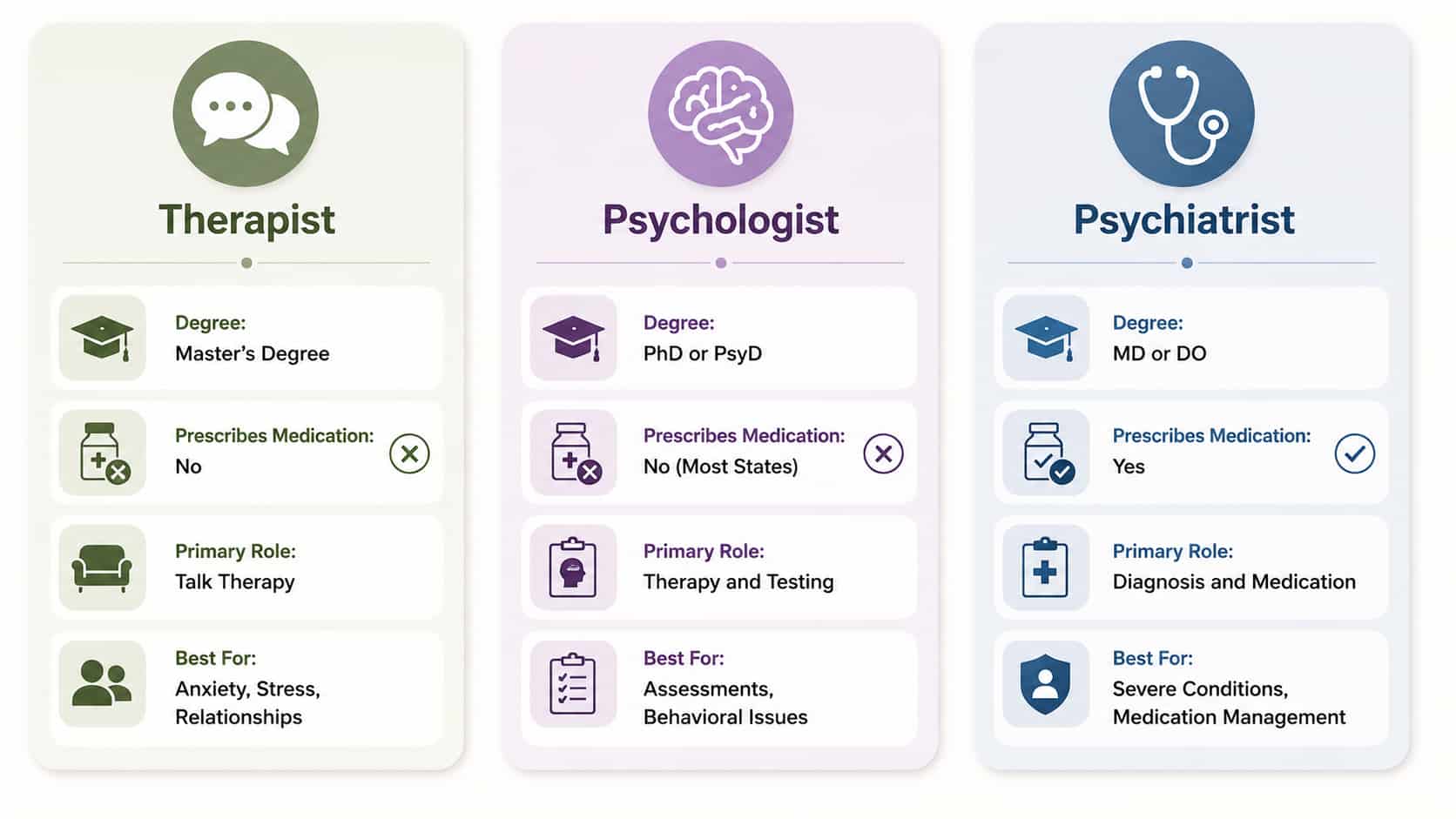
This is where most people get confused, and honestly, it makes sense. The titles sound similar, the roles overlap in some areas, and no one clearly explains the actual differences.
Here is a direct breakdown of how a therapist, psychologist, and psychiatrist each differ in training, role, and what they can do for you.
| Provider | Degree Required | Can Prescribe? | Primary Role |
|---|---|---|---|
| Therapist (LPC, LCSW, MFT) | Master’s degree | No | Talk therapy and counseling |
| Psychologist | PhD or PsyD | No (most U.S. states) | Therapy and psychological testing |
| Psychiatrist | MD or DO + residency | Yes | Medical diagnosis and medication |
The difference between a therapist and a psychologist comes down mostly to education level and scope.
A psychologist holds a doctoral degree and is trained to conduct formal psychological and neuropsychological testing, such as ADHD evaluations, IQ assessments, and learning disability screenings.
A licensed therapist, including a counselor, LCSW, or MFT, holds a master’s degree and focuses on providing talk therapy rather than formal testing.
The difference between a psychiatrist and a psychologist is simpler: the psychiatrist is a medical doctor and can prescribe, whereas the psychologist typically cannot.
If you need a formal psychological evaluation or diagnostic testing, a psychologist is usually the right provider. If you need medication, that is the psychiatrist’s territory.
Can You See Both a Therapist and a Psychiatrist?
Yes, and for many people, seeing both is the most effective approach. A psychiatrist manages your medication while a therapist works with you on the emotional and behavioral side of things.
This combination is especially common for moderate to severe depression, bipolar disorder, anxiety disorders, OCD, and PTSD. Research published through the American Psychological Association (APA) consistently shows that combining medication with psychotherapy produces better outcomes for many conditions than either treatment alone.
In practice, your therapist and psychiatrist can share updates and coordinate your care with your written consent, which is especially helpful when medication adjustments need to match what is happening in your therapy sessions.
If you are not sure where to start, beginning with a therapist is often the more accessible option, since wait times are typically shorter and the cost per session is lower.
Conclusion
Choosing between therapy and psychiatry does not have to feel like a guessing game. If you are working through emotional patterns, relationships, grief, or stress, therapy is usually the right first step.
If your symptoms are severe, interfere with daily function, or may require medication, a psychiatric evaluation makes more sense.
When it comes to therapy vs psychiatry, the clearest answer is that they solve different problems, and many people benefit from both working together.
Start by talking to your primary care doctor or by calling SAMHSA’s National Helpline at 1-800-662-4357 for free, confidential referrals to local mental health providers.
Frequently Asked Questions
Is it better to see a therapist or a psychiatrist?
It depends on what you are dealing with. See a therapist for emotional support and behavioral work. See a psychiatrist if you need a formal diagnosis or medication.
What is the difference between therapy and psychiatric therapy?
Regular therapy is talk-based and does not involve medication. Psychiatric therapy is when a psychiatrist provides both psychotherapy and medication management, which is less common in the U.S. today.
What is the 2-year rule for therapists?
Some licensing boards and ethical guidelines recommend that therapists wait at least two years after a professional relationship ends before beginning any personal relationship, to protect the client.
What does a psychiatrist do that a therapist doesn’t?
A psychiatrist can prescribe medication, conduct a full medical-psychiatric evaluation, and diagnose mental health conditions from a clinical medical standpoint. A therapist cannot do any of those things.