Quad stretches are movements that lengthen the four muscles at the front of your thigh: the rectus femoris, vastus lateralis, vastus medialis, and vastus intermedius.
These muscles work hard every time you walk, run, squat, or climb stairs. When they get tight, you feel it in your knees, hips, and lower back.
Regular quad stretching reduces that tension, keeps your joints healthy, and helps you move better in daily life and training.
Whether you sit at a desk all day or train hard at the gym, learning how to stretch your quads correctly makes a real difference.
What You Need Before You Start
You do not need much to get started. A yoga mat or soft surface helps protect your knees during floor-based stretches, and a wall or chair nearby provides balance support. Wear clothes you can move freely in, and do a light warm-up, even a 5-minute walk, before holding any static stretch.
| Item | Required? | Purpose |
|---|---|---|
| Yoga mat or soft surface | Recommended | Knee and joint comfort |
| Wall or sturdy chair | Optional | Balance support |
| Foam roller | Optional | Muscle release before stretching |
| Comfortable clothing | Yes | Full range of motion |
| Light warm-up (5 min walk) | Yes | Prepares muscles for stretching |
Stop immediately if you feel sharp or joint pain. Muscle tension during a stretch is normal; pain is not.
How to Stretch Your Quads: 15 Easy Moves
These quad stretches cover every position- standing, lying, kneeling, and moving- so you can pick the ones that work for your body and your day.
1. Standing Quad Stretch
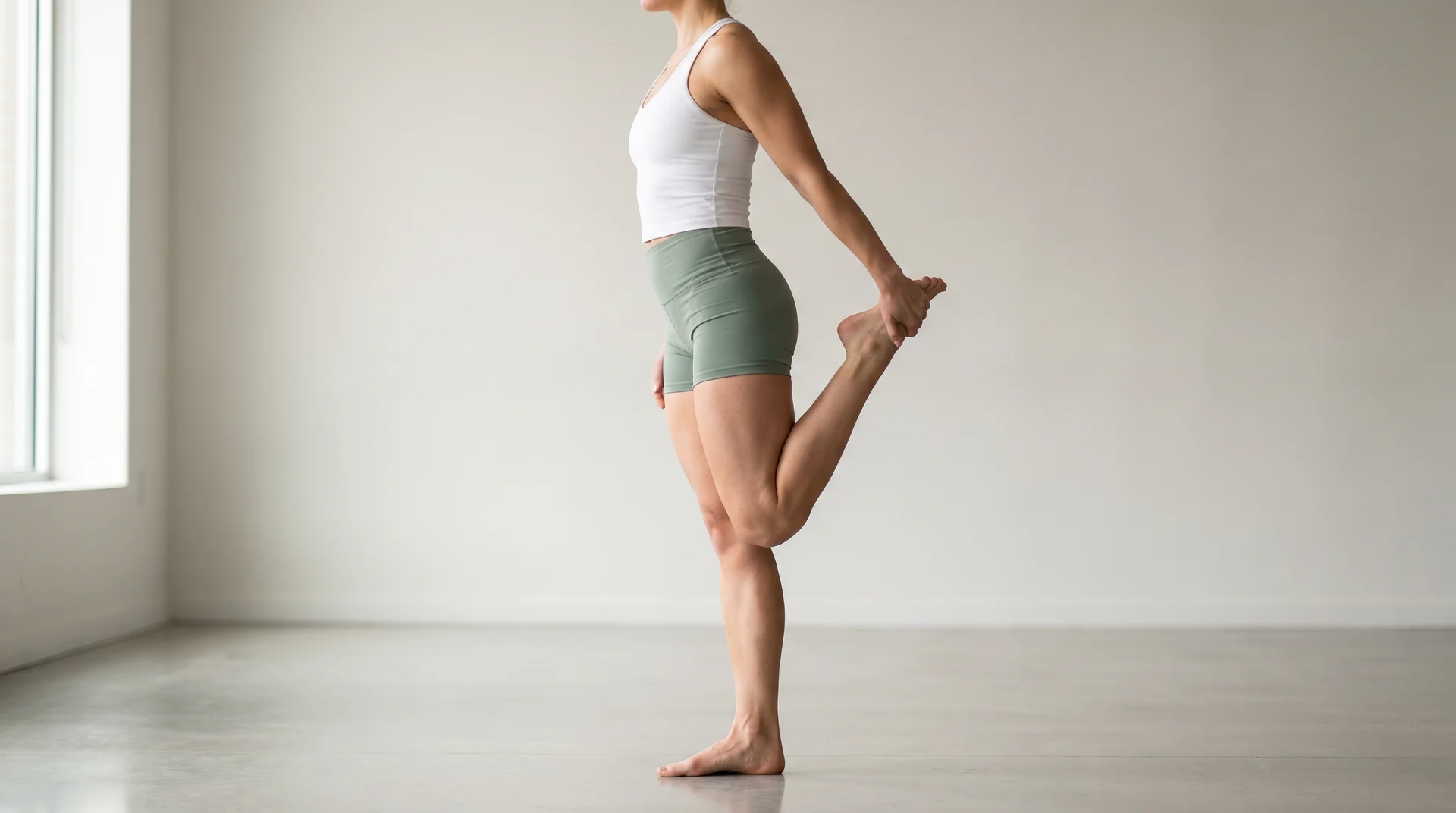
The standing quad stretch is the most well-known way to stretch your quads, and for good reason. It works, it takes 30 seconds, and you can do it anywhere without getting on the floor.
Stand tall with your feet hip-width apart. This simple position already helps you feel where tightness lives in your thighs before you even begin pulling.
How to do it:
- Stand near a wall or hold a chair for balance if needed.
- Shift your weight onto your left foot.
- Bend your right knee and bring your right heel toward your glute.
- Grip your right ankle or foot with your right hand.
- Keep both knees close together and pointing down.
- Stand tall; do not lean forward or arch your lower back.
- Hold for 20–30 seconds, then switch sides.
2. Lying Quad Stretch (Prone)
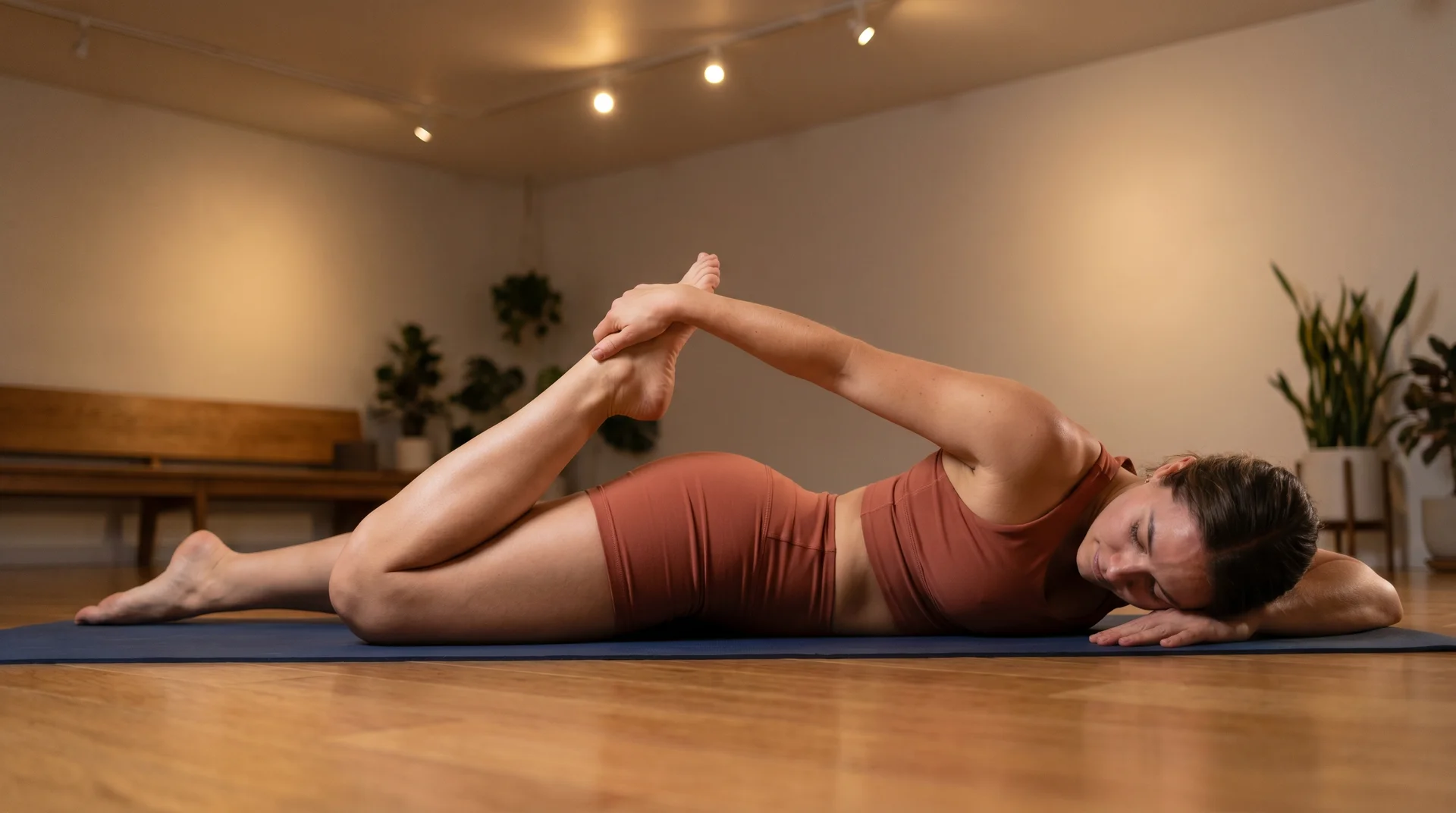
The lying quad stretch is a low-effort option that removes balance from the equation entirely. It is particularly good for people with knee sensitivity or for those new to stretching.
You lie face down and let gravity do most of the work, which makes this one of the safest quad stretches for beginners.
How to do it:
- Lie face down on a mat with your legs extended.
- Bend your right knee and bring your heel toward your glute.
- Reach back with your right hand and hold your ankle or foot.
- Gently pull the heel closer to your glute until you feel the stretch in your front thigh.
- Keep your hips pressing into the floor; do not let them lift.
- Hold for 20–30 seconds, then switch sides.
3. Seated Quad Stretch
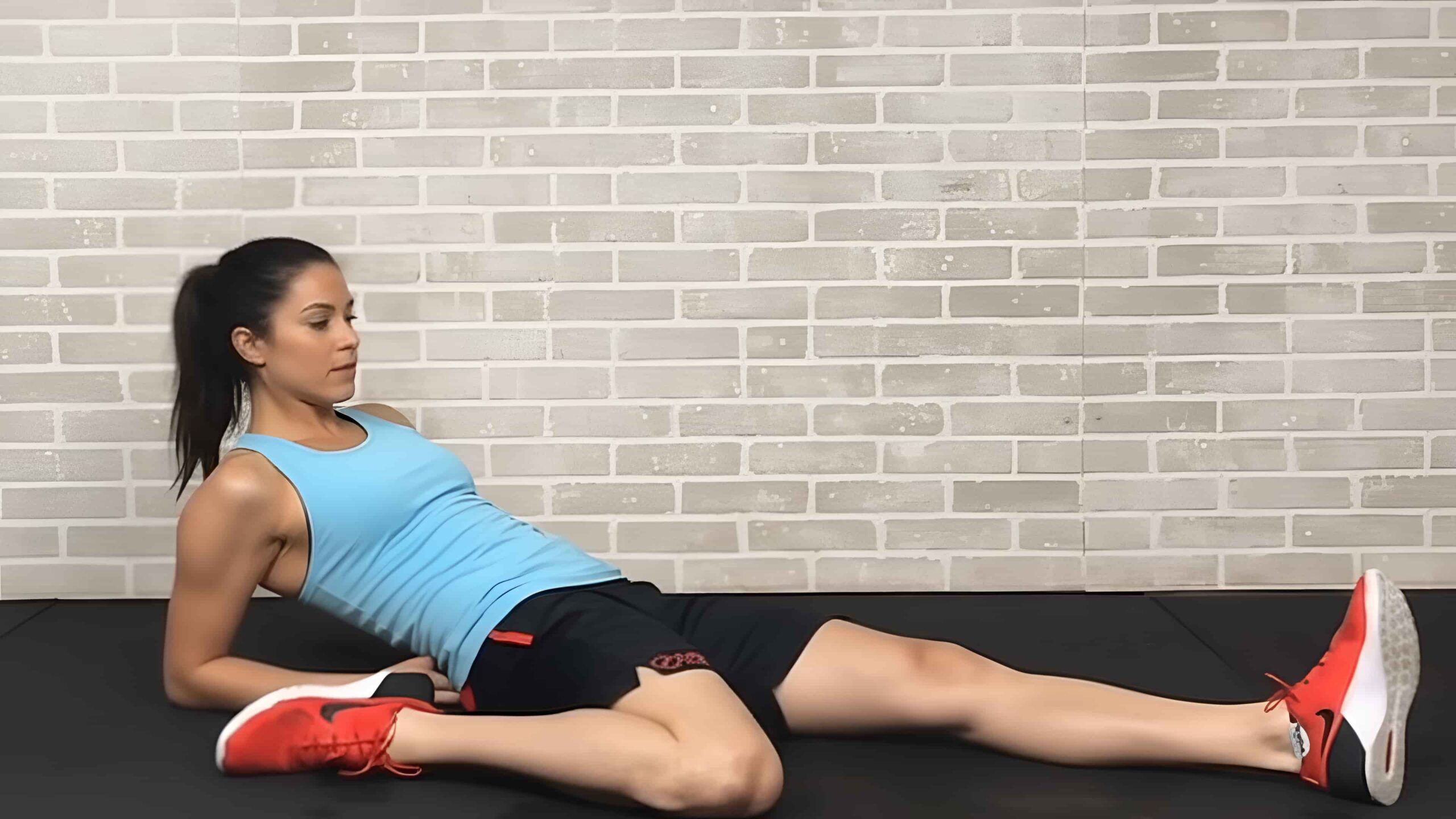
The seated quad stretch is one of the best options for people who spend most of their day sitting. It specifically targets the rectus femoris, the longest quad muscle, which shortens the most from prolonged chair time.
You can do this on the floor in a hero-pose variation, or adapt it from a chair if you have limited hip mobility. Either way, you will feel a clear stretch along the front of your thigh.
How to do it:
- Sit on the floor with your legs extended in front of you.
- Bend your right knee and bring your right foot beside your right hip, toes pointing back.
- Slowly lean back on your hands until you feel a stretch along the front of your right thigh.
- For a deeper stretch, lower your elbows to the floor or lie all the way back.
- Keep your lower back from collapsing, and maintain length in your spine.
- Hold for 20–30 seconds, then switch sides.
Chair modification: Sit at the edge of a chair, extend one leg behind you so the foot rests on the floor, and gently press the thigh downward.
4. Side-Lying Quad Stretch
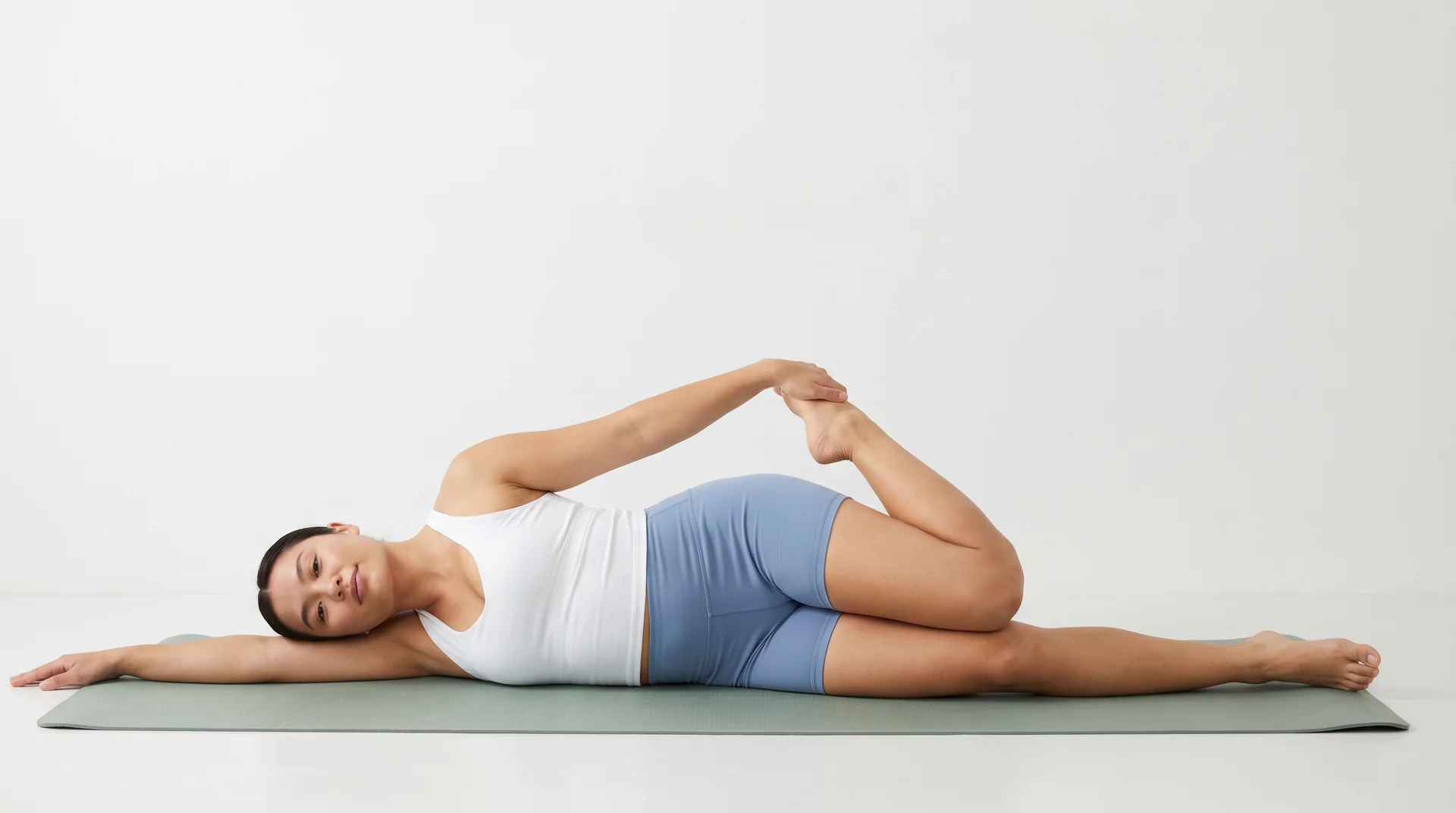
The side-lying quad stretch is the most joint-friendly option on this list. It works well for people with lower back pain who cannot lie face down comfortably, and it gives a steady, controlled stretch with minimal effort.
Lying on your side keeps your spine neutral throughout, which makes this a smart choice for morning stretching when your body is still stiff.
How to do it:
- Lie on your left side with your legs stacked on top of each other.
- Bend your right knee and bring your heel toward your glute.
- Reach back with your right hand and hold your right ankle.
- Gently pull your heel toward your glute until you feel the stretch in your front thigh.
- Keep your hips stacked; do not let your top hip roll backward.
- Hold for 20–30 seconds, then flip to the other side.
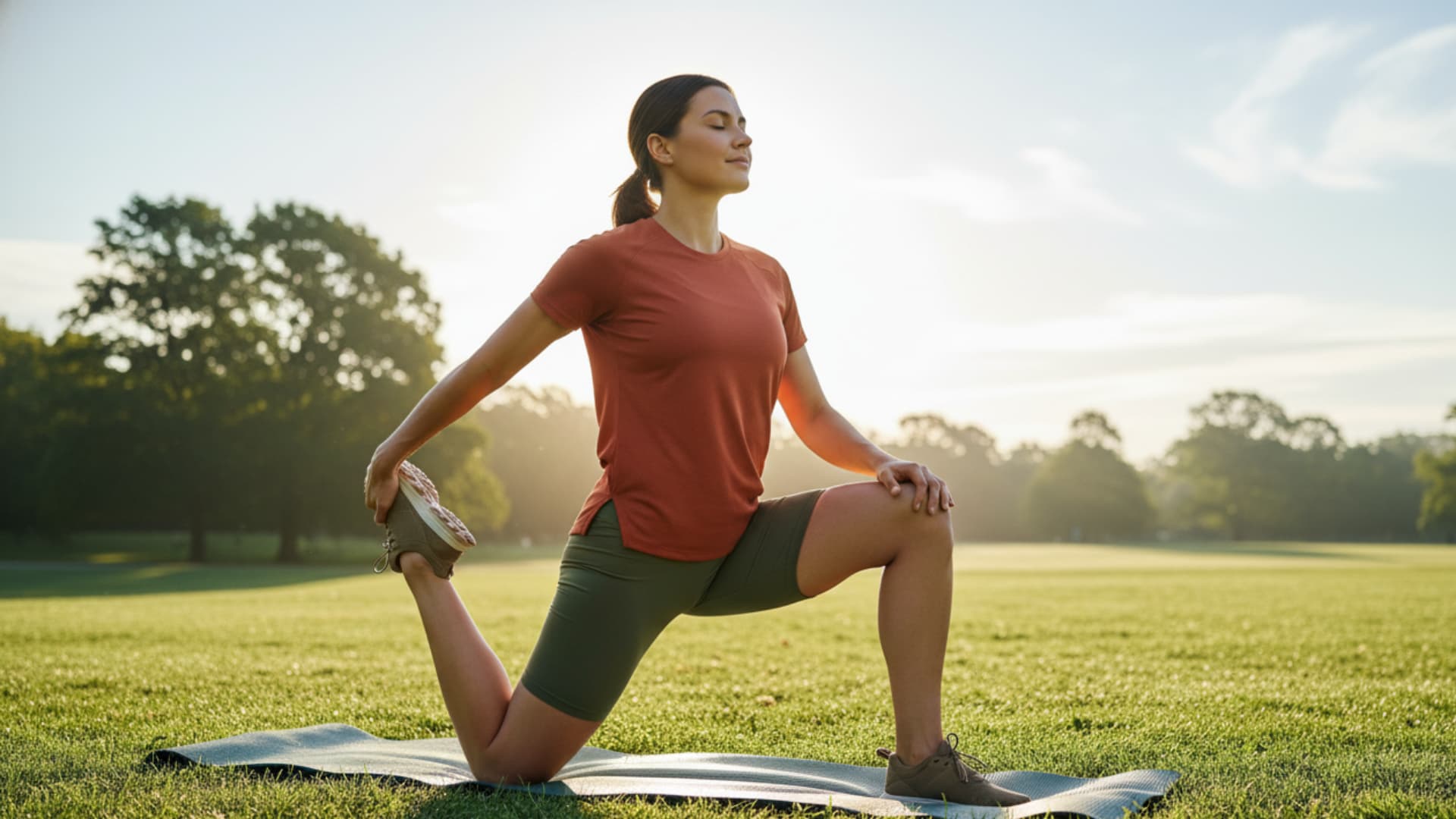
5. Kneeling Quad Stretch (Low Lunge)
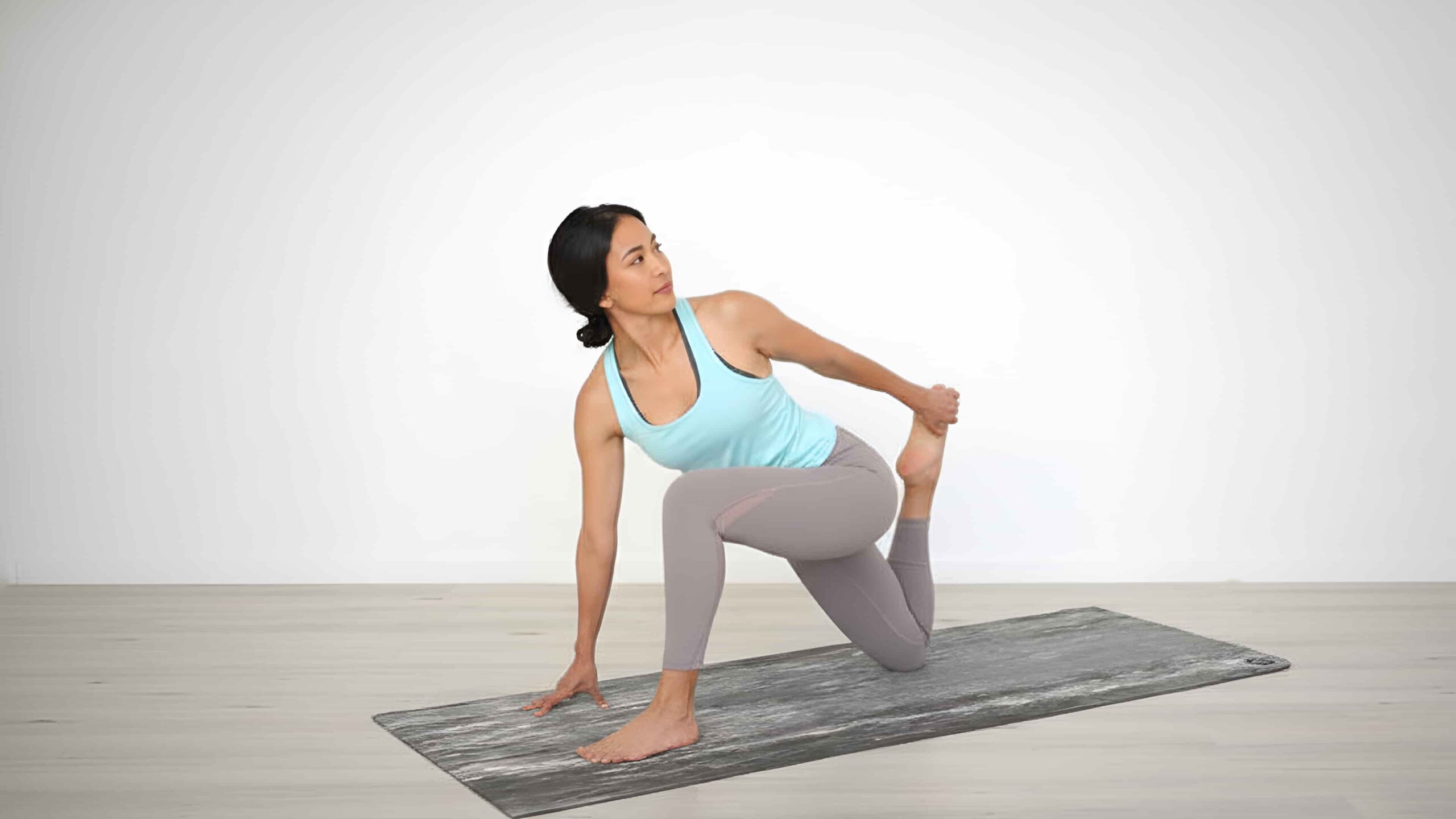
The kneeling quad stretch, sometimes called a low lunge, combines a quad stretch with a mild release of the hip flexors. It is a popular choice for runners and cyclists whose quads and hips tighten together from repetitive movement.
Getting into this position feels more intense than a standing stretch, but it gives you a longer, fuller range of pull through the entire front thigh.
How to do it:
- Kneel on a mat with both knees on the floor.
- Step your right foot forward so your right knee is directly above your right ankle.
- Lower your left knee gently to the mat (place a folded towel under it for comfort if needed).
- Shift your hips forward slowly until you feel a stretch in the front of your left thigh.
- Keep your torso upright and your front knee behind your toes.
- Hold for 20–30 seconds, then switch sides.
6. Half-Kneeling Hip Flexor and Quad Stretch
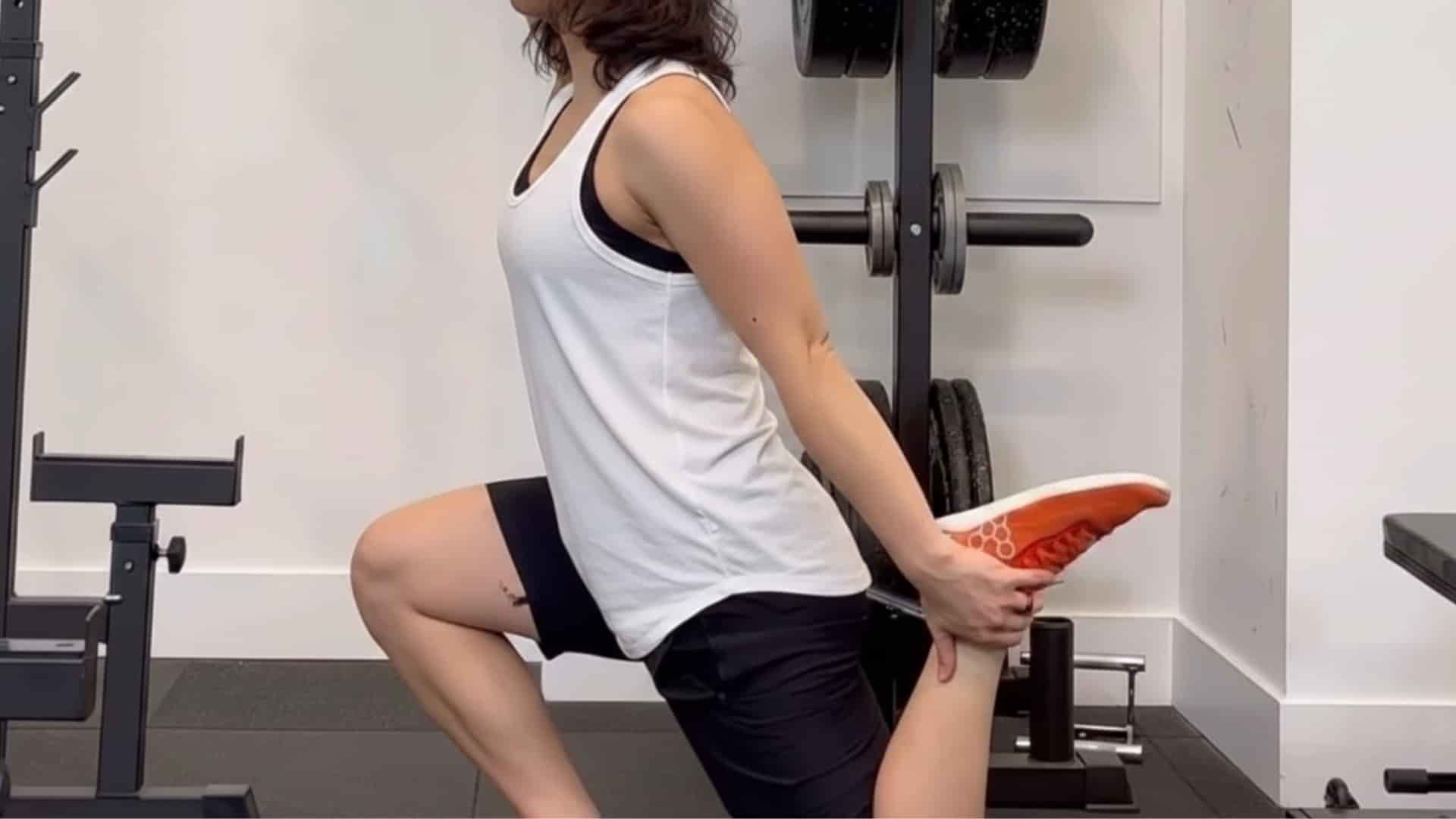
This stretch targets both the quadriceps and the hip flexors at the same time, making it one of the most complete front-of-leg stretches you can do. The key that most people miss is the glute squeeze.
Squeezing the glute of your back leg tilts your pelvis slightly and deepens the pull through the hip flexor and quad in one movement.
How to do it:
- Start in a low lunge with your right foot forward and left knee on the mat.
- Squeeze your left glute firmly and tuck your hips slightly forward and under.
- Keep your torso tall; do not lean forward.
- For more intensity, raise your left arm straight overhead and lean gently to the right.
- Hold for 30 seconds, then switch sides.
7. Standing Wall-Assisted Quad Stretch
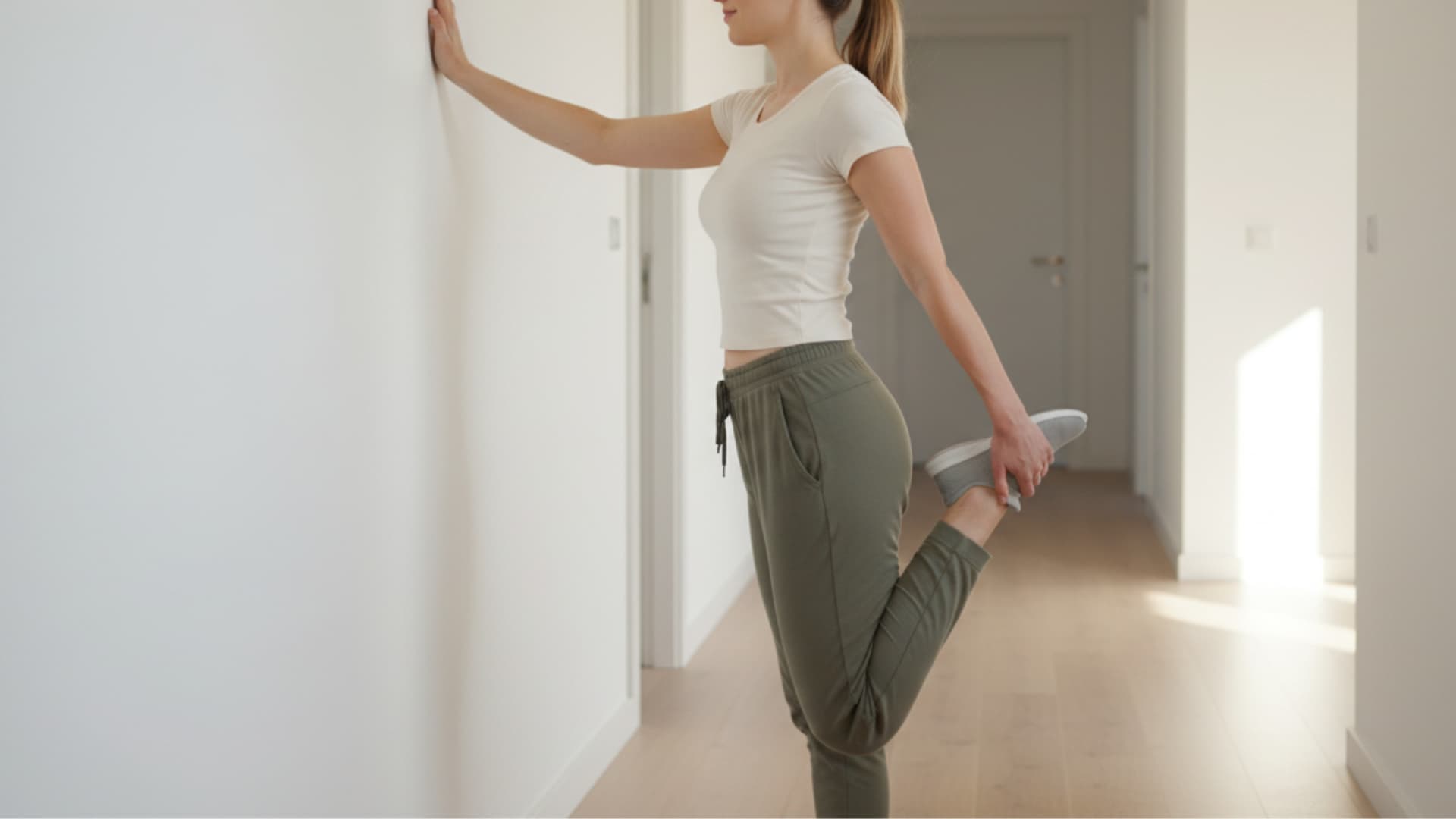
This is the beginner-friendly version of the standard standing quad stretch. Having a wall nearby removes the balance challenge completely, so you can focus fully on the stretch itself rather than staying upright.
It is also a practical option for older adults or anyone returning to stretching after an injury.
How to do it:
- Stand facing a wall, about 12 inches away.
- Place your left hand flat against the wall for support.
- Shift your weight onto your left foot.
- Bend your right knee and hold your right ankle with your right hand.
- Keep your knees together and your torso straight.
- Press your hips slightly forward to deepen the stretch.
- Hold for 20–30 seconds, then switch sides.
8. Pigeon Pose Quad Stretch
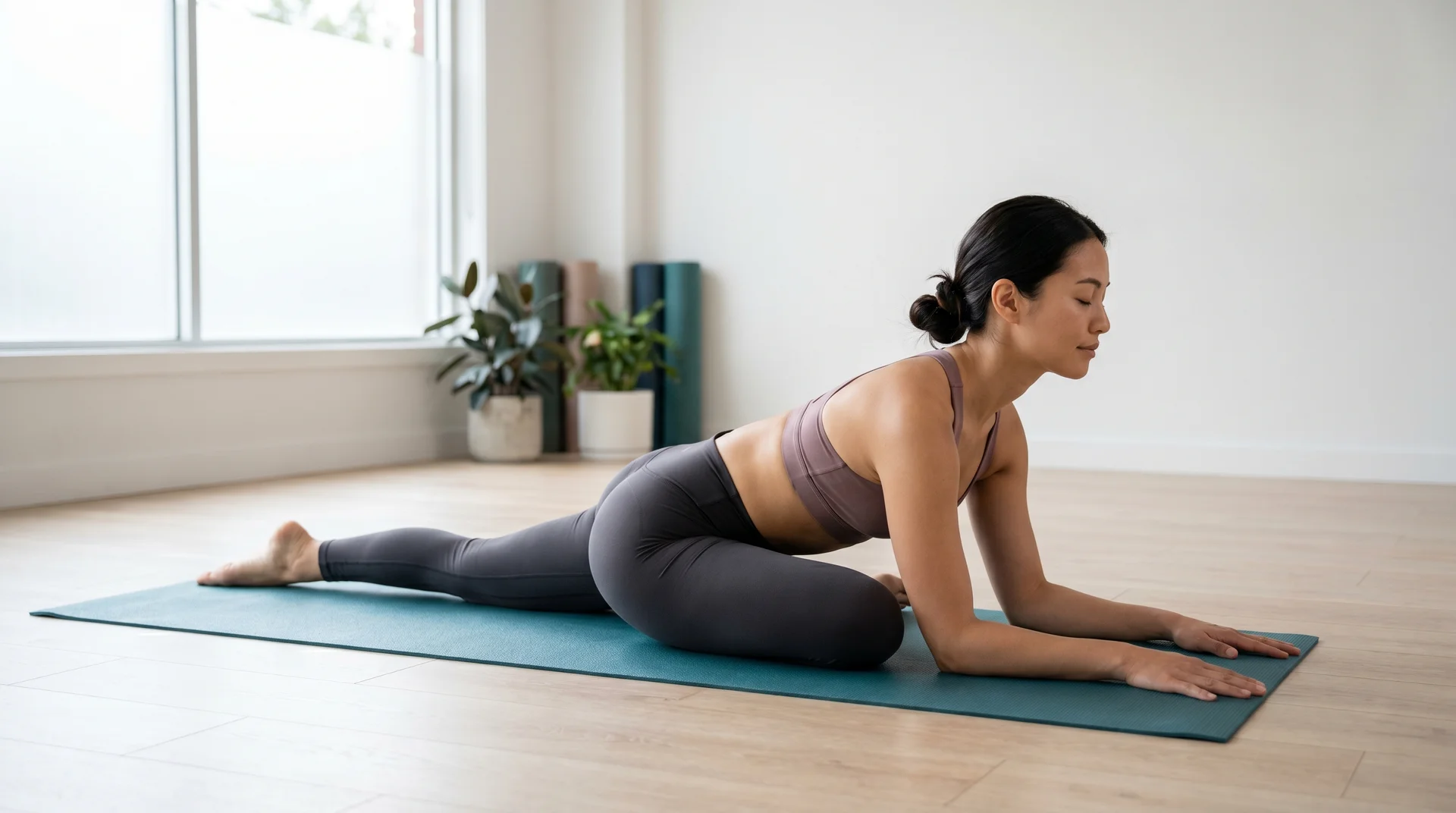
Pigeon pose is a yoga-based stretch that targets the quadriceps of the back leg and the hip rotators of the front leg at the same time. It is more advanced than the others on this list, but the payoff is a very full stretch through the front thigh, hip, and glute.
If your hips do not reach the floor, use a folded blanket or yoga block under the front hip. This is not a sign of weakness; it just means the stretch is working.
How to do it:
- Start in a plank position with your arms straight.
- Bring your right shin forward under your chest, angling it toward your left wrist.
- Extend your left leg straight behind you with the top of the foot resting on the mat.
- Lower your hips toward the floor slowly.
- Place your hands on the mat, or lower them to your forearms if comfortable.
- Hold for 30–60 seconds, then switch sides.
9. Supine Quad and Hip Stretch
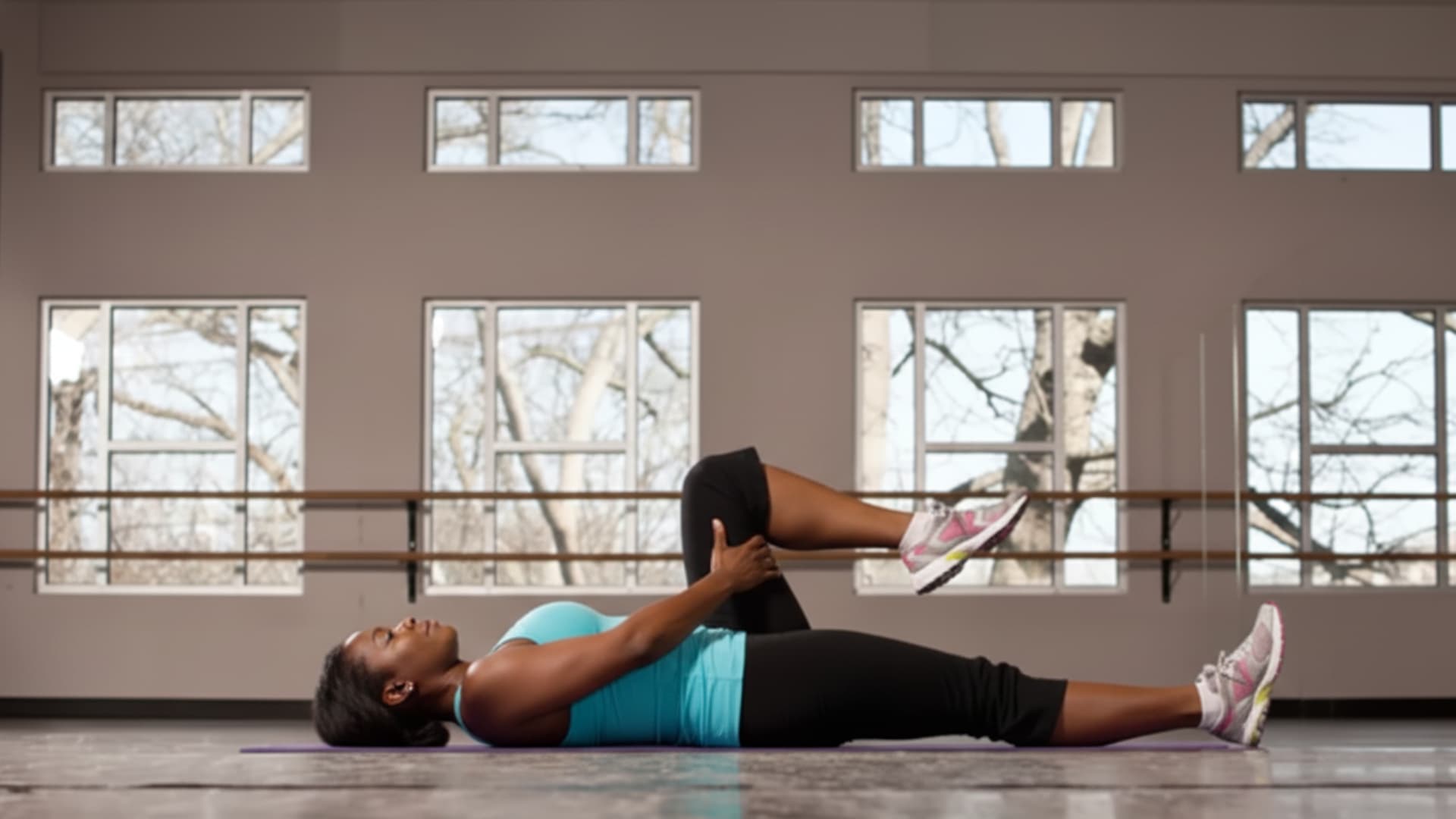
The supine quad and hip stretch is a gentle release for both the front thigh and the hip joint. It works best as a cool-down stretch after a lower-body workout, when your muscles are warm and ready to lengthen.
Lying on your back keeps your spine supported and takes pressure off your knees throughout the movement.
How to do it:
- Lie on your back with both legs extended.
- Bend your right knee and pull it toward your chest with both hands.
- Then let your right leg drop slowly out to the right side, keeping your knee bent.
- Use your left hand to gently press the right knee toward the floor.
- You will feel the stretch in the outer hip and inner thigh rather than the front.
- Hold for 20–30 seconds, then switch sides.
10. Thomas Stretch
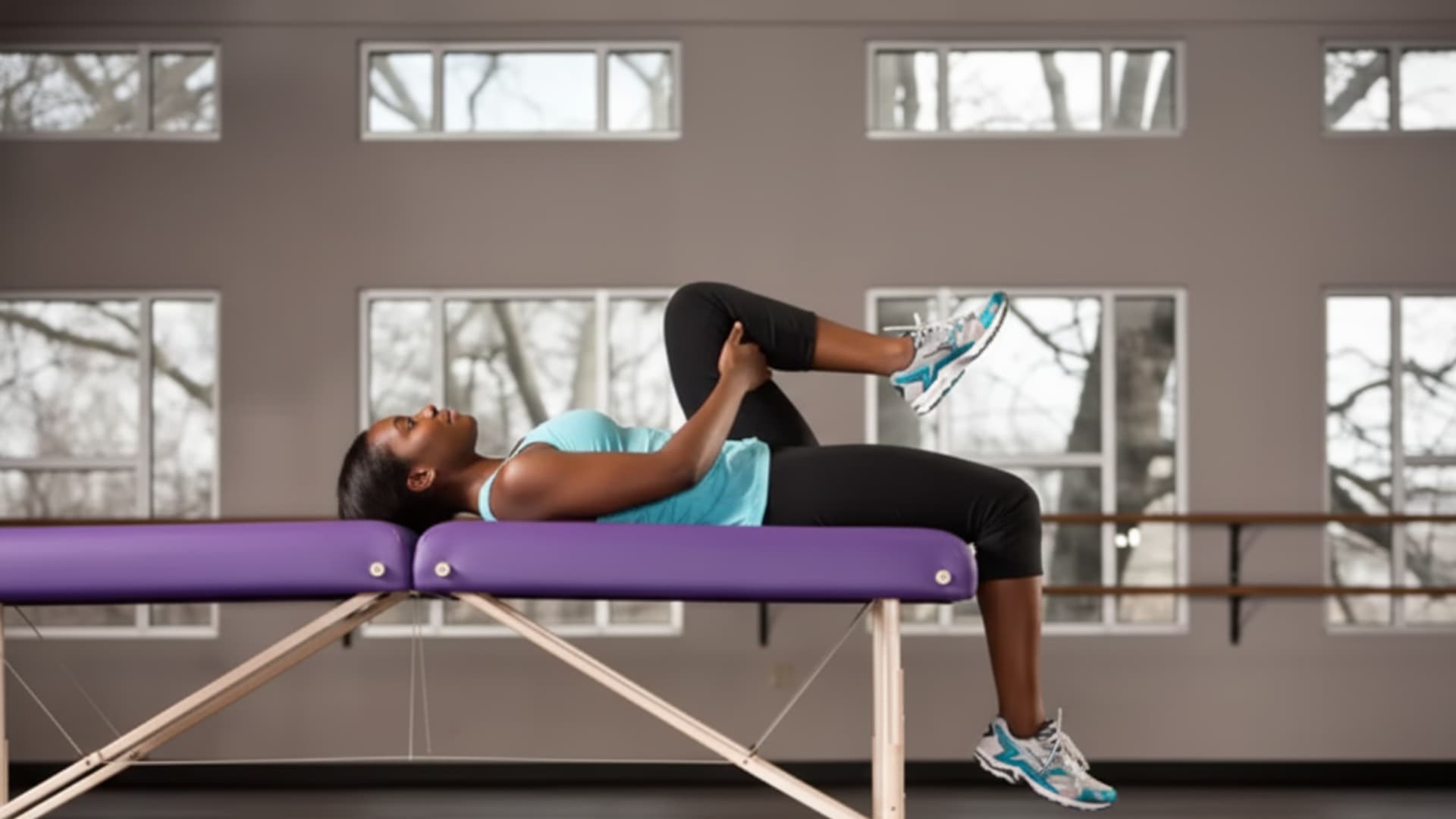
The Thomas stretch is the same position used in the Thomas Test, a clinical assessment that physical therapists use to check hip flexor and quad tightness. When used as a stretch, it is one of the most targeted quad exercises for people with very tight front thigh muscles.
You need a table, bed edge, or a firm surface slightly higher than the floor to do it correctly.
How to do it:
- Sit at the very edge of a table or bed.
- Lie back and pull both knees tightly to your chest.
- Hold your left knee firmly in place against your chest.
- Slowly lower your right leg until it hangs off the edge.
- Let gravity pull the right thigh down; the more it drops, the more flexible your quads and hip flexors are.
- If the leg stays high or the knee cannot straighten, your quad is very tight, and this stretch is especially valuable.
- Hold for 20–30 seconds, then switch sides.
According to the American Academy of Orthopaedic Surgeons, quad tightness is a contributing factor in knee pain and reduced range of motion, particularly in active individuals.
11. Couch Stretch
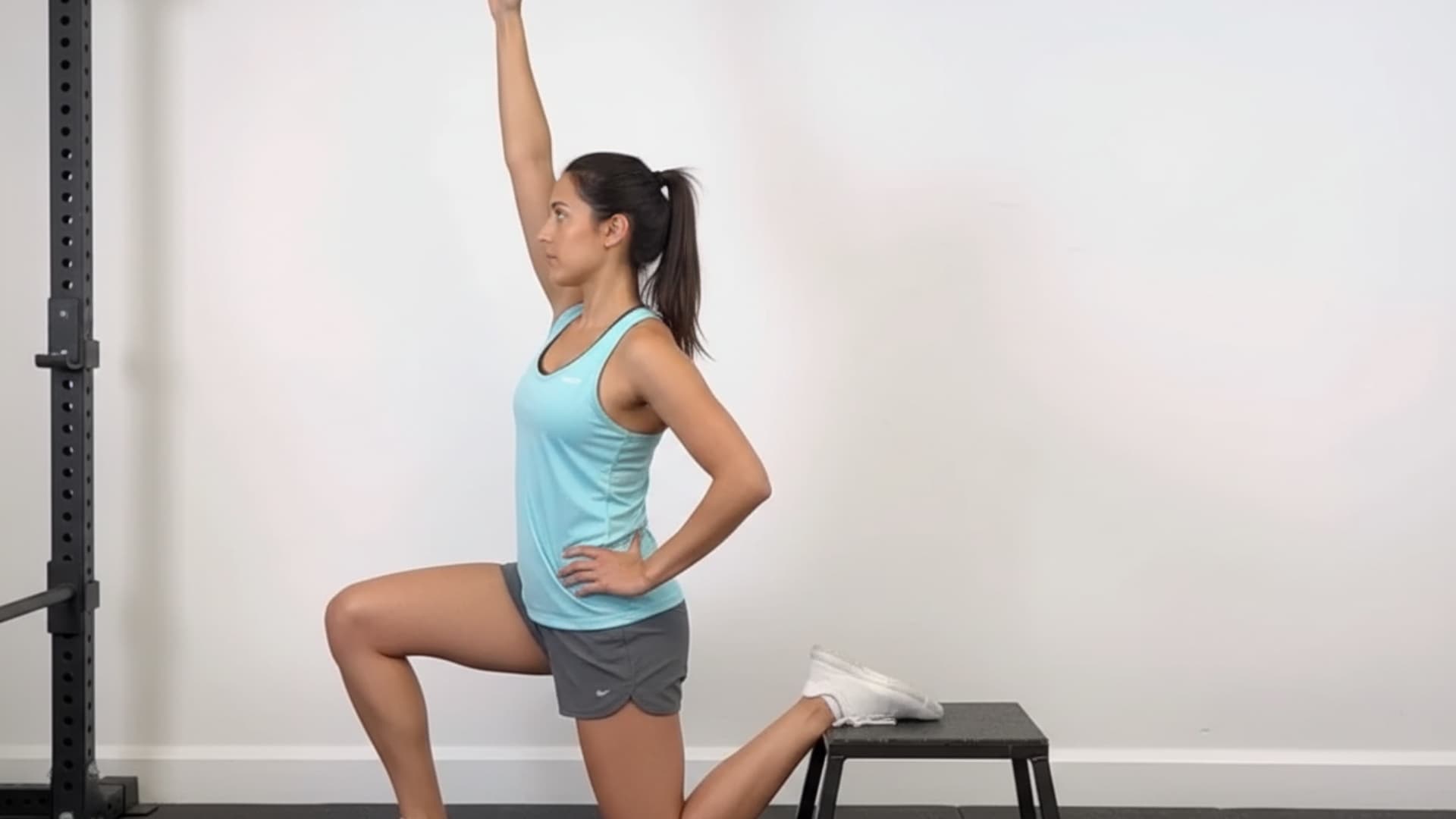
The couch stretch is one of the most intense quad stretches available and is popular among athletes, strength trainers, and people who carry very tight quads after heavy leg days. Do not attempt this one if you have active knee pain.
The couch stretch earns its name because you use a couch, bench, or wall to prop your back foot. This gives you a far deeper quad pull than a standard kneeling stretch.
How to do it:
- Kneel on a mat facing away from your couch or a low bench.
- Place your left foot up on the couch so your shin and foot rest flat against the cushion.
- Step your right foot forward into a lunge position.
- Keeping your torso upright, slowly shift your hips forward and downward.
- Squeeze your left glute to intensify the stretch in the front of your left thigh.
- Start with 30 seconds and work up to 60 seconds per side.
12. Rectus Femoris Stretch (Heel to Glute with Pelvic Tilt)
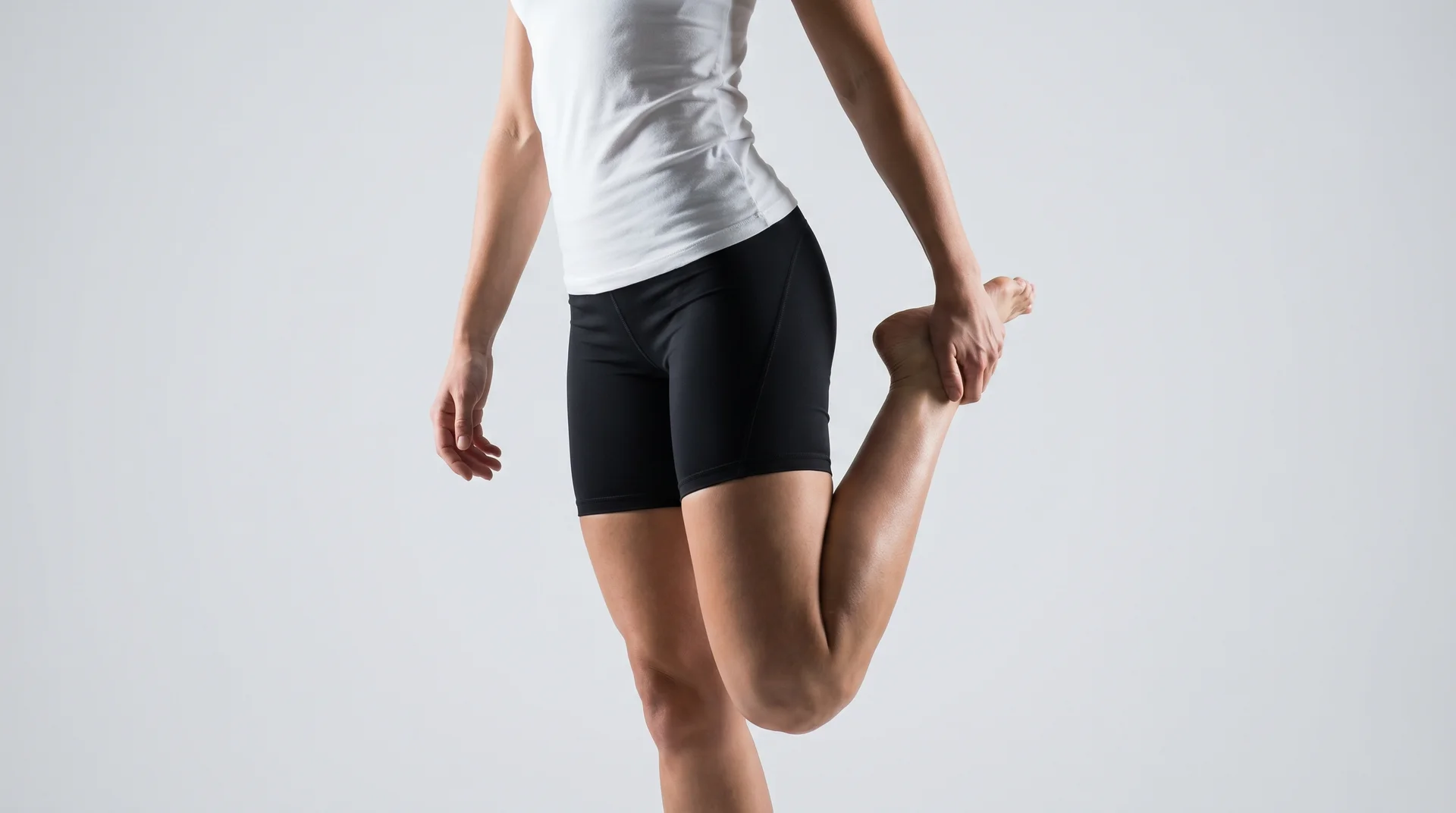
Most people perform the heel-to-glute motion and stop there. This version adds a small pelvic tilt that isolates the rectus femoris, the only quad muscle that crosses both the hip and the knee. That tilt is what makes this a true rectus femoris stretch rather than just a general quad pull.
It looks like a standard standing quad stretch from the outside. The difference is entirely in what you do with your pelvis.
How to do it:
- Stand tall and bend your right knee, bringing your heel toward your glute.
- Hold your right ankle with your right hand.
- Before settling into the stretch, tuck your pelvis slightly, think about pulling your tailbone down and under.
- Keep that pelvic tilt throughout the stretch.
- Hold for 20–30 seconds per side.
13. Dynamic Walking Quad Stretch
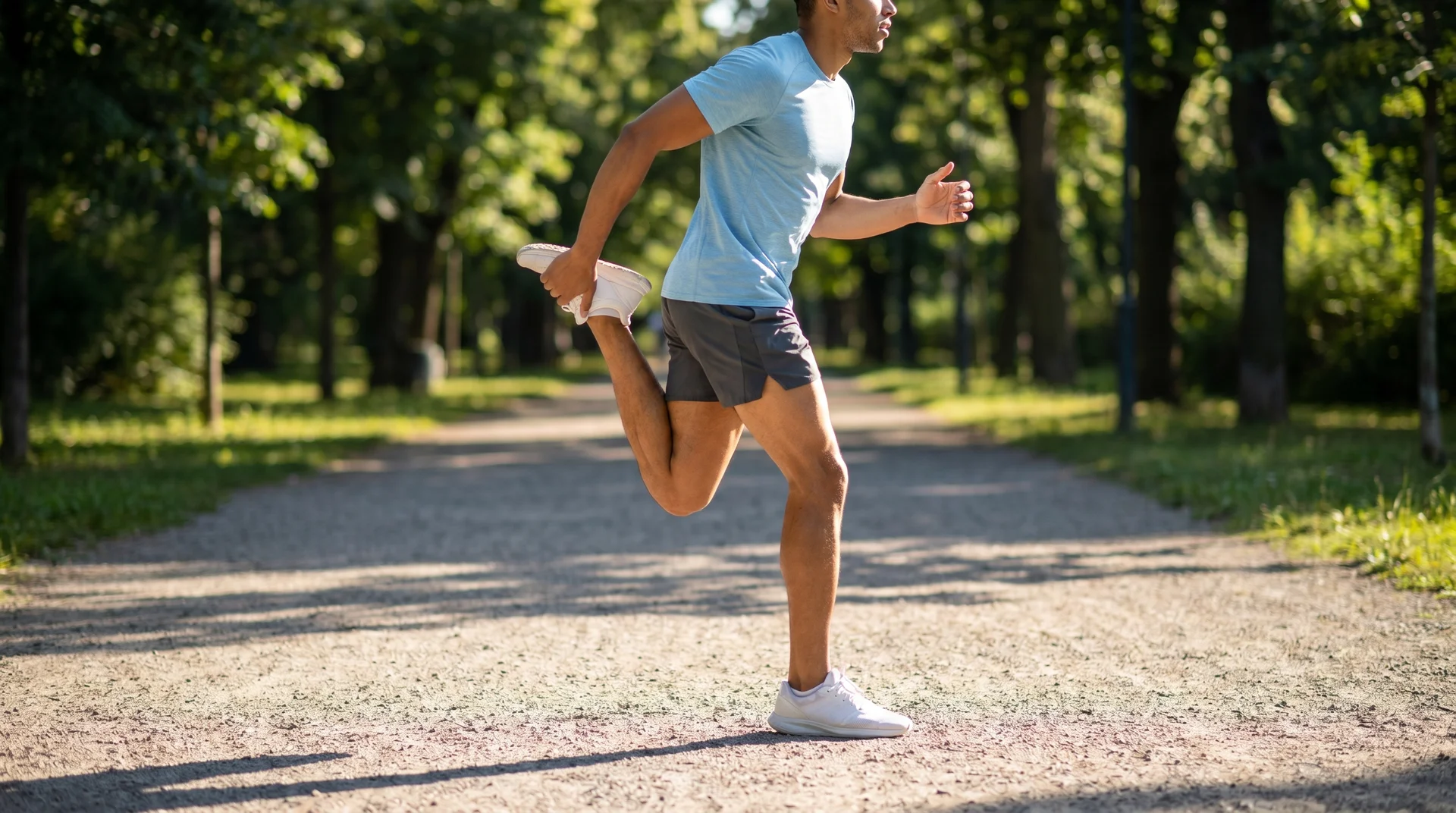
The dynamic walking quad stretch is the right choice before a workout, a run, or any sport. Unlike static stretches, this version keeps you moving, warming the quad tissue rather than lengthening cold muscle fibers.
Use it as part of your warm-up, not your cool-down. Holding a stretch before training can temporarily reduce muscle power output, but moving stretches do not carry that risk.
How to do it:
- Walk forward at a slow, controlled pace.
- With each step, bring one heel up toward your glute and hold it for 1–2 seconds.
- Release and step forward, then repeat on the other leg.
- Alternate legs as you walk for 10 reps per side.
- Keep your posture upright and your core lightly engaged throughout.
14. Foam Roller Quad Release
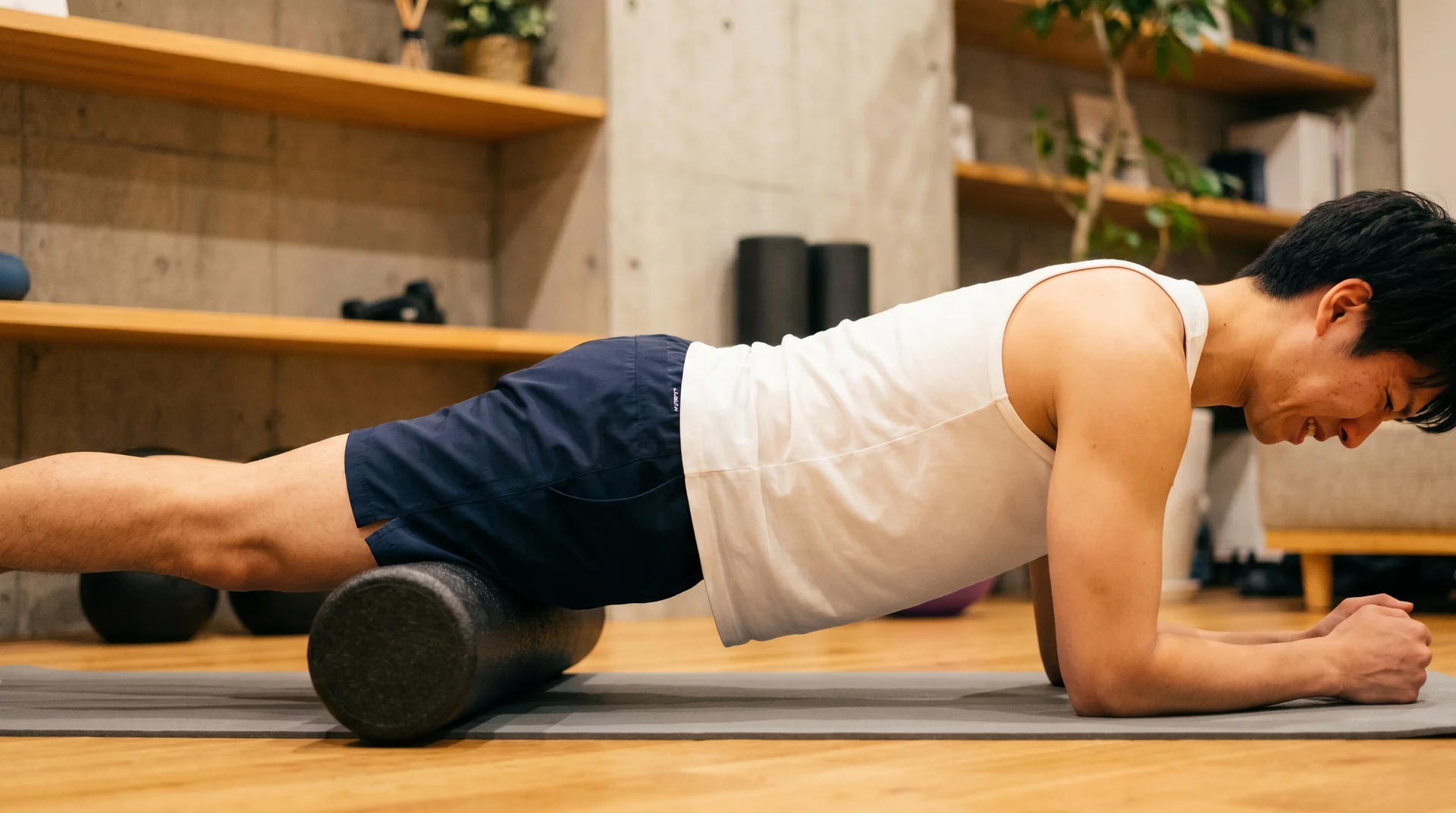
The foam roller quad release is not a stretch in the traditional sense. It is myofascial release, a technique that uses pressure to loosen tight tissue before you stretch. Think of it as softening the muscle first so your actual stretches reach further.
Spend 60–90 seconds rolling before any of the static quad stretches above, and notice the difference in how deeply you can get into each position.
How to do it:
- Lie face down and place a foam roller under both thighs, just above the knee.
- Support your upper body on your forearms.
- Slowly roll upward toward your hip, then back down toward your knee.
- When you hit a tight or sore spot, pause and hold gentle pressure for 5–10 seconds.
- Spend 60–90 seconds on each leg before moving to static stretches.
15. Quad and IT Band Stretch (Cross-Legged Standing)
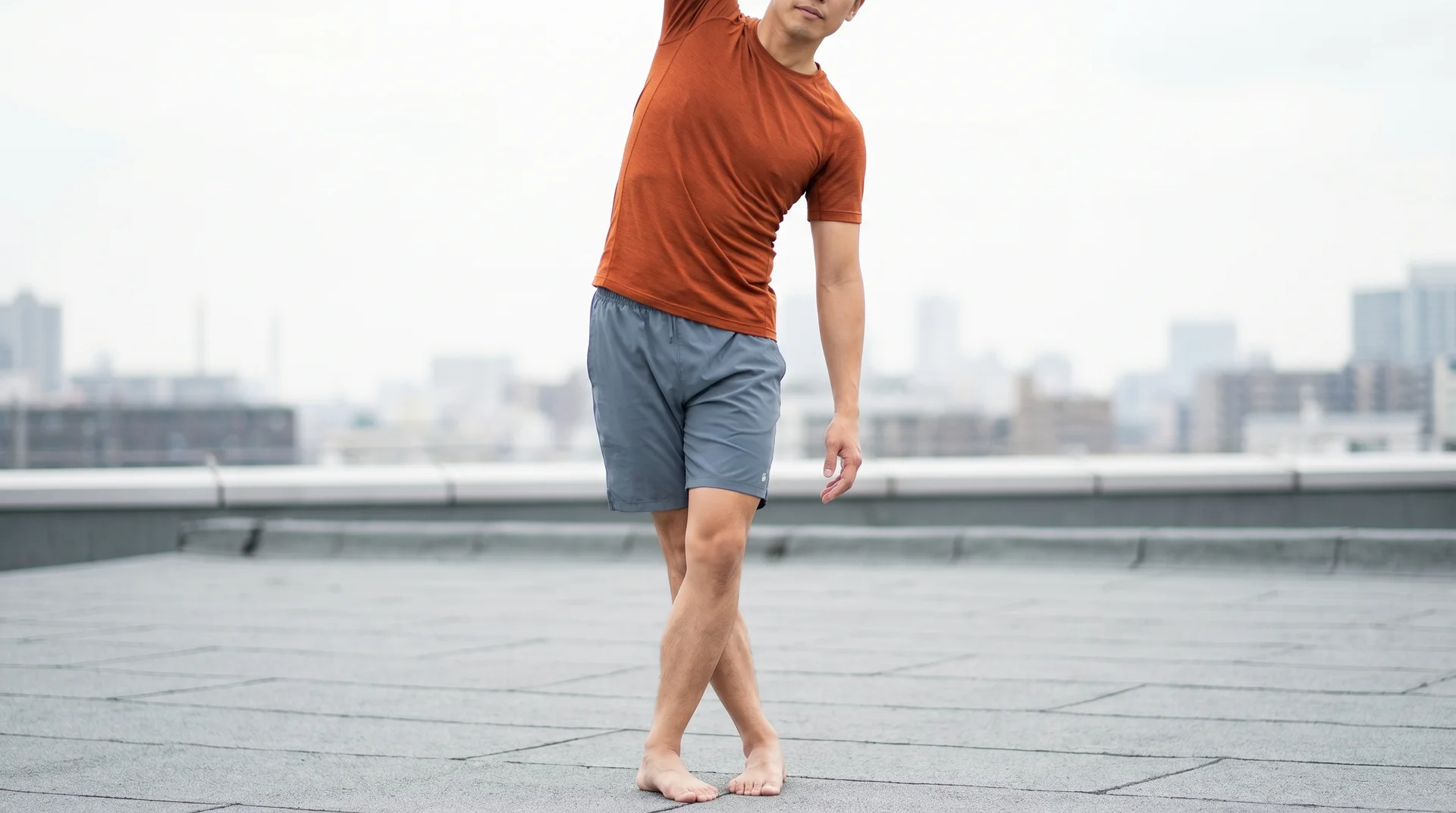
This is a two-for-one stretch. It targets the outer quadriceps and the iliotibial (IT) band, a thick band of connective tissue that runs along the outside of the thigh. Runners, cyclists, and hikers often carry tightness along this outer line, and this standing position addresses it without any floor work.
The key is the overhead reach combined with the crossed-leg position, which creates a lateral pull on the outer thigh.
How to do it:
- Stand tall with feet together.
- Cross your right foot in front of your left foot.
- Raise your right arm overhead and lean your torso slowly to the left.
- Feel the stretch running along the outer right thigh.
- For more intensity, push your right hip out slightly to the right.
- Hold for 20–30 seconds, then switch sides.
How Long Should You Hold a Quad Stretch?
For static quad stretches, hold each position for 20 to 30 seconds per side and repeat 2 to 3 times. If your quads are very tight, you can gradually work up to 60 seconds.
Dynamic stretches like the walking quad stretch should not be held; keep moving for 10 reps per leg. Never bounce within a stretch, as this triggers a protective muscle reflex that tightens the tissue rather than releasing it.
According to the American College of Sports Medicine, holding a stretch for at least 10 to 30 seconds is enough to improve flexibility when done consistently over time.
Who Benefits Most from Quad Stretches?
Tight quads affect almost everyone differently; the cause of tightness changes depending on how you spend your day, and so does how you should address it.
- Runners and cyclists: High quad demand during training leads to chronic tightness. Regular quad stretching reduces knee strain and keeps stride mechanics clean.
- Office workers and remote workers: Prolonged sitting shortens both the quads and hip flexors. A daily stretching routine offsets hours spent in a chair.
- Older adults: Quad flexibility supports gait stability and reduces fall risk. Gentle stretching two to three times per week keeps the legs functional and the knees comfortable.
- People recovering from knee injuries: Tight quads increase pressure on the kneecap. Controlled quad stretching, under medical guidance, supports recovery and reduces discomfort.
- Strength trainers and athletes: Heavy squat and leg press work builds strong quads but often leaves them very tight. Consistent stretching improves recovery and maintains a full range of motion.
When Is the Best Time to Do Quad Stretches?
The best time for static quad stretches is right after exercise, when your muscles are warm and more pliable. Warm tissue responds better and holds length longer than cold tissue does.
Before a workout, swap static holds for dynamic quad stretches like the walking version above.
If you sit at a desk all day, a short kneeling or standing quad stretch every 60 to 90 minutes does more to prevent tightness than one long session at the end of the day ever could.
Morning stretching is fine, but keep holds shorter and gentler since your muscles are cooler after hours of sleep.
Final Notes
Quad stretches are one of the simplest investments you can make in how your legs feel and function every day.
Whether you run, train, sit for hours, or simply want less tightness and better movement, the 15 quad stretches in this guide give you a reliable starting point.
Start with two or three that match your current mobility level, hold each position correctly, and be consistent. Small changes build real results over time.
Save this guide for later. Pin it to your workout board, so you always have it when your legs need a good stretch.