Teenage years bring pressure from every direction. School demands, friendships, social media, and family expectations all compete for a teen’s attention daily.
When stress builds without an outlet, it shows up as anger, withdrawal, or burnout. Healthy coping skills for teens can change how they respond to hard moments. These strategies do not remove stress. They build the emotional strength needed to handle it.
Research from the American Academy of Pediatrics shows teens with strong coping tools become more resilient over time.
This post covers practical coping skills, sorted by category, to help you find the right tool fast.
150 Coping Skills for Teens, Organized into 10 Categories
These coping skills are designed to help teens manage stress, stay balanced, and build emotional strength. Each tip offers actionable strategies for everyday challenges and personal growth.
Breathing and Relaxation Techniques
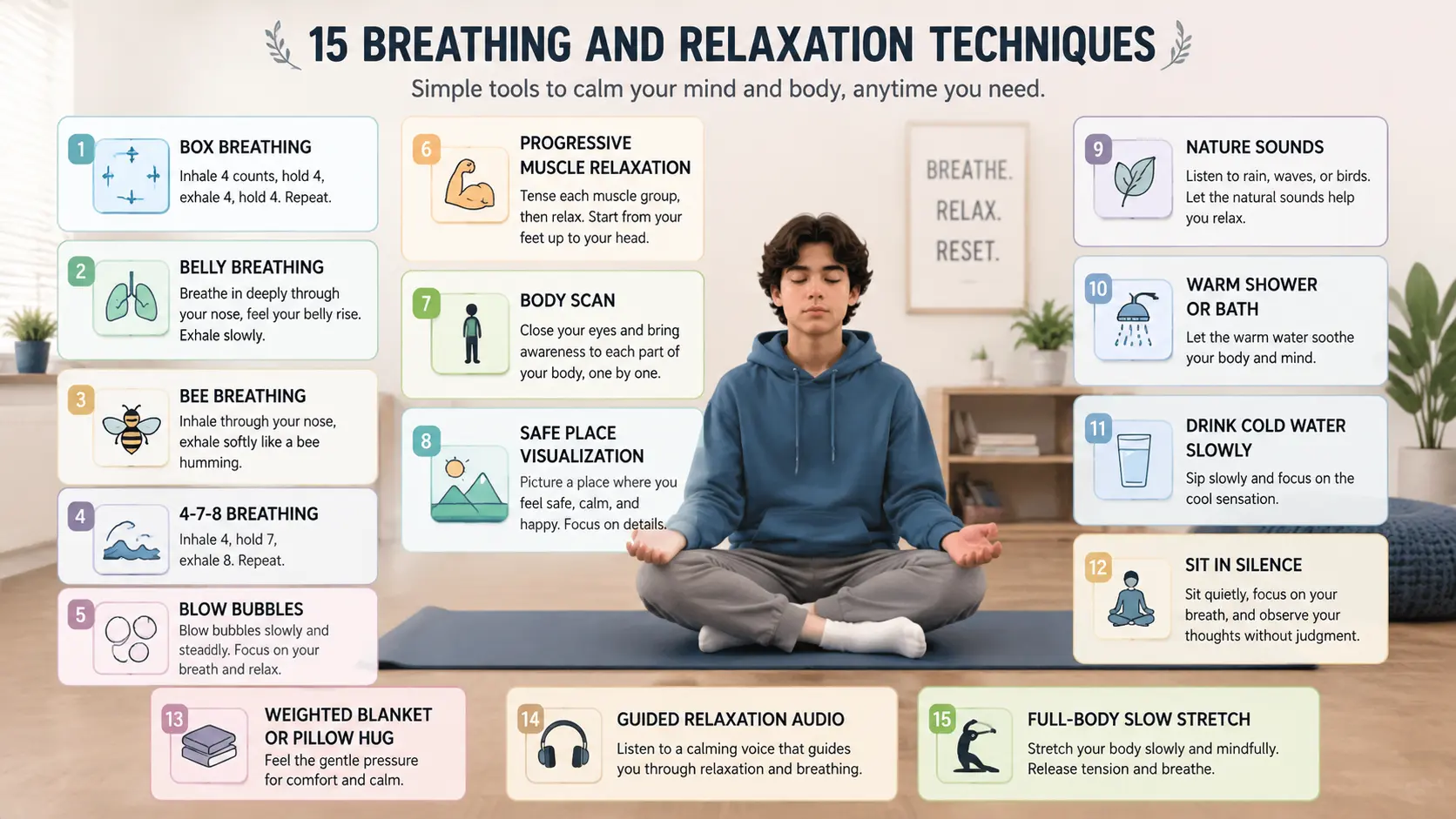
- Box breathing: Inhale for 4 counts, hold for 4, exhale for 4, then hold for 4 again. This pattern lowers the heart rate and settles the nervous system within a few minutes of consistent practice.
- Belly breathing: Place one hand on the belly and breathe slowly so the belly rises first, not the chest. Diaphragmatic breathing activates the body’s natural calming response and reduces feelings of physical tension.
- Bee breathing: Inhale slowly through the nose, then hum softly on the exhale for as long as comfortable. The vibration of humming stimulates the vagus nerve, which directly lowers the body’s stress response.
- 4-7-8 breathing: Inhale quietly for 4 counts, hold the breath for 7, then exhale fully for 8 counts. The longer exhale activates the parasympathetic nervous system, helping the body return its a state of balance.
- Blow bubbles: Focus on taking the slowest, most controlled breath possible to keep each bubble intact for as long as possible. This sensory breathing exercise naturally paces the breath without requiring any mental effort.
- Progressive muscle relaxation: Starting at the feet, tense each muscle group for 5 seconds, then release before moving upward. Working through the whole body this way releases stored physical tension that accumulates throughout the day.
- Body scan: Sit still and slowly move your attention from the feet upward through each body part without trying to change anything. This quiet awareness practice reduces anxiety by anchoring focus from abstract worries to specific physical sensations.
- Safe place visualization: Close your eyes and picture a calm, familiar location in detail, including sounds, textures, and colors. Spending 2 to 3 minutes in a mentally imagined safe place lowers measurable stress markers in the body.
- Nature sounds: Play recordings of rain, the ocean, or the forest through headphones and focus on the sounds for 10 minutes. Natural soundscapes lower cortisol levels and help the brain shift away from a heightened state of stress.
- Warm shower or bath: Stand under warm water for at least 10 minutes, letting the heat work through tense muscles. The combination of warmth, water pressure, and a quiet enclosed space creates a reliable calming effect.
- Drink cold water slowly: Fill a glass with cold water and take one sip at a time, focusing fully on the sensation. This grounding action pulls attention from racing thoughts and brings it back into the body.
- Sit in silence: Set a timer for 5 minutes, turn off all screens and audio, and simply sit without an agenda. Silence gives an overstimulated brain a genuine break and works especially well after a long or stressful school day.
- Weighted blanket or pillow hug: Apply firm pressure to the body using a heavy blanket or a large pillow against the chest. Deep pressure stimulates the body’s calming chemistry and produces a sense of physical security.
- Guided relaxation audio: Open a free app like Insight Timer and follow a 5 to 10-minute guided body relaxation. Having a voice lead the process lowers the mental effort required and makes it easier to settle in.
- Full-body slow stretch: Move through each major muscle group from the neck to the calves, holding each stretch for 10 to 15 seconds. Slow, deliberate stretching signals the nervous system that the stressful part of the day is over.
Physical Activity and Movement
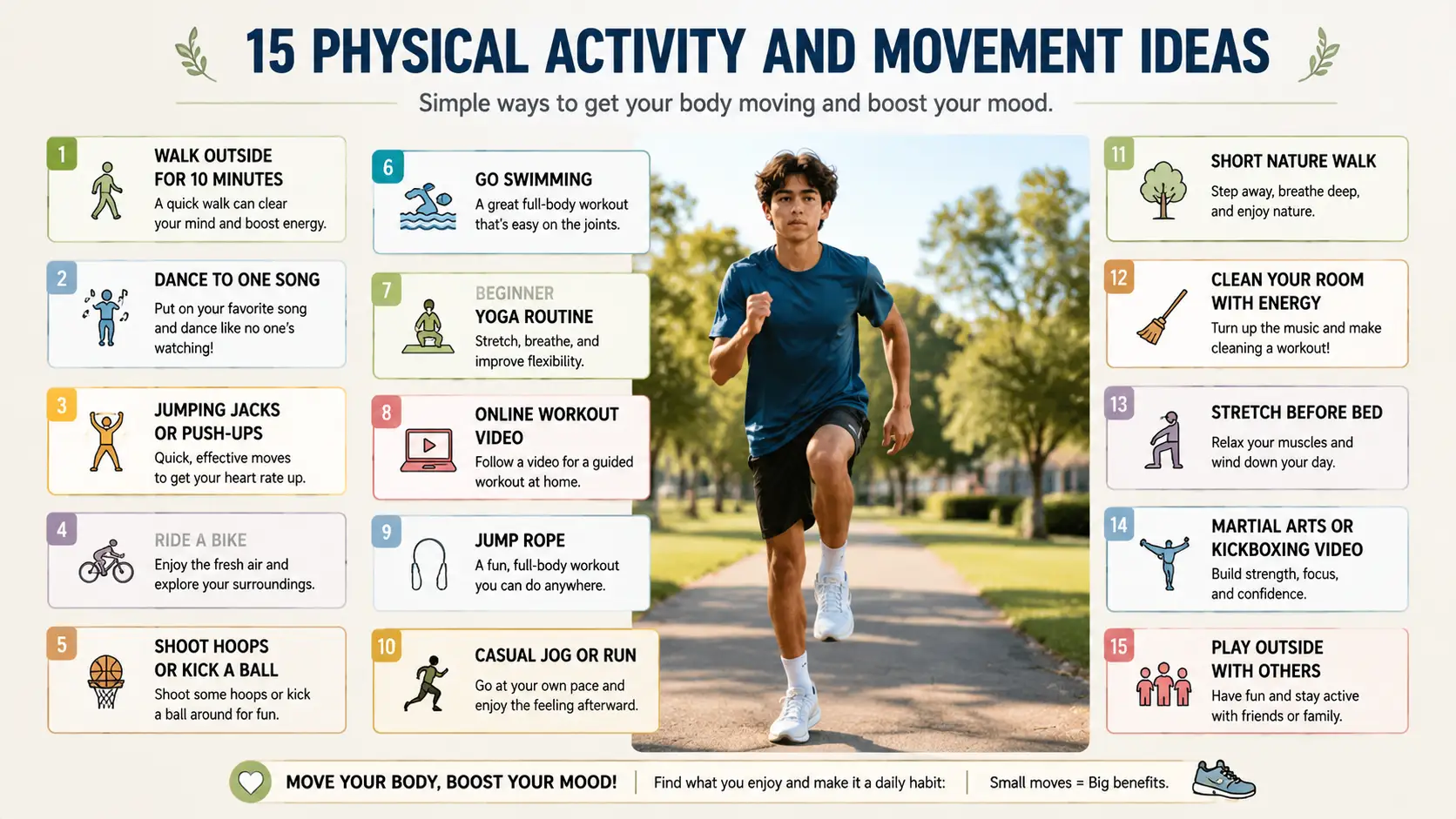
- Walk outside for 10 minutes: Step outside and walk at a comfortable, unhurried pace without a destination. Even a short walk reduces stress hormones and reliably improves mood in most teens within a few minutes.
- Dance to one song: Play one song and move freely in your room with no audience and no rules. Dancing releases physical tension and interrupts negative thought patterns by shifting the body into a different state.
- Jumping jacks or push-ups: Do a quick set of jumping jacks, push-ups, or squats to burn off built-up adrenaline. Even 2 to 3 minutes of this kind of movement visibly changes how the body and mind feel afterward.
- Ride a bike: Get on a bike and ride around the neighborhood or a nearby path without a specific destination. The rhythmic, repetitive motion of cycling calms racing thoughts and gives the mind room to reset.
- Shoot hoops or kick a ball: Head outside and practice shots or kicks alone or with a friend in an open space. Repetitive sports movements are naturally grounding and redirect mental energy away from whatever triggered the stress.
- Go swimming: Swim laps, float, or move freely in the water at a local pool or open-water area. Water provides full-body sensory input that makes stress feel physically smaller and easier to manage.
- Beginner yoga routine: Follow a 10 to 15-minute beginner yoga video online, focusing on slow transitions and breathing. Yoga combines movement, breath awareness, and present-moment focus to reduce both anxiety and physical tension.
- Online workout video: Search for a short workout video and follow along for 15 to 20 minutes with full attention. Having a guide removes the decision fatigue that often stops teens from starting exercise on their own.
- Jump rope: Take a jump rope outside and jump at your own pace for 5 to 10 minutes. The rhythmic, repetitive nature of jumping calms the nervous system while naturally raising endorphin levels.
- Casual jog or run: Put on shoes and run at whatever pace feels comfortable, without tracking time or distance. Running releases endorphins that genuinely lift mood within 10 to 20 minutes of starting.
- Short nature walk: Walk a local trail, park path, or wooded area at a relaxed pace with no pressure. Being in a natural outdoor environment lowers cortisol levels and gives the mind space to breathe between daily obligations.
- Clean your room with energy: Put on music and clean or reorganize your room with full focus and physical effort. Completing a task that produces a visible result creates a quiet but real sense of accomplishment.
- Stretch before bed: Spend 10 minutes moving through the legs, back, and shoulders before lying down. This routine signals the nervous system that the day is over and physical recovery can begin.
- Martial arts or kickboxing video: Find a free beginner video online and follow the movements with full attention. The controlled, focused movements provide a healthy outlet for frustration and build physical confidence over time.
- Play outside with others: Organize a yard game, street sport, or any informal physical activity with siblings, neighbors, or friends. Unstructured outdoor play addresses both physical and social needs that screen-based time routinely leaves unmet.
Creative Expression skills
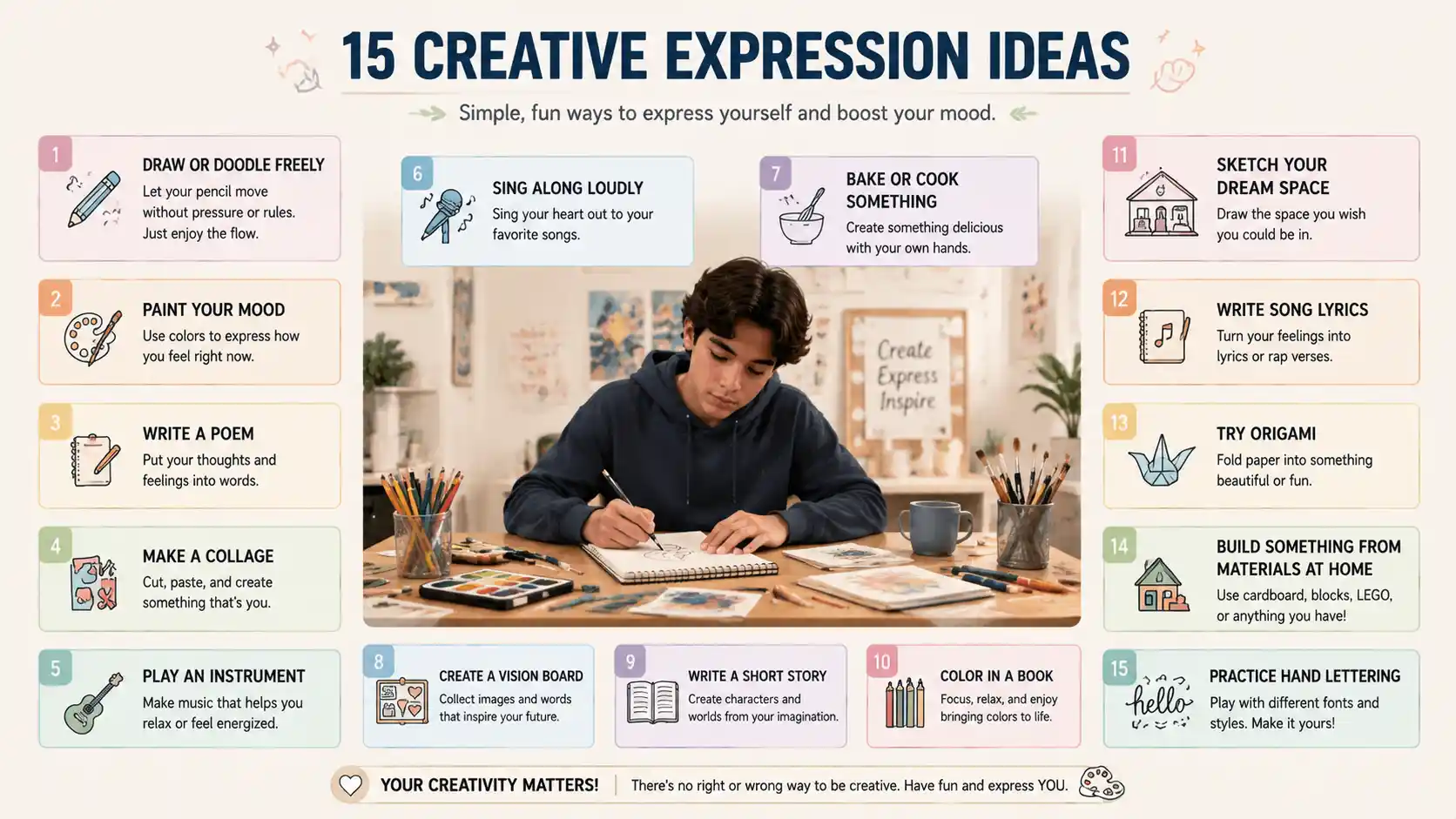
- Draw or doodle freely: Pick up a pen and draw without any goal, letting your hand follow the feeling on the page. The act of making marks on paper releases internal tension without requiring words or structure.
- Paint your mood: Set up paint and cover paper or canvas with colors that match how you feel right now. Painting externalizes emotion without requiring explanation, making it one of the most accessible creative outlets available.
- Write a poem: Write a short poem about your current emotion without following any rules for rhyme or form. Shaping a feeling into language reduces its intensity and gives the mind a clearer picture of what it is holding.
- Make a collage: Cut images, colors, and words from old magazines and arrange them on paper in any order. The physical process of cutting and placing creates a sense of order that the brain finds calming.
- Play an instrument: Pick up any instrument you know and play through something you enjoy, even just a few chords. Making music measurably shifts brain activity, reducing anxiety and interrupting emotional overwhelm.
- Sing along loudly: Choose a song that matches your emotional state and sing along with full volume and no self-consciousness. Singing activates the breathing muscles and provides a physical release for large emotions that have nowhere else to go.
- Bake or cook something: Choose a simple recipe and follow it from start to finish without multitasking or rushing. The sensory focus and physical rhythm of cooking, combined with a finished result, make it one of the more reliable grounding activities available.
- Create a vision board: Cut out images and words that represent where you want to be or how you want to feel. Building a visual picture of the future shifts attention from current stress toward a possible, positive direction.
- Write a short story: Create a fictional character facing something difficult and write one scene from their story. Writing fiction lets teens process real emotions at a safe creative distance, without the pressure of personal disclosure.
- Color in a book: Spend 15 to 20 minutes coloring in a book designed for teens or adults. The repetitive, focused motion of coloring activates the same attention pathways used in mindfulness practice.
- Sketch your dream space: Draw the layout or details of a room, garden, or place you would love to spend time in. This low-stakes visual planning channels mental energy into something personal and forward-looking.
- Write song lyrics: Write the words to an imaginary song about how you feel right now, without needing a melody. Getting feelings onto paper in lyric form makes them feel less heavy inside the head.
- Try origami: Find a free beginner tutorial online and fold paper carefully into a simple shape, step by step. Origami requires full attention and produces a satisfying, tactile result, both of which interrupt anxious spiraling.
- Build something from materials at home: Use cardboard, tape, or any available household materials to build something with your hands. The combination of problem-solving and physical making is one of the most absorbing, stress-redirecting activities a teen can engage in.
- Practice hand lettering: Watch a short beginner video, then write words slowly in a decorative style on paper. The deliberate pace of hand lettering demands full attention and naturally quiets the mental noise that stress produces.
Mindfulness and Grounding
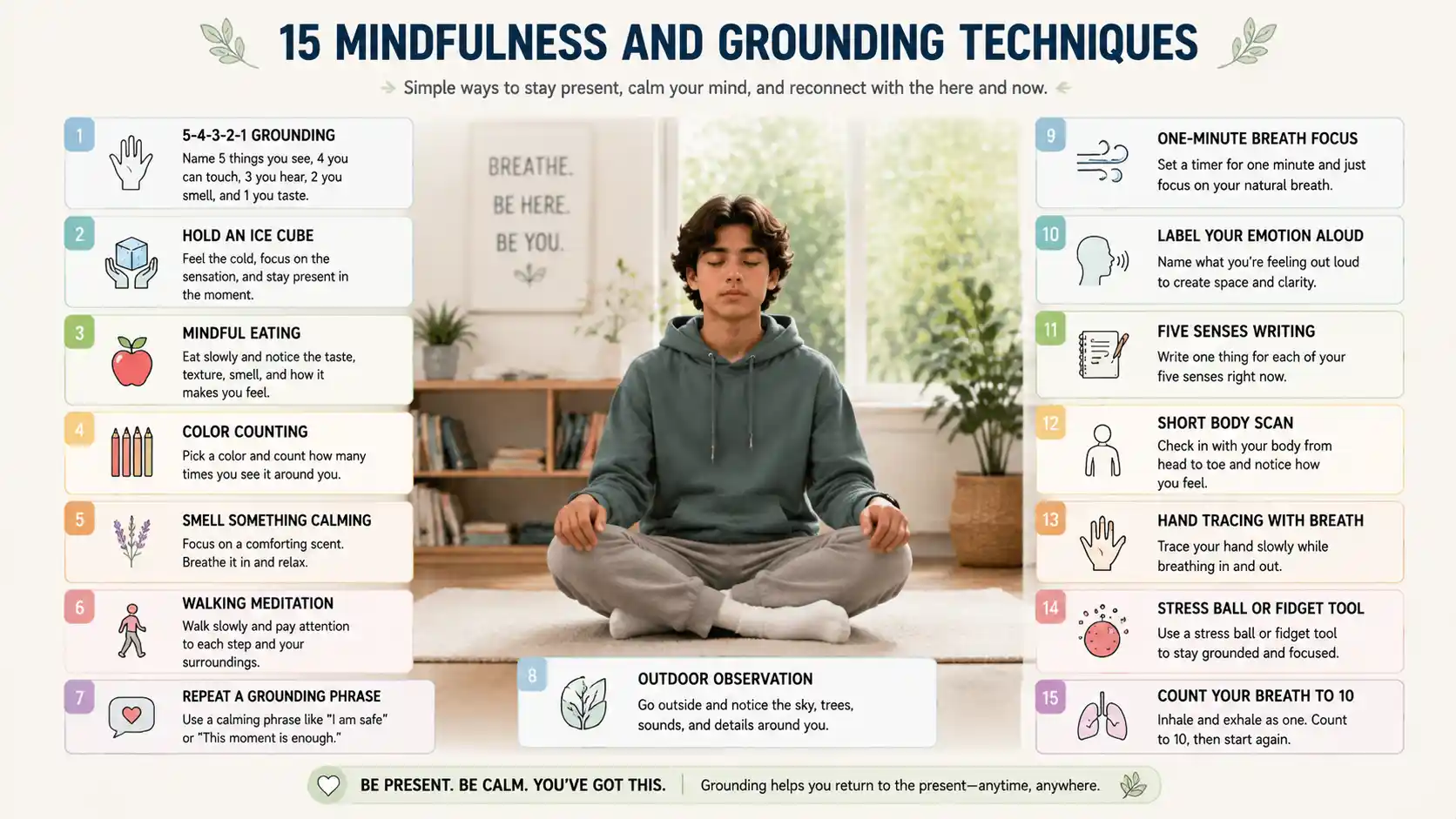
- 5-4-3-2-1 grounding: Name 5 things you can see, 4 you hear, 3 you can touch, 2 you smell, and 1 you taste. This structured sensory check-in anchors full attention in the present moment and stops an anxiety spiral within minutes.
- Hold an ice cube: Focus entirely on its temperature, texture, and how it melts in your hand. The sharp, clear physical sensation overrides anxious thought patterns by giving the brain something immediate and real to process.
- Mindful eating: Choose a small snack and eat it with no screens or conversation, focusing only on taste, texture, and smell. This simple action turns an ordinary habit into a grounding tool that slows the nervous system.
- Color counting: Look around the room and count every object of one specific color before switching to another. This focused visual task occupies the reasoning mind and naturally interrupts ruminative thinking.
- Smell something calming: Hold a familiar or calming scent, such as lavender, mint, citrus, or lotion, near your nose and breathe slowly. The olfactory system connects directly to the brain’s emotional center, making smell one of the fastest sensory reset tools available.
- Walking meditation: Walk slowly and focus entirely on the sensation of each foot meeting the ground with each step. This movement-based mindfulness practice is especially useful for teens who find sitting still during anxiety too difficult.
- Repeat a grounding phrase: Choose a truthful, calming sentence like “I am safe, I am here, I can handle this” and say it aloud. Repeating a grounded statement out loud interrupts the thought pattern that feeds anxiety.
- Outdoor observation: Sit outside for 5 minutes and quietly observe one specific thing, whether a bird, a tree, or the movement of clouds. This unhurried noticing slows mental activity and connects the body to something larger than the current problem.
- One-minute breath focus: Set a 60-second timer and focus only on your natural breathing, without changing or judging it. Even one minute of full breath awareness measurably reduces heart rate and quiets mental noise.
- Label your emotion aloud: Say the specific emotion you feel clearly and aloud, without explanation or judgment. Research in affective neuroscience shows that labeling emotions reduces their intensity in the brain, a process called affect labeling.
- Five senses writing: Write down what each of your five senses notices right now using a few concrete words for each. This grounding exercise shifts the brain from abstract threat-scanning into direct, factual observation of the present moment.
- Short body scan: Lie or sit still and notice each body part from the feet upward, without trying to change what you observe. A 5-minute body scan reduces generalized anxiety by narrowing attention from the abstract to the specific.
- Hand tracing with breath: Place your hand flat on paper and trace each finger slowly, breathing in as you trace up and out as you trace down. This simple tool combines visual focus, slow movement, and breath control into a single grounding activity.
- Stress ball or fidget tool: Keep a stress ball, textured object, or fidget cube nearby and use it during moments of rising anxiety. The repetitive tactile input gives the nervous system a focal point that competes directly with anxious thoughts.
- Count your breath to 10: Close your eyes and silently count each inhale from 1 to 10, then start over if you lose count. This structure keeps the mind from wandering without requiring effort or any prior meditation experience.
Social Connection Skills
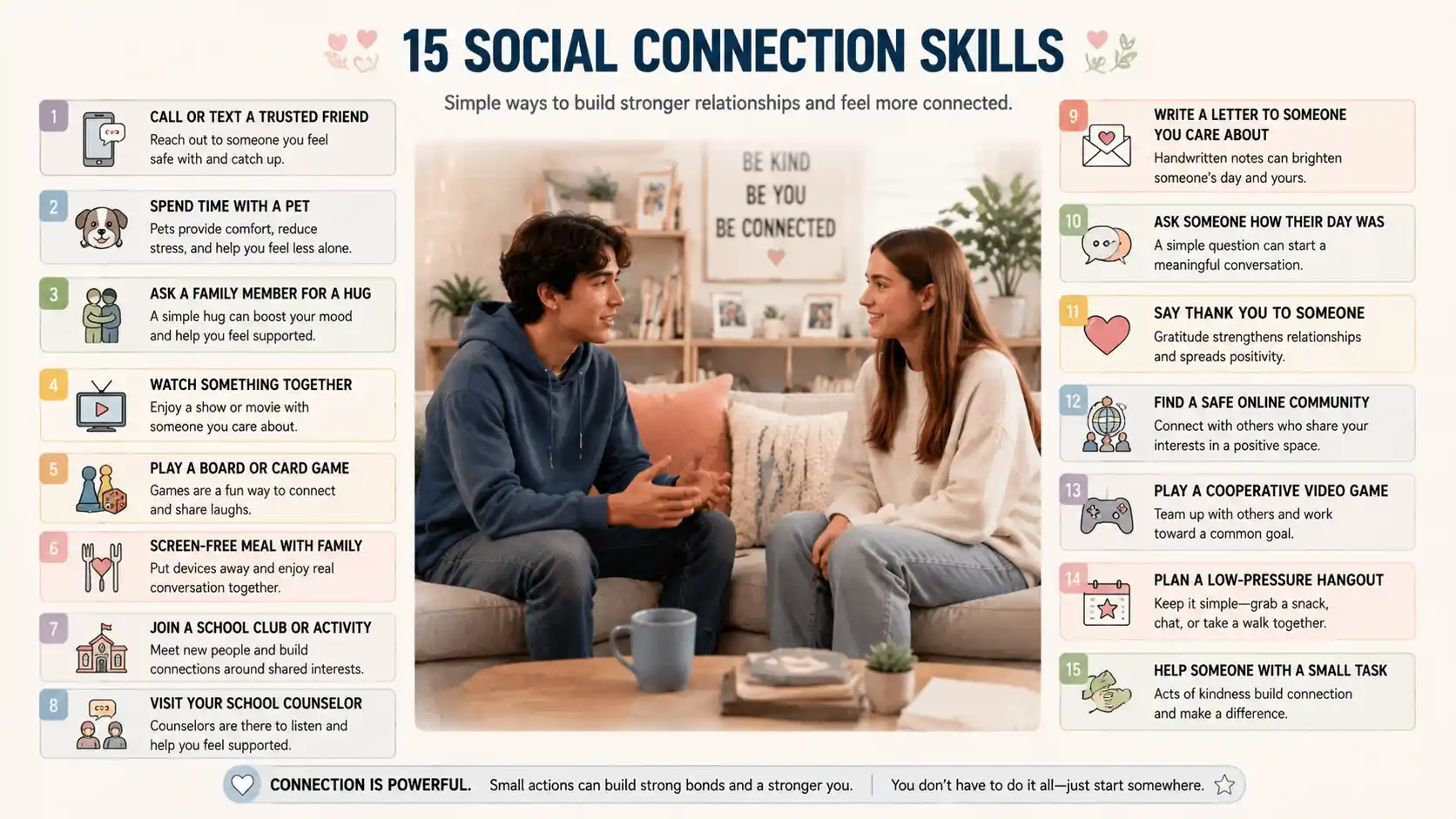
- Call or text a trusted friend: Send a short message or call someone you trust and share what is on your mind. Research consistently shows that social support after stress lowers its physical impact on the body.
- Spend time with a pet: Sit with, walk, or play with a pet for at least 15 minutes. Interacting with animals reduces cortisol and raises oxytocin, producing a calming, measurable physiological effect.
- Ask a family member for a hug: Request a hug or brief physical contact from a parent, sibling, or trusted person at home. Safe physical touch activates the nervous system’s calming response within seconds of contact.
- Watch something together: Put on a show or movie you enjoy with another person in the room, with no obligation to talk. Shared, low-pressure time in the same space creates a connection that relieves loneliness without requiring any effort.
- Play a board or card game: Pull out a game and play with a family member or friend for 20 to 30 minutes. Games redirect attention onto something structured and engaging while keeping the social connection active.
- Screen-free meal with family: Sit down for a meal with your family without phones at the table. The ordinary, informal conversation that happens during shared meals builds the connection teens need most during harder moments.
- Join a school club or activity: Sign up for one club, team, or school activity that places you near others with a common interest. Regular structured contact with peers outside of academic pressure is one of the strongest protective factors for teen mental health, according to AACAP.
- Visit your school counselor: Book a short check-in to discuss anything you are currently managing. School counselors are trained to help teens navigate exactly the kind of stress that accumulates during the school year.
- Write a letter to someone you care about: Write honestly to a friend or family member about what you appreciate in them, even if you never send it. Writing toward someone else shifts emotional energy from inward stress to outward connection.
- Ask someone how their day was: Turn your attention outward and genuinely ask one person how their day went, then listen without checking your phone. Shifting focus onto another person’s experience breaks the loop of self-focused anxious thinking.
- Say thank you to someone: Identify one person who helped you recently and tell them in person or by message. Expressing gratitude strengthens the social bond and improves the mood of both the giver and the recipient.
- Find a safe online community: Join a moderated, teen-specific forum or interest group where clear community rules protect the conversation. Structured online communities give teens a sense of belonging when in-person connection is temporarily hard to access.
- Play a cooperative video game: Choose a game that requires working with a partner and play it with a friend online or in person. Cooperative play builds team connection and provides a structured, enjoyable way to spend social time.
- Plan a low-pressure hangout: Make simple plans to walk, grab a snack, or spend a casual afternoon with one friend. Unstructured time with a trusted person tends to be more restorative than teens expect when they are under stress.
- Help someone with a small task: Offer to assist a neighbor, classmate, or sibling with a concrete, manageable task. Redirecting anxious mental energy toward helping another person produces a quiet but genuine sense of purpose.
Emotional Processing Skills
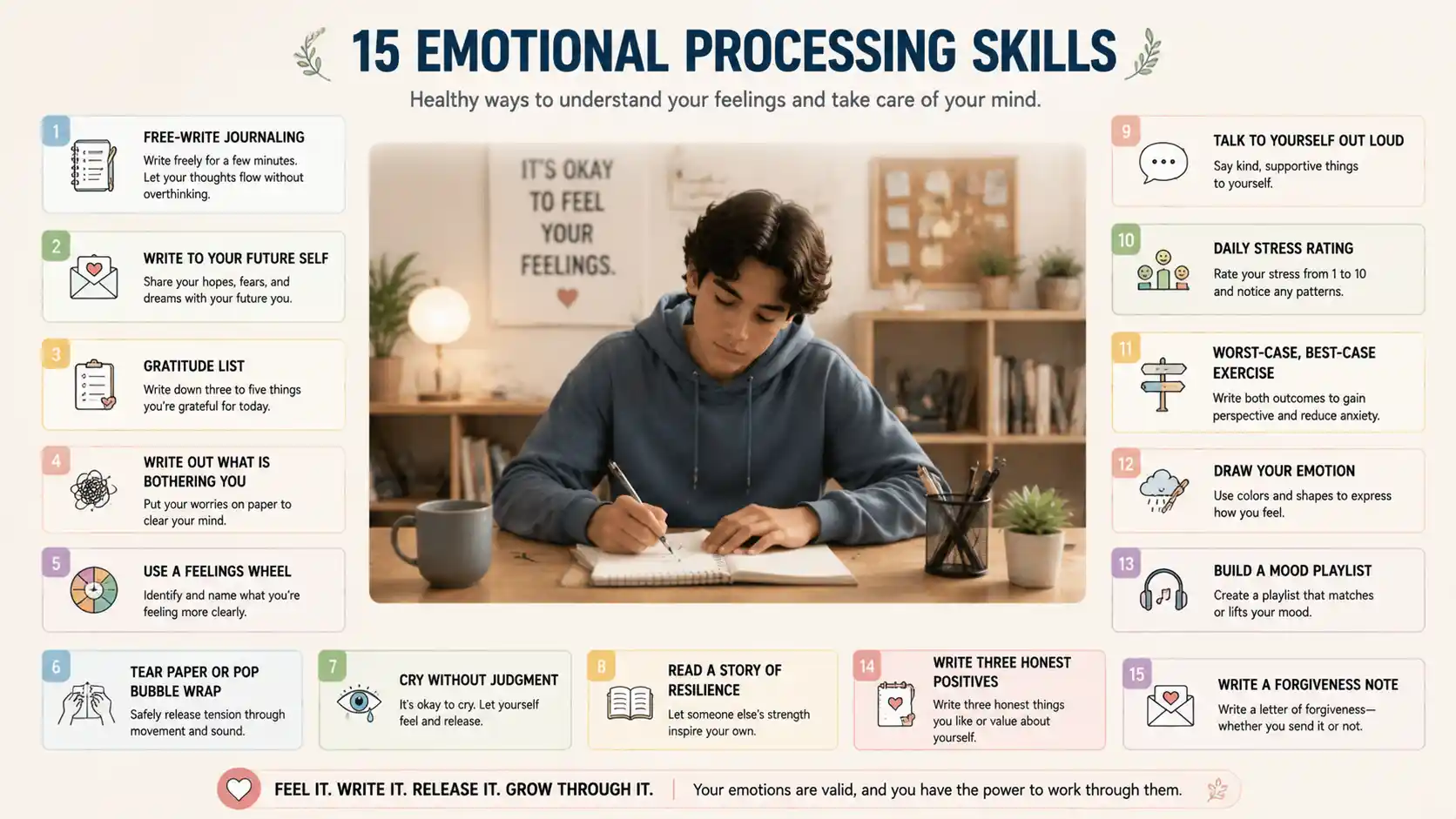
- Free-write journaling: Open a notebook and write whatever is in your head without editing, filtering, or rereading. Getting thoughts onto paper clears mental clutter and gives the brain space to settle and process.
- Write to your future self: Address a letter to yourself five years from now and describe what you are feeling, struggling with, and hoping for. This practice builds perspective by framing today as one moment in a longer, ongoing story.
- Gratitude list: Write down 10 things you feel genuinely grateful for today, including small and ordinary ones. Research from the Greater Good Science Center at UC Berkeley shows that regular gratitude practice measurably improves emotional well-being over time.
- Write out what is bothering you: Put the problem in one clear, specific sentence, then keep writing until nothing remains to say. Externalizing a worry reduces its psychological weight and often reveals it is more manageable than it felt inside the head.
- Use a feelings wheel: Look up a feelings wheel online and find the most precise word for what you are experiencing right now. Naming an emotion specifically reduces its intensity, a process supported by research in affective neuroscience.
- Tear paper or pop bubble wrap: Use the physical act of tearing old paper or popping a sheet of bubble wrap to release built-up tension. This non-harmful physical release gives the body’s stress response a clear, safe outlet.
- Cry without judgment: Allow tears to come without labeling it as weakness or stopping them too quickly. A study published in the Journal of Research in Personality found that crying produces a genuine calming effect, especially in the presence of a trusted person.
- Talk to yourself out loud: Explain what you are feeling to yourself in a calm, kind voice, as if talking to a close friend. Externalizing inner experience through speech creates a small but meaningful emotional distance from the feeling.
- Daily stress rating: Rate your stress level from 1 to 10 each morning and evening, and write one sentence about what drove it. Tracking this pattern over two weeks helps identify specific triggers and which coping tools reliably reduce stress.
- Worst-case, best-case exercise: For any situation causing anxiety, write the worst realistic outcome, the best realistic outcome, and the most likely outcome. This structured thinking exercise almost always reveals that the probable outcome is something that can be handled.
- Draw your emotion: Take paper and draw what your current feeling looks like as a shape, color, or weather pattern. Giving visual form to an abstract emotion helps the brain process it rather than push it further down.
- Build a mood playlist: Create a music playlist for each major emotional state you experience regularly, including calm, sad, energized, and frustrated. Listening to music that reflects the current mood is a research-backed tool for emotional regulation and gentle processing.
- Read a story of resilience: Find a short, real account of someone who went through something difficult and found a way forward. Reading about another person’s genuine experience builds a quiet internal sense that hard situations can be survived.
- Write three honest positives: On a difficult day, write three things that are genuinely true and positive about who you are right now. This is especially useful when self-criticism is louder than usual and evidence-based thinking is needed.
- Write a forgiveness note: Write a letter forgiving someone who hurt you, even if you have no plan to share it. The American Psychological Association links forgiveness practices to reduced anxiety and improved emotional health in adolescents.
Problem-Solving and Thinking Skills
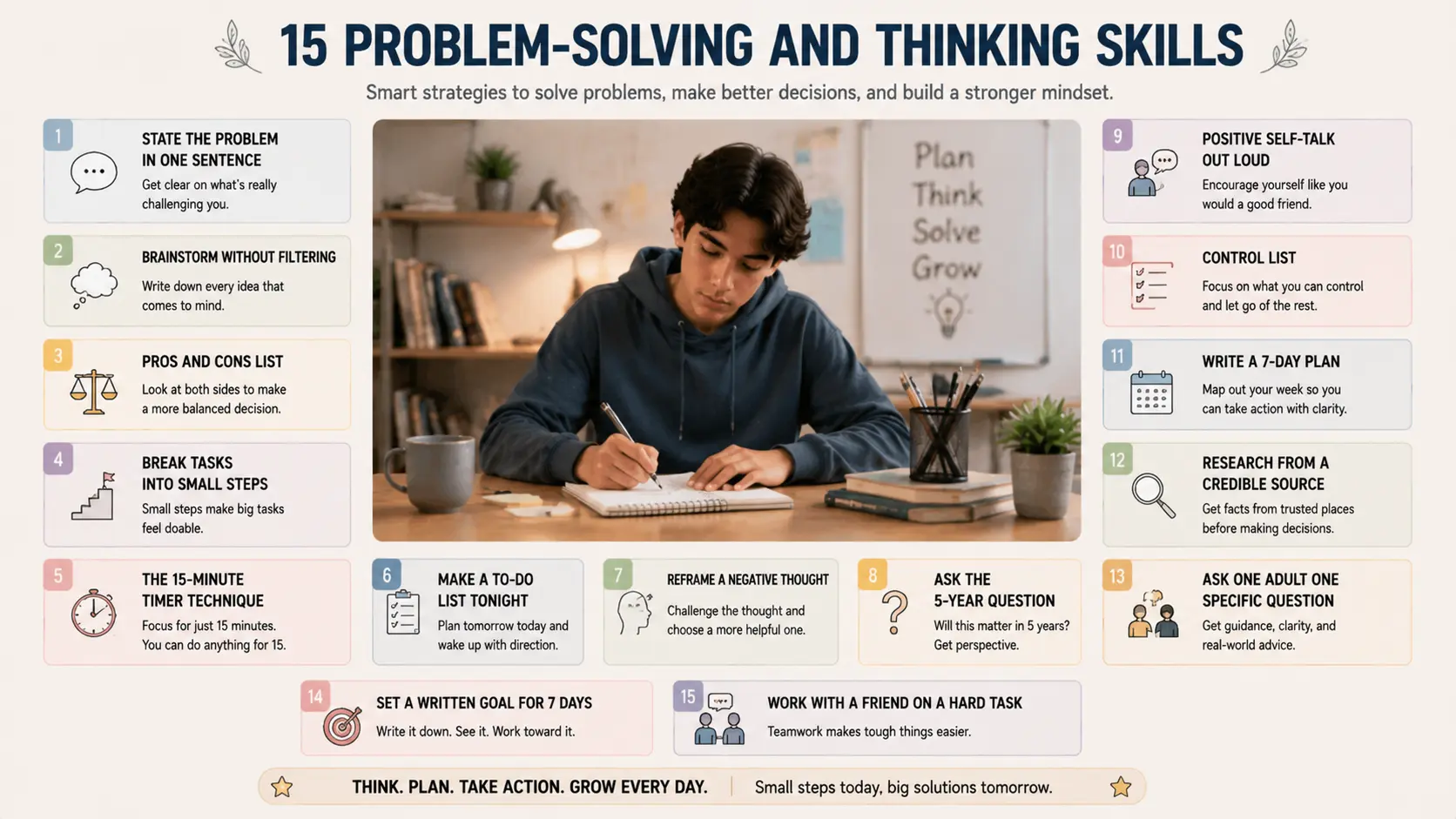
- State the problem in one sentence: Write the issue down as one specific, honest sentence to make it concrete rather than abstract. A clearly stated problem is one the brain can actually begin addressing rather than circling endlessly.
- Brainstorm without filtering: Write 3 to 5 possible solutions to the problem without judging any of them. Getting multiple options onto paper quickly reduces the tunnel vision that comes with anxiety and stress.
- Pros and cons list: Draw two columns and list the advantages and disadvantages of each option in front of you. Seeing trade-offs written out reduces the emotional weight of a decision that has been stuck in the head.
- Break tasks into small steps: Take one large task and divide it into the smallest possible individual steps, writing each one out. A list of small, specific steps is far less intimidating than a single large, undefined task sitting unstarted.
- The 15-minute timer technique: Set a 15-minute timer and commit to working on one step only until it rings. Starting is the hardest part, and a short, fixed time window removes the resistance to beginning.
- Make a to-do list tonight: Before bed, write the next day’s tasks in a simple list on paper or in a notes app. Getting tomorrow’s demands out of the head and onto paper is one of the most underrated tools for falling asleep.
- Reframe a negative thought: Take one harsh self-critical thought and write a neutral, fact-based version of it. “I always fail” becomes “I did not do well on this one test,” which is honest without being self-destructive.
- Ask the 5-year question: When a problem feels catastrophic, ask yourself honestly whether it will still matter in five years. This question places most daily stressors in a realistic perspective without dismissing the current feeling.
- Positive self-talk out loud: Stand in front of a mirror and say three honest, supportive statements to yourself in a speaking voice. Research shows that saying positive statements aloud creates a stronger psychological impact than reading or thinking them silently.
- Control list: Draw two columns, one for what you can control and one for what you cannot. Focus all problem-solving energy on the first column and make a deliberate choice to set the second one aside.
- Write a 7-day plan: Identify one specific stressor and create a simple, day-by-day plan to address it over the next week. A written plan turns a vague, ongoing anxiety into a series of concrete, manageable actions.
- Research from a credible source: When a problem involves something you do not understand, look it up from a trustworthy source such as a medical site, government page, or educational institution. Accurate information closes the gaps that anxiety fills with worst-case assumptions.
- Ask one adult one specific question: Choose a single, clear question and bring it to one trusted adult. Asking for input on one specific issue is easier than asking for general help and often produces exactly the guidance needed.
- Set a written goal for 7 days: Write one specific, realistic goal for the coming week and keep it visible. Concrete, short-term goals direct mental energy that would otherwise circle back to worry.
- Work with a friend on a hard task: Sit alongside a peer and tackle a difficult assignment or challenge together rather than alone. Working in the presence of another person raises motivation and makes the task feel less isolating.
Self-Care and Daily Habit Skills
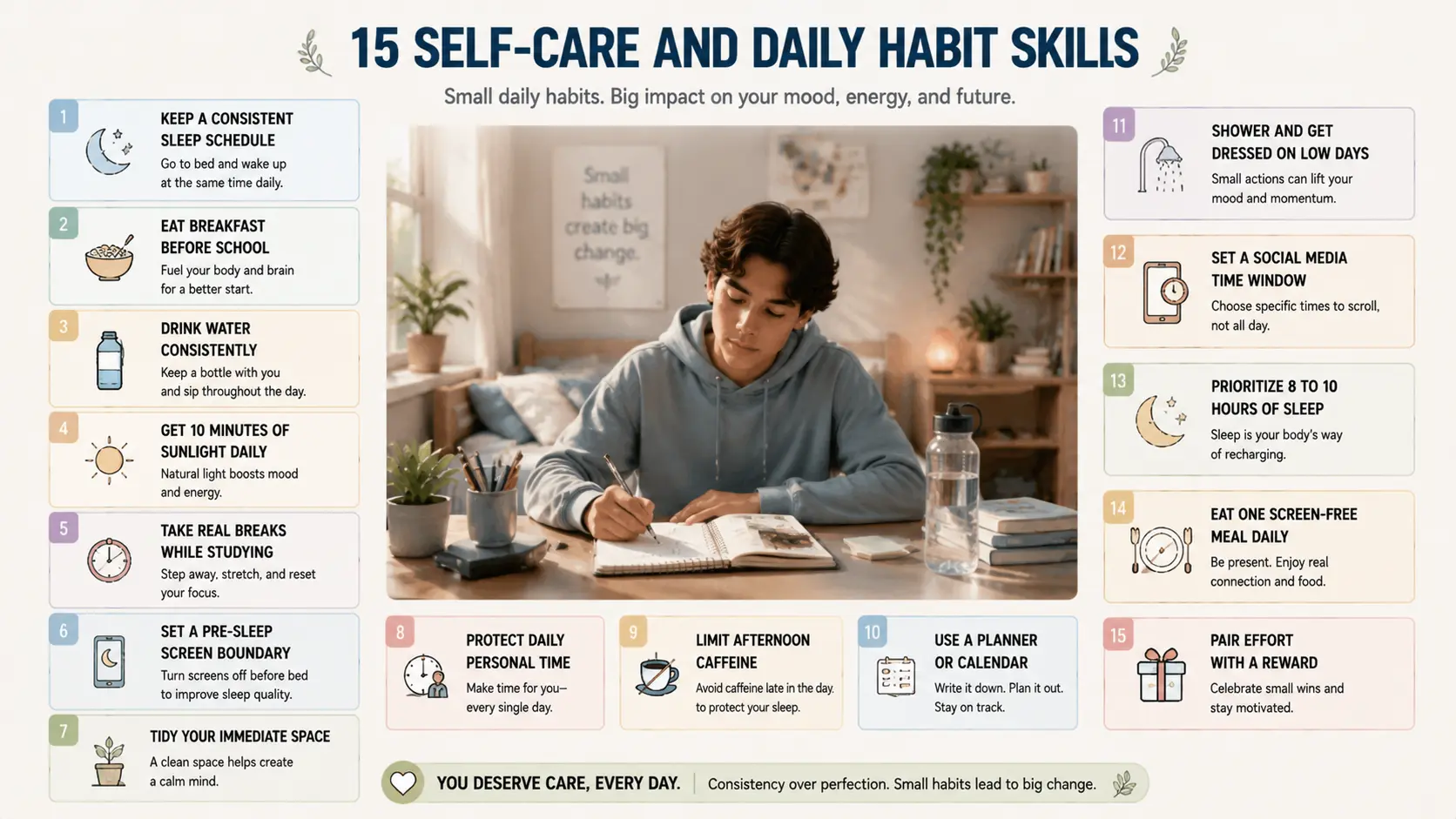
- Keep a consistent sleep schedule: Go to sleep and wake up at the same time every day, including weekends when possible. Sleep is the most powerful recovery tool available to the teen brain, and inconsistency undermines every other coping skill.
- Eat breakfast before school: Choose any available food and eat it before the school day begins, even if your appetite is low. Stable blood sugar from the morning onward directly affects mood, concentration, and the ability to manage stress.
- Drink water consistently: Keep water accessible during the school day and drink it regularly rather than waiting until thirsty. Even mild dehydration worsens cognitive performance and raises feelings of irritability.
- Get 10 minutes of sunlight daily: Step outside or sit near a window for at least 10 minutes of natural light. Natural light regulates the circadian rhythm and supports serotonin production, both of which directly affect mood.
- Take real breaks while studying: Step away from all study materials and screens during breaks, rather than switching between tasks. The brain requires genuine rest, not task-switching, to consolidate information and sustain attention over a longer session.
- Set a pre-sleep screen boundary: Decide on a firm time to put away all screens at least 30 minutes before bed. A consistent wind-down period before sleep measurably improves sleep quality in adolescents.
- Tidy your immediate space: Take 5 to 10 minutes each morning to clear and organize the space where you work or spend the most time. A clean, orderly physical environment reduces the low-level background stress that accumulates unnoticed.
- Protect daily personal time: Set aside at least 10 minutes each day for an activity you enjoy, without any performance pressure. A steady teen self-care routine treats personal enjoyment as a daily necessity, not a reward to be earned.
- Limit afternoon caffeine intake: Avoid coffee, energy drinks, and other heavily caffeinated beverages after 3 pm. Caffeine taken in the afternoon delays sleep onset and reduces sleep depth, which raises the following day’s stress and irritability.
- Use a planner or calendar: Write upcoming tasks, deadlines, and commitments in a visual planner or on your phone calendar each week. Externalizing the week’s demands reduces the mental effort required to track them and lowers background anxiety.
- Shower and get dressed on low days: Complete basic hygiene and get dressed even when motivation is very low. This behavioral activation strategy reliably lifts mood shortly after completion and restores a sense of daily agency.
- Set a social media time window: Choose two fixed daily windows to check social media, rather than checking continuously throughout the day. Reducing the frequency of social media checks lowers anxiety and improves focus in adolescents.
- Prioritize 8 to 10 hours of sleep: Treat the 8 to 10-hour sleep range as a non-negotiable part of the daily routine. According to the American Academy of Sleep Medicine, this range is the recommended minimum for teens aged 13 to 18.
- Eat one screen-free meal daily: Choose one daily meal to eat without a phone, tablet, or television present. This brief screen break gives the nervous system genuine rest and creates natural space for real conversation or quiet.
- Pair effort with a reward: After completing a task you have been avoiding, give yourself a small, specific, planned reward. Consistent reward pairing builds the internal motivation required to begin difficult tasks again in the future.
Distraction and Sensory Skills
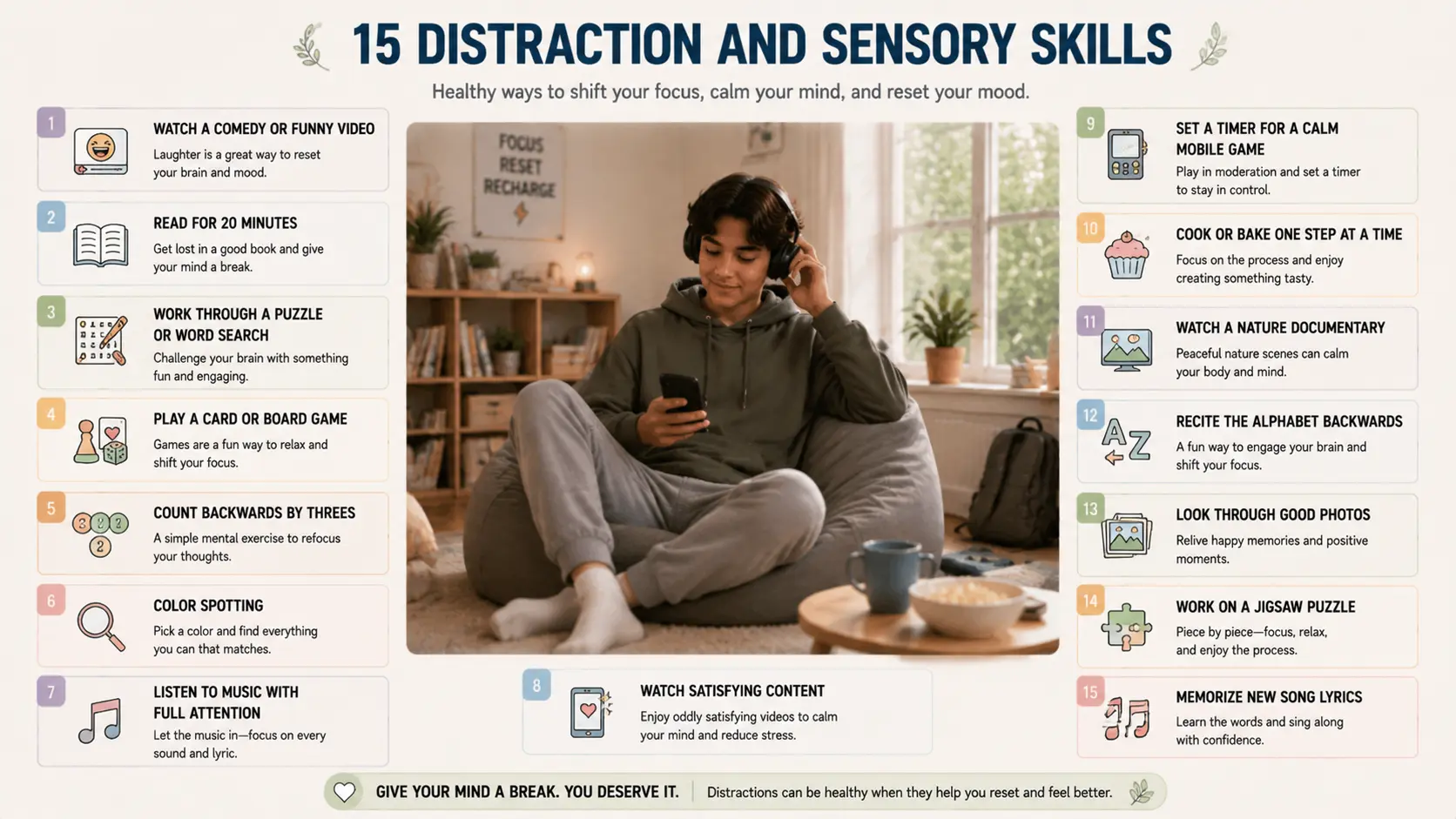
- Watch a comedy or funny video: Put on 15 to 20 minutes of something genuinely funny with no other agenda. Laughter produces a physical relaxation response and briefly suspends the body’s stress chemistry.
- Read for 20 minutes: Open a book, graphic novel, or comic that genuinely interests you and read without interruption. Reading consistently shows up in stress research as a reliable mood-lowering intervention, especially when the material is personally engaging.
- Work through a puzzle or word search: Sit with a crossword or word search and work at your own pace with no time pressure. The focused attention these puzzles require occupies the reasoning mind and naturally interrupts anxious thought spirals.
- Play a card or board game: Pull out a game and play alone or with someone in your home for 20 to 30 minutes. The structured rules and small decisions of a game direct mental energy purposefully without adding emotional load.
- Count backward by threes: Starting at 100, count backward in intervals of three: 100, 97, 94, 91. This mental task fully occupies working memory and effectively breaks the rumination loop.
- Color spotting: Choose one specific color and find every object of that color in your immediate space. This attention-based exercise pulls the mind out of abstract thought and into direct, grounded sensory observation.
- Listen to music with full attention: Choose one song and listen to it completely, noticing each instrument, lyric, and transition. Intentional music listening activates different neural pathways than background music and produces a more lasting calming effect.
- Watch satisfying content: Find a focused video about organizing, crafting, cooking, or nature and watch it without multitasking. These low-stimulation but engaging videos create a genuinely restful mental state that reduces overall tension.
- Set a timer for a calm mobile game: Put a 10 to 15-minute limit on a low-pressure mobile game before starting, and stop when the timer ends. Brief, time-limited gaming can serve as a genuine mental reset when used intentionally.
- Cook or bake one step at a time: Choose a recipe and follow it step by step, reading each instruction before acting. The sequential, sensory, and productive nature of cooking makes it one of the most naturally absorbing distraction-based coping tools.
- Watch a nature documentary: Find a documentary about an animal, landscape, or natural event and watch 20 to 30 minutes with full attention. The slow pacing and visual richness of nature content shift the brain into a lower-stimulation, calmer state.
- Recite the alphabet backward: Say the letters from Z back to A without looking them up and start over if you lose your place. This cognitive task absorbs just enough attention to interrupt anxious thoughts without being frustrating.
- Look through good photos: Open a folder of photos from happy or neutral memories and spend 10 minutes going through them. Visual exposure to positive memories activates the brain regions associated with warmth and calm.
- Work on a jigsaw puzzle: Start a 300 to 500-piece puzzle over multiple sessions with no pressure to finish quickly. The quiet, repetitive, visual-spatial nature of puzzle work creates a steady, reliable calm that builds gradually.
- Memorize new song lyrics: Choose a song you do not know yet and work on memorizing the lyrics word for word. Active memorization requires sufficient cognitive engagement to prevent rumination and is more enjoyable than most study tasks.
Digital Wellness and Screen-Free Skills
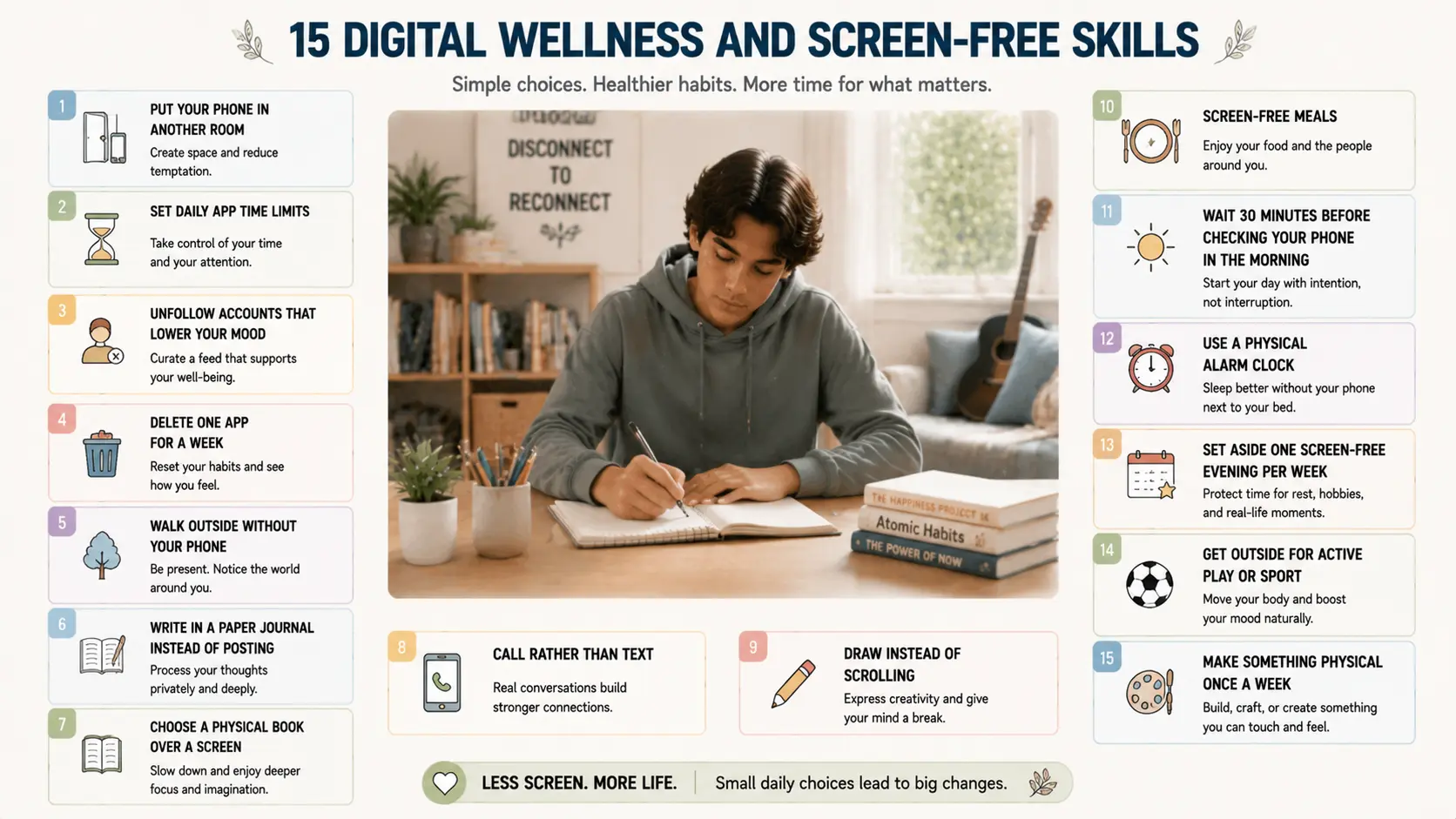
- Put your phone in another room: Place your device in a different room for at least 30 minutes and notice how your mind feels. Most teens report a surprising level of mental relief within just a few minutes of genuine separation from their phones.
- Set daily app time limits: Use the screen time management tools built into your phone to cap the daily use of your most-used apps. Automatic limits remove the ongoing mental effort of deciding when to stop scrolling.
- Unfollow accounts that lower your mood: Scroll through who you follow and unfollow or mute any account that consistently leaves you feeling worse. The content you see daily shapes your emotional baseline in ways that accumulate quietly over time.
- Delete one app for a week: Remove one social media app from your phone for seven full days and pay attention to how your mood and focus change. Even one week away from a high-stimulation app often produces a noticeable shift in anxiety levels.
- Walk outside without your phone: Leave your device at home for a 15-minute walk and let the time be genuinely phone-free. Walking without a device is one of the few situations in which the brain processes thoughts spontaneously without external input competing.
- Write in a paper journal instead of posting: Write your thoughts in a physical notebook rather than sharing them on social media. What you write privately tends to be more honest and more relieving than what you post publicly.
- Choose a physical book over a screen: Pick up a printed book for one reading session per week and stay with it for at least 20 minutes. Reading on paper removes the proximity of notifications and the eye strain that screens create.
- Call rather than text: When you want to connect with someone, make a voice call rather than send a string of messages. Voice conversation is richer and more satisfying than text and requires less emotional energy to interpret.
- Draw instead of scrolling: When boredom appears, and the reflex is to open an app, pick up a pen and doodle on paper instead. Replacing one habit with a specific physical alternative is more effective than simply intending to use the phone less.
- Screen-free meals: Commit to eating at least one meal each day without your phone on the table. Even a brief break from the device during meals reduces the background anxiety that comes from constant connectivity.
- Wait 30 minutes before checking your phone in the morning: After turning off your alarm, avoid your phone for the first 30 minutes of the day. The mental tone set in those first 30 minutes affects the entire morning more than most teens realize.
- Use a physical alarm clock: Switch to a standalone alarm clock and charge your phone outside the bedroom overnight. Removing the phone from the sleep environment is one of the most effective steps for improving teen sleep quality.
- Set aside one screen-free evening each week: spend it entirely without screens. This regular break gives the nervous system a weekly reset it rarely gets otherwise.
- Get outside for active play or sport: Organize or join an outdoor game, street sport, or yard activity with friends or siblings rather than meeting around a screen. Active, outdoor social time addresses both physical and social needs that screen-based time does not.
- Make something physical once a week: Commit to one hands-on project per week, such as origami, clay, crafts, or drawing, done without screens or background noise. Re-engaging the hands through tactile making replenishes focused attention that screen-heavy days deplete.
Healthy vs. Unhealthy Coping Skills for Teens
Every teen tries to manage stress in some way. The question is whether the method they reach for builds them up or quietly makes things harder over time.
| Situation | Unhealthy Response | Healthier Alternative |
|---|---|---|
| Failed a test | Skip school | Talk to the teacher and make a plan |
| Fight with a friend | Refuse to talk | Journal, then have a calm conversation |
| Anxious before an event | Skip it | Use box breathing, attend briefly |
| Overwhelmed by schoolwork | Scroll on social media | Set a timer and do one small step |
| Angry at family | Yell or shut down | Walk outside, cool down, then return |
| Persistently sad | Sleep all day | Move gently, reach out to someone |
| Pre-exam stress | Pull all-nighters | Study in short sessions, then sleep |
Younger children can use many of the same strategies, but the tools often need to be simpler and more sensory-based.
Kids aged 5 to 12 tend to respond especially well to pinwheel breathing, glitter calm-down jars, and naming living things outdoors. Drawing feelings with colors, counting to 10, and gentle physical movement like dancing all transfer naturally to children, too.
Kids learn coping skills for children best when a trusted adult models them first during a calm, ordinary moment, not in the middle of a difficult one.
Final Take
Coping skills for teens are not a quick fix. They are habits, built over time through consistent practice and self-awareness.
The strategies in this guide cover breathing, movement, creativity, mindfulness, connection, and more, because different emotions call for different tools. What works on a hard school day may not work during a family conflict.
Building a personal toolkit takes time, but it gets easier with each attempt. A teen who builds steady coping skills handles setbacks differently.
They recover faster and ask for help without shame. Start with one category today, try one skill, and see what happens next.