

Finding the right mental health professional is not always straightforward.
When comparing counselor vs therapist, the titles can seem interchangeable, yet their training, scope of practice, and treatment approaches can differ.
Knowing those differences can make it easier to choose the support that fits your needs.
This article explains what counselors and therapists do, the issues they treat, their education and licensing requirements, and where their roles overlap.
It also covers costs, insurance considerations, and practical situations where one professional may be a better fit than the other, helping you make a more informed decision about your mental health care.
What Is a Counselor?
A counselor is a licensed mental health professional who helps people work through specific life challenges, emotional concerns, or behavioral issues. Counselors often focus on present-day problems, goal setting, coping skills, and practical solutions that help clients improve their daily lives.
Types of Counselors
| Type of Counselor | What They Do |
|---|---|
| Licensed Professional Counselor (LPC) | Provides mental health counseling for emotional, behavioral, and relationship concerns. |
| Licensed Mental Health Counselor (LMHC) | Similar to an LPC, though the title varies by state licensing laws. |
| School Counselor | Helps students with academic planning, social development, and personal challenges. |
| Addiction Counselor (CADC/LADC) | Supports people dealing with substance use and recovery-related issues. |
| Career Counselor | Assists with career planning, job transitions, and workplace concerns. |
| Rehabilitation Counselor | Helps individuals manage disabilities and return to work or daily activities. |
| Marriage and Couples Counselor | Works with couples to improve communication and relationship functioning. |
What Does a Counselor Do?
Counselors help people work through challenges that affect their daily lives, relationships, emotions, or goals. Their work is often focused on practical support, problem-solving, and helping clients build healthier coping skills.
- Active Listening: Listens carefully to concerns and provides a supportive, judgment-free space.
- Goal Setting: Helps clients identify goals and create realistic action plans.
- Coping Strategies: Teaches techniques for managing stress, anxiety, and everyday challenges.
- Problem Solving: Helps clients work through personal, academic, career, or relationship concerns.
- Referrals: Connect clients with specialists or additional services when needed.
- Session Structure: Guides conversations with a clear focus on progress and solutions.
What Is a Therapist?
A therapist is a licensed mental health professional trained to treat emotional, behavioral, and psychological conditions. The term therapist serves as an umbrella label that may include psychotherapists, marriage and family therapists, and licensed clinical social workers.
Types of Therapists
| Type of Therapist | What They Do |
| Licensed Marriage and Family Therapist (LMFT) | Specializes in relationships, couples counseling, and family dynamics. |
| Licensed Clinical Social Worker (LCSW) | Provides therapy while considering social, environmental, and family influences. |
| Psychotherapist | Uses talk therapy methods to address emotional and psychological concerns. |
| Cognitive Behavioral Therapist (CBT Therapist) | Focuses on changing unhelpful thinking and behavior patterns. |
| Dialectical Behavior Therapist (DBT Therapist) | Helps people build emotional regulation and distress tolerance skills. |
| Trauma Therapist | Works with trauma-related conditions using methods such as EMDR and somatic therapies. |
| Physical Therapist | Treats physical movement and rehabilitation issues, not mental health conditions. |
What Does a Therapist Do?
Therapists help people address emotional, behavioral, and psychological challenges that may affect their well-being and daily functioning. They often work with clients over time to identify patterns, develop treatment plans, and support lasting change.
- Assessment: Evaluates symptoms, concerns, and mental health history.
- Treatment Planning: Develops a personalized plan tailored to the client’s needs and goals.
- Clinical Diagnosis: May diagnose mental health conditions when permitted by licensure.
- Therapy Techniques: Uses approaches such as CBT, DBT, EMDR, and talk therapy.
- Ongoing Support: Helps clients work through emotional and behavioral patterns over multiple sessions.
- Progress Monitoring: Tracks improvement and adjusts treatment strategies when needed.
Counselor vs Therapist: Side-by-Side Comparison
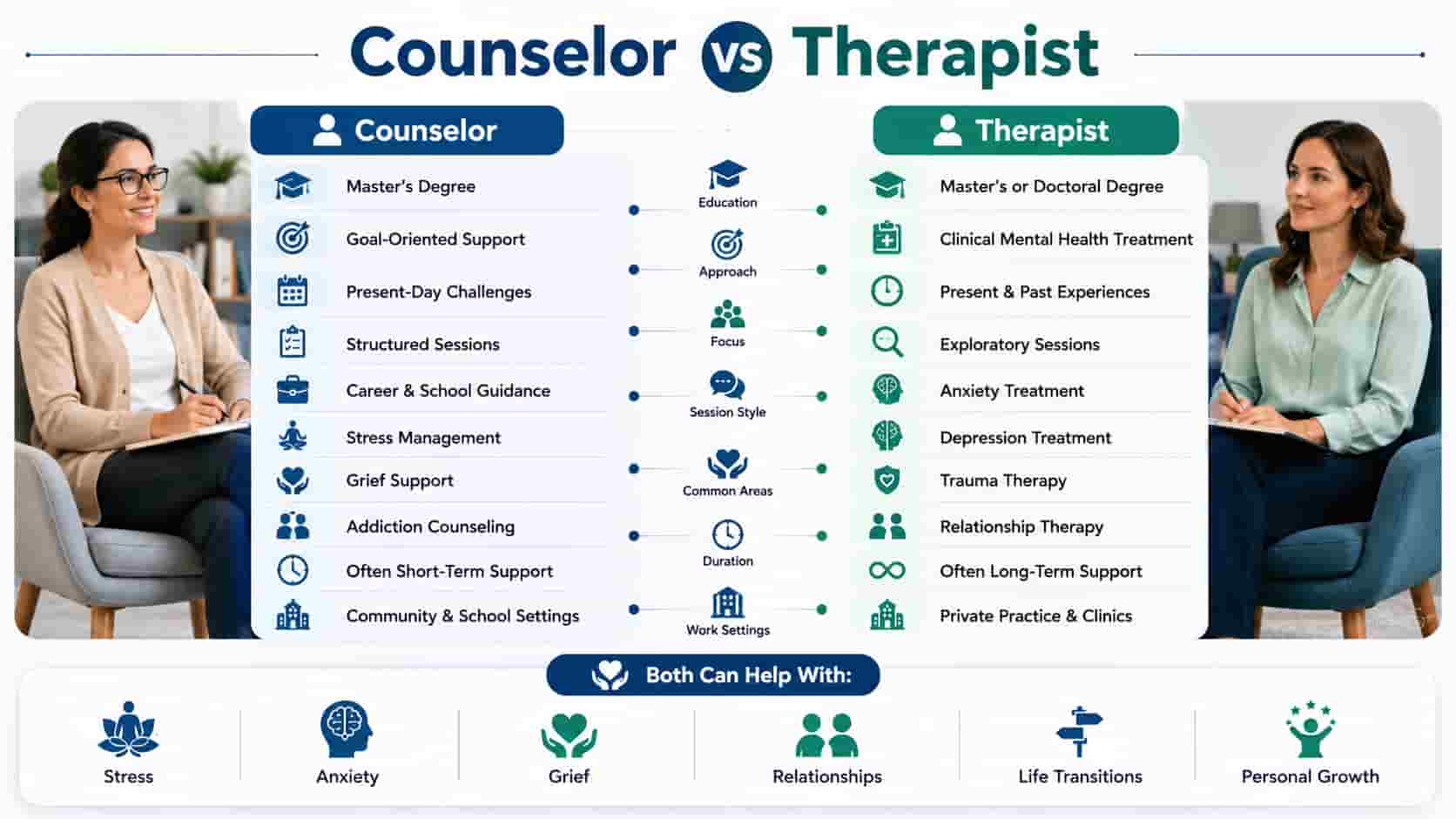
Choosing between a counselor and a therapist becomes easier when you compare their training, focus, and day-to-day work. While both provide mental health support, their roles can differ depending on their education, licensure, and clinical responsibilities.
| Feature | Counselor | Therapist |
|---|---|---|
| Degree Required | Master’s degree in counseling or related field | Master’s or doctoral degree |
| Licensing | LPC, LMHC, NCC, and others, depending on the state | LMFT, LCSW, LPC, and other clinical licenses |
| Focus | Present-day challenges and goal-oriented support | Emotional, behavioral, and psychological treatment |
| Session Style | Structured and solution-focused | Exploratory and insight-focused |
| Diagnosis Authority | Limited in many states | Often permitted with clinical licensure |
| Treatment Length | Short to medium term | Medium to long term |
| Common Settings | Schools, nonprofits, clinics, EAPs | Private practice, hospitals, clinics |
| Typical Cost Range | $50 to $150 per session | $75 to $250 per session |
Searching for the difference between a counselor and a therapist, I find there is considerable overlap. Both professionals help clients improve mental health, build coping skills, and work through difficult situations.
The biggest differences usually involve clinical scope, diagnosis authority, and the depth of treatment provided. State licensing laws can also affect what each professional is allowed to do.
Reliable licensing and credential information is available through the American Counseling Association and the National Board for Certified Counselors.
Key Differences Between a Counselor and a Therapist
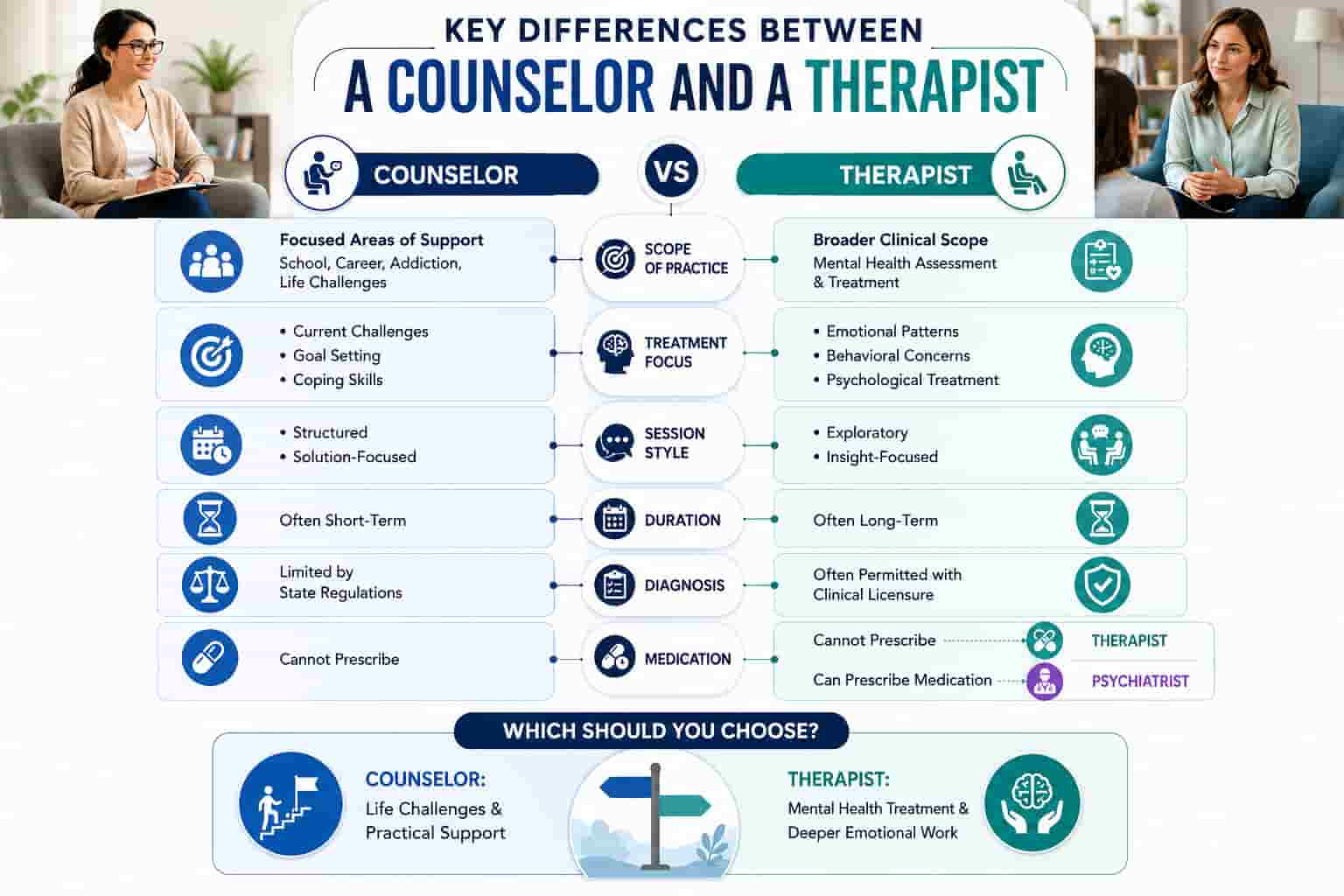
Although counselors and therapists share many skills, a few distinctions can influence which professional is the better fit. The differences involve scope of practice, treatment depth, and diagnostic authority.
1. Scope of Practice
Counselors often work within a specialty area such as school counseling, career counseling, addiction recovery, or general mental health support.
Therapists typically have a broader clinical scope. They may treat a wider range of emotional, behavioral, and psychological conditions, including more complex mental health concerns that require ongoing treatment.
2. Short-Term vs Long-Term Focus
Counselors are frequently chosen for short-term support related to specific challenges. Examples include job loss, academic stress, grief, relationship difficulties, or adjusting to a major life change.
Therapists are more commonly associated with longer-term treatment. They often help clients address recurring emotional patterns, trauma, chronic anxiety, depression, personality disorders, and other concerns that may require extended care.
This distinction is not absolute. Some counselors work with clients for years, while some therapists provide brief, focused treatment.
3. Who Can Diagnose a Mental Health Condition?
Can a counselor diagnose you?
In many states, licensed counselors have limited authority to formally diagnose mental health conditions. Licensed therapists, including LCSWs and LMFTs, are often permitted to diagnose as part of clinical treatment. Rules vary by state and license type.
Only psychiatrists and other licensed medical doctors can prescribe psychiatric medication. In some cases, therapy and psychiatry work together, with a therapist providing ongoing counseling while a psychiatrist manages medication when needed.
This is one of the most important differences when comparing a counselor vs. a therapist for anxiety, depression, trauma, or other mental health conditions.
4. Settings Where Each Professional Works
Common workplaces for counselors:
- Schools and universities
- Community mental health centers
- Nonprofit organizations
- Private practices
- Employee Assistance Programs (EAPs)
- Addiction treatment facilities
Common workplaces for therapists:
- Private practices
- Hospitals
- Outpatient mental health clinics
- Community mental health centers
- Telehealth platforms
- Residential treatment programs
Where Counselors and Therapists Overlap

Masses assume counselors and therapists perform completely different jobs. In reality, there is substantial overlap between the two professions.
Both help people improve emotional well-being, manage stress, strengthen coping skills, and build healthier relationships. Both receive graduate-level training, complete supervised clinical experience, and follow professional ethics and confidentiality requirements.
For common concerns such as stress, grief, relationship difficulties, and mild anxiety, either professional may be able to provide effective support. The quality of the therapeutic relationship and the professional’s experience with your specific concern often matter more than the title alone.
Shared Skills and Techniques
Both counselors and therapists commonly use:
- Active listening
- Empathy and emotional support
- Goal-setting strategies
- Cognitive Behavioral Therapy (CBT)
- Problem-solving techniques
- Stress-management tools
- Confidential treatment practices under HIPAA regulations
Both professions also require supervised clinical experience before independent practice.
Conditions Both Can Help With
Counselors and therapists may both help clients manage:
- Mild to moderate anxiety
- Grief and loss
- Relationship communication challenges
- Life transitions
- Work stress and burnout
- Self-esteem concerns
- Adjustment difficulties
- General emotional distress
For many people seeking support for everyday mental health concerns, either option can be appropriate.
When Either Professional Can Help You
If you are experiencing stress, relationship challenges, grief, life transitions, or mild anxiety, both counselors and therapists can often provide meaningful support. The most important factor is finding someone who is licensed, experienced with your concern, and with whom you feel comfortable working consistently.
Misconceptions About Counselors and Therapists
Misconception: Counselors and Therapists Are the Same Thing
Truth: They share many skills and treatment methods, but their education, licensing, and scope of practice can differ depending on the profession and state regulations.
Misconception: Therapists Are More Qualified Than Counselors
Truth: Qualifications depend on training, licensure, and experience. A counselor who specializes in a specific issue may be a better fit than a therapist without that expertise.
Misconception: Counselors Only Help With School or Career Problems
Truth: Licensed counselors help with anxiety, depression, grief, relationship concerns, substance use issues, stress, and many other mental health challenges.
Misconception: You Need a Diagnosis to See a Therapist
Truth: People seek therapy for many reasons, including stress, personal growth, relationship issues, and life changes, even when no mental health diagnosis is involved.
How to Choose Between a Counselor and a Therapist?
Choosing between a counselor and a therapist depends on the type of support you need. A counselor may be a good fit if you are dealing with a specific life challenge, such as work stress, grief, relationship difficulties, or a major transition, and want practical coping strategies.
A therapist may be a better choice if you are experiencing ongoing anxiety, depression, trauma, or other mental health concerns that require deeper clinical treatment.
Consider your goals, the severity of your symptoms, your preferred treatment style, and your insurance coverage. If you are unsure, either professional can help assess your needs and recommend the next step.
Conclusion
When comparing counselor vs therapist, the most important takeaway is that both professionals provide valuable mental health support, but their training, scope of practice, and treatment approaches can differ.
Counselors often focus on present-day challenges and practical coping strategies, while therapists frequently address deeper emotional and psychological concerns.
Understanding these differences helps you choose the right level of care sooner and with greater confidence. The best choice depends on your goals, symptoms, budget, and personal preferences.
For additional support, consider reading related resources on finding a therapist, types of therapy, and mental wellness strategies.