

Mental health care involves several types of professionals, and many people are unsure where to start. One of the most common questions is the difference between a psychiatrist and a psychologist.
Both help people manage mental health conditions, emotional challenges, and behavioral concerns, yet their training, treatment methods, and responsibilities differ. Knowing these distinctions can save time, reduce frustration, and help people find suitable support sooner.
This article explains what each professional does, how their qualifications compare, when to seek their help, and how they often work together to support better mental health outcomes.
What Is a Psychiatrist?
A psychiatrist is a medical doctor who specializes in diagnosing, treating, and preventing mental health disorders. After completing medical school and psychiatric residency training, psychiatrists gain expertise in how mental health conditions interact with physical health, brain function, medications, and biological factors.
They can evaluate symptoms, diagnose psychiatric disorders, prescribe medications, monitor treatment responses, and adjust medications when needed. Psychiatrists often treat conditions such as major depression, bipolar disorder, schizophrenia, severe anxiety disorders, post-traumatic stress disorder, and attention-deficit hyperactivity disorder.
Some psychiatrists also provide psychotherapy, though many focus primarily on medication management and medical aspects of treatment.
Types of Psychiatry Specializations
Mental health needs vary from person to person, which is why psychiatrists can specialize in different areas of care. These specializations focus on specific age groups, conditions, or treatment settings.
| Specialization | Focus |
|---|---|
| Child and Adolescent Psychiatry | Mental health care for children and teens |
| Geriatric Psychiatry | Mental health care for older adults |
| Addiction Psychiatry | Substance use and addiction treatment |
| Forensic Psychiatry | Mental health issues related to legal cases |
| Emergency Psychiatry | Psychiatric crisis and emergency care |
| Community Psychiatry | Mental health services within communities |
What Is a Psychologist?
A psychologist is a mental health professional trained to assess emotions, behaviors, thoughts, and psychological functioning. Most psychologists earn a Doctor of Philosophy (PhD) or Doctor of Psychology (PsyD) degree and receive extensive training in psychotherapy, psychological testing, and behavioral interventions.
They help individuals identify thought patterns, develop coping skills, improve emotional well-being, and address mental health concerns through evidence-based therapeutic approaches.
Psychologists diagnose many mental health conditions and often work with clients over longer periods to support lasting behavioral and emotional changes.
Areas of Psychology Specialization
Psychologists can focus on different areas of mental health, behavior, and human development. Each specialization works with specific populations, concerns, or treatment approaches.
| Psychology Specialization | Focus |
|---|---|
| Clinical Psychology | Diagnosing and treating mental health conditions |
| Counseling Psychology | Emotional, social, and life challenges |
| Neuropsychology | Brain function, memory, and cognitive health |
| Child Psychology | Mental and behavioral health in children |
| Health Psychology | Connection between mental and physical health |
| Forensic Psychology | Psychological issues within legal settings |
Psychiatrist vs Psychologist: Side-by-Side Comparison
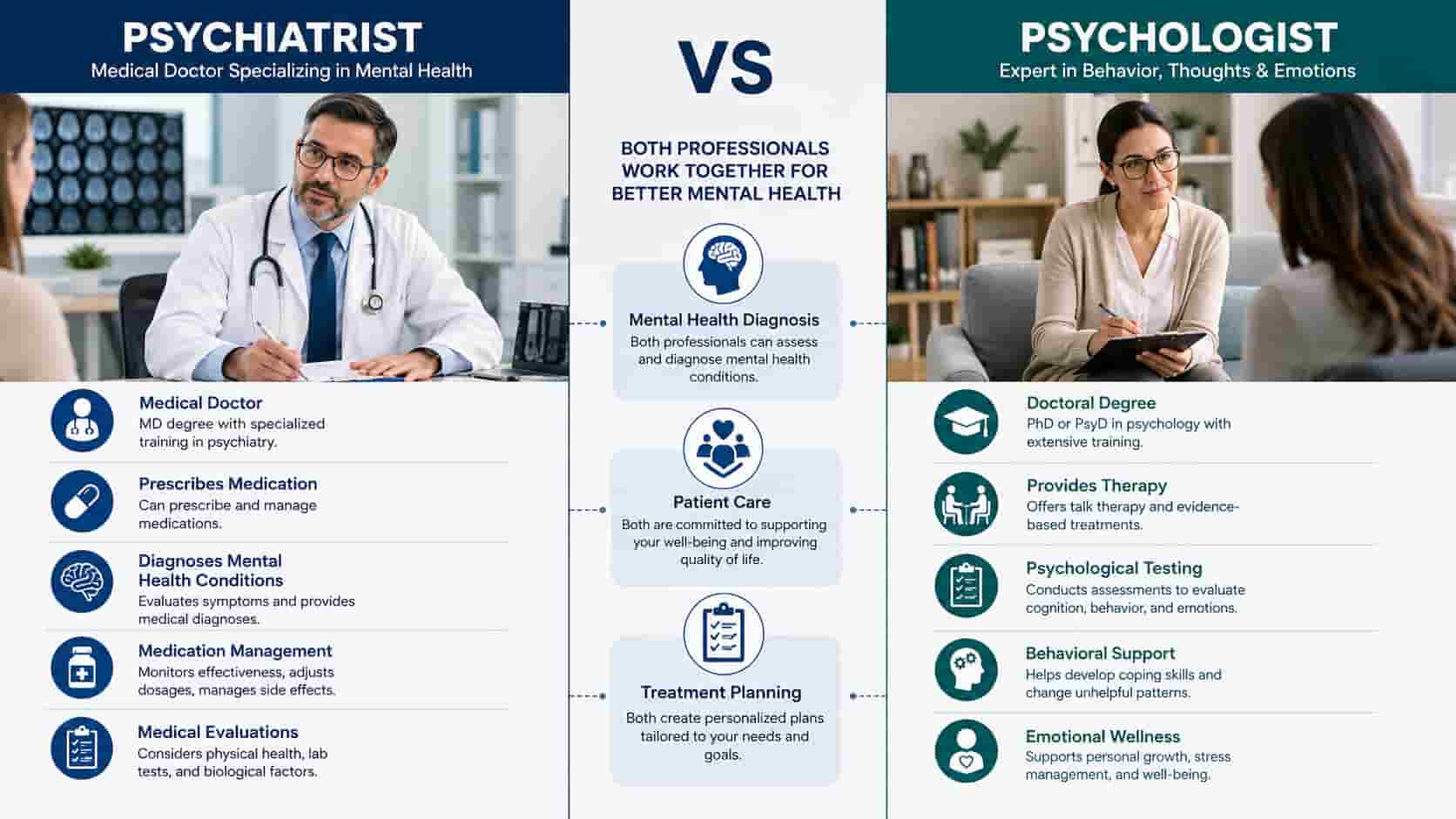
Although both professionals treat mental health conditions, their training and treatment methods differ. Knowing how they compare can make choosing the right provider much easier.
1. Education
Psychiatrists attend medical school and complete psychiatric residency training. Their education focuses on medicine, biology, and the treatment of mental illnesses through medical interventions.
Psychologists earn doctoral degrees centered on human behavior, emotions, psychological assessment, and psychotherapy techniques.
2. Treatment Approaches
Psychiatrists often focus on medication management and medical evaluations. Psychologists primarily use therapy approaches such as Cognitive Behavioral Therapy (CBT), Acceptance and Commitment Therapy (ACT), and other counseling methods.
When comparing therapy and psychiatry, therapy focuses on changing thoughts, behaviors, and coping patterns, while psychiatry often addresses symptoms through medical treatment when appropriate.
3. Clinical Responsibilities
Psychiatrists assess mental health from both medical and psychiatric perspectives. Psychologists focus heavily on behavioral assessment, therapy, and psychological testing to identify patterns affecting mental well-being.
4. Patient Interaction
Psychology sessions often last 45 to 60 minutes and occur weekly or biweekly. Psychiatric appointments may be shorter, especially when focused on medication reviews and treatment adjustments.
5. Treatment Goals
Psychologists often help clients build coping skills, improve emotional regulation, and address behavioral concerns. Psychiatrists frequently focus on symptom stabilization and medication management alongside broader treatment plans.
6. Workplace Settings
Both may work in hospitals, clinics, and private practices. Psychologists are also commonly found in schools, universities, and research settings.
7. Average Appointment Structure
Psychologists generally spend more time discussing emotions, behaviors, relationships, and coping strategies. Psychiatrists may review symptoms, medications, side effects, and treatment effectiveness during appointments.
8. Who Can Diagnose Mental Health Conditions?
Both psychiatrists and psychologists can diagnose many mental health disorders. Psychiatrists may combine psychiatric evaluations with medical assessments to rule out physical causes of symptoms. Psychologists often use interviews, behavioral observations, and psychological testing to reach diagnostic conclusions.
9. Who Can Prescribe Medication?
This is one of the biggest distinctions in the psychiatrist vs psychologist comparison. Psychiatrists can prescribe medications because they are licensed medical doctors.
Most psychologists cannot prescribe medication, although a small number can do so in specific jurisdictions after additional training and certification
Real-World Examples: Psychiatrist vs Psychologist
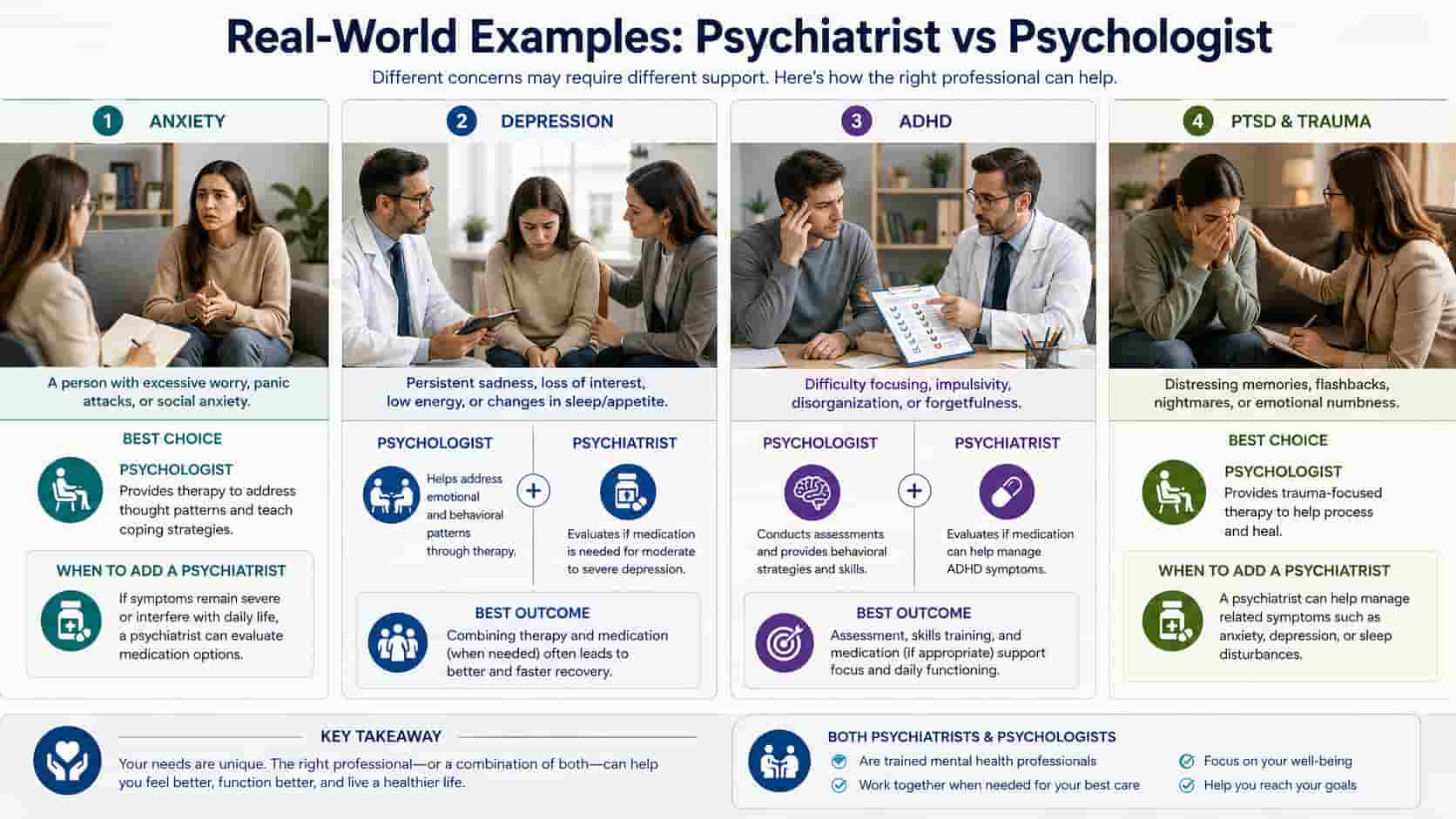
The right professional often depends on the specific challenge a person is facing.
For example, someone with anxiety may start with a psychologist to learn coping strategies and address thought patterns, while a psychiatrist may become involved if symptoms remain severe or medication is being considered.
A person experiencing depression may benefit from therapy to address emotional and behavioral concerns, with psychiatric support added if symptoms significantly affect daily functioning.
For ADHD, a psychologist can assess attention and behavior patterns, while a psychiatrist can evaluate medication options.
In cases of PTSD or trauma, psychologists often provide trauma-focused therapy, while psychiatrists may help manage related symptoms such as anxiety, depression, or sleep disturbances.
When Should You See a Psychiatrist?
Mental health symptoms can vary in severity, and some situations may require medical evaluation alongside emotional support. A psychiatrist is often the right choice when medication or specialized psychiatric care may be needed.
- Severe Depression: Seek psychiatric care when depression affects daily functioning, sleep, appetite, work performance, or personal safety.
- Bipolar Disorder: A psychiatrist can diagnose and manage bipolar disorder, especially when manic or depressive episodes become difficult to control.
- Psychosis: Hallucinations, delusions, or a loss of contact with reality require prompt psychiatric evaluation and treatment.
- Medication Evaluation: Consider a psychiatrist when medication may help manage symptoms or when current medications need adjustment.
- Treatment-Resistant Symptoms: A psychiatric assessment may be helpful if symptoms continue despite therapy or previous treatment attempts.
- Complex Mental Health Conditions: People with multiple mental health conditions often benefit from psychiatric care to coordinate treatment and medication management.
When Should You See a Psychologist?
Mental health concerns are not always severe enough to require medication. A psychologist can help people understand their thoughts, emotions, and behaviors while providing practical coping strategies.
- Ongoing Emotional Challenges: Consider a psychologist when anxiety, sadness, stress, or other emotional concerns persist and affect daily life.
- Stress Management and Coping Skills: A psychologist can help develop healthy coping techniques for work, school, family, or personal stress.
- Relationship and Family Issues: Therapy can provide support for communication problems, conflicts, relationship concerns, and family dynamics.
- Trauma Recovery: A psychologist can help process traumatic experiences and build healthy strategies for managing emotional triggers.
- Personal Growth and Behavioral Change: Psychologists can support goals such as improving self-esteem, changing unhealthy habits, and building emotional resilience.
Cost, Insurance, and Accessibility Differences
Costs vary by provider, location, insurance plan, session length, and care setting. Psychiatrist appointments may cost more because they involve medical care, while therapy costs depend on credentials and visit frequency.
| Cost Factor | Psychiatrist | Psychologist |
| Typical Visit Type | Evaluation or medication follow-up | Therapy or assessment |
| Session Length | Often shorter follow-ups | Often longer therapy sessions |
| Typical Cost Without Insurance | $200 to $500 for initial visits | $100 to $250 per session |
| Insurance Coverage | Often covered under mental health benefits | Often covered under mental health benefits |
| Access Issues | Longer wait times in some areas | More provider options in many areas |
| Telehealth Availability | Common for medication follow-ups | Common for therapy sessions |
Before booking, call the provider’s office or check your insurance portal. Ask about visit costs, cancellation policies, telehealth options, referral requirements, and whether the provider is in network.
Disclaimer: This article is for educational purposes only and should not replace professional medical advice, diagnosis, or treatment from a qualified healthcare provider.
How to Choose Between a Psychiatrist and a Psychologist
Choosing between a psychiatrist and a psychologist depends on symptoms, treatment preferences, and personal circumstances.
A psychiatrist may be the better choice when medication could be part of treatment, symptoms are severe, or there is concern about conditions such as bipolar disorder, psychosis, or major depression.
A psychologist may be a better fit when the goal is therapy, emotional support, behavior change, trauma recovery, stress management, or relationship improvement. If uncertainty remains, starting with either professional is reasonable because referrals between providers are common.
Depending on symptoms and treatment goals, both therapy and psychiatric care may play a role in recovery.
Key Takeaways
When comparing a psychiatrist vs. a psychologist, the main difference comes down to training, treatment methods, and medication authority.
Psychiatrists are medical doctors who can diagnose conditions and prescribe medication, while psychologists focus on therapy, behavior change, and psychological assessment.
Both play valuable roles in mental health care and often work together to support recovery and long-term well-being. Choosing the right professional depends on symptoms, goals, and treatment needs.
Whether someone starts with therapy, psychiatry, or both, seeking help early can improve outcomes and provide the support needed to manage mental health challenges effectively.