

You want mental health support. You search online and suddenly find yourself looking at two very similar-sounding options: a therapist and a psychologist.
Both help people with mental and emotional concerns. Both work in similar clinical settings. So which one do you actually need? The confusion is completely understandable.
The difference between a therapist and a psychologist runs deeper than the title. It comes down to training level, scope of practice, and what each professional can legally do for you.
This post breaks down how they differ, what they treat, what they cost, and how to choose the right fit.
What Is a Therapist?
A therapist is a licensed mental health professional who helps people work through emotional, behavioral, and relational challenges using talk-based treatment.
The title “therapist” is an umbrella term. It covers multiple licensed credentials, each with its own training path and scope of practice. Most therapists hold a master’s degree and complete thousands of supervised clinical hours before receiving their state license.
They work with individuals, couples, families, and children on concerns from anxiety and depression to grief, stress, and relationship conflict.
| License | Full Title | Primary Focus |
|---|---|---|
| LPC | Licensed Professional Counselor | Emotional wellbeing and mental health counseling |
| LCSW | Licensed Clinical Social Worker | Mental health within a social and environmental context |
| LMFT | Licensed Marriage and Family Therapist | Relationship and family dynamics |
| LMHC | Licensed Mental Health Counselor | Mental and emotional disorders through counseling |
License names and scope of practice vary by state.
What Is a Psychologist?
A psychologist is a doctoral-level mental health professional with advanced training in assessment, diagnosis, and treatment. Unlike most therapists, psychologists hold a Ph.D. or Psy.D., which requires four to seven years of postgraduate study beyond a bachelor’s degree.
This training allows psychologists to run formal psychological tests, establish complex diagnoses, and build plans for cases that go beyond standard counseling.
Many psychologists work in private practice, hospitals, universities, and research settings alongside clinical roles.
| Type | Description |
|---|---|
| Clinical Psychologist | Assesses, diagnoses, and treats a wide range of mental health conditions |
| Counseling Psychologist | Focuses on emotional wellbeing, life adjustment, and personal growth |
| Neuropsychologist | Evaluates brain-behavior relationships and cognitive function after injury or illness |
| School Psychologist | Supports learning and development within educational settings |
| Forensic Psychologist | Applies psychology in legal and criminal justice contexts |
Clinical and counseling psychologists most commonly provide therapy in private practice and clinical settings.
Therapist vs Psychologist: Key Differences at a Glance
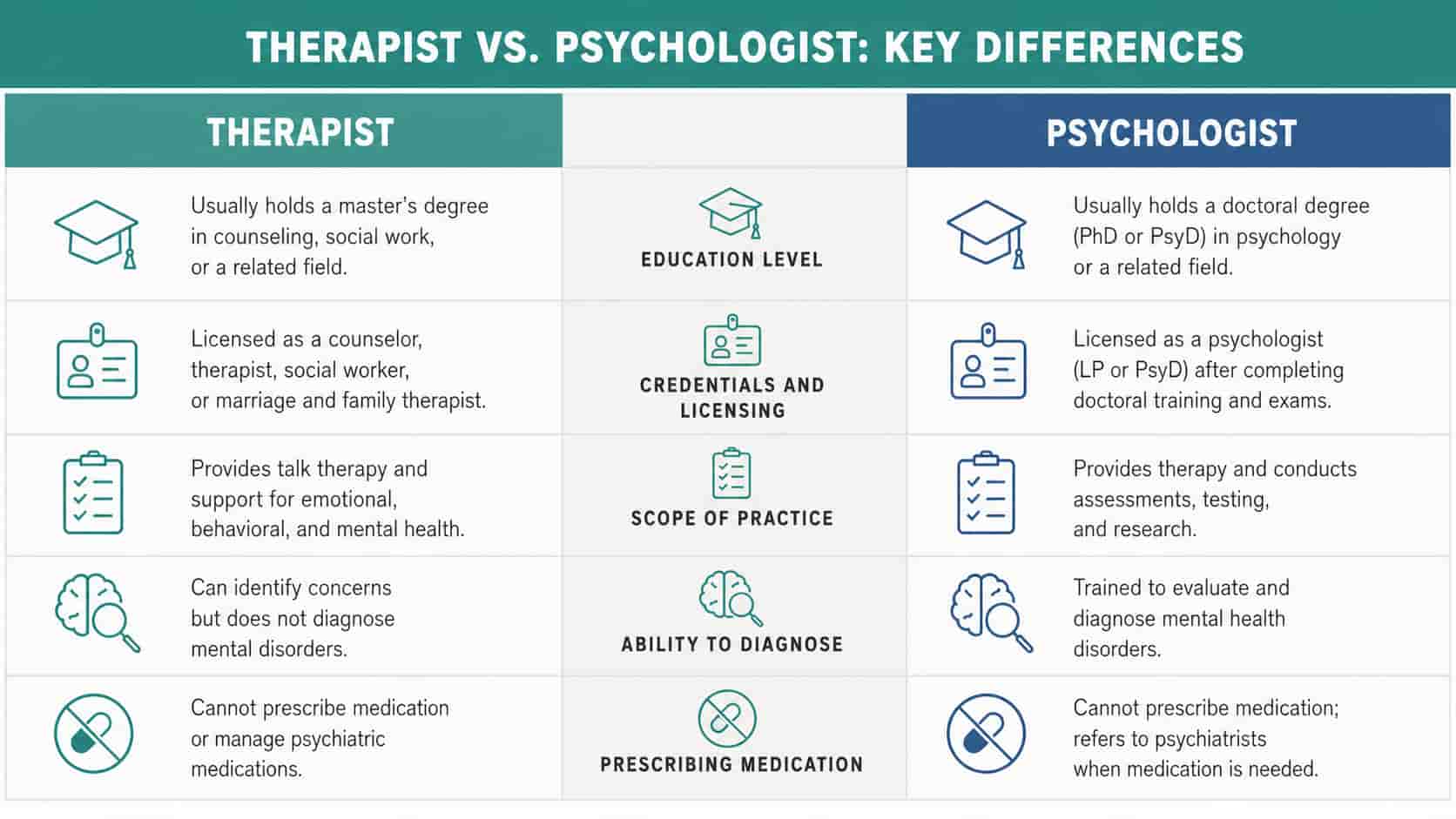
Therapists and psychologists both work in mental health, but their training levels and practice scopes are not the same. Knowing where these two professionals differ helps you make a well-informed decision before you book.
1. Education Level
A therapist typically holds a master’s degree, which requires two to three years of postgraduate study. A psychologist earns a doctoral degree that takes four to seven years of advanced training beyond undergraduate study.
That extra time translates directly into more depth in clinical assessment tools and research-backed treatment methods. For most everyday mental health concerns, the right specialty match matters more than the degree level alone.
2. Credentials and Licensing
Therapists hold state-issued credentials such as LPC, LCSW, LMFT, or LMHC, depending on their specialization and location.
Psychologists are licensed by the state psychology board after completing a Ph.D. or Psy.D. and fulfilling supervised internship hours. Both groups must pass state licensing exams before practicing and maintain their licensure through continuing education.
Always verify a provider’s current license through your state licensing board before booking.
3. Scope of Practice
Both therapists and psychologists provide talk therapy and treat mental health conditions.
Psychologists go beyond that by administering and interpreting formal psychological assessments and standardized tests. Therapists focus on counseling, behavioral strategies, and structured skill-building, without access to the formal testing tools that psychologists use.
If ongoing counseling is your primary need, the right therapeutic fit matters more than the degree level.
4. Ability to Diagnose
In most states, licensed therapists such as LCSWs, LPCs, and LMFTs hold diagnosis rights under the DSM-5. According to the American Psychological Association (APA), psychologists also diagnose but use formal testing to clarify complex, overlapping, or treatment-resistant presentations.
If you need documented testing for school, work, or legal purposes, a psychologist is the right choice. For most common mental health conditions, both professionals can assess and diagnose with similar accuracy.
5. Prescribing Medication
Neither therapists nor psychologists can prescribe medication in most states. Prescribing authority belongs to psychiatrists, nurse practitioners, and physician assistants.
Louisiana, New Mexico, and a small number of other states allow licensed psychologists with additional specialized training to prescribe. Most people who need medication work with a psychiatrist alongside a therapist or psychologist for talk therapy.
What Does a Therapist Do in a Session?
A therapy session goes well beyond a casual conversation about your week. Therapists apply structured, research-backed methods to help clients build lasting change in how they think, feel, and respond.
Common Treatment Approaches
- Cognitive Behavioral Therapy (CBT): Helps clients identify and replace thought patterns that fuel anxiety, depression, or unhelpful behaviors
- Dialectical Behavior Therapy (DBT): Teaches emotional regulation, distress tolerance, and healthier interpersonal responses
- Solution-Focused Brief Therapy (SFBT): Centers on current strengths and practical goals rather than past events
- Psychodynamic Therapy: Looks at how early experiences shape current emotional responses and relational patterns
- EMDR: Processes traumatic memories through bilateral stimulation; used by trained therapists for trauma and PTSD – learn more at the EMDR International Association
Who Does a Therapist Work With? Therapists see individuals, couples, families, and children working through emotional, behavioral, or relational challenges.
What a Typical Session Looks Like: Sessions run 45 to 60 minutes; the therapist listens, asks structured questions, and works toward clearly defined goals with the client.
What Does a Psychologist Do?
Psychologists do more than provide talk therapy. Their doctoral training prepares them to handle complex diagnoses, administer formal testing, and build treatment plans that go beyond standard counseling.
Their work often combines therapy, evaluation, and research in ways that most therapists are not trained or licensed to perform.
Psychological Testing and Assessment
- Cognitive and IQ testing: Measures intellectual capacity, processing speed, and learning ability
- Personality assessments: Tools like the MMPI provide a detailed picture of emotional patterns, thought styles, and behavior
- Neuropsychological evaluations: Assess memory, attention, language, and executive function, particularly after brain injury or illness
- Diagnostic testing for ADHD and autism: Confirms or rules out conditions that require formal, documented clinical support
Therapy Provided by Psychologists: Psychologists use the same research-backed methods as licensed therapists but typically work with more severe or diagnostically complex cases.
Other Roles Psychologists Play: Many psychologists contribute to clinical research, consult in legal or medical settings, or supervise and train other mental health professionals in graduate and clinical programs.
Therapist vs Psychologist: Which Fits Your Situation?
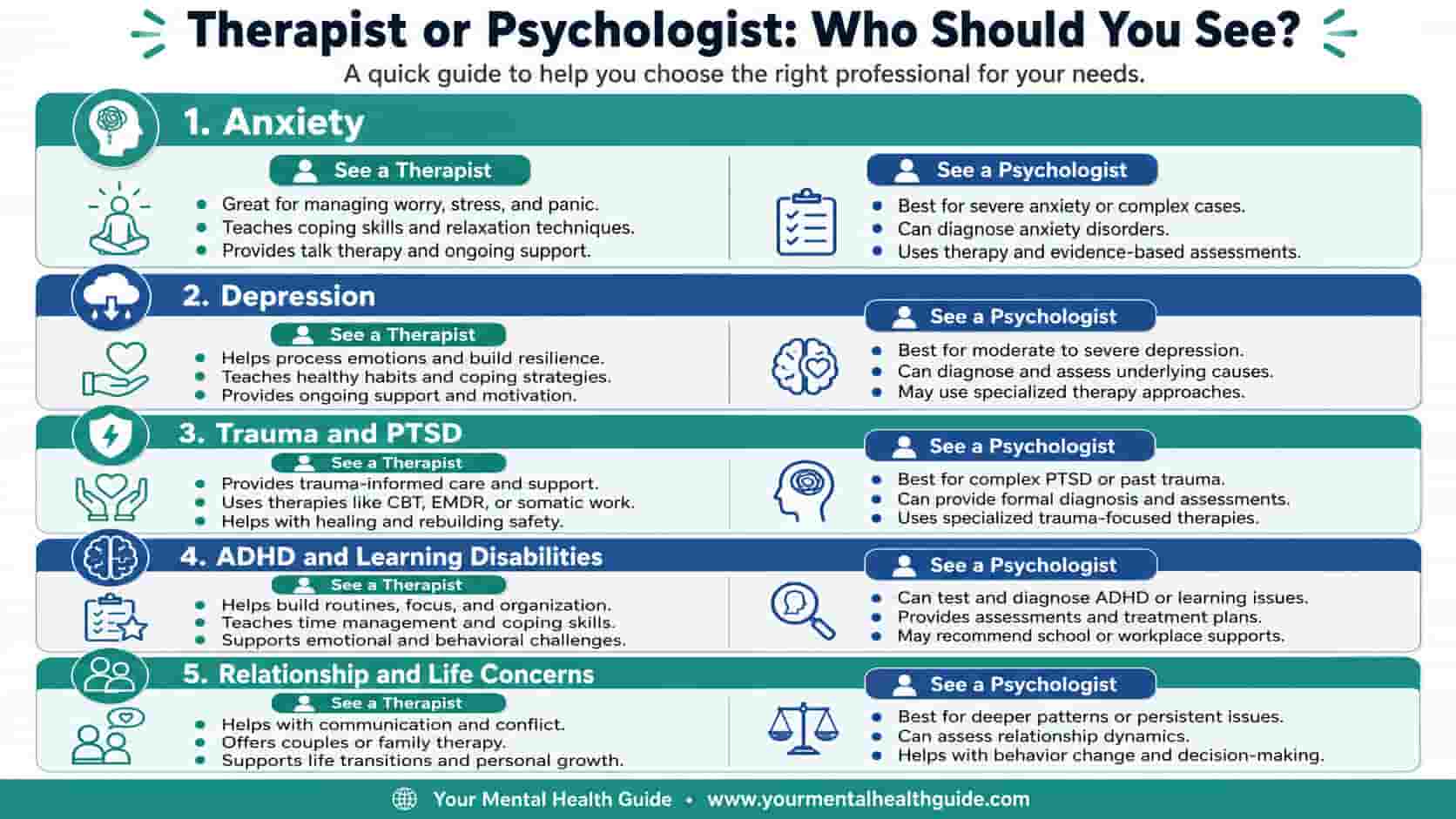
The right professional is the one whose training and focus match what you actually need right now. This overview helps you match your situation to the right type of care.
For Anxiety
- Mild to moderate anxiety: a licensed therapist using CBT is effective and accessible for most people
- Severe or diagnostically unclear anxiety: a psychologist can run a formal assessment and confirm a precise diagnosis
- If you already carry a diagnosis and want regular sessions, an experienced therapist is your most accessible option
For Depression
- Situational or mild depression: a licensed therapist handles this well through regular talk therapy sessions
- Recurring, severe, or treatment-resistant depression: a psychologist’s clinical evaluation can identify underlying factors driving the symptoms
- A psychiatrist may also need to be part of the care plan when medication is involved
For Trauma and PTSD
- Both therapists and psychologists offer trauma-focused methods such as EMDR and Cognitive Processing Therapy
- Complex PTSD with overlapping conditions may need a psychologist’s formal assessment before treatment starts
- Therapists trained specifically in trauma are a strong and accessible first option for most people
For ADHD, Autism, or Learning Disabilities
- Formal testing and diagnosis: A psychologist is required; therapists do not have the tools for neuropsychological evaluations
- Post-diagnosis support: A licensed therapist provides skills training and emotional support after a formal diagnosis is confirmed
- Many families see a psychologist for diagnosis and then transition to a therapist for ongoing support
For Relationship and Life Concerns
- An LMFT or licensed therapist is well-suited for couples counseling, family sessions, and life transition support
- A psychologist can address these, too, but is often more specialized and expensive than the situation needs
- Marriage and family therapists hold specific training in relational dynamics that most general psychologists do not
How Much Does a Therapist vs a Psychologist Cost?
Cost is one of the top factors people weigh when choosing mental health care. Fees vary by setting, experience level, and location, but this table gives you a clear starting point.
| Provider Type | Average Session Cost | Testing Fees | Insurance Coverage |
|---|---|---|---|
| Licensed Therapist (LPC, LCSW, LMFT) | $75–$200 per session | Not applicable | Most plans cover |
| Licensed Psychologist | $150–$300+ per session | $1,000–$3,000 for a full battery | Most plans cover |
| Community Mental Health Center | $0–$75 (sliding scale) | Varies | Often covers |
| Telehealth Therapist | $60–$150 per session | Not applicable | Many plans cover |
Fees vary by location, experience, and practice setting. Always check in-network status with your insurance provider before booking.
How to Choose Between a Therapist and a Psychologist
Start by identifying what you actually need from care. If you want regular talk therapy for anxiety, depression, or stress, a licensed therapist is a strong first step.
They cost less and are widely available through most insurance plans. If you need formal psychological testing for ADHD or a learning disability, a psychologist is the right fit.
The same applies if you need official documentation for school or workplace accommodations. For those who also need medication, therapy and psychiatry often work together as part of the same care plan.
Once you know your primary need, check your insurance plan’s mental health directory for covered providers. Look at each professional’s specialization and treatment approach before booking.
A first consultation helps you assess fit. Switching providers when needed is always a healthy and reasonable decision.
Conclusion
Choosing between a therapist and a psychologist does not have to be complicated. Therapists work well for anxiety, depression, relationships, and everyday stress through regular talk sessions.
Psychologists bring deeper training in assessment, formal diagnosis, and complex cases. For most people seeking mental health support, a licensed therapist is the right first step.
If your situation requires testing or a formal evaluation, a psychologist is the better fit. The most important thing is that you start. Getting professional support is what matters most.
Want to find the right type of therapy for your needs? Read our post on effective therapy approaches.