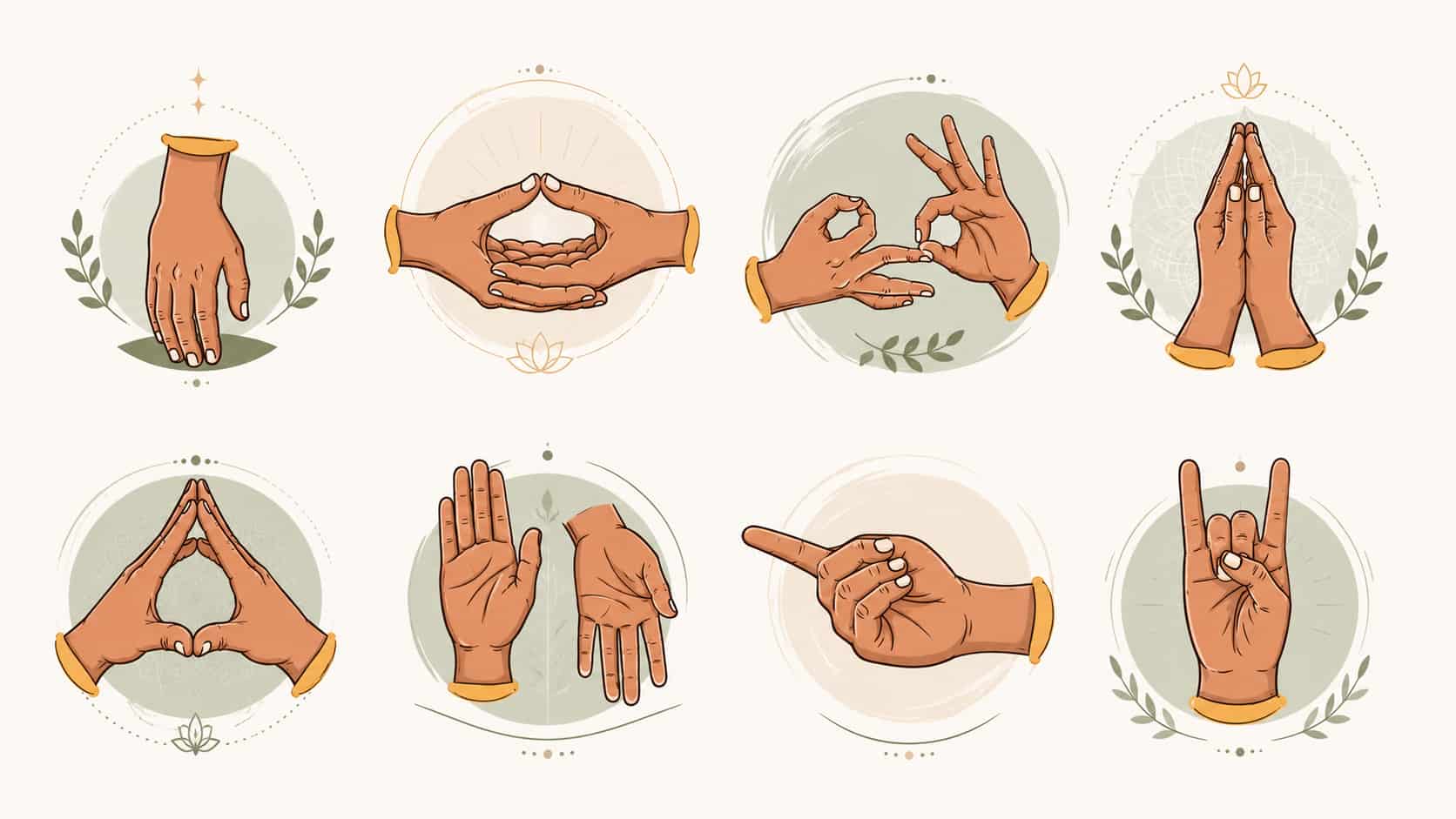
Your hands hold more power than you think. Most people sit down to meditate and let their hands rest wherever feels natural.
But those who practice with intention know that specific hand positions can shift focus, calm the nervous system, and anchor the mind in seconds. These positions have guided practitioners for thousands of years across cultures and traditions.
This guide covers what meditation hand signs are, where they come from, which ones matter most, and exactly how to bring them into your daily practice.
What Are Meditation Hand Signs?
Meditation hand signs, known in Sanskrit as mudras, are specific finger and hand positions used during meditation to influence the flow of energy, sharpen mental focus, and support physical well-being.
The word “mudra” translates to “seal” or “gesture,” and these positions appear across Hindu, Buddhist, yogic, and Taoist traditions.
Each mudra works by bringing certain fingers into contact, which is believed to activate corresponding nerve pathways and balance the body’s internal energy.
They are not symbolic decorations. They are practical tools that give the hands a purposeful role during practice, reducing restlessness and helping the mind settle faster.
Science and History Behind Meditation Hand Signs
Mudras carry thousands of years of practical wisdom, and modern science is beginning to catch up with what ancient traditions already understood.
Historical roots:
- Mudras first appear in the Vedas, ancient Hindu texts dating back over 3,000 years, where they were used in rituals and healing practices.
- They are described in detail in classical yogic texts, including the Hatha Yoga Pradipika and the Gheranda Samhita, as techniques for directing prana (life force energy) through the body.
- In Buddhist tradition, every statue of the Buddha displays a specific hand position. Each one communicates a distinct teaching, the moment of enlightenment, the act of giving, the state of deep meditation.
- Classical Indian dance forms such as Bharatanatyam use mudras as a complete visual language, with over 100 documented gestures.
What science observes: The hands contain over 17,000 nerve endings, and in the brain’s sensory cortex, they occupy a larger mapped area than almost any other body part.
Research in the field of mind-body medicine suggests that mindful hand positioning activates the parasympathetic nervous system, which governs the body’s rest and recovery state.
A study published in the Journal of Ayurveda and Integrative Medicine explored how mudra-based practices support mental calm and physiological regulation. While research is still developing, the experiential evidence spans centuries and cultures.
Meditation Hand Signs and Their Meanings
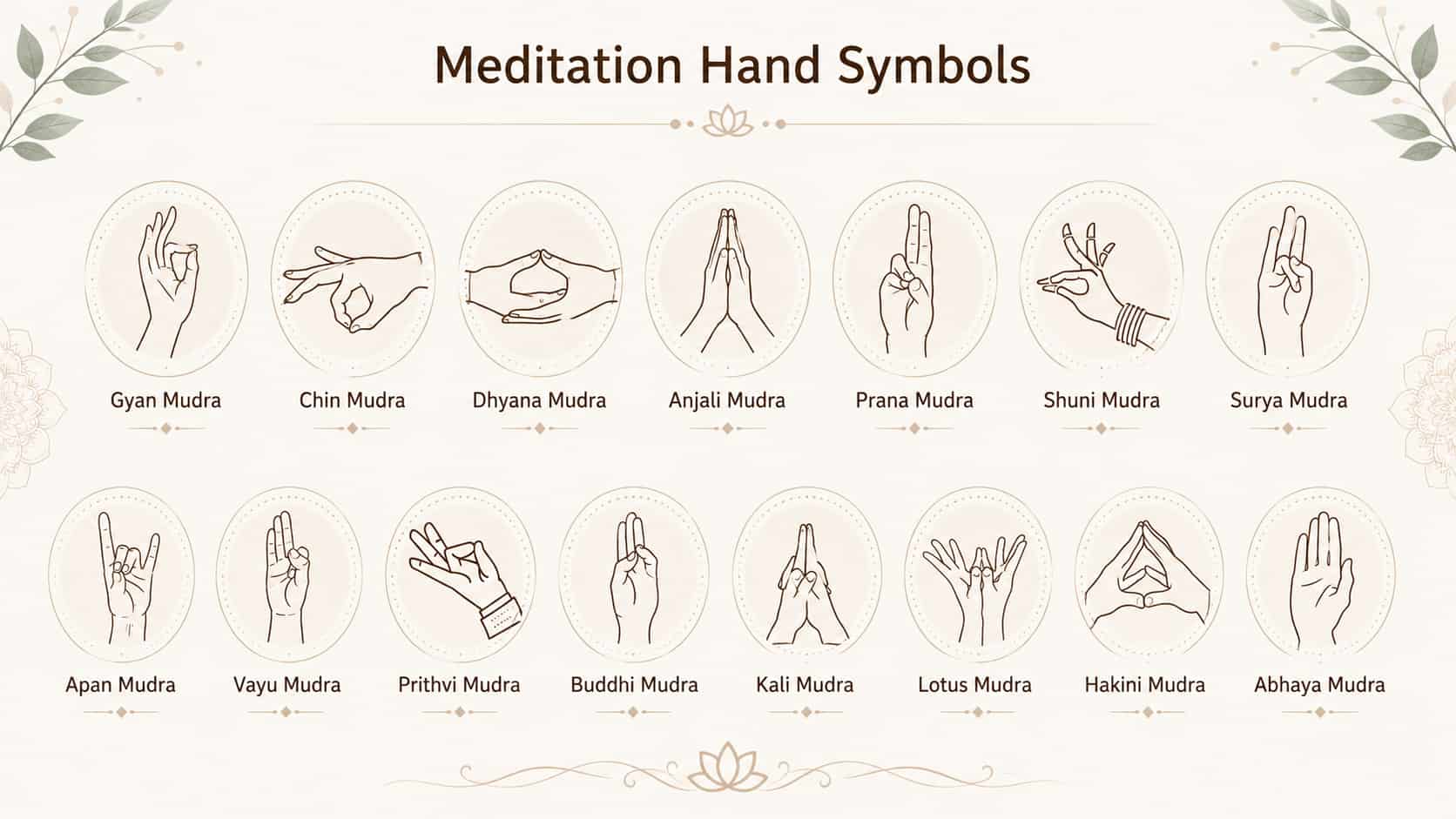
There are hundreds of documented mudras across various traditions, but a core set appears consistently in yoga and meditation practices worldwide. These are the ones most worth knowing. Each one is simple to form, easy to hold, and carries a distinct purpose.
Gyan Mudra (Knowledge Seal: Touch the tip of your index finger to the tip of your thumb, with the other three fingers relaxed and extended. It sharpens focus and brings mental calm during meditation.
Chin Mudra (Consciousness Seal): Same finger position as Gyan Mudra, but with palms facing upward. It opens the mind to a receptive, aware state during seated practice.
Dhyana Mudra (Meditation Seal): Both hands rest in the lap, right on top of left, palms up, thumbs lightly touching. It supports deep stillness and is the classic position for silent meditation.
Anjali Mudra (Prayer Seal): Both palms press together at the chest, fingers pointing upward. It calms the nervous system instantly and works well at the start or close of any session.
Prana Mudra (Life Force Seal): Touch the ring finger and little finger to the thumb tip, with the other two fingers extended. It activates energy in the body and is ideal when you feel physically drained.
Shuni Mudra (Patience Seal): Touch the tip of the middle finger to the tip of the thumb, keeping the rest of the fingers extended. It builds patience and inner steadiness during longer practice sessions.
Surya Mudra (Sun Seal): Fold the ring finger to touch the base of the thumb and press lightly. It generates internal warmth and works best in morning practice to feel alert and active.
Apan Mudra (Purification Seal): Touch the middle and ring fingertips to the thumb tip, with the index and little fingers extended. It supports the body’s natural release process and a sense of letting go.
Vayu Mudra (Air Seal): Fold the index finger down to the base of the thumb and press gently. It calms physical restlessness and is useful when the body feels unsettled before or during meditation.
Prithvi Mudra (Earth Seal): Touch the tip of the ring finger to the tip of the thumb, keeping the other fingers extended. It grounds scattered energy and is one of the best mudras for anxiety.
Buddhi Mudra (Mental Clarity Seal): Touch the little fingertip to the tip of the thumb, with the other three fingers extended. It supports clear thinking and is useful during decision-focused practice sessions.
Kali Mudra (Strength Seal): Interlace all fingers except the index fingers, which point upward together, with thumbs pointing down. It directs concentrated energy and suits active or intention-setting meditations.
Lotus Mudra (Padma Mudra): Bring both palms together at the heart, keeping thumbs and little fingers touching while opening the other fingers wide. It opens the heart center and supports compassion-based practice.
Hakini Mudra (Focus and Memory Seal): Bring all five fingertips of both hands together to touch at the tips. It improves memory and mental coordination and works well during study or problem-solving sessions.
Abhaya Mudra (Fearlessness Seal): Raise the right hand to shoulder height with the palm facing outward and fingers pointing up. It signals safety to the nervous system and works well at the start of a session when anxiety is present.
Meditation Hand Signs by Purpose
Not every meditation session has the same goal. Knowing which hand signs match your intention helps you get more from your practice without guessing. Here is a clear breakdown organized by what you actually need.
1. For Focus and Concentration
When mental chatter takes over and your thoughts refuse to settle, the right mudra can act as a quick anchor. Gyan Mudra, Hakini Mudra, and Shuni Mudra are the three best choices for focus.
Each one connects to the air and space elements, which yogic tradition links to mental agility and clear thinking. Place them on your thighs with a tall spine, close your eyes, and let the hand position do part of the work for you.
2. For Stress and Anxiety Relief
Anxiety often feels like the ground has shifted beneath you. The mudras that help most here are grounding ones. Prithvi Mudra, Anjali Mudra, and Chin Mudra signal the body to slow down and reconnect with a sense of safety.
Prithvi Mudra in particular activates the earth element and is widely used in Ayurvedic practice for its calming effect on an overactive mind and nervous system.
3. For Grounding and Stability
Feeling scattered or emotionally unsteady calls for earth energy. Prithvi Mudra and Apan Mudra are the most direct routes to that feeling of being rooted and stable.
They are both simple to hold and can be used outside formal meditation, such as during a walk or a quiet moment at your desk, when you need to feel settled and present.
4. For Energy and Vitality
When you feel tired but need to stay engaged, Prana Mudra and Surya Mudra are worth reaching for. Prana Mudra activates the life force energy in the body, while Surya Mudra generates internal heat and drive.
Both are best used in morning practice or early afternoon sessions. Avoid using energy-activating mudras close to bedtime, as they may interfere with winding down.
5. For Sleep and Deep Relaxation
The mudras that support rest are the ones that signal receiving and letting go. Chin Mudra and Dhyana Mudra are ideal for evening practice or body scan meditations.
Both involve open, receptive palm positions that tell the nervous system it does not need to be on guard. Pair either one with slow, diaphragmatic breathing for the best effect.
6. For Healing and Health
Several mudras have deep roots in Ayurvedic medicine and are used to support physical well-being. Prana Mudra, Apan Mudra, and Prithvi Mudra each connect to elements linked to immunity, vitality, and the body’s natural ability to restore balance.
They are not a replacement for medical care, but as a complement to healthy habits, regular practice can support overall physical resilience.
7. For Spiritual Connection
Some mudras are primarily devotional, used to cultivate a sense of reverence, compassion, or inner peace that goes beyond the practical.
Anjali Mudra, Lotus Mudra, and Abhaya Mudra each carry centuries of spiritual meaning. They open the heart center and remind the practitioner that meditation is not only a mental exercise. Used at the start or close of a session, they bring a quality of sincerity that changes the tone of the whole practice.
Meditation Hand Signs Across Different Traditions
Mudras did not develop in one place. They evolved independently and in parallel across multiple cultures, each giving these hand positions its own set of meanings and methods. Here is how the major traditions compare.
| Tradition | Key Mudras | Primary Purpose | Key Context |
|---|---|---|---|
| Hindu / Yogic | Gyan, Prana, Surya, Apan, Prithvi | Balance elements, direct prana | Used in yoga, Ayurveda, Tantra, and Kundalini practice |
| Buddhist (Theravada / Mahayana) | Dhyana, Bhumisparsha, Varada, Vitarka | Represent states of awakening | Iconographic and ritual use; seated meditation |
| Tibetan Buddhism | Complex ritual mudras combined with mantra and visualization | Sadhana practice and deity yoga | Taught through lineage; requires formal instruction |
| Taoist / Qi Gong | Hand seals for energy circulation | Direct qi (life force) flow | Used in Nei Gong and Qi Gong movement practices |
| Japanese Zen (Zazen) | Hokkaijo-in (Cosmic Mudra) | Support non-doing, presence | Thumbs level — too high or too low reflects the mind’s state |
Each tradition treats mudras differently in terms of how strictly they are codified, how they are taught, and what they are believed to achieve. What they all share is the conviction that the position of the hands during practice is not incidental. It matters.
How to Use Meditation Hand Signs: Step-by-Step
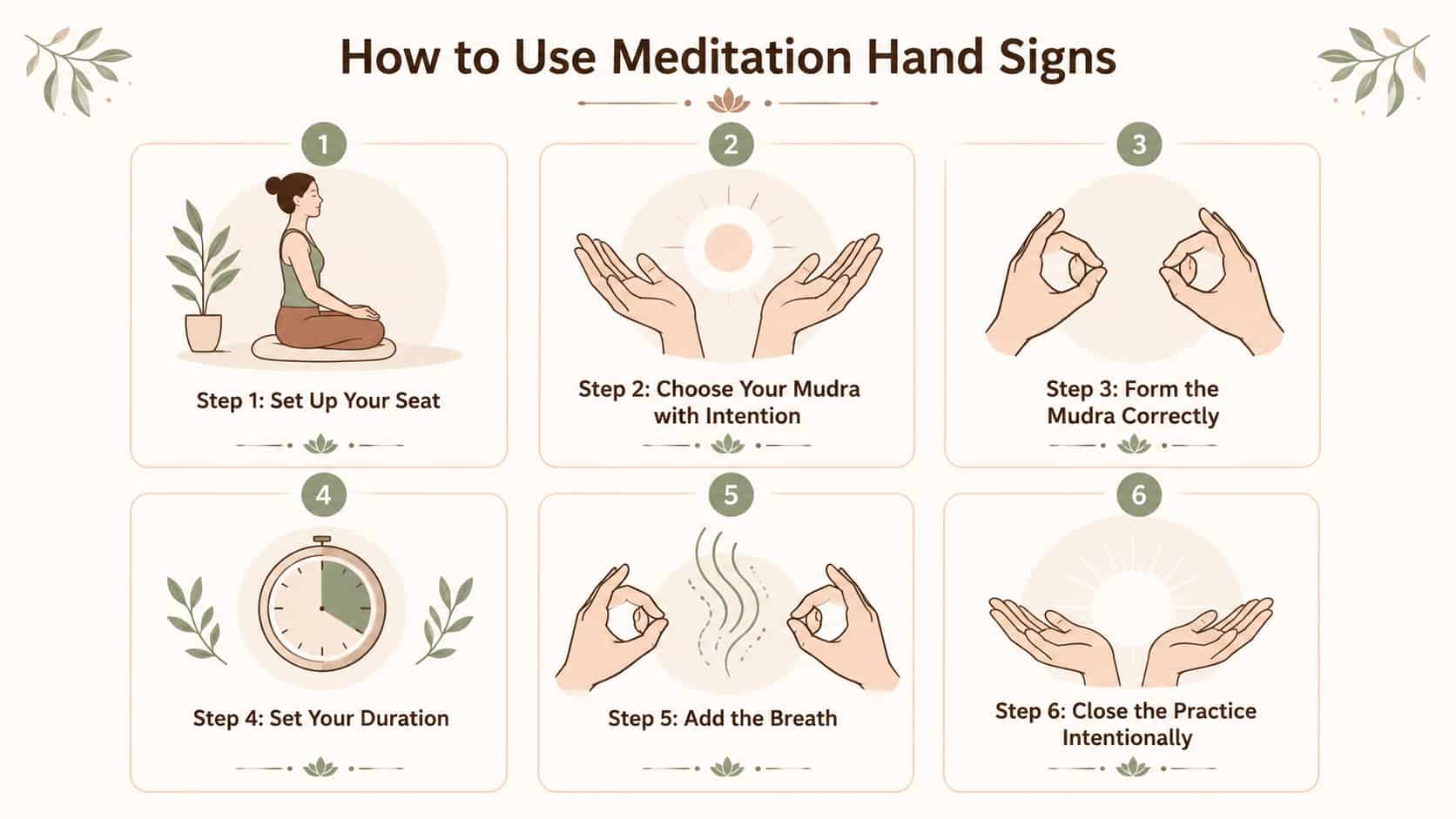
Knowing which mudra to use is only half of it. How you practice makes an equal difference. These steps apply whether you are a first-time practitioner or someone returning to a more structured approach.
Step 1: Set Up Your Seat
Start by sitting in a position you can hold without strain. A cross-legged seat on the floor, a cushion, or a straight-backed chair all work equally well.
The key requirement is a tall, relaxed spine, with your shoulders resting back and down. A slouched posture compresses the breath and reduces the quality of your practice, regardless of which mudra you choose.
Step 2: Choose Your Mudra with Intention
Pick one mudra that aligns with what you need from this session. If you are not sure, Gyan Mudra is the best starting point for most people. Resist the urge to switch mudras mid-session.
Staying in one position for the full duration provides continuity in the practice and allows the intended effect to settle. Consistency matters far more than variety.
Step 3: Form the Mudra Correctly
Rest your hands on your thighs or knees. Form the mudra gently, without gripping or pressing hard. The contact between the fingers should feel light and natural, as if the circuit were closed rather than forced shut.
If you feel tension in the fingers or wrists after a few minutes, ease the pressure slightly. Comfort and sustainability are part of the practice.
Step 4: Set Your Duration
Beginners do well starting with five minutes per session. With a few weeks of regular practice, most people naturally extend to fifteen or thirty minutes.
Some Ayurvedic traditions recommend three 15-minute sessions per day for specific health-focused mudras. The most important variable is not the length, it is the regularity. Five minutes every morning will produce more noticeable results than one hour once a week.
Step 5: Add the Breath
A mudra held with a conscious, steady breath is more effective than a mudra held while the mind races. Once the hand position is formed and comfortable, shift attention to the breath.
Slow the exhale slightly. Let the breath move without force. The mudra and the breath work together to give the nervous system a clear, consistent signal to settle. This combination is the foundation of most traditional mudra-based meditation methods.
Step 6: Close the Practice Intentionally
When your session ends, do not simply release the mudra and move on. Take two or three slow breaths with the hands in position. Then release the mudra, rest the hands flat on the thighs, and sit for another thirty seconds before opening your eyes.
This brief transition helps the body carry the calm quality of the practice into the next part of your day rather than dropping it the moment you stand up.
Conclusion
Meditation hand signs are one of the most accessible tools you can add to your practice right now. They ask for nothing more than your hands, a few minutes, and a willingness to be consistent.
Start with one mudra. Use it daily. Notice what shifts. The knowledge behind mudras spans thousands of years, multiple continents, and dozens of traditions, all pointing to the same truth: how you hold your hands during meditation is not a small detail.
It is part of the practice itself. Pick up one mudra today and carry it with you.