
Your stomach feels fine one day. Next, you are bloated, cramping, and uncomfortable after a regular meal. If this sounds familiar, your food choices may be triggering your digestive symptoms.
Many everyday vegetables contain carbohydrates that are hard for your gut to process. For people with IBS or a sensitive stomach, this can make eating feel stressful.
The good news is that low FODMAP vegetables let you eat well without the discomfort. They are nutritious, easy to prepare, and gentle on your digestive system.
This guide covers the best low FODMAP vegetables to add to your meals, which ones to avoid, and simple tips to make the diet easier to follow every day.
What Is FODMAP?
FODMAP stands for a group of short-chain carbohydrates found in many common foods. Here is what each letter means:
- F – Fermentable: These carbohydrates are broken down by gut bacteria through fermentation.
- O – Oligosaccharides: Found in foods like wheat, rye, and certain vegetables.
- D – Disaccharides: Mainly lactose, found in milk, soft cheese, and yogurt.
- M – Monosaccharides: Mainly fructose, found in honey, apples, and high-fructose foods.
- A – And
- P – Polyols: Sugar alcohols found in some fruits, vegetables, and artificial sweeteners.
Your body does not fully absorb FODMAPs in the small intestine. They move into the large intestine, where gut bacteria ferment them. This produces gas and causes bloating, cramping, and diarrhea in sensitive people.
A low FODMAP diet limits these carbohydrates to reduce symptoms. It is most helpful for people with Irritable Bowel Syndrome (IBS).
Benefits of Low FODMAP Vegetables
Low FODMAP vegetables give your gut a break while still keeping your meals nutritious and satisfying.
-
Helps reduce bloating: These vegetables are easier on your digestive system. They produce less gas during digestion. You feel lighter and more comfortable after meals.
-
Supports digestion: Low FODMAP vegetables are gentle on the gut lining. They do not trigger excess fermentation. Your digestive system can process them without much strain.
-
May improve IBS symptoms: Many people with IBS report fewer flare-ups when they eat low FODMAP vegetables. Symptoms like cramping and irregular bowel movements tend to settle down.
-
Provides vitamins and fiber: These vegetables are rich in essential vitamins like A, C, and K. They also provide a steady source of dietary fiber. Your body gets the nutrition it needs without the discomfort.
-
Supports gut health: A low FODMAP, vegetable-rich diet helps maintain a balanced gut environment. It reduces unnecessary stress on your digestive tract over time.
9 Best Low FODMAP Vegetables
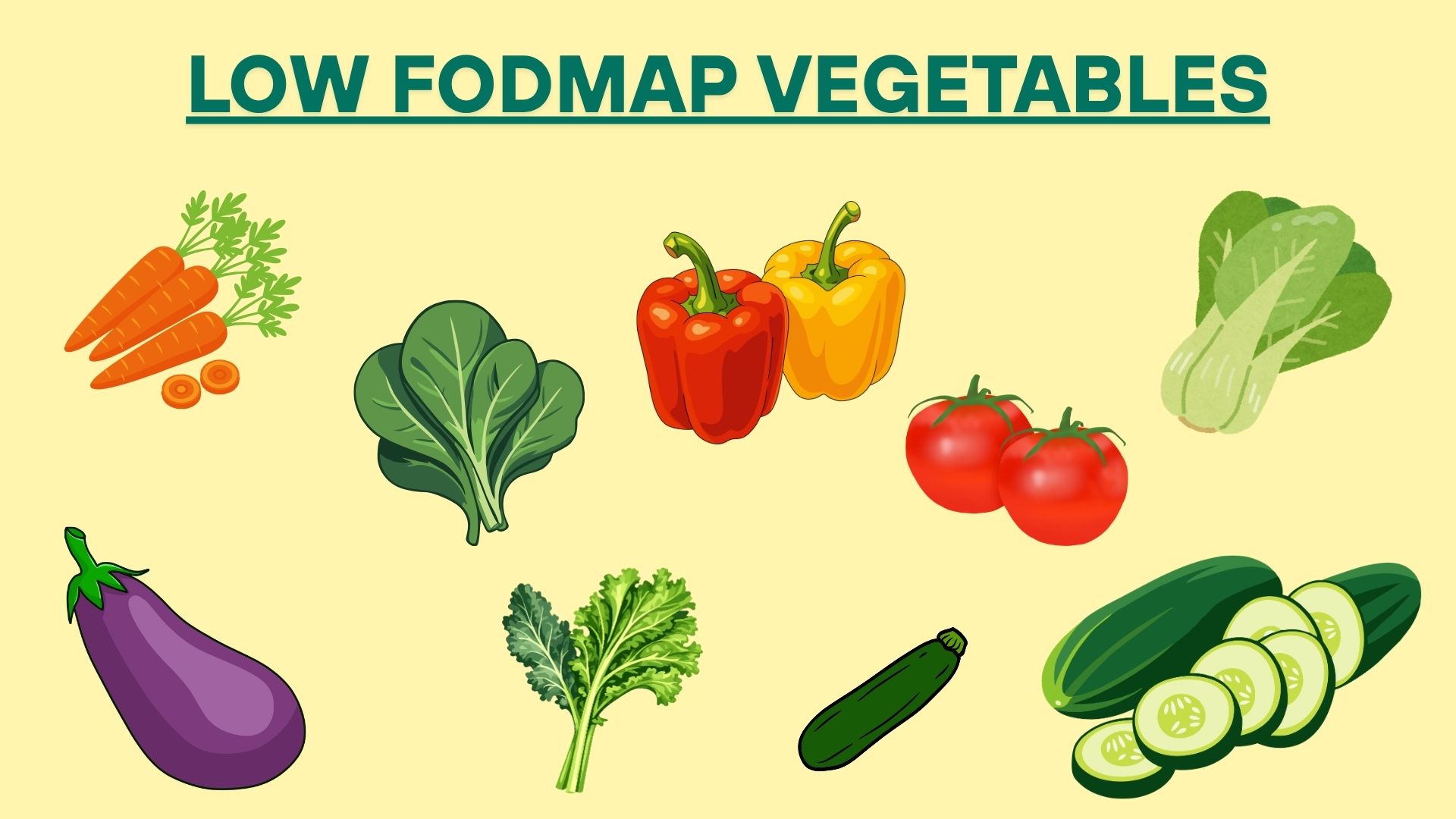
Not all vegetables are created equal on a low FODMAP diet. These nine options are safe, nutritious, and easy to include in your daily meals.
1. Carrots
Carrots are among the safest vegetables on a low-FODMAP diet. They are rich in beta-carotene, which your body converts to Vitamin A. Carrots are easy to digest and unlikely to cause gut discomfort. You can enjoy them in many ways:
- Raw as a snack with a low FODMAP dip
- Steamed or boiled as a side dish
- Roasted with olive oil and herbs
- Added to soups and stews
2. Spinach
Spinach is a nutrient-dense leafy green that fits well into a low FODMAP plan. It is packed with iron, Vitamin K, and folate.
Raw spinach works well in salads, and blended spinach adds nutritional value to smoothies without significantly changing the flavor. It is a simple and flexible addition to your diet.
3. Zucchini
Zucchini is low in calories and very versatile in the kitchen. It has a mild flavor that pairs with almost anything. It is gentle on the stomach and a great option for filling meals without triggering symptoms. You can use it in:
- Stir-fries and grilled dishes
- Baked casseroles and frittatas
- Spiralized as a pasta substitute
4. Bell Peppers
Bell peppers are high in Vitamin C and add color and crunch to any meal. Red, yellow, and orange varieties are all low FODMAP-friendly.
They taste great raw in salads, roasted in the oven, or cooked in a stir-fry. Bell peppers are also a good source of antioxidants that support overall health.
5. Cucumbers
Cucumbers are hydrating and refreshing, making them a great low FODMAP snack. They have a high water content that keeps you full without adding many calories.
Slice them up for a quick snack, add them to salads, or pair them with a low FODMAP dip. They are easy to prepare and easy on the gut.
6. Eggplant
Eggplant is a low-calorie vegetable that works well when roasted or grilled. It has a soft texture after cooking and absorbs flavors from seasonings well.
Eggplant fits into many cuisines and can replace heavier ingredients in meals. It is a satisfying option for anyone following a low FODMAP diet.
7. Kale
Kale is packed with antioxidants and supports overall health when eaten regularly. It contains Vitamins A, C, and K along with calcium and fiber. You can use kale in salads, soups, or lightly sauteed as a side dish.
It is one of the more nutrient-dense options on the low-FODMAP vegetable list.
8. Bok Choy
Bok choy has a mild flavor that makes it easy to use in many dishes. It works especially well in soups and stir-fries. Bok choy is low in calories and provides Vitamin C, Vitamin A, and calcium. It cooks quickly and adds a satisfying crunch to meals without causing digestive issues.
9. Tomatoes
Tomatoes are rich in lycopene, an antioxidant linked to heart health. They are low FODMAP in moderate servings, typically one medium tomato per meal.
You can use them fresh in salads, cook them into sauces, or roast them as a side. Stick to recommended portions to keep your meal gut-friendly.
Vegetables to Avoid on a Low FODMAP Diet
Some vegetables are high in FODMAPs and can trigger bloating, gas, and stomach pain. Avoid these during the elimination phase of your diet.
-
Onion: Even small amounts can cause significant bloating and gas. This includes white, red, and spring onion varieties.
-
Garlic: It contains fructans, a major FODMAP trigger. Garlic-infused oil is a safer alternative as it does not carry the same fructans.
-
Cauliflower: High in polyols and fructans. It is one of the most common IBS triggers among vegetables.
-
Mushrooms contain polyols, specifically mannitol. Most varieties, including button and portobello, are best avoided on this diet.
-
Asparagus: High in fructans and fructose. Even a small serving can cause bloating and cramping in sensitive individuals.
You can reintroduce these vegetables gradually after the elimination phase to test your personal tolerance.
Tips for Eating Low FODMAP Vegetables
Following a low FODMAP diet gets much easier when you keep a few practical habits in mind.
-
Watch portion sizes: Even low FODMAP vegetables can cause issues in large amounts. Stick to recommended serving sizes for each vegetable. A standard serving is usually half a cup to one cup, depending on the vegetable.
-
Use simple cooking methods: Steaming, roasting, and grilling are the best options. These methods preserve nutrients and keep your meals easy to digest. Avoid heavy batters or deep-frying, which can introduce unnecessary triggers.
-
Avoid high FODMAP sauces and seasonings: Many sauces contain garlic, onion, or high-fructose ingredients. Always check labels before using store-bought condiments. Stick to herbs, low FODMAP spices, and plain olive oil to keep your meals safe.
Your vegetable choices do not have to feel limited on a low FODMAP diet. With the right picks and simple preparation, you can eat well and feel comfortable doing it.
Conclusion
Low FODMAP vegetables are not about eating less. They are about eating smarter for your gut.
Choosing the right vegetables, watching your portion sizes, and keeping your cooking simple can make a real difference. Carrots, spinach, zucchini, bell peppers, and the other options on this list give your body the nutrients it needs without the bloating and discomfort.
If you have been struggling with IBS or ongoing digestive symptoms, starting with low FODMAP vegetables is a practical first step. Small changes to what you put on your plate can lead to noticeable relief over time.
Not sure where to start? Check out our guide to building a full low-FODMAP meal plan to make your daily eating even easier.