
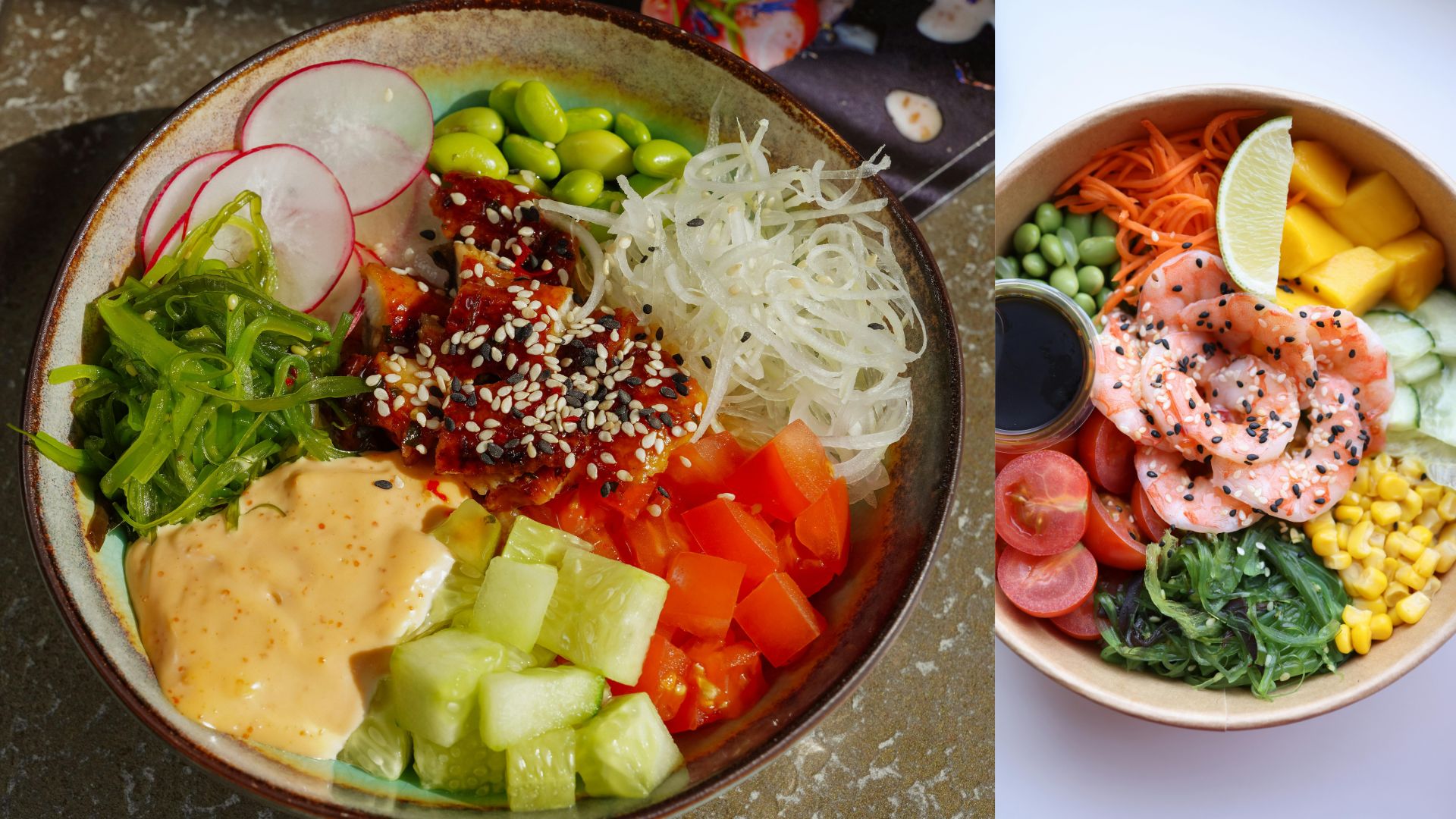
You have built the perfect poke bowl in your head. Fresh fish, colorful toppings, and a drizzle of sauce over a bed of rice.
But then the question hits: how many calories are you actually eating in a poke bowl?
It is a fair question. Poke bowls look healthy. Most of the time, they are. But the calorie count can swing from 350 to over 1,000 depending on what you choose.
The base, the sauce, the protein, the toppings, each one changes the total.
This guide breaks down the calories in every part of a poke bowl. By the end, you will know exactly how to build a bowl that fits your goals.
What Is a Poke Bowl?
You have probably seen poke bowls at every food hall and health cafe lately. But what exactly goes into one?
A poke bowl started as a traditional Hawaiian dish. Hawaiian fishermen would season raw fish scraps with sea salt, seaweed, and kukui nuts. The word “poke” means “to slice” or “to cut” in Hawaiian. The dish was simple, fresh, and built around raw fish.
Modern poke bowls look a little different. Today, most bowls are built in layers. You start with a base, add a protein, pile on toppings, and finish with a sauce.
Poke bowls are often seen as a balanced meal. They combine lean protein, complex carbs, healthy fats, and vegetables in one bowl. That said, the calorie count can vary a lot depending on what you choose.
How Many Calories Are in a Poke Bowl?
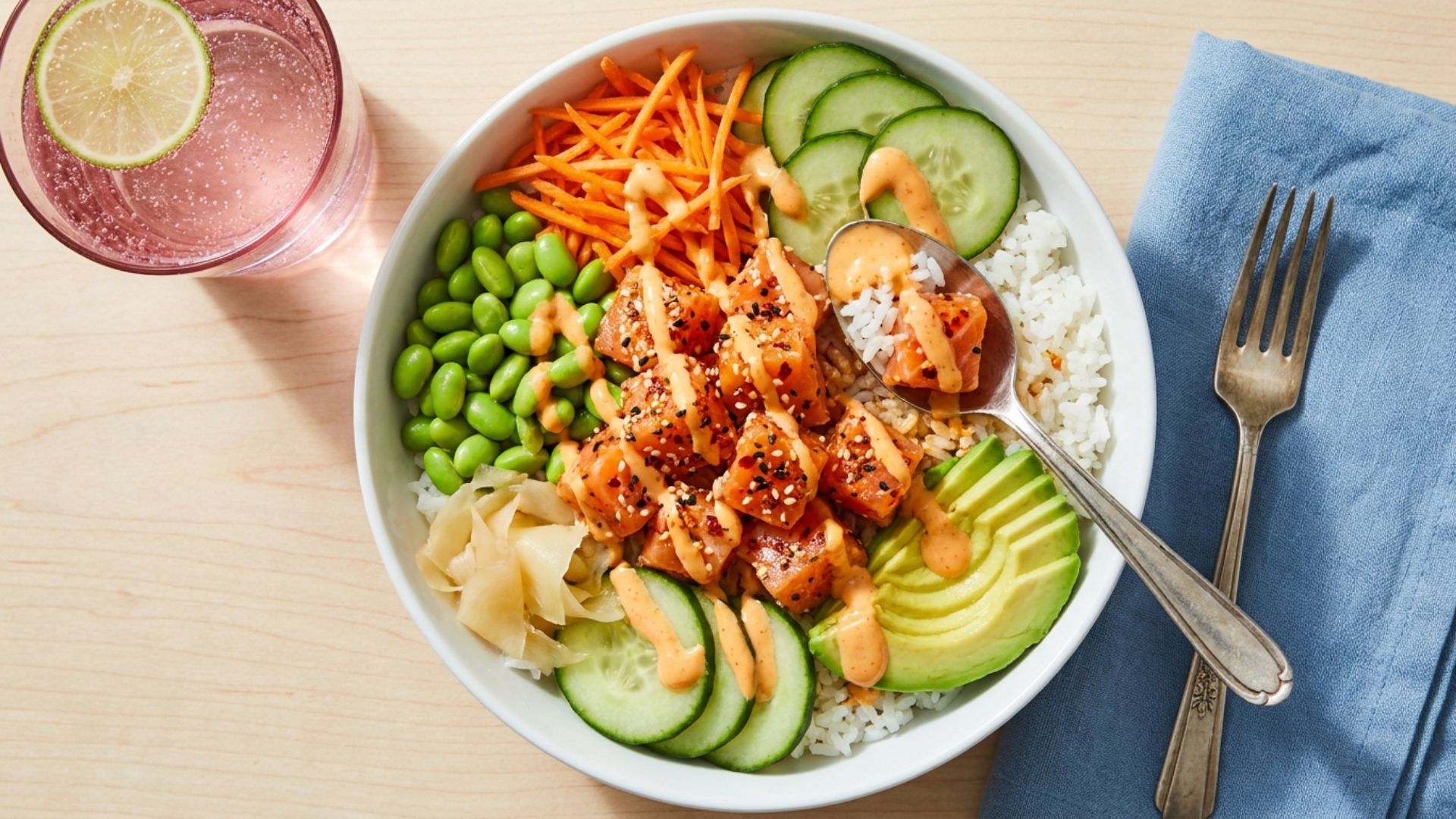
Poke bowl calories can range widely. A small, simple bowl may have around 400 calories. A large bowl loaded with rich sauces and toppings can easily exceed 1,000 calories.
Most restaurant poke bowls range from 500 to 800 calories per standard serving. That number depends on three main factors: your base, your protein, and your sauces.
| Bowl Type | Estimated Calories |
|---|---|
| Light bowl (greens base, lean protein, light sauce) | 350 to 450 kcal |
| Standard bowl (rice base, fish protein, soy sauce) | 500 to 650 kcal |
| Loaded bowl (rice base, rich sauce, high-fat toppings) | 700 to 1,000+ kcal |
What affects the final calorie total:
- The type of base you choose
- How much sauce is added (and which kind)
- The protein and how it is prepared
- The number and type of toppings
Poke Bowl Calories by Base and Sauce
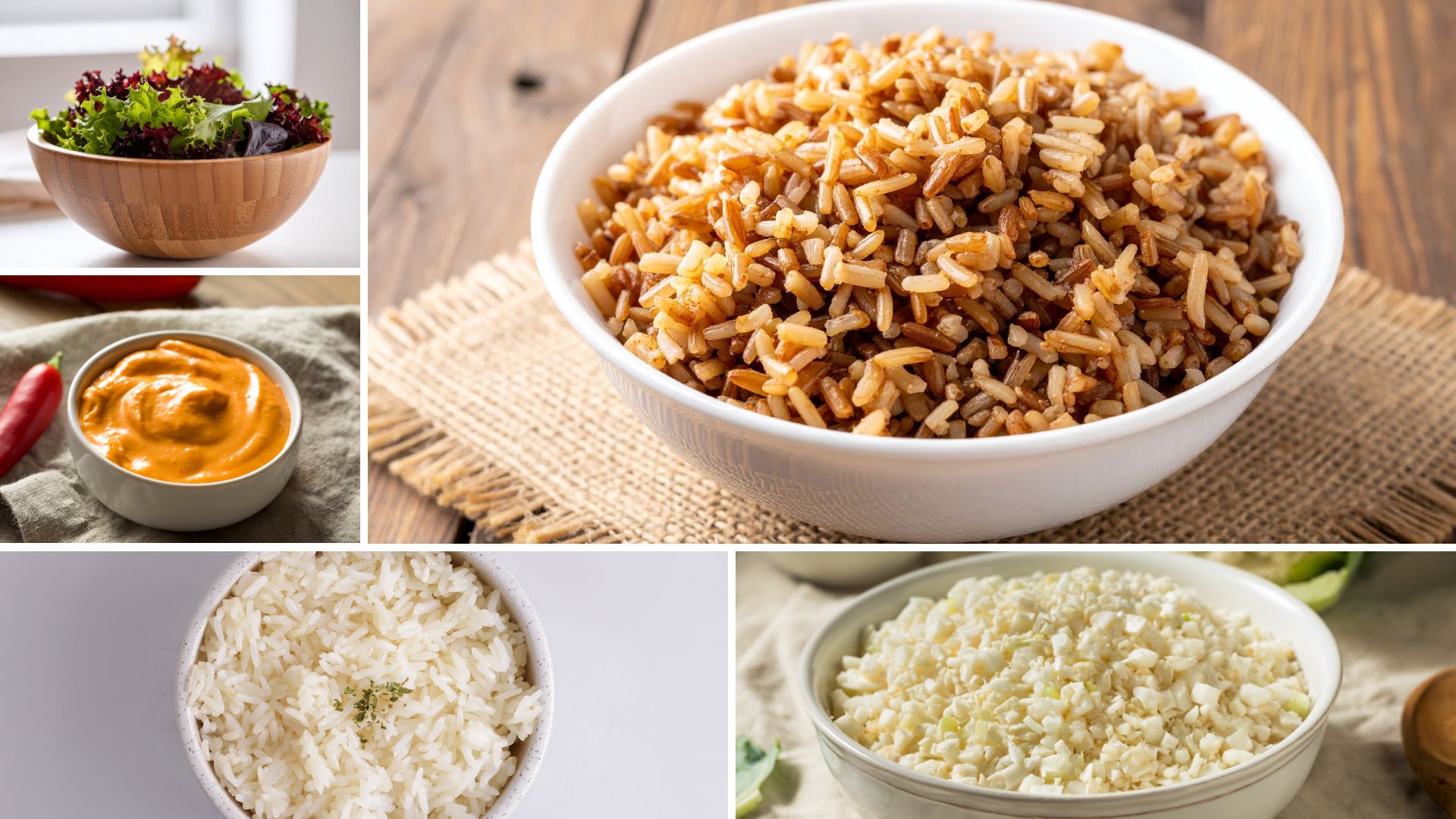
Your base and sauce choices add a surprising number of calories. Many people overlook this part of the bowl.
1. White Rice and Sushi Rice
White rice and sushi rice are the most common bases for poke bowls. Both have a similar calorie count, around 200 to 250 calories per cup. Sushi rice is often seasoned with rice vinegar and a little sugar, which adds a small number of extra calories.
2. Brown Rice
Brown rice has a similar calorie count to white rice. One cup adds roughly 215 to 230 calories. The key difference is that brown rice has more fiber, which helps you feel full longer.
3. Mixed Greens
Mixed greens are the lowest-calorie base you can choose. Two cups of greens add only about 15 to 25 calories. This is a strong option if you want to cut calories without losing volume.
4. Cauliflower Rice
Cauliflower rice is another low-calorie base. One cup adds just 25 to 35 calories. It works well as a swap for white rice when you want a lighter bowl.
5. Soy Sauce and Ponzu
Soy sauce and ponzu are the lightest sauce options. Both add only 15-30 calories per 2 tablespoons. They add flavor without a heavy calorie load.
6. Spicy Mayo
Spicy mayo is popular, but it is also the highest-calorie sauce on most menus. Two tablespoons can add 90 to 120 calories. Most restaurants add a generous drizzle, which can push the total even higher.
7. Eel Sauce
Eel sauce is sweet and savory. Two tablespoons add around 55 to 70 calories. It has more sugar than soy sauce, so it adds up quickly if you use a lot.
8. Sesame Dressing
Sesame dressing adds a rich, nutty flavor. Two tablespoons bring in about 60 to 80 calories. It is a mid-range option calorie-wise.
Poke Bowl Calories by Protein
Protein is the heart of any poke bowl. Your choice here affects both the calorie count and the nutritional value of your meal.
| Protein | Serving Size | Approximate Calories |
|---|---|---|
| Tuna (raw) | 3 oz | 100 to 130 kcal |
| Salmon (raw) | 3 oz | 150 to 180 kcal |
| Shrimp (cooked) | 3 oz | 80 to 100 kcal |
| Chicken (grilled) | 3 oz | 120 to 150 kcal |
| Tofu (firm) | 3 oz | 70 to 90 kcal |
Choosing the right protein can make a big difference in your poke bowl calories and overall nutrition. Leaner options like shrimp and tofu are lower in calories, making them ideal for lighter meals or weight management.
Mixing your protein with fresh vegetables and lighter sauces can help create a more balanced poke bowl.
Poke Bowl Toppings and Calories
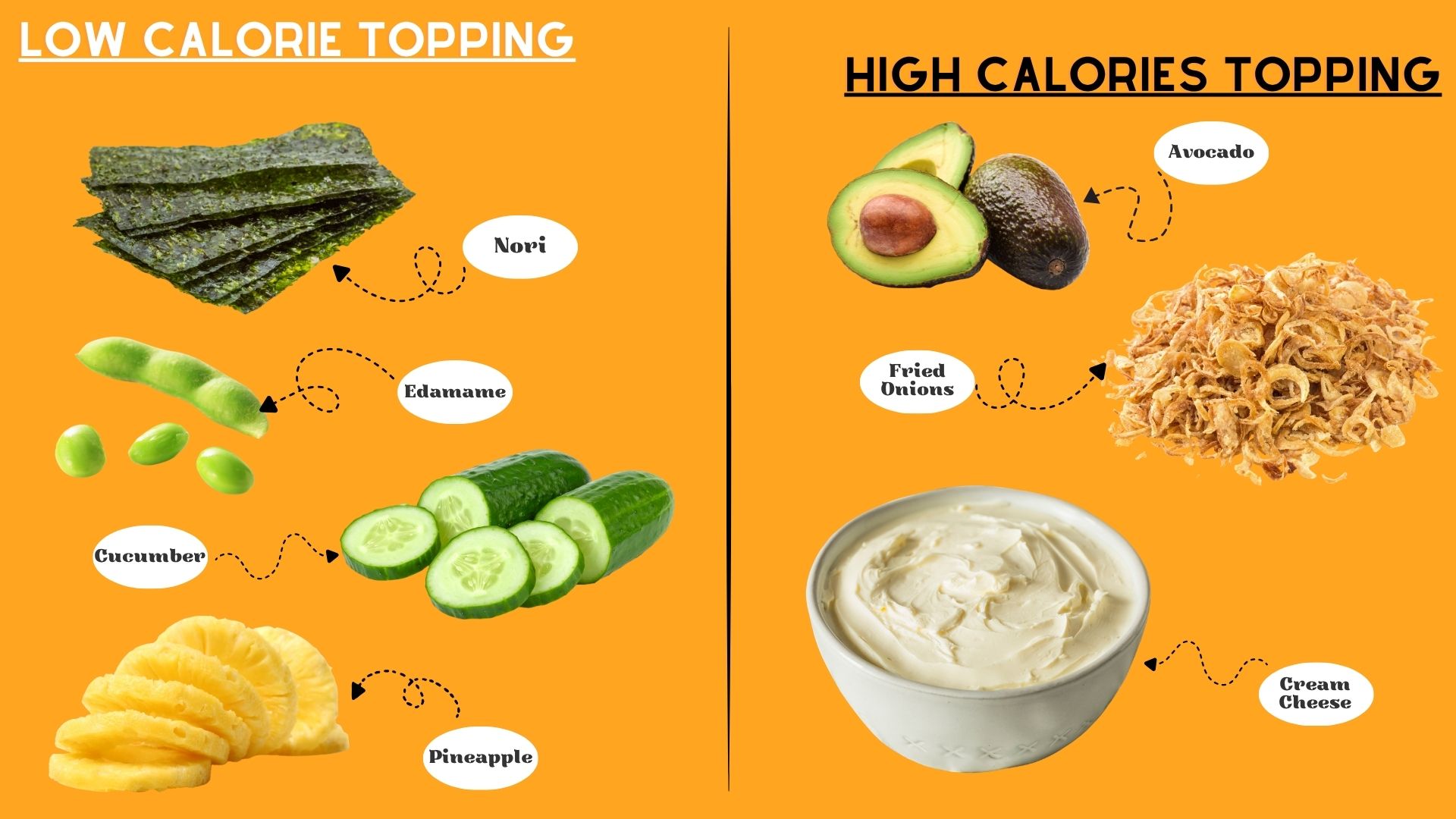
Toppings are where poke bowls can quietly add a lot of extra calories. Some toppings keep your bowl light. Others can add several hundred calories on their own.
🥒 Low-Calorie Toppings
These toppings add texture, flavor, and nutrients without many extra calories.
Cucumber adds a cool crunch. Half a cup adds only 8 to 12 calories. It also adds water content, which helps fill you up.
Seaweed salad adds a savory, umami flavor. A quarter cup adds 30 to 45 calories. It also brings iodine and other minerals to your bowl.
Edamame is a small but filling topping. A quarter cup adds 60 to 75 calories. It also adds plant protein and fiber.
Radish is one of the lowest-calorie toppings available. A quarter cup adds only 5 to 10 calories. It adds a peppery bite without any significant calorie impact.
Pineapple adds a sweet contrast to savory toppings. A quarter cup adds 20 to 30 calories. It also contains bromelain, an enzyme that supports digestion.
🍤 High-Calorie Toppings
These toppings taste great but carry a heavier calorie load. Use them in smaller amounts.
Avocado is the most popular high-calorie topping. A quarter of an avocado adds 60 to 80 calories. The fat in avocado is healthy, but the calories add up fast if you use a full half or whole avocado.
Crispy onions are fried, which raises the calorie count. Two tablespoons add 45 to 70 calories. They also add sodium and refined carbs.
Tempura flakes are light but fried. Two tablespoons add 50 to 80 calories. Many restaurants add a generous handful, so the total can climb quickly.
Cream cheese is used in some fusion-style poke bowls. One tablespoon adds 50 to 60 calories. It is mostly saturated fat with little nutritional benefit.
Calories in Popular Poke Bowl Types
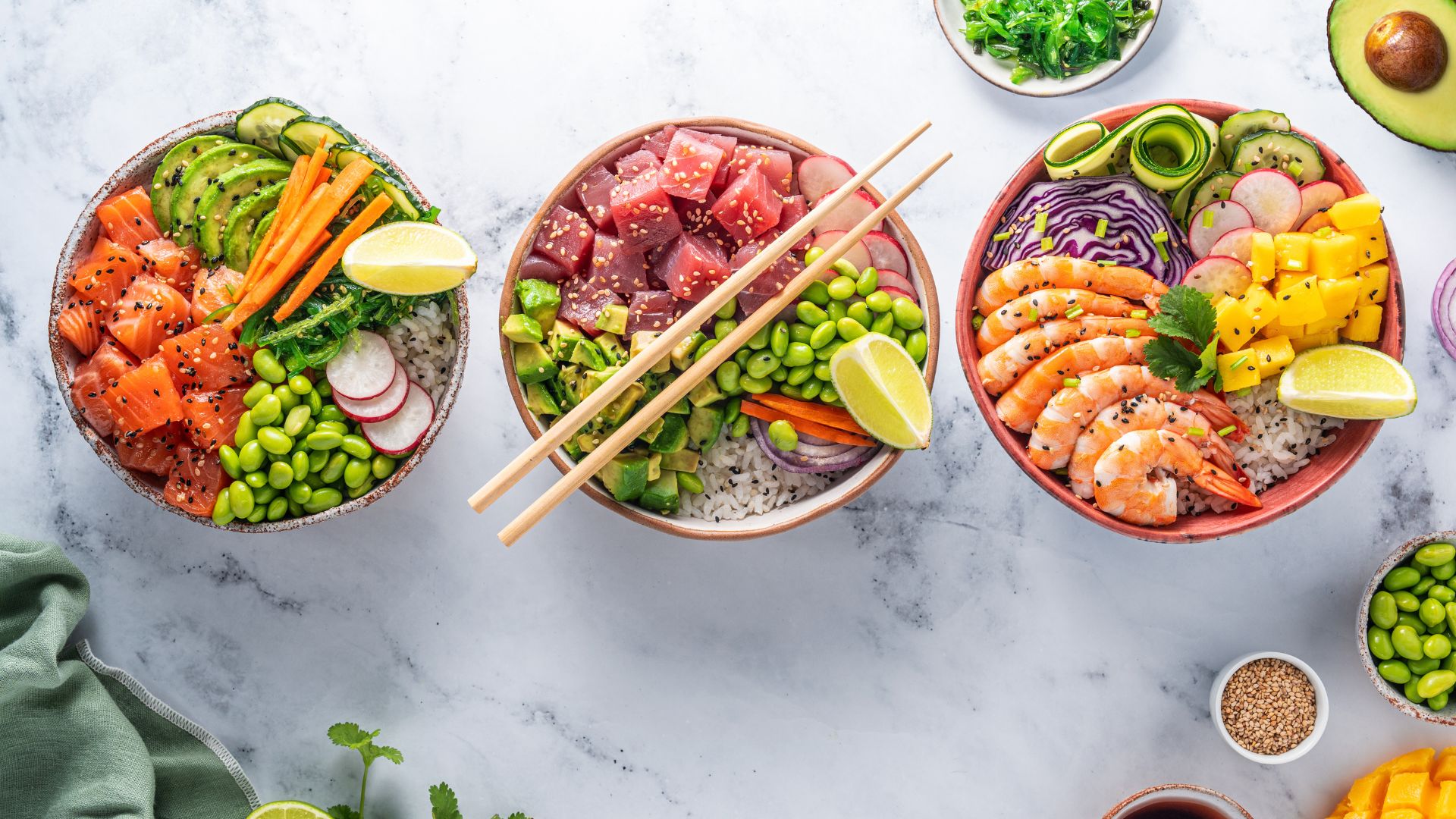
Popular poke bowls can vary greatly in calories depending on the protein, rice base, toppings, and sauces used in each combination.
Salmon Poke Bowl
A salmon poke bowl with sushi rice, avocado, edamame, cucumber, and soy sauce lands at roughly 550 to 700 calories.
Salmon brings healthy fats to the bowl, which raises the count slightly compared to tuna. If you add spicy mayo instead of soy sauce, expect the total to climb by another 100 calories.
Tuna Poke Bowl
Tuna is leaner than salmon. A tuna poke bowl with white rice, seaweed, edamame, cucumber, and ponzu sauce comes in at around 450 to 600 calories.
It is one of the lower-calorie restaurant options, especially when you skip heavy sauces.
Spicy Mayo Poke Bowl
Spicy mayo changes everything. A standard salmon or tuna bowl with a generous drizzle of spicy mayo can hit 700 to 900 calories.
The sauce alone adds 90 to 120 calories, and many restaurants pour more than a standard serving.
Vegetarian Poke Bowl
A vegetarian poke bowl with tofu, brown rice, cucumber, radish, edamame, and sesame dressing comes in at around 400-550 calories.
It is a filling, nutrient-rich option. The calorie count stays manageable as long as you limit heavy sauces and fried toppings.
Are Poke Bowls Healthy?
Poke bowls can be a healthy meal choice. They bring together lean protein, healthy fats, fiber, and vegetables in a single dish. But the final nutritional value depends entirely on what goes into your bowl.
Poke bowls are a strong source of protein. Fish like tuna and salmon deliver 20 to 25 grams of protein per serving. Protein helps your muscles recover and keeps hunger at bay for longer.
Salmon and avocado both contain unsaturated fats. These fats support heart health and help your body absorb fat-soluble vitamins. They do add calories, but they are not the kind of fat to avoid.
Vegetables, edamame, and brown rice all add dietary fiber. Fiber supports digestion and helps manage blood sugar levels. Seaweed adds iodine. Edamame adds iron and folate. A well-built poke bowl can cover a range of your daily nutrient needs in one meal.
How to Order a Low-Calorie Poke Bowl?
Want to enjoy a poke bowl without going over your calorie goal? These steps make it simple.
Step 1: Choose a Lighter Base: Swap white rice or sushi rice for mixed greens or cauliflower rice. This one change alone can cut 180-220 calories from your bowl. If you want rice, brown rice is a fiber-rich option at a similar calorie count.
Step 2: Use Lean Protein: Pick shrimp, tuna, or grilled chicken. These proteins keep the calorie count low while still delivering a good amount of protein per serving. Avoid fried protein options if they are available.
Step 3: Limit Creamy Sauces: Ask for spicy mayo, eel sauce, or sesame dressing on the side. This way, you control how much goes on. Choose soy sauce or ponzu as your main sauce to keep calories in check.
Step 4: Add More Vegetables: Load up on cucumber, radish, seaweed, and edamame. These toppings add volume, texture, and nutrients without adding many calories. The more vegetables you add, the more satisfied you will feel.
Step 5: Control Portion Sizes: Order a small or regular bowl instead of a large one. A smaller bowl with smart ingredient choices can be just as satisfying. You get the same flavors with fewer calories overall.
Homemade vs. Restaurant Poke Bowl Calories
Making a poke bowl at home almost always means fewer calories than ordering one at a restaurant. Here is why.
Why Restaurant Bowls May Contain More Calories
- Restaurants often use more sauce than a standard serving suggests.
- Portion sizes at restaurants tend to be larger.
- Many restaurants add oil, sugar, or extra seasoning to their sauces.
- You cannot always see or control every ingredient that goes into your bowl.
- Toppings like crispy onions and tempura flakes are often added generously.
Benefits of Making Poke Bowls at Home
- You control exactly how much of each ingredient goes in.
- You can choose lower-calorie sauces and measure them out.
- Fresh, whole ingredients are easier to source and less processed.
- You can adjust the bowl to fit your calorie goal with precision.
- Home-cooked fish and toppings skip the added oils some restaurants use.
A homemade poke bowl with similar ingredients can be 100 to 300 calories lighter than a restaurant version. The difference comes down to sauce volume and portion control, two things you manage fully at home.
Conclusion
A poke bowl can range from 350 to over 1,000 calories, depending on your choices. The base, sauce, protein, and toppings all contribute to the final count.
A light bowl built with greens, lean protein, vegetables, and a simple sauce stays well under 500 calories. A loaded bowl with rice, spicy mayo, avocado, and tempura can quickly go beyond 900.
Knowing what goes into your bowl gives you full control. Small swaps, like trading white rice for greens or spicy mayo for soy sauce, can make a real difference without taking away the flavors you enjoy.
So next time you order or build a poke bowl, check your base, watch your sauce, and stack up the vegetables. Your bowl can taste great and still fit your goals.
Which part of your poke bowl do you think adds the most calories? Let us know in the comments below.