
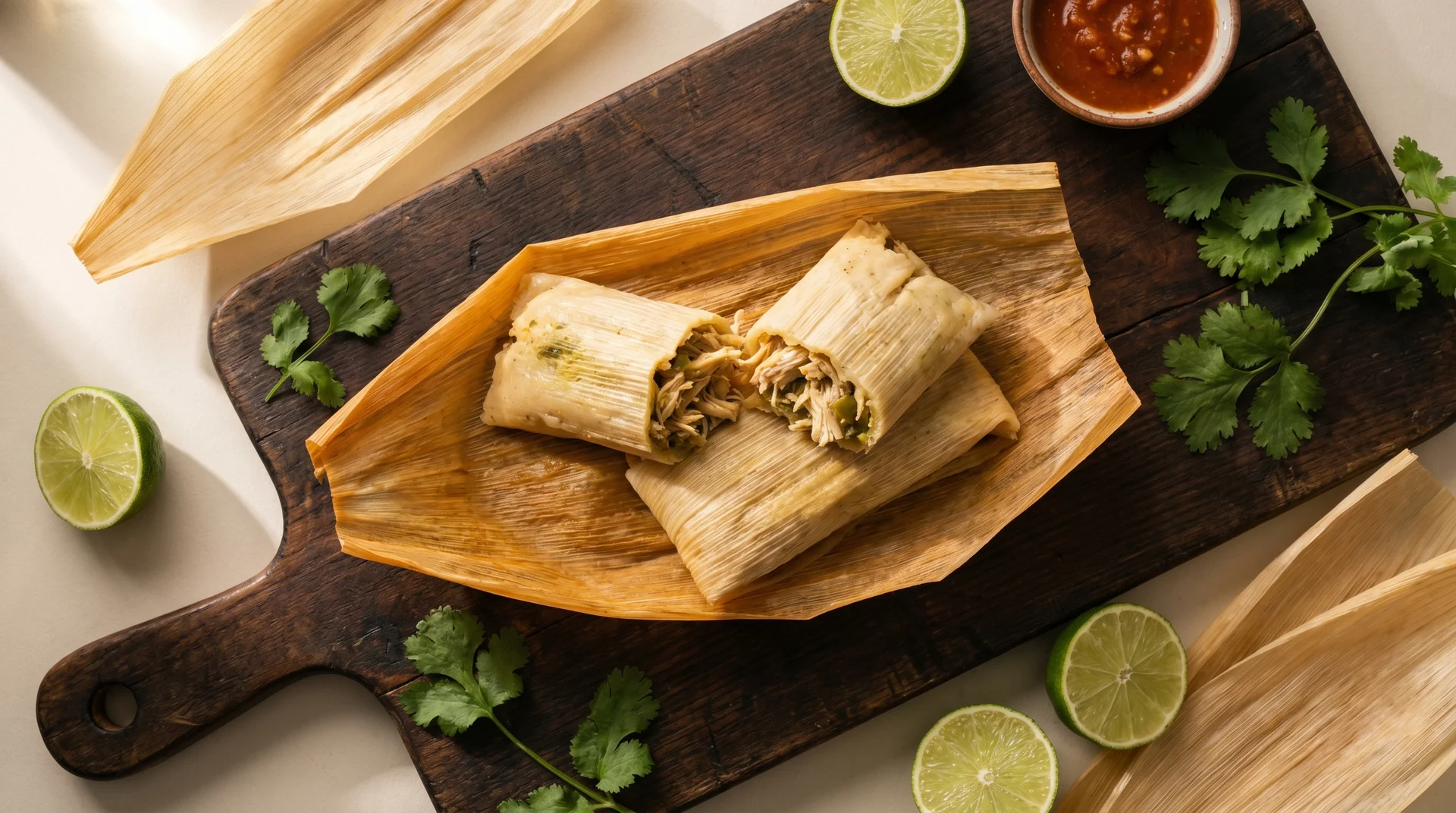
Tamales are a traditional Mesoamerican dish made from masa (corn dough) filled with meat, cheese, beans, or peppers, wrapped in corn husks or banana leaves, and steamed.
Dating back over 8,000 years to ancient Aztec and Mayan civilizations, tamales have been a cultural staple across Mexico, Central America, and the American Southwest for generations.
Today, they remain one of the most widely eaten foods in Latin cuisine.
This post covers the calories in a tamale, the full nutrition breakdown, how tamales compare to other foods, and practical tips to make them healthier.
Tamales Nutrition Facts
Before getting into the details, here is a quick snapshot of what you are actually eating when you sit down with a tamale.
| Nutrient | Amount Per Medium Tamale (approx. 4 oz) |
|---|---|
| Calories | 150 – 200 kcal |
| Total Fat | 7 – 11g |
| Saturated Fat | 2 – 4g |
| Carbohydrates | 20 – 25g |
| Dietary Fiber | 1 – 3g |
| Protein | 7 – 10g |
| Sodium | 350 – 500mg |
| Iron | 5 – 8% DV |
| Niacin (B3) | 6 – 10% DV |
| Folate | 4 – 7% DV |
| Zinc | 4 – 6% DV |
Are Tamales Good for Weight Loss?
Yes, tamales can fit into a weight loss plan, but only when portioned correctly.
One or two lean-filled tamales (chicken or bean) at around 150 to 200 calories each make a filling, protein-rich meal, especially when paired with non-starchy vegetables.
The issue arises when portions grow to three or four large tamales loaded with pork and extra sauce, pushing a single meal past 700 calories.
Stick to one or two, choose leaner fillings, and watch what you eat alongside them. Tamales are not a diet food by design, but they are far from the worst option on the table.
Calories by Tamale Type:
| Tamale Type | Approx. Calories (1 tamale) |
|---|---|
| Pork tamale | 200 – 250 kcal |
| Chicken tamale | 150 – 200 kcal |
| Cheese and chile tamale | 180 – 220 kcal |
| Bean tamale | 140 – 180 kcal |
| Sweet tamale | 170 – 210 kcal |
| Vegetable tamale | 130 – 160 kcal |
What Makes a Tamale Less Healthy?
Not all tamales are created equal. Several factors push them into less healthy territory, and knowing what to watch for helps you make smarter choices.
- Lard in the masa: Traditional recipes use lard, which is high in saturated fat. This is the single biggest source of added fat in most tamales.
- High-sodium fillings: Seasoned pork, canned beans, and pre-made chile sauces are often heavily salted, driving sodium well past 500mg per tamale.
- Extra sauce on top: Red or green chile sauce poured over tamales adds another 100 to 200mg of sodium and extra calories, most people do not account for.
- Large portion sizes: Restaurant servings often include two to three large tamales per order, which can quickly double or triple the calorie and sodium load.
- Sweet tamales with added sugar: Sweet tamales made with raisins, sugar, and lard combine saturated fat and simple sugars, making them more of a dessert than a balanced meal.
- Processed or packaged tamales: Store-bought tamales often contain preservatives, artificial flavoring, and sodium levels far above those of a homemade version.
3 Recipes for Healthy Tamales
These recipes use simple swaps that cut fat, reduce sodium, and boost nutrition without touching the flavor that makes tamales worth eating in the first place.
Recipe 1: Lean Chicken and Green Chile Tamales
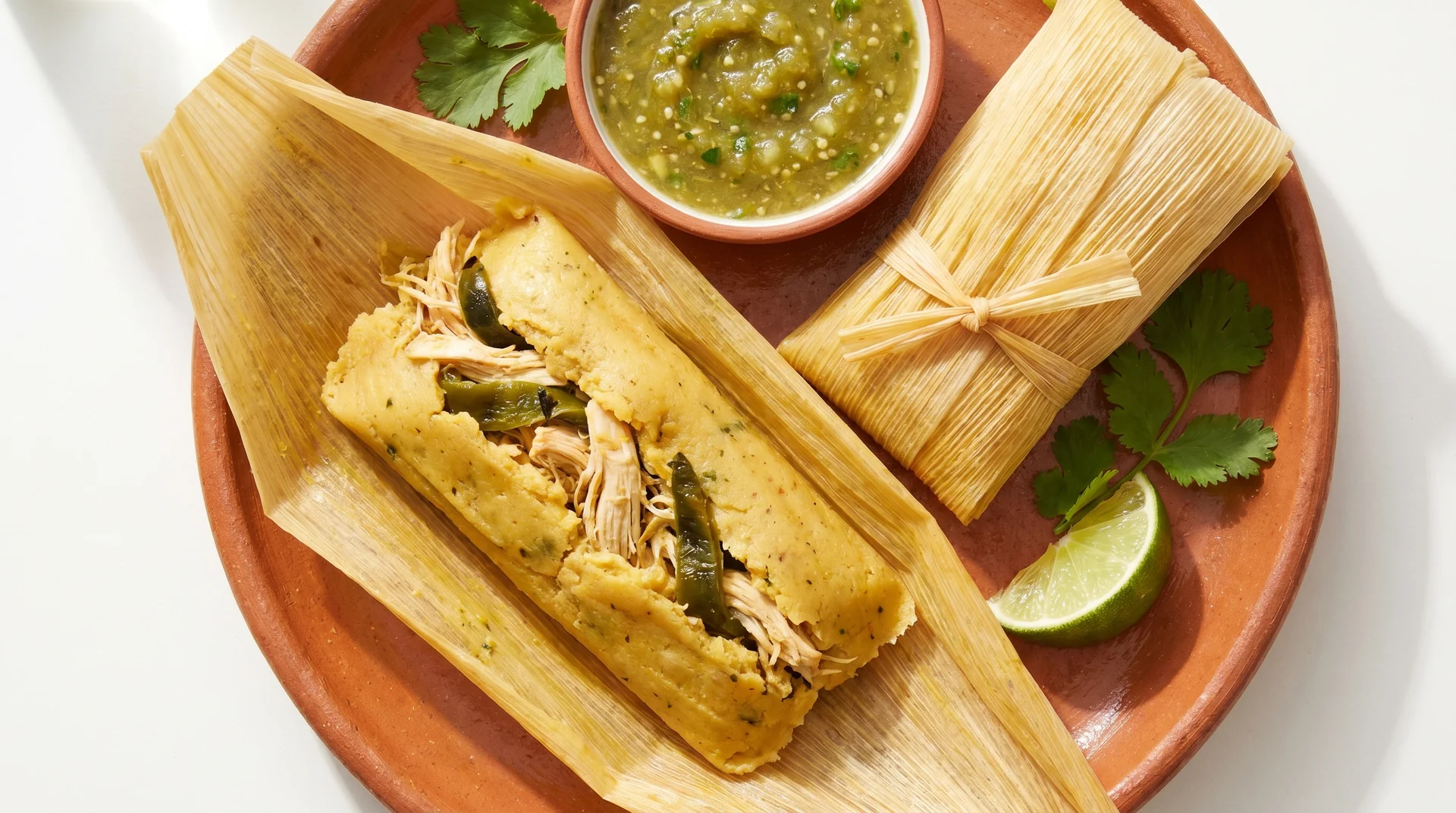
Chicken breast replaces fatty pork, and olive oil replaces lard. These tamales are high in protein, lower in saturated fat, and seasoned with fresh green chiles instead of processed sauce. Each tamale comes in at around 160 to 180 calories with 10 to 12 grams of protein, a solid, filling option that works for most diets.
Ingredients:
- 2 cups masa harina (no added salt variety)
- 1 1/4 cups low-sodium chicken broth
- 3 tablespoons olive oil
- 1/2 teaspoon cumin
- 1/2 teaspoon garlic powder
- 1/4 teaspoon salt
- 1 1/2 cups cooked, shredded chicken breast
- 1/2 cup roasted green chiles (diced)
- 12 dried corn husks (soaked in warm water for 30 minutes)
How to Make:
- Soak corn husks in warm water for at least 30 minutes, then drain and pat dry.
- Mix masa harina, olive oil, low-sodium broth, cumin, garlic powder, and salt in a large bowl until a soft dough forms. If the dough feels dry, add broth one tablespoon at a time.
- In a separate bowl, combine the shredded chicken and diced green chiles. Mix well.
- Spread about 2 to 3 tablespoons of masa onto the center of each corn husk, leaving a 1-inch border on all sides.
- Add 1 to 2 tablespoons of the chicken and chile filling to the center of the masa.
- Fold one long side of the husk over the filling, then fold the other side over. Fold up the narrow bottom end.
- Stand the tamales upright in a steamer basket with the open end facing up.
- Steam over medium heat for 45 to 55 minutes, checking water levels every 20 minutes.
- Tamales are done when the masa pulls cleanly away from the husk. Let rest for 5 minutes before serving.
Recipe 2: Black Bean and Roasted Veggie Tamales (Vegan)
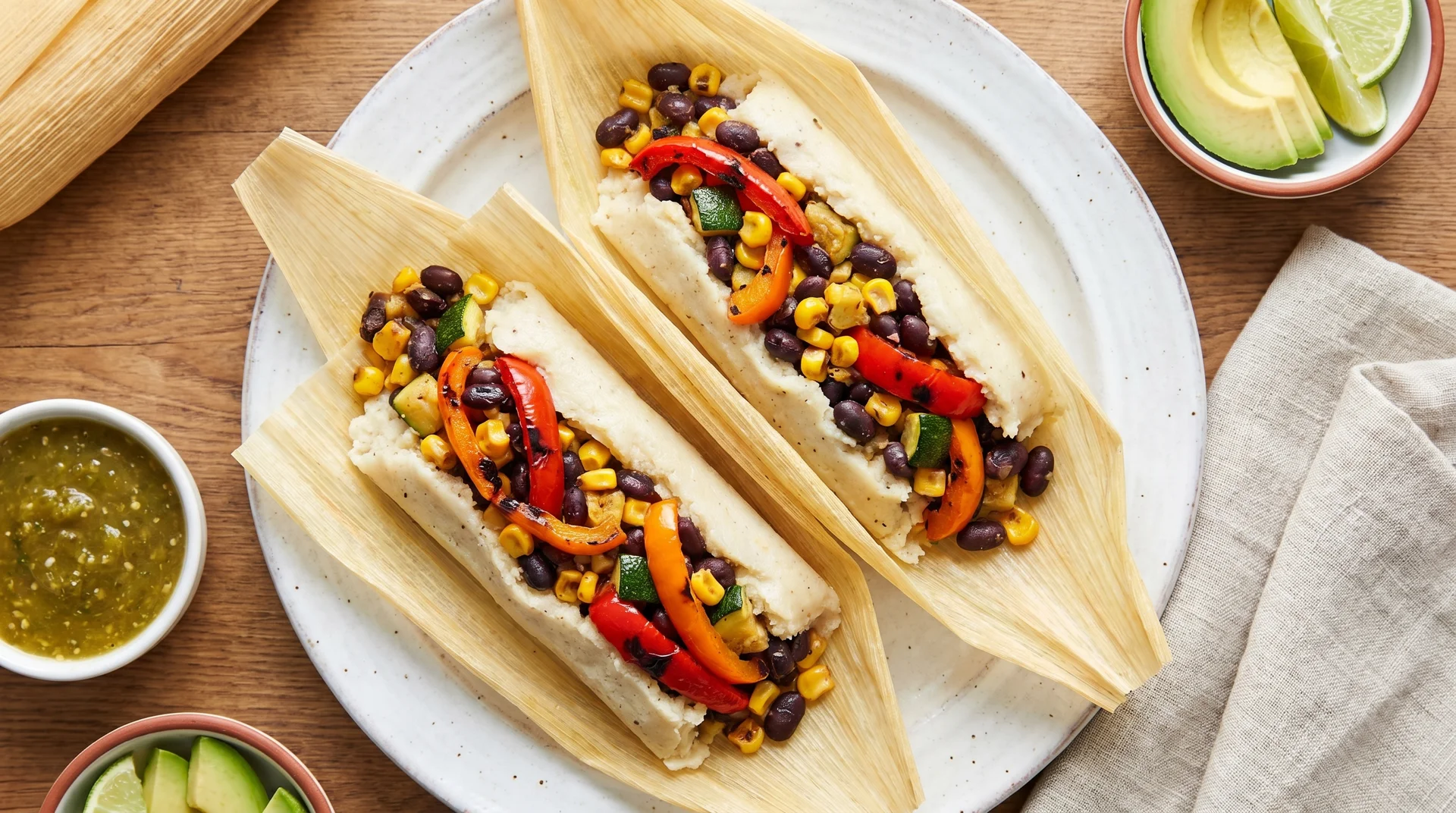
This fully plant-based recipe uses vegetable oil instead of lard and fills the masa with fiber-rich black beans and roasted vegetables. It is naturally gluten-free, dairy-free, and vegan. Each tamale provides 3 to 4 grams of fiber and around 140 to 160 calories, making it one of the lightest and most nutrient-dense options you can make.
Ingredients:
- 2 cups masa harina
- 1 1/4 cups low-sodium vegetable broth
- 3 tablespoons avocado oil (or olive oil)
- 1/2 teaspoon smoked paprika
- 1/2 teaspoon cumin
- 1/4 teaspoon salt
- 1 cup cooked black beans (rinsed if canned)
- 1 cup roasted vegetables (bell peppers, zucchini, and corn work well)
- 2 tablespoons salsa verde (low sodium)
- 12 corn husks (soaked)
How to Make:
- Soak corn husks in warm water for 30 minutes. Drain and set aside.
- Preheat the oven to 400°F. Dice bell peppers and zucchini, toss with a little olive oil and smoked paprika, and roast for 20 minutes until slightly charred. Set aside.
- Combine masa harina, avocado oil, vegetable broth, cumin, and salt. Mix until the dough holds together without cracking.
- Mash the black beans lightly with a fork, then mix with the roasted vegetables and salsa verde.
- Spread masa onto each softened corn husk, about 2 tablespoons per husk.
- Add 1 to 2 tablespoons of the bean-and-vegetable mixture to the center.
- Fold and wrap each husk the same way as Recipe 1.
- Steam for 40 to 50 minutes. Let rest before serving.
Recipe 3: Turkey and Red Chile Tamales (Lower Fat)
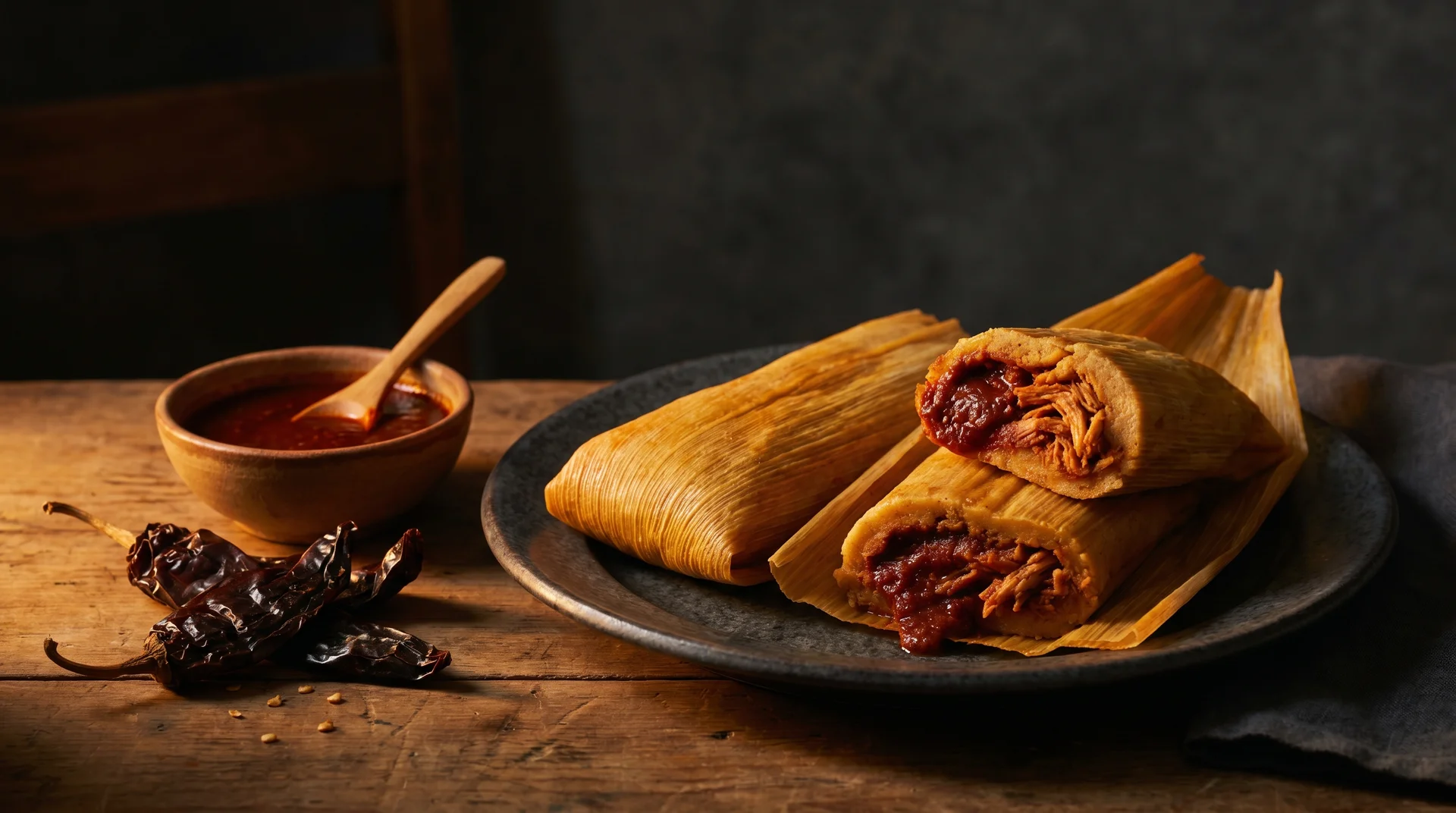
Ground turkey is leaner than pork and still delivers rich, savory flavor when seasoned correctly. This recipe uses a simple homemade red chile sauce made from dried chiles, which has far less sodium than jarred versions. Each tamale has roughly 170-190 calories and a good protein-to-fat ratio.
Ingredients:
- 2 cups masa harina
- 1 1/4 cups low-sodium chicken broth
- 2 tablespoons olive oil
- 1/4 teaspoon salt
- 1/2 teaspoon garlic powder
- 1 lb lean ground turkey
- 3 dried ancho or guajillo chiles (stemmed and seeded)
- 1 cup water
- 1/2 teaspoon cumin
- 1/4 teaspoon oregano
- 12 corn husks (soaked)
How to Make:
- Soak corn husks in warm water for 30 minutes.
- Toast the dried chiles in a dry skillet over medium heat for 30 seconds per side until fragrant. Place in a bowl, cover with hot water, and soak for 15 minutes. Blend chiles with 1 cup of water, cumin, and oregano until smooth.
- Brown the ground turkey in a skillet over medium heat. Drain any excess fat. Add the blended chile sauce and simmer on low for 10 minutes. Season lightly with salt.
- Mix masa harina, olive oil, broth, garlic powder, and salt into a smooth dough.
- Spread the masa onto each corn husk, then add 1 to 2 tablespoons of turkey filling.
- Fold and wrap as described in Recipe 1.
- Steam for 50 to 60 minutes. Rest for 5 minutes before serving.
Are Tamales Healthy Compared to Other Foods?
Tamales often get compared to other popular Mexican-style dishes. Putting the numbers side by side helps you see where tamales stand on their own terms.
Here is how one medium tamale stacks up against common alternatives.
| Food Item | Calories | Total Fat | Sodium | Protein | Fiber |
|---|---|---|---|---|---|
| Tamale (1 medium) | 150 – 200 | 7 – 11g | 350 – 500mg | 7 – 10g | 1 – 3g |
| Burrito (1 standard) | 500 – 900 | 20 – 40g | 900 – 1,500mg | 20 – 30g | 4 – 8g |
| Taco (1 corn tortilla) | 150 – 250 | 8 – 12g | 300 – 500mg | 8 – 12g | 1 – 2g |
| Quesadilla (1 serving) | 300 – 450 | 15 – 25g | 600 – 900mg | 12 – 20g | 1 – 3g |
| Enchilada (1 piece) | 200 – 350 | 10 – 18g | 400 – 700mg | 10 – 15g | 2 – 4g |
Tamales come out favorably against burritos and quesadillas on every front: fewer calories, less fat, and lower sodium. They are roughly comparable to corn tacos. If you are eating Mexican-style cuisine and watching your intake, one or two tamales with a vegetable side is one of the better choices on the menu.
Are Tamales Healthy for Specific Diets?
Tamales fit some dietary patterns better than others. Here is a clear, one-line answer for each common diet concern.
- Diabetes: Tamales contain 20 to 25g of carbs per piece, so portion control matters. Bean tamales with extra fiber are the better pick to help slow blood sugar spikes.
- Heart health: Traditional lard-based tamales are higher in saturated fat and sodium, so choosing plant-oil-based masa and low-sodium fillings significantly improves their heart-health profile.
- High-protein diets: Two chicken tamales give you roughly 16 to 20 grams of protein, making them a decent contributor to daily protein goals when paired with other protein sources.
- Weight management: One or two lean-filled tamales per meal fit a calorie-controlled diet without issue; the problem is portion size, not the tamale itself.
- Kidney disease: The sodium content (350 to 500mg per tamale) is a real concern for people managing kidney function. Homemade tamales with no added salt are the safest route.
- Pregnancy: Masa provides folate, which supports fetal development; just make sure fillings are fully cooked and sodium is kept in check throughout the meal.
How to Make Tamales Healthier
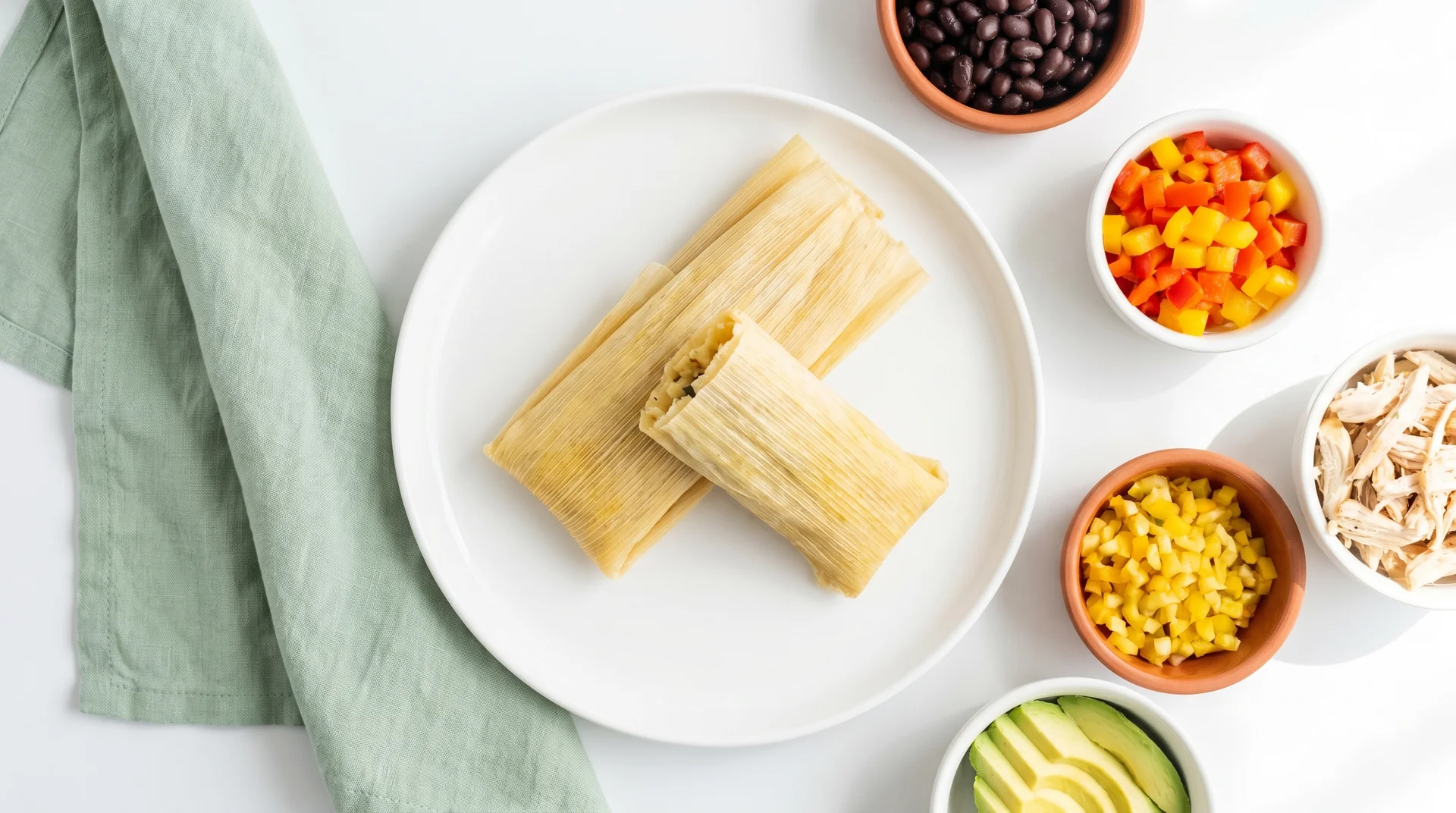
Small ingredient swaps in homemade tamales make a real difference in the final nutrition profile without changing the texture or flavor most people love.
Ingredient Swaps
- Replace lard with olive oil or avocado oil in the masa to cut saturated fat.
- Use low-sodium broth instead of regular broth when making masa dough.
- Choose no-salt-added masa harina as your base.
- Swap full-fat cheese for reduced-fat cheese or skip it entirely in non-cheese tamales.
- Use homemade chile sauce instead of jarred sauce to control sodium.
Healthier Filling Options
- Chicken breast: Lean, high in protein, and low in saturated fat, the most balanced meat option.
- Roasted vegetables: Bell peppers, zucchini, and corn add flavor, color, and nutrients for very few calories.
- Shrimp: Very low in fat and calories, high in protein and zinc, an underrated tamale filling.
- Pulled jackfruit: A great plant-based swap for shredded pork, low in calories and naturally fiber-rich when cooked with spices.
- Lentils with cumin: Packed with plant protein and iron, lentils make a hearty, budget-friendly filling that holds its shape well inside masa.
- Egg whites and spinach: A breakfast-style filling that keeps fat very low while delivering a clean source of protein and iron in every bite.
- Tuna with jalapeño: Canned tuna in water is one of the highest-protein, lowest-fat fillings you can use, and jalapeño adds heat without extra calories.
Are Tamales Gluten-Free and Dairy-Free?
Traditional tamales made with masa harina are naturally gluten-free because masa is made from corn, not wheat.
Most classic tamale recipes are also dairy-free, since the dough is made with lard or oil and the fillings are typically meat, beans, or vegetables.
The exception is cheese tamales or any recipe that includes crema or sour cream, which are not dairy-free. If you have celiac disease, always confirm with the manufacturer that the masa harina was processed in a gluten-free facility, as cross-contamination can occur in some commercial brands.
Look for masa harina labeled as certified gluten-free, such as Maseca Gluten-Free, which is widely available in the U.S.
Final Notes
Tamales are healthy when you pay attention to what goes in them and how many you eat.
One or two lean-filled tamales give you a balanced mix of protein, complex carbs, fiber, and key nutrients like iron and B vitamins.
The real concerns are lard-based masa, high-sodium fillings, and large portion sizes. Make them at home with olive oil, lean protein, and low-sodium seasoning, and they become a genuinely nutritious meal.
Buy them at a restaurant without checking the portion, and the numbers climb quickly. The tamale itself is not the problem. What you put inside and how much you eat is what counts.