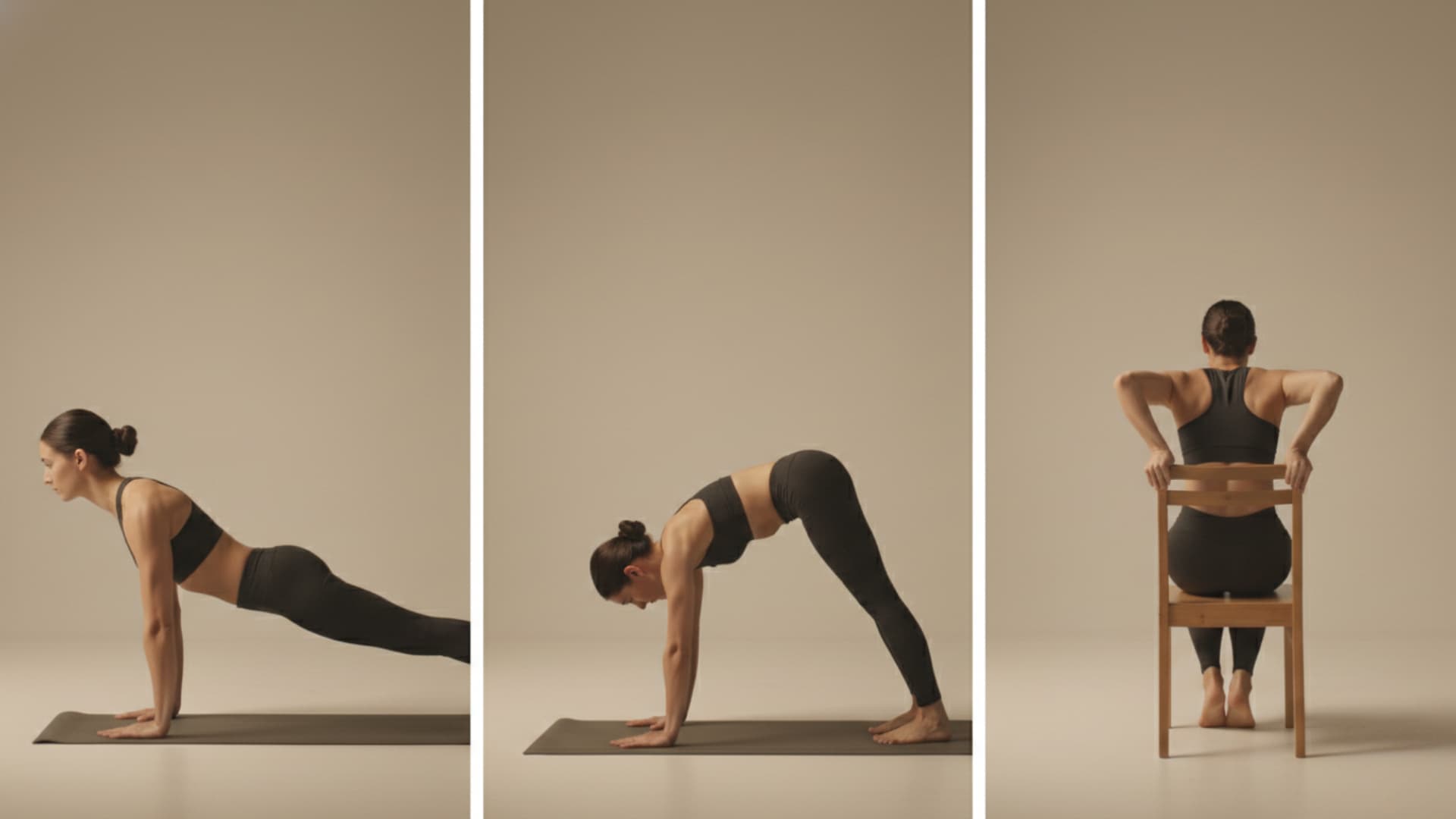
You don’t need a gym, barbells, or cables to build a strong upper body. Bodyweight exercises can effectively target the chest, arms, shoulders, and back while improving mobility and endurance.
Many people put off starting because they assume equipment is necessary, but your own body weight provides enough resistance to challenge your muscles in multiple ways.
This guide covers upper-body bodyweight exercises, with step-by-step instructions for each one, and explains how to combine them into a structured workout you can do anywhere, anytime.
Muscles Worked in Upper Body Bodyweight Training
Here is a quick breakdown of the muscles your upper body training will target.
Primary Muscle Groups:
These muscles carry the greatest load in upper-body bodyweight training.
- Chest (Pectorals): The pectorals control pushing movements. Push-up variations and dip-based exercises fire them directly.
- Shoulders (Deltoids): The deltoids support pressing and overhead movements. Pike push-ups and handstand holds target them hard.
- Triceps: The triceps extend the elbow. Every push-up and dip variation works them.
- Biceps: The biceps flex the elbow. They activate during pulling-style bodyweight movements.
Secondary Muscle Groups:
These muscles work as stabilizers during most upper-body exercises.
- Core: A stiff core keeps your spine neutral during push-ups and planks. Without it, your form collapses fast.
- Upper Back (Rhomboids and Traps): These muscles hold your shoulder blades in the right position during pressing movements.
- Rotator Cuff: These small muscles protect your shoulder joint. They stay active in almost every upper-body exercise.
15 Upper Body Bodyweight Exercises
These exercises cover every major muscle in your upper body. They range from beginner-friendly to advanced. Start where your current strength puts you and build from there.
1. Push-Up
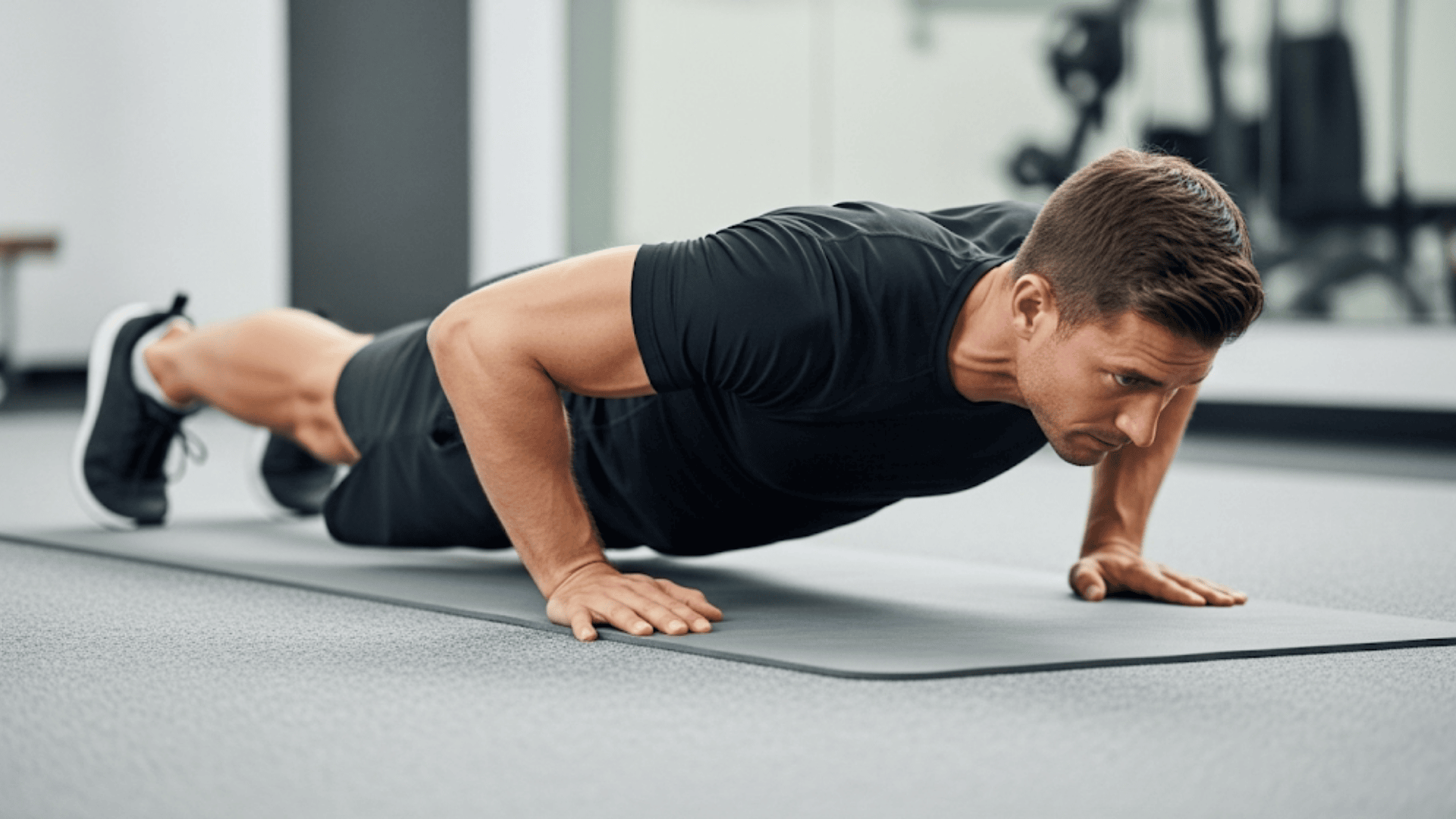
The push-up is the foundation of upper body bodyweight training. If you only had time for one exercise, this would be it. Master this one before moving to harder variations.
The push-up targets your chest, triceps, and front deltoids. It also works your core as a stabilizer. When done correctly, it is one of the most effective pressing movements you can do without equipment.
Muscles It Works:
- Chest (pectorals)
- Triceps
- Front deltoids (anterior deltoids)
- Core (stabilizer)
How to Do It:
- Start in a high plank. Hands slightly wider than shoulder-width.
- Keep your body in a straight line from head to heels.
- Lower your chest toward the floor. Elbows at 45 degrees from your torso.
- Stop just before your chest touches the floor.
- Press back up to the start position. That is one rep.
Reps and Sets:
- Beginner: 3 sets of 5 to 8 reps
- Intermediate: 3 to 4 sets of 10 to 15 reps
2. Wide Push-Up
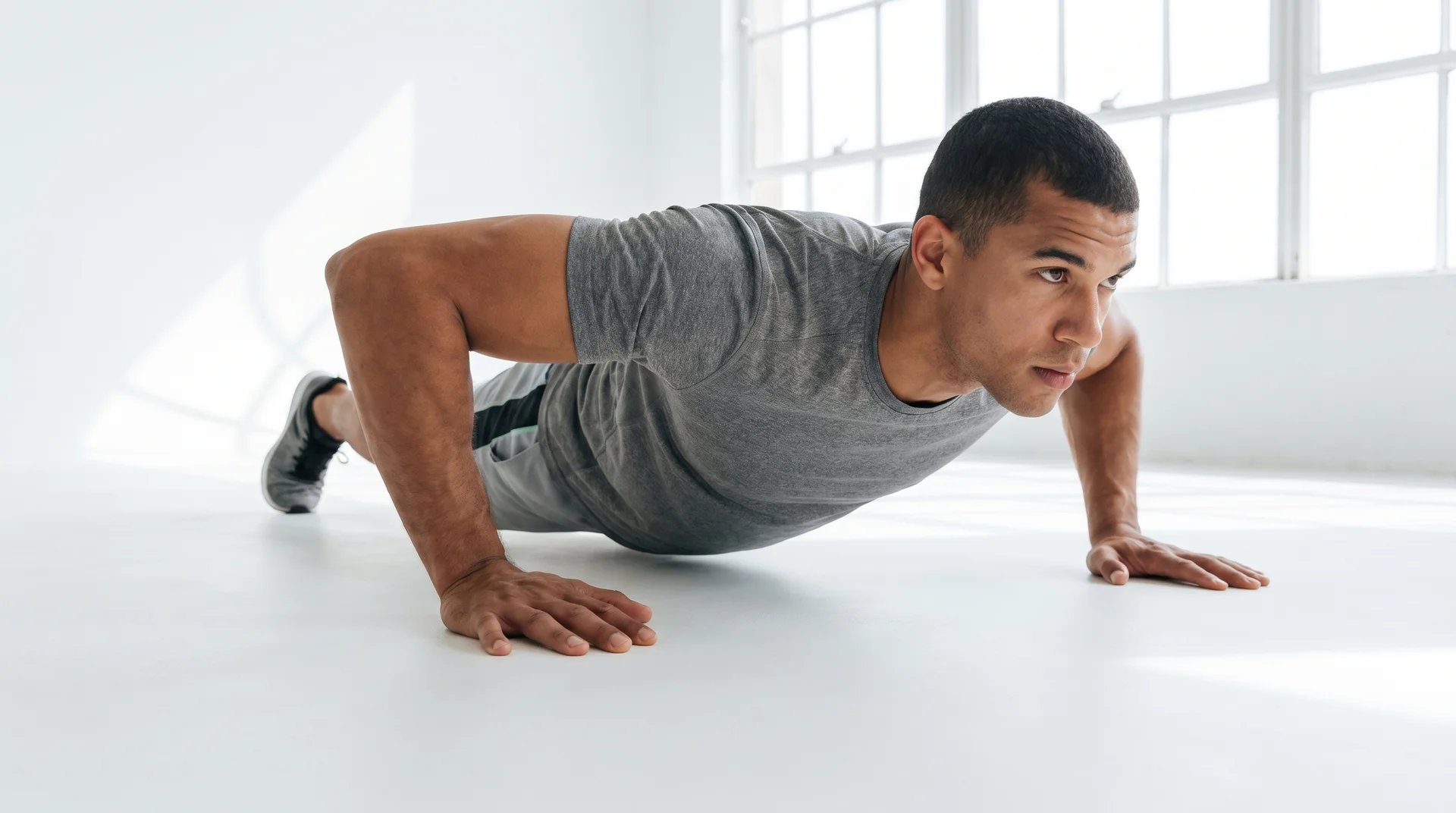
Wide push-ups shift more of the work onto the outer chest. The wider hand position gives your pecs a longer range of motion. This small change makes a noticeable difference in how your chest develops.
If your goal is a broader-looking chest, wide push-ups belong in every upper body session. They stretch the pectoral major more at the bottom of the movement than a standard push-up does.
Muscles It Works:
- Outer chest (pectorals)
- Front deltoids
- Triceps (secondary)
How to Do It:
- Set up in a high plank. Place hands wider than shoulder-width.
- Keep your body straight and core tight.
- Lower your chest between your hands.
- Feel a stretch across your chest at the bottom.
- Press back up to start. That is one rep.
Reps and Sets:
- Beginner: 3 sets of 6 to 10 reps
- Intermediate: 3 to 4 sets of 10 to 15 reps
3. Diamond Push-Up

The diamond push-up is one of the best bodyweight arm exercises for your triceps. The narrow hand position shifts most of the load off the chest and onto the back of your arms.
This variation is harder than the standard push-up. If you struggle with it at first, that is your triceps telling you they need more work. Stick with it.
Muscles It Works:
- Triceps (primary)
- Inner chest
- Front deltoids
How to Do It:
- Set up in a high plank. Bring your hands together under your chest.
- Touch your index fingers and thumbs to form a diamond shape.
- Lower your chest toward your hands.
- Keep elbows pointed back, not flared out to the sides.
- Press back up to start. That is one rep.
Reps and Sets:
- Beginner: 3 sets of 4 to 8 reps
- Intermediate: 3 sets of 10 to 12 reps
4. Pike Push-Up
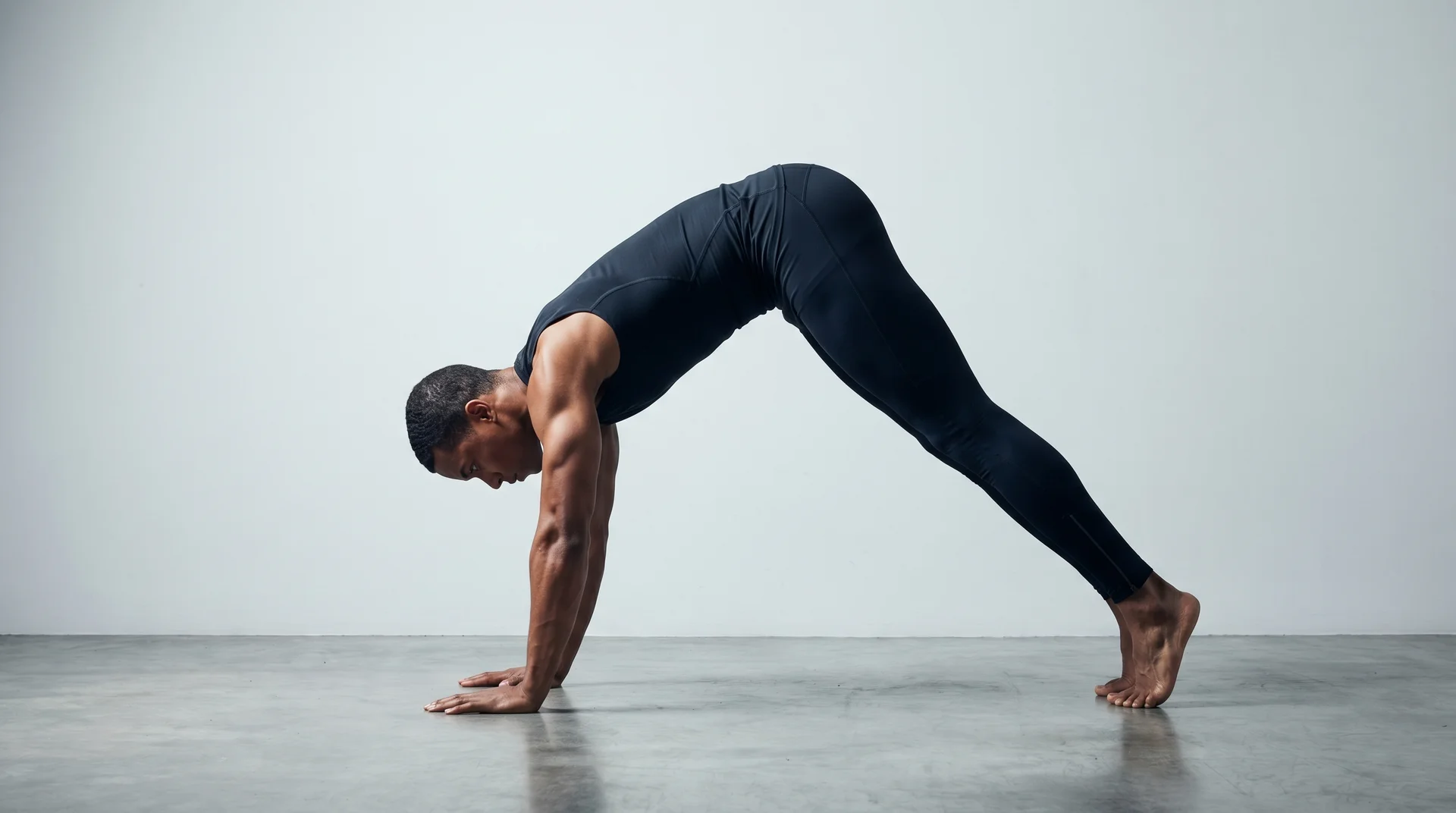
Pike push-ups are the closest thing to an overhead press you can do without weights. They target the shoulders hard. They also prepare your body for more advanced movements, such as the wall handstand hold.
If you want stronger, more defined shoulders, add pike push-ups to every upper body session. The setup is simple, but the difficulty is real.
Muscles It Works:
- Shoulders (deltoids)
- Triceps
- Upper chest
How to Do It:
- Start in a high plank. Walk your feet toward your hands.
- Raise your hips high. Your body forms an upside-down V.
- Bend your elbows and lower the top of your head toward the floor.
- Stop just before your head touches.
- Press back up through your palms. That is one rep.
Reps and Sets:
- Beginner: 3 sets of 5 to 8 reps
- Intermediate: 3 to 4 sets of 8 to 12 reps
5. Decline Push-Up
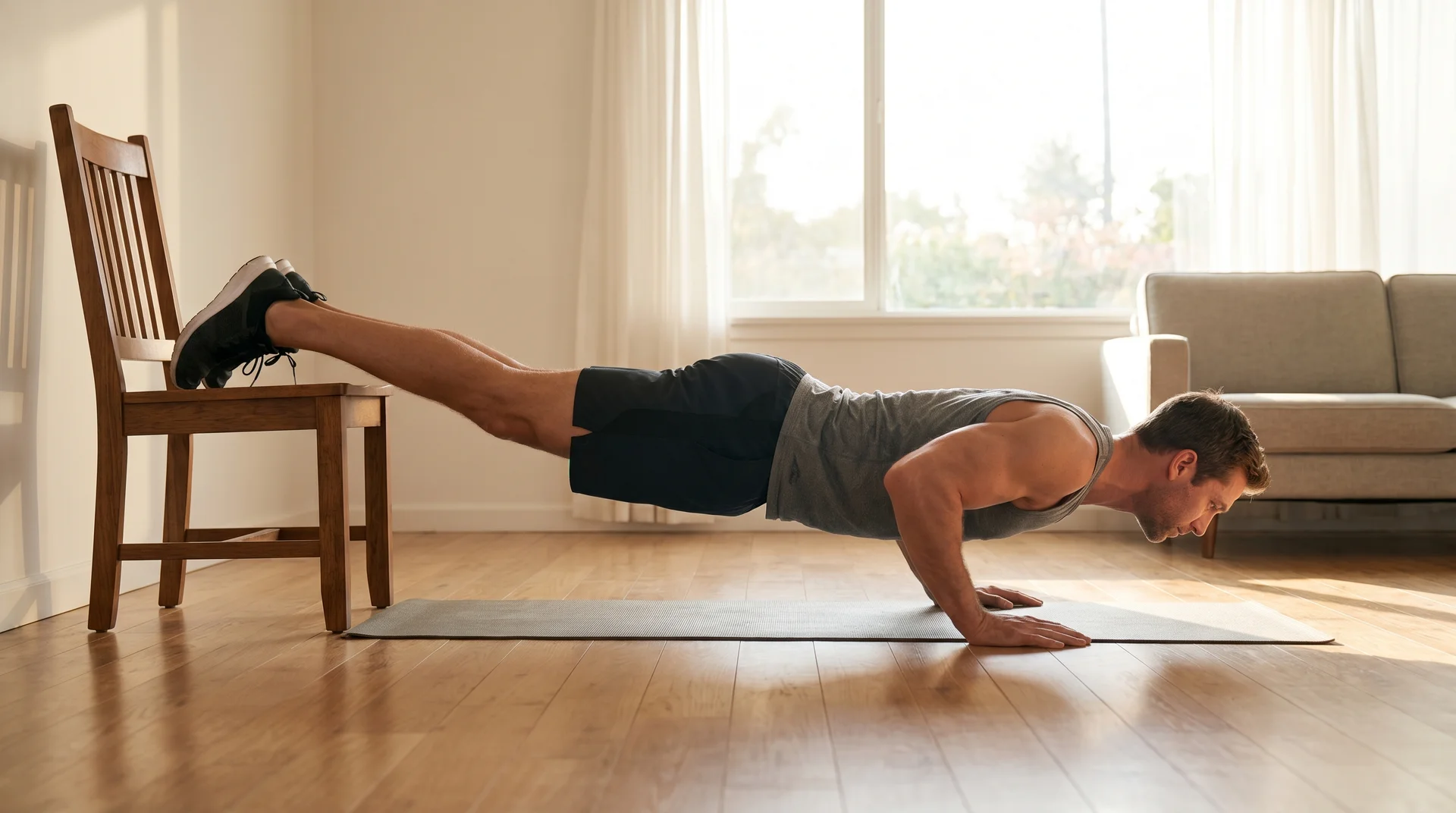
The decline push-up targets the upper chest and front deltoids. Elevating your feet changes the angle of the press. This hits the upper chest in a way that flat push-ups simply cannot.
You only need a chair, a step, or a couch. The higher your feet, the harder the exercise becomes.
Muscles It Works:
- Upper chest (clavicular pectorals)
- Front deltoids
- Triceps
How to Do It:
- Place your feet on a raised surface such as a chair or step.
- Walk your hands out into a push-up position.
- Lower your chest toward the floor.
- Keep your elbows at 45 degrees from your body.
- Press back up to start. That is one rep.
Reps and Sets:
- Beginner: 3 sets of 5 to 8 reps
- Intermediate: 3 sets of 10 to 12 reps
6. Tricep Dip (Chair Dip)
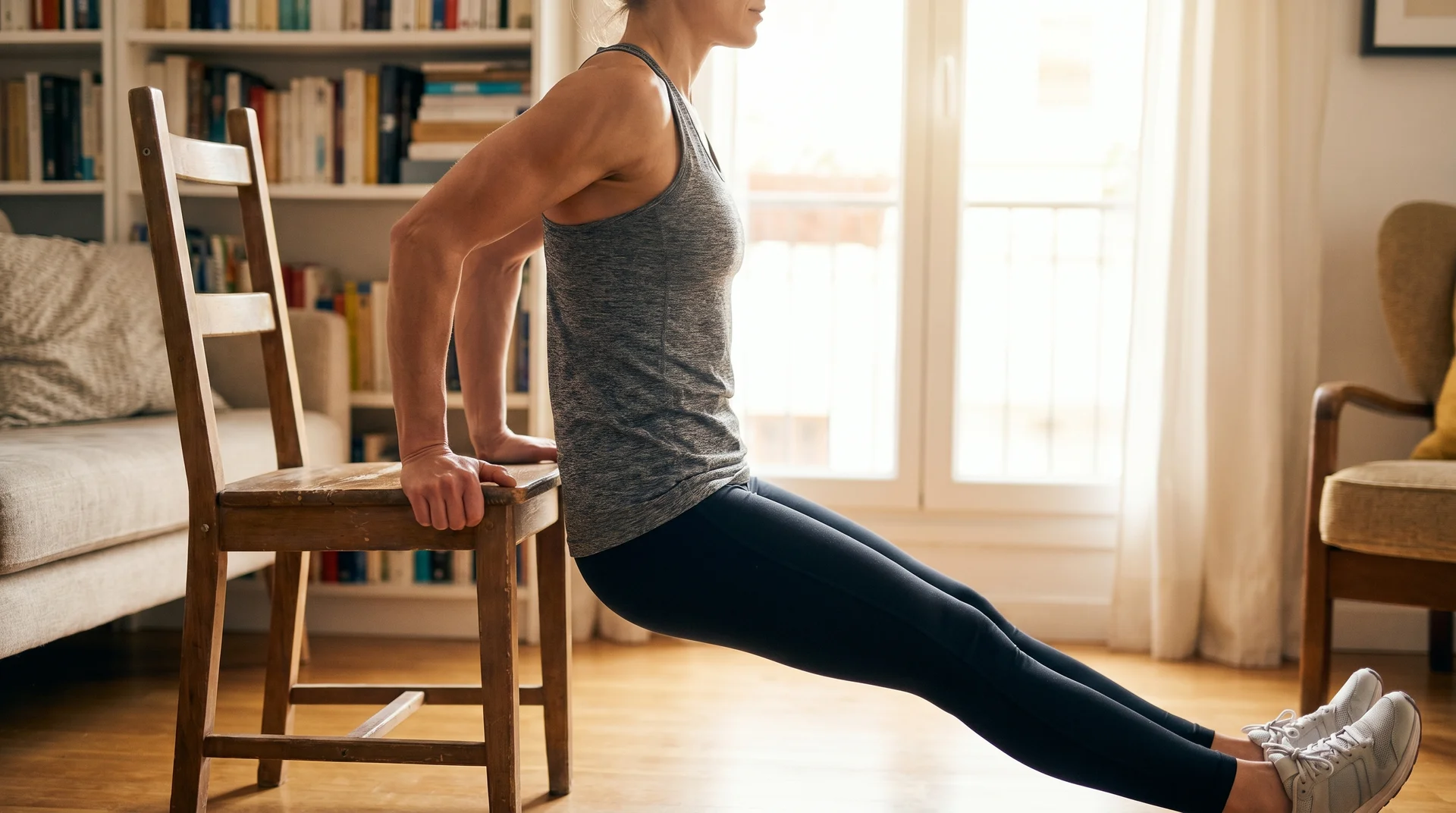
Tricep dips are one of the most direct bodyweight arm exercises you can do at home. You sit on the edge of a chair, lower your body, and press back up. Simple to set up. Intense on the triceps.
This exercise also works the front of your shoulders and a portion of your lower chest. It is a solid choice for anyone looking to build arm strength without a gym.
Muscles It Works:
- Triceps (primary)
- Front deltoids
- Lower chest (secondary)
How to Do It:
- Sit on the edge of a sturdy chair. Place your hands beside your hips, fingers pointing forward.
- Slide your hips off the chair. Extend your legs or keep your knees bent.
- Lower your body by bending your elbows.
- Stop when elbows reach 90 degrees.
- Press back up to start. That is one rep.
Reps and Sets:
- Beginner: 3 sets of 5 to 8 reps
- Intermediate: 3 sets of 10 to 15 reps
7. Plank Shoulder Tap
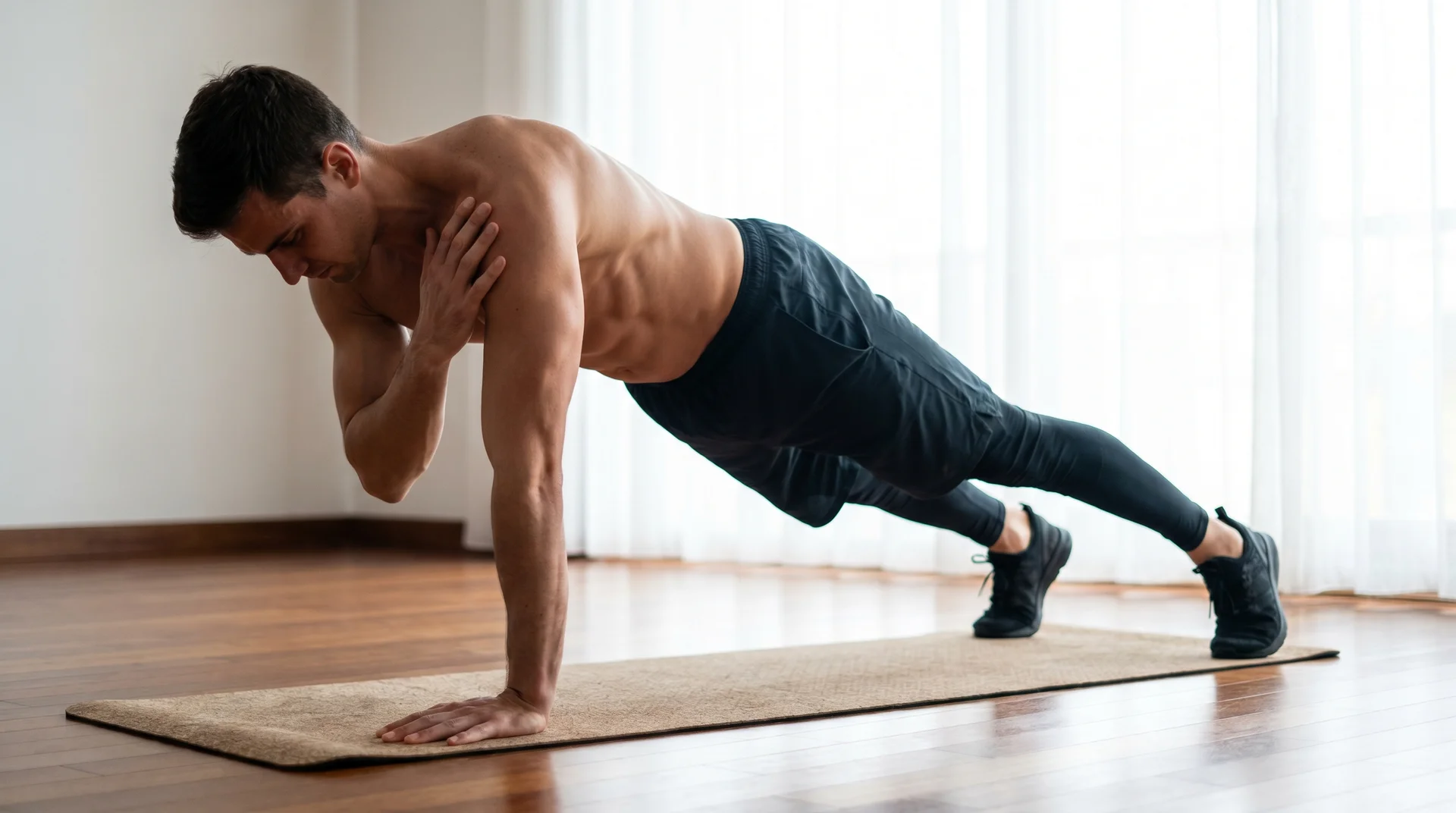
The plank shoulder tap looks simple. It is not. This exercise forces your shoulders to stabilize your body while resisting rotation. It builds shoulder strength and core control at the same time.
This is one of the best exercises for shoulder endurance. It teaches your body to stay stable under load, which carries over directly to every other pressing movement you do.
Muscles It Works:
- Shoulders (deltoids)
- Core (primary stabilizer)
- Triceps
How to Do It:
- Start in a high plank position. Feet hip-width apart.
- Keep your hips square and completely still.
- Lift your right hand and tap your left shoulder.
- Return your hand to the floor.
- Repeat on the other side. That is one full rep.
Reps and Sets:
- Beginner: 3 sets of 8 taps per side
- Intermediate: 3 sets of 12 to 15 taps per side
8. Inchworm

The inchworm activates your entire upper body. It warms up the shoulders, chest, triceps, and core in a single movement. Many coaches use it as a warm-up, but it works just as well as a training exercise.
This is a great choice when you want full-range upper-body activation without placing a heavy load on any single muscle group.
Muscles It Works:
- Shoulders
- Chest
- Triceps
- Core
- Hamstrings (during the walk)
How to Do It:
- Stand tall. Hinge at the hips and place both hands on the floor.
- Walk your hands forward until you reach a high plank.
- Do one push-up (optional but recommended).
- Walk your hands back toward your feet.
- Stand back up. That is one rep.
Reps and Sets:
- Beginner: 3 sets of 5 reps
- Intermediate: 3 sets of 8 to 10 reps
9. Bear Crawl Hold
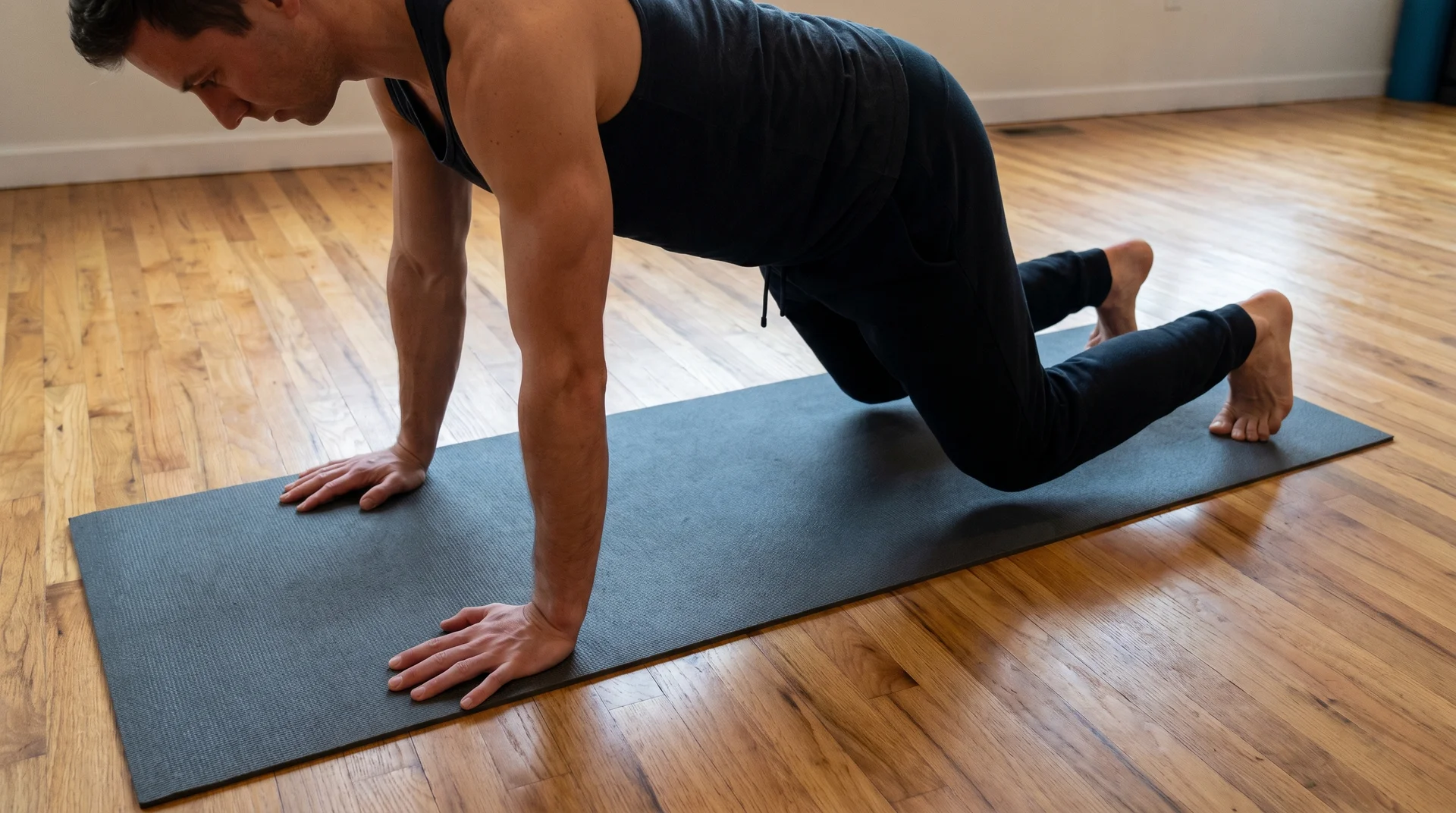
The bear crawl hold is a static exercise that builds serious shoulder stability. You hover just above the floor in a four-point position. Your shoulders work hard to keep you steady throughout the hold.
Most people skip this one entirely. That is a mistake. It builds the kind of shoulder strength that improves your push-up and pressing performance in a way most exercises cannot.
Muscles It Works
- Shoulders (deltoids and rotator cuff)
- Core
- Wrists and forearms
How to Do It:
- Start on all fours. Hands under shoulders, knees under hips.
- Curl your toes under. Lift your knees 1 to 2 inches off the floor.
- Hold this position with your back flat.
- Breathe steadily. Do not let your hips rise or drop.
- Hold for the target time.
Reps and Sets:
- Beginner: 3 sets of 15 to 20 seconds
- Intermediate: 3 sets of 30 to 45 seconds
10. Superman Hold
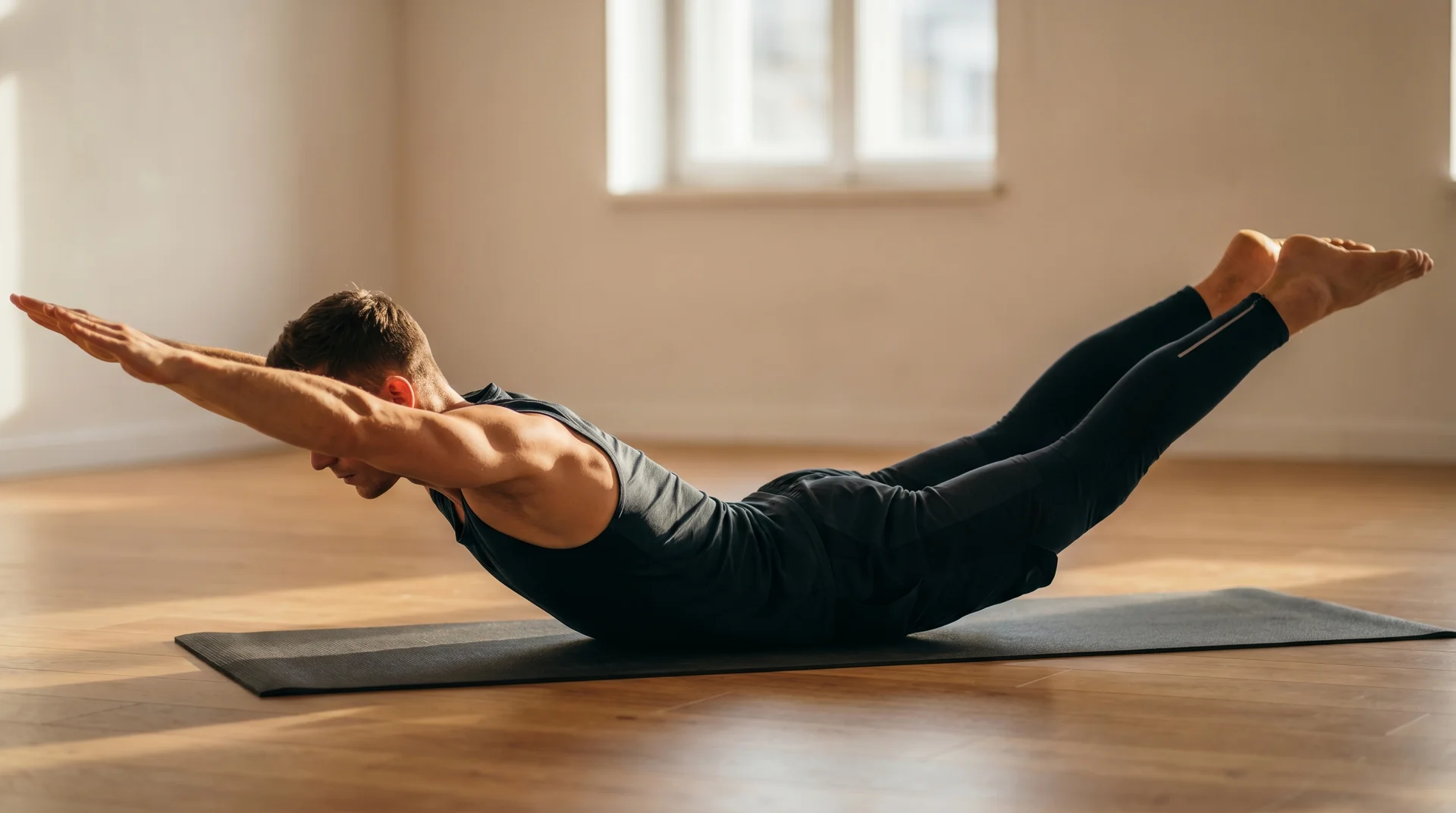
The Superman holds targets your upper back, lower traps, and rear deltoids. These are muscles that most pushing exercises ignore completely. Without training them, your posture suffers, and your shoulder health declines over time.
This exercise is simple but fills a gap that most upper-body programs leave wide open. It is one of the most overlooked movements in bodyweight training.
Muscles It Works:
- Upper back (lower traps, rhomboids)
- Rear deltoids
- Spinal erectors
How to Do It:
- Lie face down with both arms extended in front of you.
- Lift your chest, arms, and legs off the floor at the same time.
- Squeeze your shoulder blades together at the top.
- Hold briefly at the top.
- Lower back down slowly. That is one rep.
Reps and Sets:
- Beginner: 3 sets of 8 to 10 reps
- Intermediate: 3 sets of 12 to 15 reps
11. Reverse Snow Angel
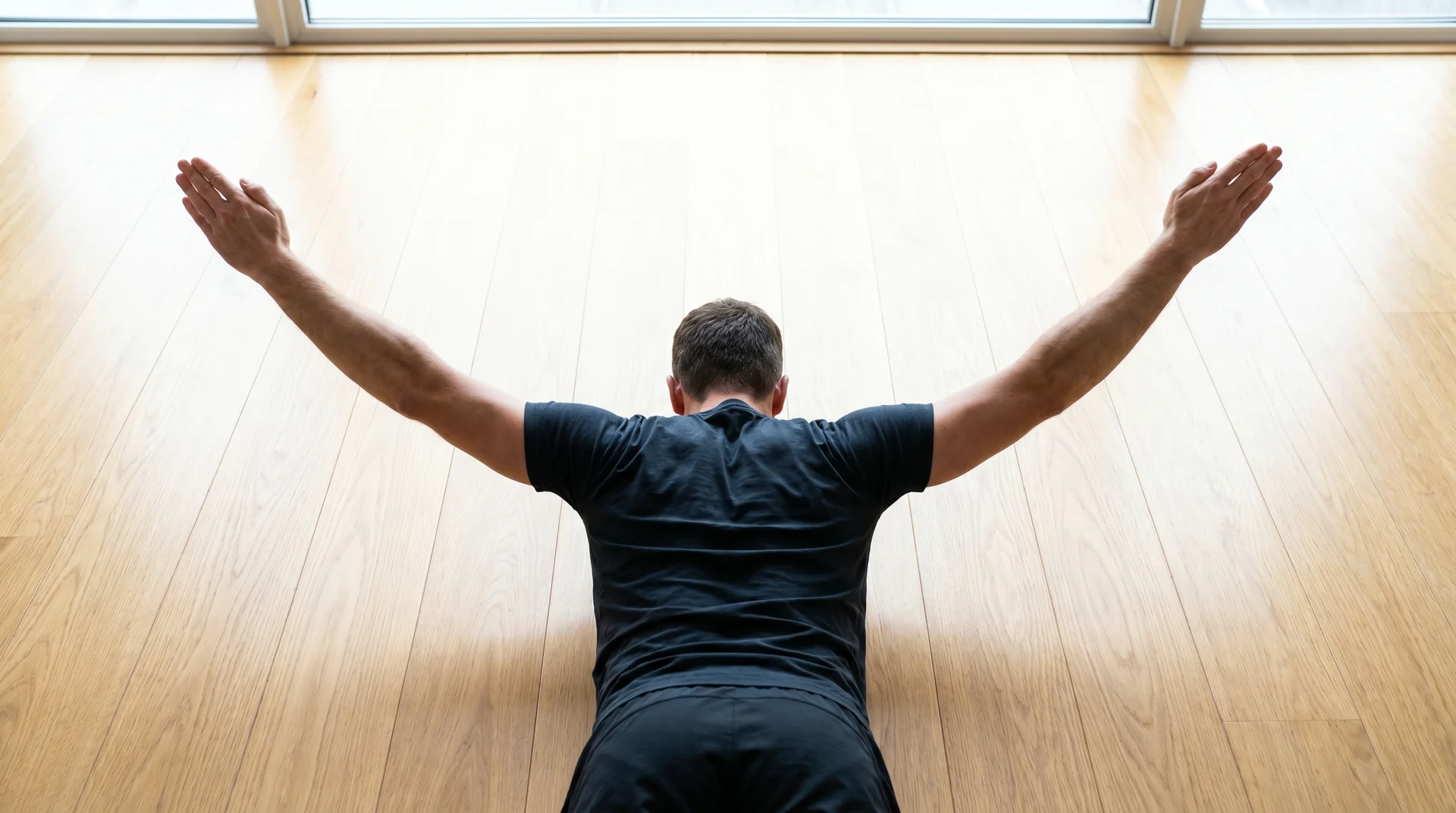
The reverse snow angel is one of the best exercises for your upper back and rear shoulders. You lie face down and sweep your arms in wide arcs from your hips to overhead. It sounds easy. It is not.
This exercise corrects the muscular imbalances that build up from too much pushing and not enough pulling. It builds the muscles that hold your shoulders back and naturally open your chest.
Muscles It Works:
- Rear deltoids
- Rhomboids
- Lower traps
- Rotator cuff
How to Do It:
- Lie face down with arms at your sides, palms facing down.
- Lift your arms slightly off the floor.
- Sweep them in a wide arc up toward your head.
- Keep your arms off the floor throughout the full movement.
- Reverse the arc back to the start. That is one rep.
Reps and Sets:
- Beginner: 3 sets of 8 reps
- Intermediate: 3 sets of 12 to 15 reps
12. Bodyweight Tricep Extension
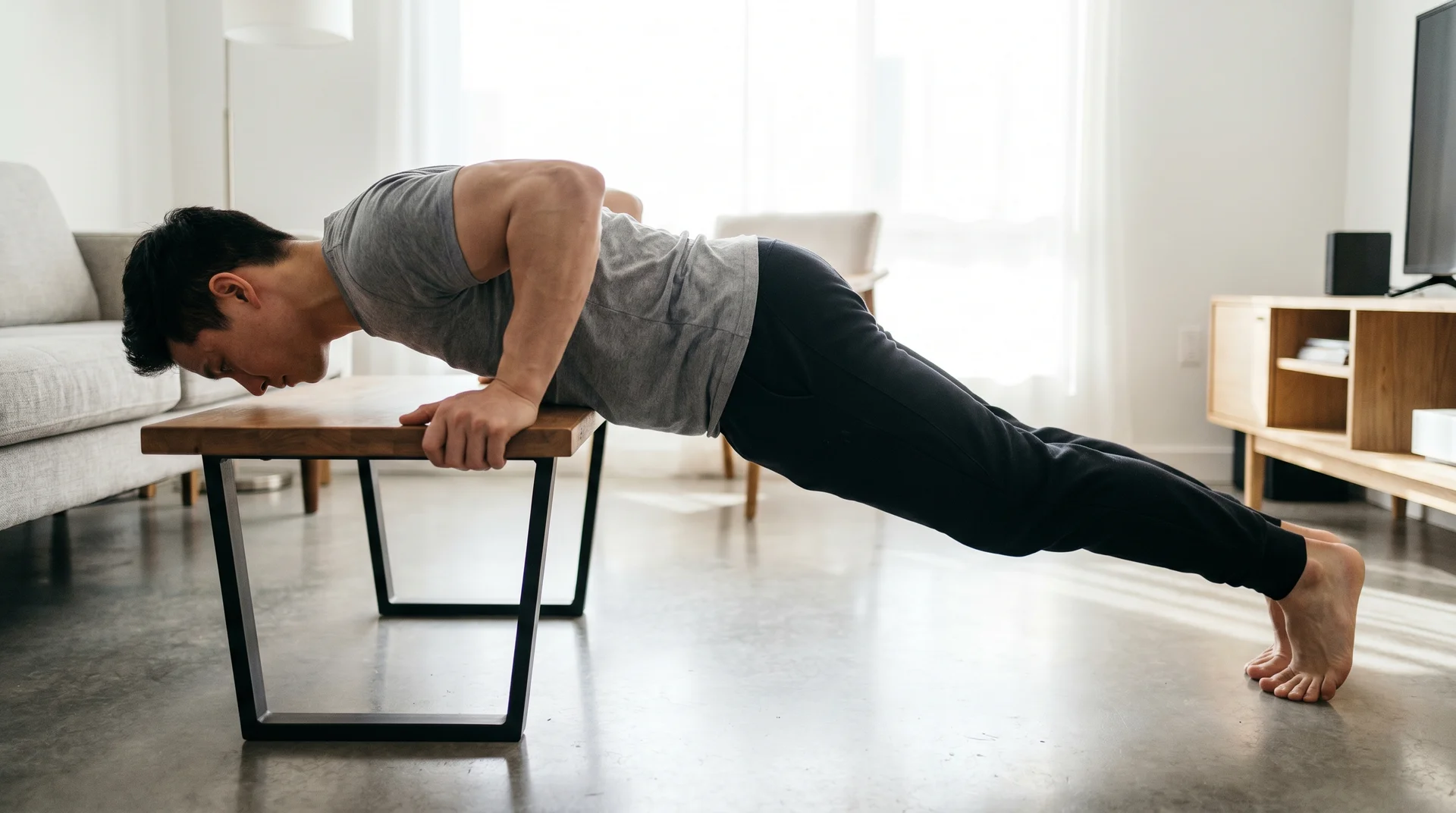
The bodyweight tricep extension is one of the most demanding bodyweight arm exercises you can do for the back of your arms.
It uses a wall or raised surface to load the triceps through a long range of motion. The leverage makes it far tougher than it looks. If diamond push-ups feel too easy, this exercise will get your attention fast.
Muscles It Works:
- Triceps (primary)
- Front deltoids (secondary)
How to Do It:
- Place your hands on a wall or the edge of a surface at chest height.
- Walk your feet back until your body is at a diagonal angle.
- Keep your arms straight. Bend only at the elbows.
- Lower your forehead toward the surface.
- Press back out using only your triceps. That is one rep.
Reps and Sets:
- Beginner: 3 sets of 5 to 8 reps (wall variation)
- Intermediate: 3 sets of 8 to 10 reps (lower surface)
13. Archer Push-Up
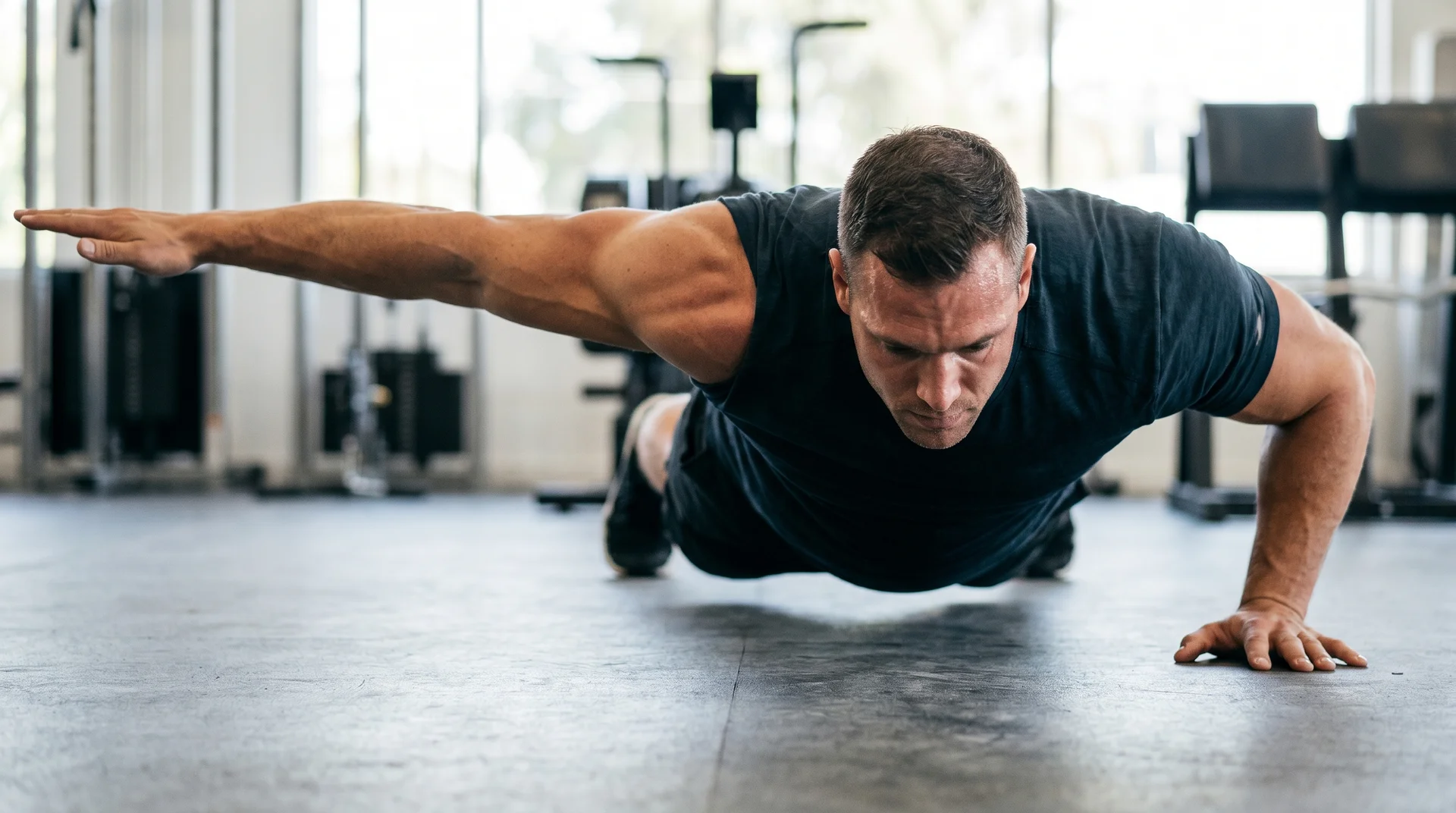
The archer push-up is a unilateral exercise. One arm does the pressing while the other stays extended for balance. Each arm works independently, which builds more strength per side than a standard push-up can.
This is a challenging movement. Build a solid base with standard push-ups and wide push-ups before attempting this one.
Muscles It Works:
- Chest (unilateral focus per side)
- Triceps
- Front deltoids
How to Do It:
- Set up in a wide push-up position. Hands well outside shoulder-width.
- Shift your weight to the right side. Bend your right elbow to lower your body.
- Keep your left arm straight throughout the movement.
- Press back up to start.
- Repeat on the left side. That is one full rep.
Reps and Sets:
- Intermediate: 3 sets of 4 to 6 reps per side
- Advanced: 3 to 4 sets of 6 to 10 reps per side
14. Pseudo Planche Push-Up
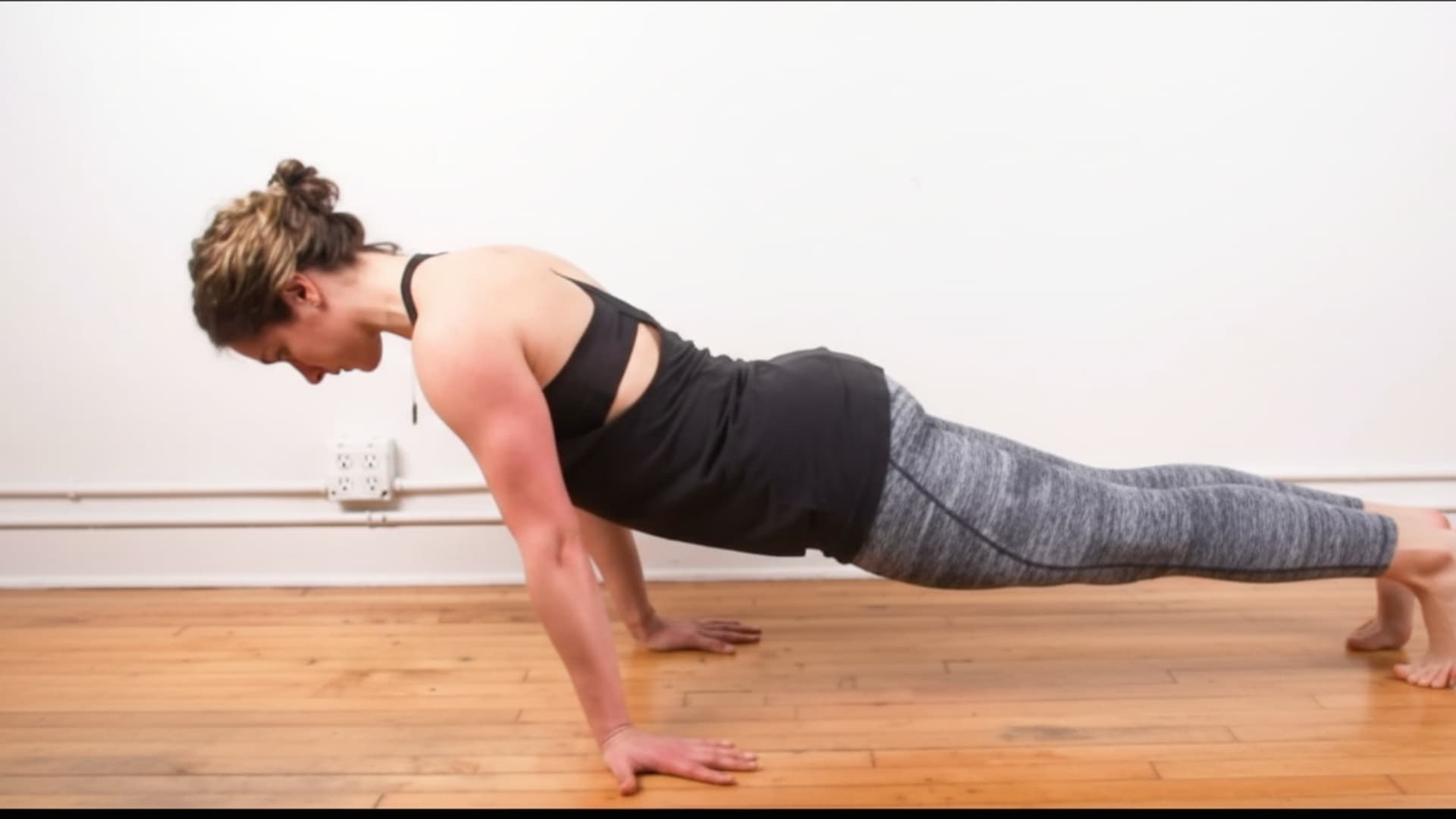
The pseudo planche push-up is an advanced pressing movement that places a heavy load on your shoulders and chest. The forward hand placement changes the angle of force. It makes the exercise far more demanding than any standard push-up variation.
This requires wrist and shoulder strength built through months of consistent training. Do not skip to this one early.
Muscles It Works:
- Shoulders (primary)
- Chest
- Triceps
- Wrists and forearms
How to Do It:
- Set up in a plank. Move your hands back toward your hips.
- Point your fingers slightly outward or backward.
- Lean your torso forward so your shoulders are past your wrists.
- Lower your chest toward the floor.
- Press back up to start. That is one rep.
Reps and Sets:
- Advanced: 3 sets of 3 to 6 reps
15. Wall Handstand Hold
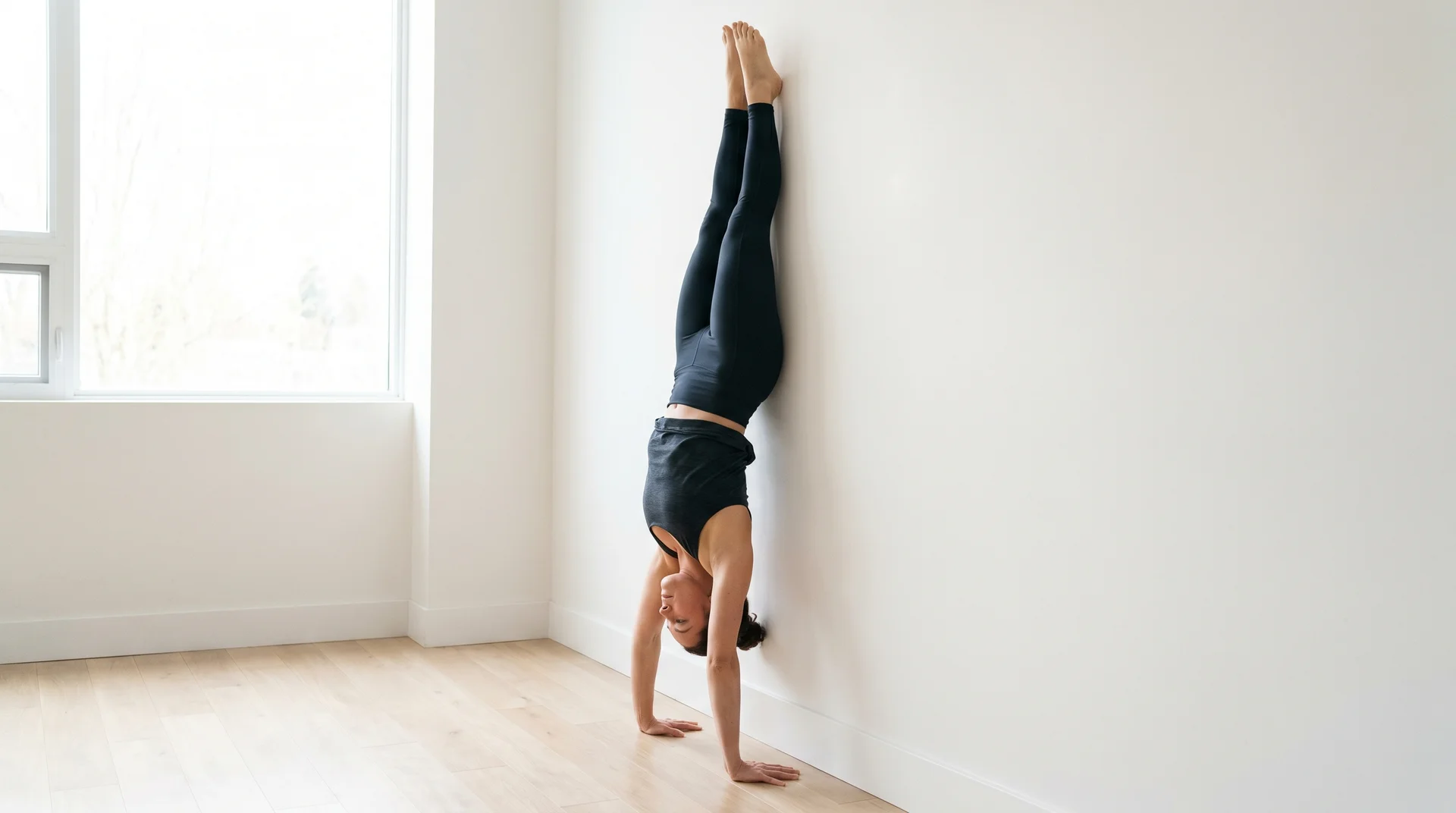
The wall handstand hold is the most demanding upper body bodyweight exercise on this list. It builds overhead shoulder strength that no other movement here can fully replicate.
It also takes time to reach. Holding a wall handstand for even 10 seconds is a real achievement for most people. Work toward it with patience.
Muscles It Works:
- Shoulders (primary)
- Triceps
- Core (stabilizer)
- Wrists and forearms
How to Do It:
- Place your hands on the floor about 12 inches from a wall.
- Kick one leg up toward the wall. Follow with the other.
- Find your balance with both feet resting against the wall.
- Keep your arms straight, core tight, and body as vertical as possible.
- Hold for the target time.
Reps and Sets:
- Working toward advanced: 3 sets of 5 to 10 seconds
- Advanced: 3 sets of 20 to 45 seconds
How to Structure Your Upper Body Bodyweight Workout?
Start with three exercises if you are new to training. A solid beginner session includes Push-Ups, Tricep Dips, and Superman Holds. Do 3 sets of 8 reps for each. Rest 60 to 90 seconds between sets.
Once you can do 15 clean push-ups, move to five exercises per session. Add Wide Push-Ups, Pike Push-Ups, Plank Shoulder Taps, and Bodyweight Tricep Extensions to your rotation.
Rest 45 to 60 seconds between sets at this level. Train your upper body two to three times per week. Always leave at least one full rest day between sessions.
Your muscles grow during recovery, not during the workout itself. Keep sessions between 20 and 35 minutes. Focus on clean form over high rep counts.
As you get stronger, move to harder variations instead of just adding more sets.
How Often Should You Train Your Upper Body?
Train your upper body two to three times per week. This gives your muscles enough stimulus to grow and enough time to recover between sessions.
The National Academy of Sports Medicine notes that training a muscle group twice per week builds solid strength for most people. If you are in your first few months of training, two sessions per week is the right place to start.
If you have been training consistently for more than six months, three sessions per week work well. The most important thing is showing up regularly and making each session slightly harder than the last.
Conclusion
Upper-body bodyweight exercises are among the most practical ways to build real strength. You don’t need a gym, a weight rack, or expensive equipment.
You need consistency, good form, and the right exercises. The movements in this blog give you everything to get started. Push-ups, dips, pike push-ups, archer push-ups.
Pick the ones that match your level and build from there. Train two to three days per week. Rest. Recover. Then go again. Your body is already the tool you need.
Enjoyed this guide? Subscribe to The Fitness Explorer newsletter and get new stretch routines, workout tips, and recovery guides straight to your inbox.