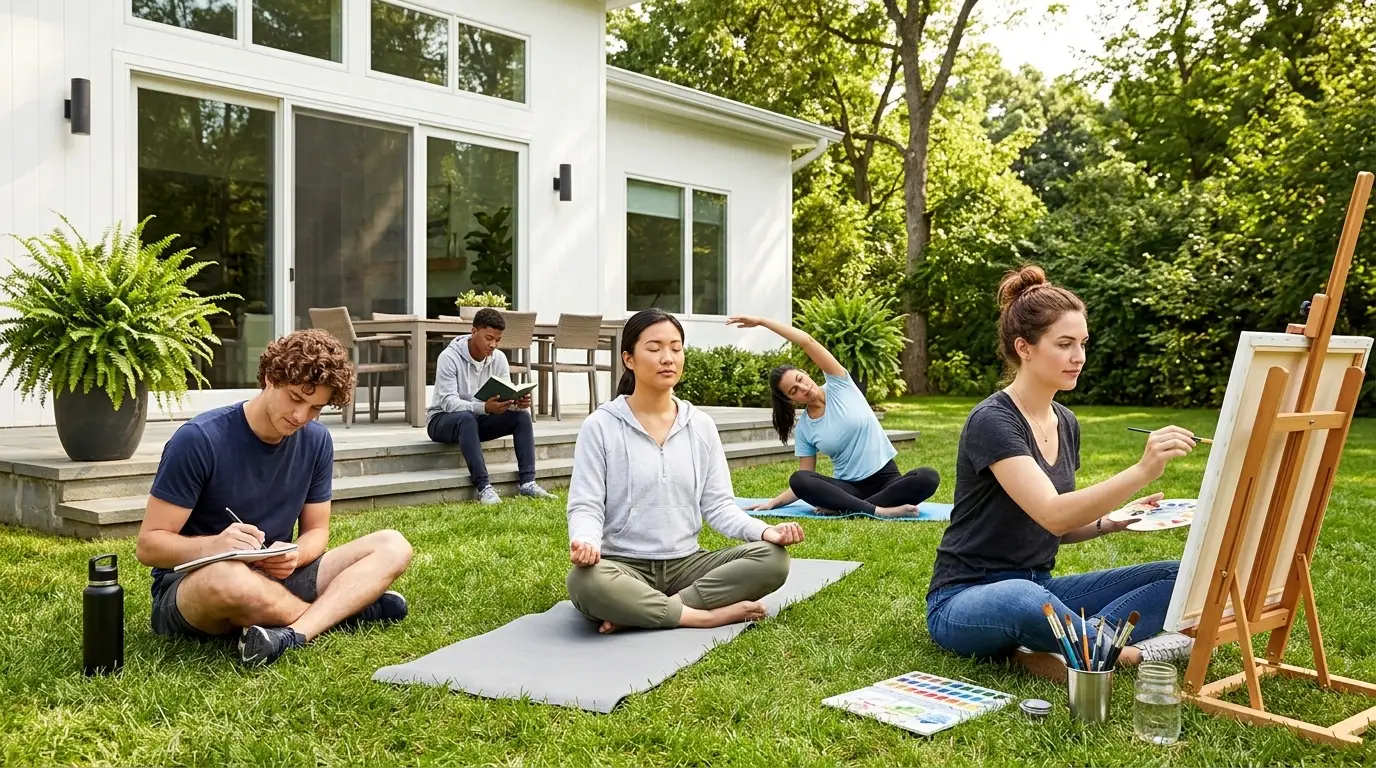
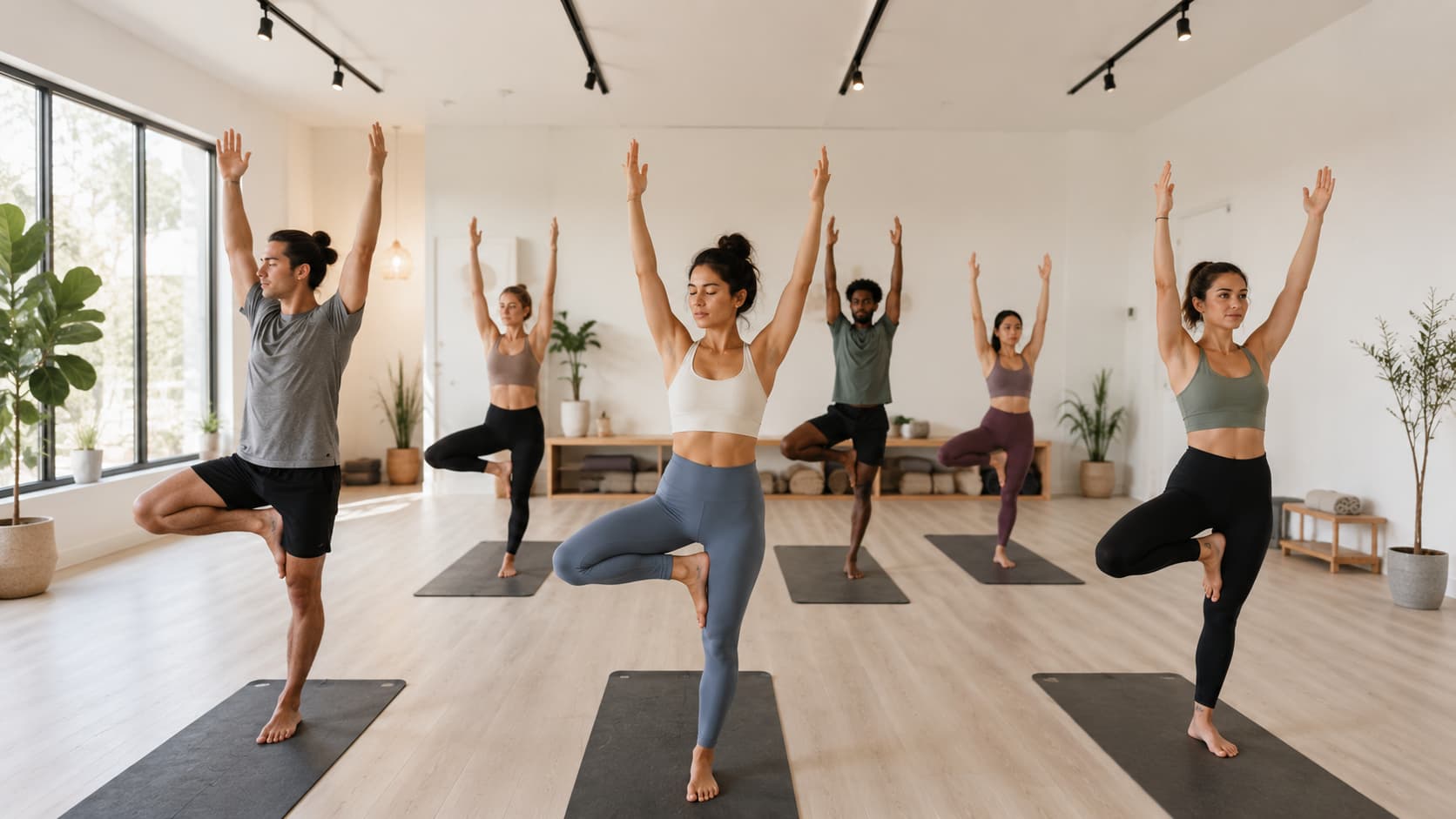
Have you ever finished a yoga class and realized you spent most of the time thinking about whether you were doing the poses correctly?
Embody Yoga takes a different approach. Instead of focusing on how a pose looks, it encourages you to pay attention to what you feel from the inside.
Every movement, breath, and pause becomes an opportunity to build a deeper connection with your body.
In this post, we’ll explore what embody yoga is, how it relates to somatic yoga, its core principles, key benefits, and where you can find classes across the US.
What Is Embody Yoga?
Embody Yoga is a yoga practice rooted in body awareness and somatic principles.
The word “embody” refers to being fully present in your body and experiencing movement from the inside rather than focusing on how it looks from the outside.
Instead of striving for perfect poses, practitioners pay attention to sensations, breath, and natural movement patterns.
This inward-focused approach helps strengthen the mind-body connection, reduce stress, improve self-awareness, and encourage more comfortable, intuitive movement both on and off the yoga mat.
Core Principles of Embody Yoga
Embody Yoga is built on the idea that awareness comes before movement. Instead of focusing on how a pose looks, practitioners are encouraged to notice sensations, areas of tension, and places that feel relaxed or disconnected.
Movement then becomes a response to what the body is experiencing in the moment. Another key principle is creating a sense of safety within the body. Slow movements, steady breathing, and a non-judgmental approach help calm the nervous system and support greater ease, mobility, and self-awareness.
Rather than striving for perfect poses, embody yoga emphasizes curiosity, presence, and connection with the body’s natural signals.
Benefits of Embody Yoga for Mind and Body
People come to embody yoga for many different reasons. Some arrive with chronic pain that nothing else has touched. Others feel burned out, disconnected, or anxious. Some simply want to experience their yoga practice more deeply. Regardless of the starting point, the benefits tend to reach both the body and the mind at the same time.
- Releases chronic muscle tension: By retraining the nervous system through slow, conscious movement, embodied yoga helps the body let go of habitual muscular contractions that contribute to stiffness and pain.
- Calms the nervous system: Slow breathing and mindful movement shift the body from sympathetic activation (fight-or-flight) into parasympathetic rest, lowering heart rate and blood pressure over time.
- Builds body awareness (interoception): Regular practice strengthens your ability to sense and respond to internal signals, which supports better emotional regulation and physical self-care.
- Supports emotional healing: Tension stored in the body from stress, fatigue, or past experiences can be released through conscious movement, offering a non-verbal path to emotional relief.
- Improves sleep quality: Reducing nervous system overactivation leads to measurable improvements in sleep, as the body learns to let go at the end of the day.
- Reduces chronic pain: By addressing the learned muscular patterns that Thomas Hanna identified as the neurological root of many chronic pain conditions, embodied yoga can reduce pain where surface-level treatment has not reached.
- Deepens the yoga practice: For experienced practitioners, this approach opens an entirely new relationship with postures they may have done thousands of times.
6 Places to Practice Embody Yoga in the US
Finding a quality embodied yoga or somatic yoga class in the US is easier than it used to be. Here are six well-established options to explore.
1. Shraddha Yoga: Amherst, Massachusetts

Yoga Center Amherst, now operating as Shraddha Yoga, is the birthplace of Embodyoga and remains the most direct connection to the practice’s roots. Founded by Patty Townsend, the center has trained hundreds of teachers who now teach throughout the US and internationally.
Classes focus on inner awareness, subtle movement, breath, anatomy, and energetic principles rather than external performance. The center also offers workshops, retreats, and teacher training programs ranging from foundational study to advanced certification.
For anyone wanting to learn Embodyoga as it was originally developed, this remains the gold standard.
Visit: shraddhayoga.org
2. Newington Yoga Center: Newington, Connecticut
Newington Yoga Center is one of the recognized Embodyoga teaching locations in the Northeast. Led by Suzanne Manafort, the center blends embodied movement practices with therapeutic yoga principles to create classes that feel approachable and supportive.
Students are encouraged to move with awareness rather than force, making the classes suitable for beginners, older adults, and anyone recovering from stress-related tension. The studio also maintains strong ties to yoga therapy education and continuing teacher development.
Its location makes it a convenient option for practitioners throughout Connecticut and the surrounding region.
Visit: newington.yoga
3. Kripalu Center for Yoga & Health: Stockbridge, Massachusetts
Kripalu is one of the largest yoga and wellness retreat centers in North America. While it is not an official Embodyoga location, many of its teachings share a similar emphasis on self-awareness, mindful movement, and compassionate practice.
Visitors can choose from hundreds of workshops and retreats covering yoga, meditation, breathwork, trauma-sensitive movement, and nervous system regulation. The peaceful Berkshire Mountains setting also naturally supports slower, more reflective practices.
For those interested in embodiment work beyond traditional yoga classes, Kripalu offers a wide range of options.
Visit: kripalu.org
4. Embody Yoga: Milwaukee, Wisconsin

Founded in 2015, Embody Yoga was created with a mission to make movement practices accessible to a broader community. The studio focuses less on achieving perfect poses and more on helping students build a stronger connection with their bodies.
Its class schedule includes yoga, Pilates, mobility work, and beginner-friendly sessions designed to meet students where they are. The welcoming atmosphere and emphasis on inclusivity have helped it become a respected wellness space in the Milwaukee area.
For anyone looking for an approachable introduction to body-centered movement, it is a strong option in the Midwest.
Visit: embodyyogamke.com
5. Embody Center for the Healing Arts: Sandpoint, Idaho
Located in downtown Sandpoint, the Embody Center for the Healing Arts combines yoga, somatic movement, dance, meditation, and wellness education under one roof. The center attracts practitioners seeking a deeper connection among movement, healing, and self-awareness.
Classes often explore themes such as nervous system regulation, body awareness, emotional expression, and mindful movement. Workshops and community events are also offered throughout the year, creating opportunities for ongoing learning.
Its holistic approach makes it one of the more unique embodiment-focused spaces in the Pacific Northwest.
Visit: embodysandpoint.love
6. Embody Somatics and Yoga: Online
Not everyone has access to a local somatic yoga studio, which is why online options have become increasingly popular. Embody Somatics and Yoga offers virtual classes that combine gentle yoga, somatic movement, breathwork, and nervous system support.
The sessions are intentionally slow and accessible, making them suitable for people dealing with stress, chronic tension, burnout, or recovery from illness. Participants can practice from home while still receiving structured guidance from an experienced teacher.
For those seeking flexibility and convenience, online somatic yoga can be an excellent starting point.
Visit: embodysomatics.ca
What to Expect in an Embody Yoga Class?
An embody yoga class does not look or feel like a typical yoga session. Most classes run between 45 and 90 minutes, and from the very first moment, the pace is slow and deliberate.
You will usually begin lying down or seated, with the teacher guiding you to settle into the body before any movement begins. This opening phase is not incidental; it trains the nervous system to shift out of automatic functioning and into genuine presence.
From there, movements are introduced with attention to sensation rather than shape. You might explore a gentle rotation, a soft stretch, or a long-held posture, but the instruction will consistently direct your attention inward: what do you feel, where do you feel it, and what does it want to do next?
Transitions between positions are treated with the same care as the positions themselves, because in embodied yoga, how you move matters as much as what you do. Built-in pauses give the body time to absorb and integrate each experience.
The final rest period, similar to Savasana in traditional yoga, is where much of the nervous system work settles, and it is never skipped. You will leave a class feeling quieter, more present, and more connected to your physical self than when you arrived.
Wrapping Up
Embody yoga offers something most fitness-focused practices do not: a direct, body-centered path to genuine self-awareness and physical relief.
By combining somatic yoga principles with yoga’s broader wisdom traditions, this practice addresses pain, stress, and disconnection at their neurological source rather than at the surface.
Whether you choose to attend Patty Townsend’s founding studio at Yoga Center Amherst, find an affiliated teacher in your area, or start with an online session, the practice meets you exactly where you are.
No flexibility required. No prior experience needed. Just a willingness to feel your body honestly and let that feeling lead the way.