
Most people think getting fit means expensive gym memberships, complicated workout plans, or pushing through high-impact exercises that leave your knees screaming. What if none of that was actually necessary?
Rucking is proof that simple works. It is just walking with a weighted backpack, and yet it builds real strength, burns serious calories, supports your heart, and clears your head, all in one go.
No machines. No membership. No complicated routine to follow.
It started in the military, but today everyday people are discovering what soldiers have known for centuries. Adding weight to a walk changes everything about how your body responds.
If you have been looking for a workout that is sustainable, effective, and actually fits into real life, the benefits of rucking might be exactly what you have been missing.
What Is Rucking?
Rucking is simply walking with a weighted backpack on your back. It started as a military training method, where soldiers marched long distances carrying heavy gear to build strength and endurance.
Today, it has moved well beyond the military and become a popular fitness activity for everyday people of all fitness levels. Here is how it works:
- You load a backpack with weight, put it on, and walk.
- The added load forces your muscles to work harder than a regular walk.
- Your legs, core, back, and shoulders all engage to keep you moving and upright.
- The heavier the pack and the longer the distance, the more your body is challenged.
- That is what makes rucking so effective despite its simplicity.
Benefits of Rucking
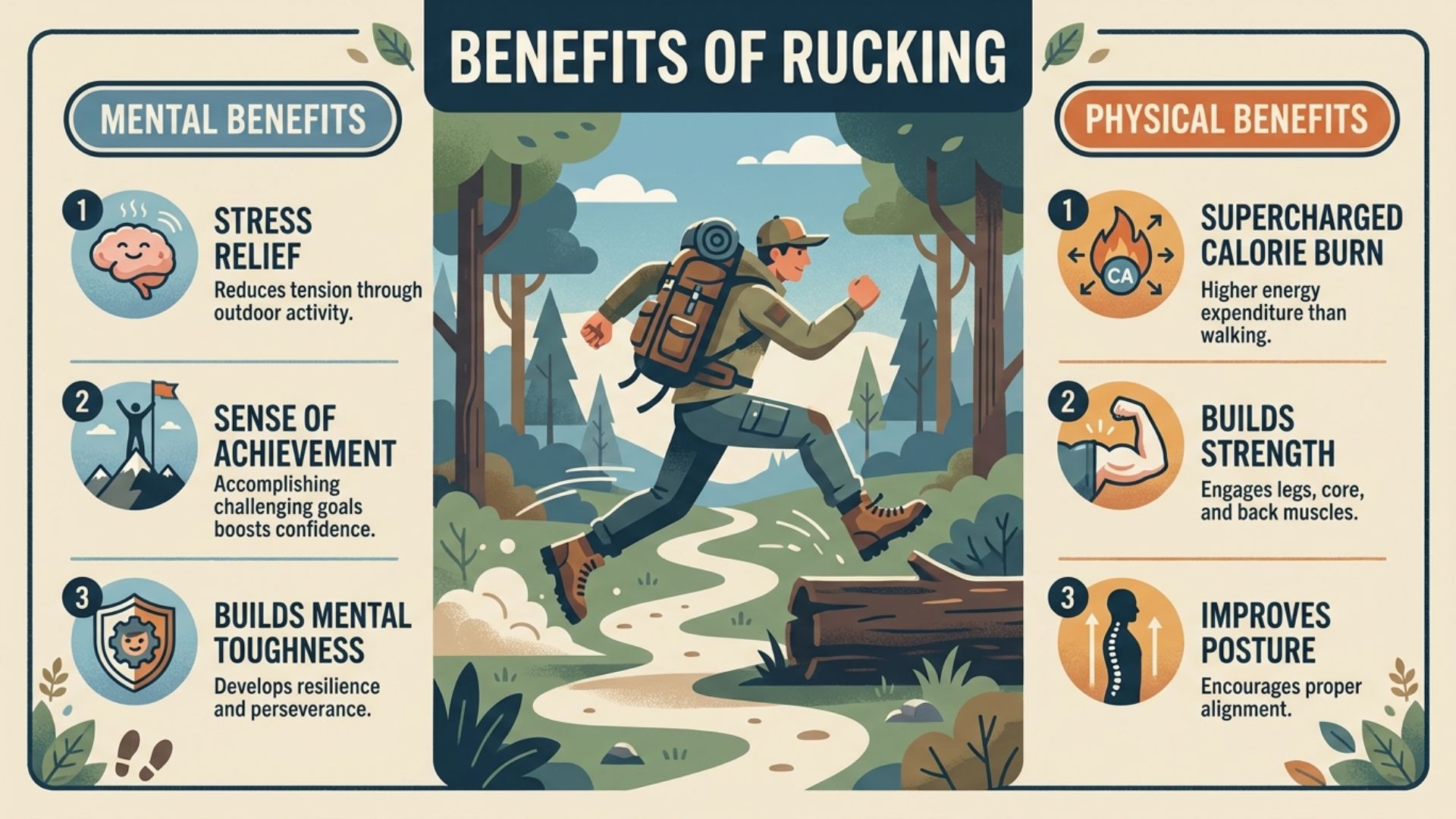
Rucking does a lot more for your body than most people expect. Here is a breakdown of what you actually gain from making it a regular habit.
1. Builds Strength and Muscle Endurance
Carrying a weighted pack activates your legs, glutes, core, shoulders, and upper back all at once. Over time, your muscles adapt to that constant load and grow stronger.
It is not just cardio. Every step is low-level resistance training, building the kind of endurance that carries over into real life.
2. Burns More Calories Than Regular Walking
The average person burns around 125 calories on a 30-minute walk.
Add a weighted pack, and that number jumps to roughly 325 calories in the same timeframe. Several factors determine how many calories you burn while rucking:
- How much weight are you carrying
- Your walking pace and speed
- The terrain you are covering (flat, hilly, trail)
- The total distance or duration of your ruck
- Your own body weight
The more you dial up any of these variables, the higher your calorie burn goes.
3. Improves Heart Health and Stamina
Rucking keeps your heart rate consistently elevated, especially on hills or uneven terrain. That sustained effort strengthens your cardiovascular system over time and improves your aerobic capacity.
Think of it as Zone 2 cardio. It is steady, manageable, and proven to support long-term heart health and endurance when done regularly.
4. Supports Weight Loss Goals
Rucking creates a higher calorie deficit than walking alone, which is the foundation of fat loss. Pair that with the muscle engagement it demands and you have a workout that burns fat while preserving lean muscle.
It also fits easily into a daily routine, making it easier to stay consistent, which is what actually drives results over time.
5. Strengthens Bones and Improves Posture
The weight on your back puts mechanical stress on your spine, hips, and legs. That stress signals your body to maintain and build bone density over time.
Research shows weighted walking can help prevent bone mass loss, which matters more as you age. On top of that, carrying a pack correctly trains you to walk tall with your shoulders back and spine neutral.
6. Low-Impact Alternative to Running
Rucking is mechanically the same as walking, so the joint stress stays far lower than running. You still get a strong cardio and strength stimulus without the wear and tear. Here is how the two compare:
- Joints: Rucking is much easier on the knees, hips, and ankles.
- Calorie burn: Both are effective, but rucking closes the gap with added weight.
- Muscle engagement: Rucking activates more postural muscles due to the load.
- Injury risk: Rucking carries a significantly lower risk of overuse injuries.
- Accessibility: Rucking is suitable for beginners, older adults, and those recovering from injury.
7. Helps Reduce Stress and Improve Mood
Physical activity already helps with stress. Add fresh air, movement, and time away from screens and the effect compounds.
Studies show that exercising outdoors provides mental health benefits beyond what indoor exercise offers. Many ruckers describe it as moving meditation. The rhythm of walking with weight keeps you present and focused, which naturally quiets a busy mind.
8. Builds Mental Toughness and Discipline
Carrying weight over distance is uncomfortable, especially as fatigue sets in. Pushing through that discomfort repeatedly builds a kind of mental resilience that extends beyond your rucks.
You get better at tolerating hard things, staying focused when it gets tough, and finishing what you start. That mindset shift is one of the underrated benefits people talk about most.
9. Improves Everyday Functional Fitness
Rucking trains your body to move under load, which is exactly what real life asks of you. Carrying groceries, lifting boxes, climbing stairs, picking things up off the floor.
All of these feel easier when your body is conditioned to handle weight in motion. It builds the kind of strength that actually shows up outside of a gym.
10. Easy to Fit Into a Busy Routine
No gym required. No class schedule. No equipment beyond a backpack and some weight. You can ruck before work, during a lunch break, or after dinner.
It stacks onto your existing walk or commute without adding much planning. That simplicity is a big reason people stick with it longer than most other fitness routines.
How to Start Rucking Safely?
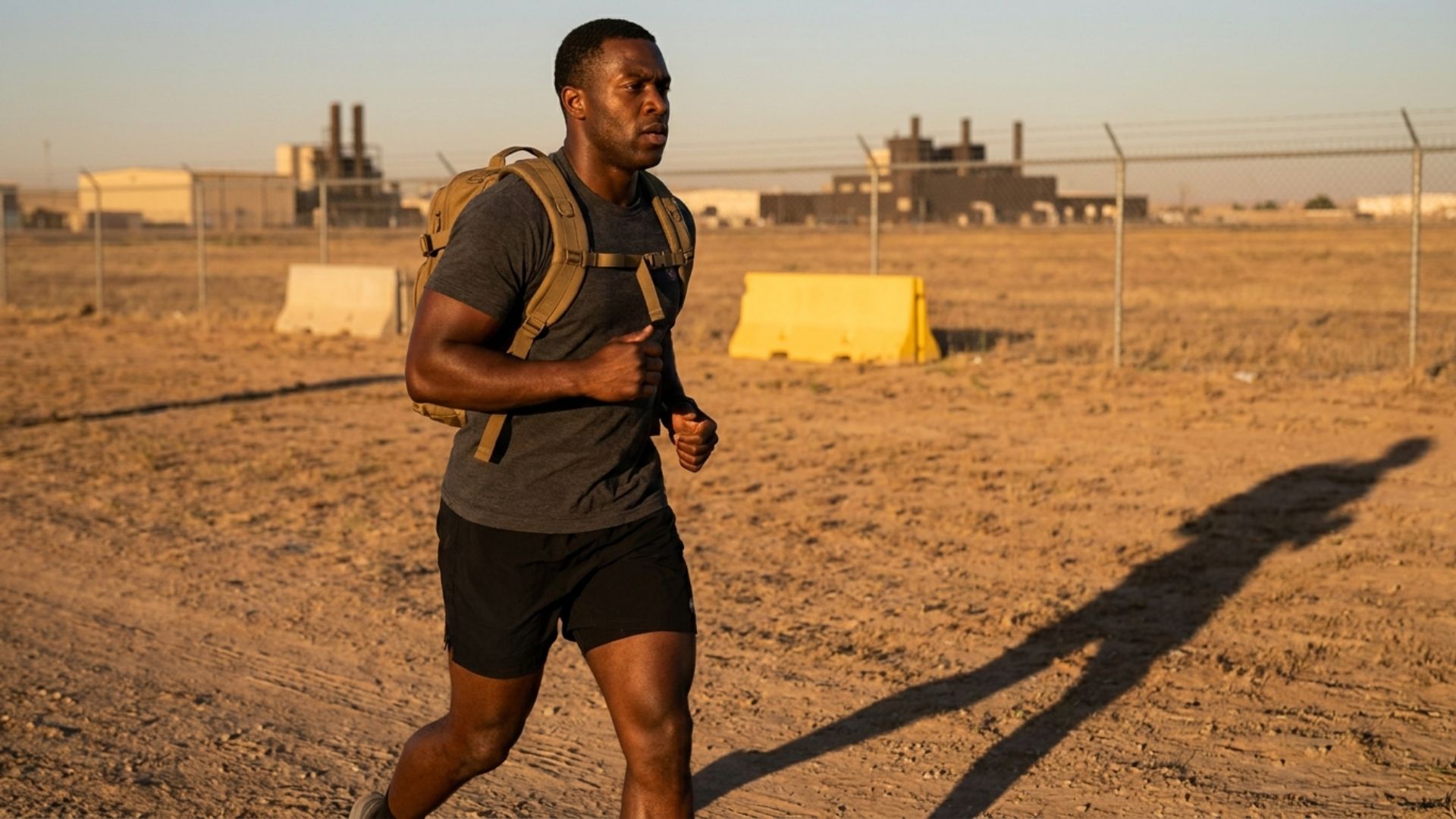
Starting rucking the right way saves you from unnecessary soreness, injury, and burnout. Keep these essentials in mind before your first ruck.
Choosing the Right Backpack and Weight:
- Any sturdy backpack works when you are just starting out.
- Look for one with chest or waist straps to distribute weight evenly and reduce shifting.
- Begin with 10 pounds or roughly 10% of your body weight, whichever is lighter.
- Keep the weight high and close to your back to reduce strain and improve balance.
- As you get more comfortable, gradually increase the load over weeks, not days.
Proper Rucking Form for Beginners:
- Stand tall with your shoulders back and spine neutral.
- Keep your core lightly engaged throughout the walk.
- Take shorter, controlled steps rather than long strides.
- Look ahead, not down at the ground.
- Avoid leaning forward into the pack, let your posture do the work.
How Often to Ruck Each Week:
- Start with 2 to 3 sessions per week on non-consecutive days.
- Your muscles and connective tissue need 24 to 48 hours to recover between sessions.
- Begin with 20 to 30 minutes per session and build duration before adding more weight.
- If you feel more sore than expected, scale back before pushing further.
- Consistency over weeks matters far more than intensity in the early stages.
Common Beginner Mistakes to Avoid When Rucking
A lot of beginners miss out on the full benefits of rucking simply because of a few avoidable errors. Here is what to watch out for from the start.
- Starting too heavy, too soon: More weight does not mean faster progress. Give your body time to adapt before increasing the load.
- Ignoring pack fit: A loose or poorly fitted backpack shifts with every step, pulling you off balance and placing stress in all the wrong areas.
- Wearing the wrong footwear: Unsupportive shoes under a loaded pack is a fast track to foot pain and discomfort. Always wear supportive walking or trail shoes with good grip.
- Increasing weight and distance at the same time: Change one variable at a time. Either add more weight or go further, never both together in the same week.
- Not drinking enough water: Rucking raises your heart rate and body temperature. Carry water and sip consistently throughout your session, especially on longer or warmer rucks.
- Rucking on challenging terrain too soon: Hills and uneven trails are great eventually, but starting there before your body is ready increases the risk of trips, falls, and overuse injuries.
Rucking vs Other Forms of Exercise
Not all workouts deliver the same results. Here is how rucking stacks up against other popular forms of exercise to help you see where it fits in your routine.
| Activity | Calorie Burn | Muscle Engagement | Joint Impact | Best For |
|---|---|---|---|---|
| Rucking | High | Full body | Low to moderate | Strength + cardio |
| Walking | Moderate | Lower body | Very low | Daily movement |
| Running | High | Lower body | High | Cardio endurance |
| Hiking | Moderate to high | Lower body + core | Moderate | Outdoor fitness |
Rucking sits in a unique spot. It matches running for calorie burn, keeps joint impact low like walking, and engages more muscle groups than either. For anyone wanting one workout that does it all, rucking makes a strong case.
Who Should Try Rucking?
Rucking is one of those rare workouts that genuinely works for almost everyone. Whether you are just getting started or looking for something more effective than a regular walk, rucking meets you where you are.
- It is beginner-friendly, low on technical skill, and fully adjustable to your current fitness level.
- It is a smart choice for anyone with joint sensitivity who still wants real cardio and strength benefits.
- It works equally well for people who want functional strength without splitting their routine into separate cardio and lifting sessions.
Final Thoughts
Rucking is not a trend. It is one of the most practical, sustainable, and effective workouts available to anyone, regardless of fitness level or schedule.
It strengthens your body, protects your joints, burns calories, and does something good for your mental health along the way.
The best part is that the barrier to entry is almost zero. A backpack, some weight, and a willingness to get outside is genuinely all you need to get started.
Start light. Walk with purpose. Build gradually. The results will follow.
If you are ready to give rucking a shot, lace up, load up, and take that first step. Your body will thank you for it sooner than you think.