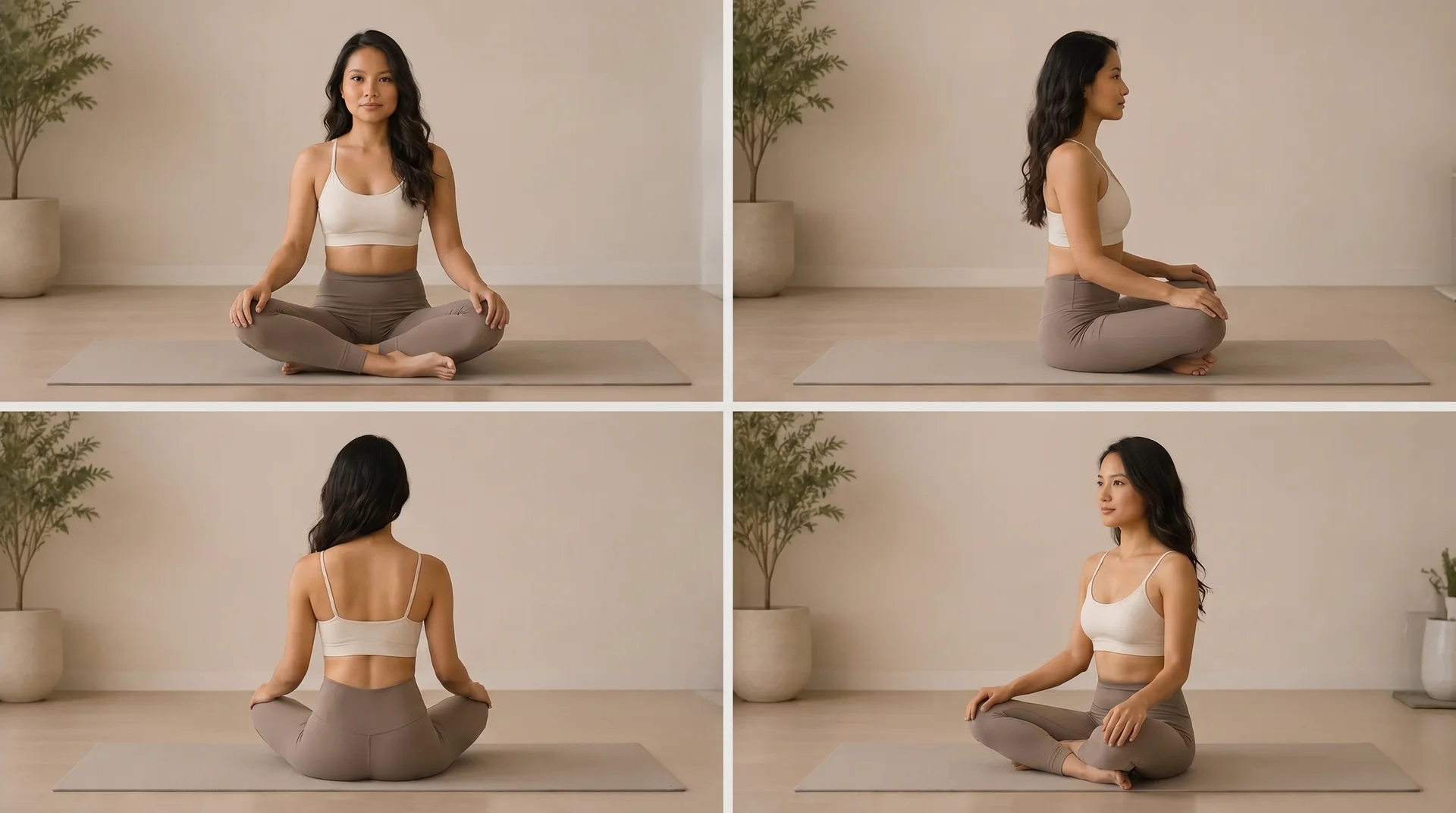
Most of us sit on our legs without a second thought, but there’s more to this simple pose than meets the eye.
Artists search for clear references, yoga students wonder what it’s called, and office workers notice aching knees after a long stretch.
In this post, you’ll get a complete breakdown of the sitting-on-legs pose, step-by-step instructions, visual references from every angle, real benefits, safe variations, who should skip it, and how long to hold it.
Read on, and you’ll know exactly how to sit safely and comfortably.
What Is the Sitting on Legs Pose?
The sitting-on-legs pose is a floor-based position in which you fold your legs underneath your body and rest your hips on your heels or between your feet.
Known as Seiza in Japanese practice and closely related to Virasana (Hero Pose) in yoga, this position keeps your spine upright, knees fully bent, and shins flat on the floor.
It requires no equipment or prior flexibility. People use it for meditation, floor dining, prayer, artistic pose reference, and passive stretching of the knees, ankles, and thighs. Virasana is one of the foundational seated postures in yoga, widely used to build hip and knee flexibility over time.
| Feature | Details |
|---|---|
| Pose Name | Sitting on Legs Pose |
| Also Known As | Seiza, Virasana, Hero Pose |
| Pose Type | Restorative, Passive Stretch |
| Skill Level | Beginner-Friendly |
| Recommended Hold Time | 1 to 5 minutes (beginners), up to 15 minutes (experienced) |
| Props Needed | Optional yoga block or folded blanket |
| Main Muscles Involved | Quadriceps, ankles, knees, hip flexors |
| Best Time to Practice | After meals, during meditation, and post-workout rest |
How to Do the Sitting on Legs Pose Step by Step
Getting into this pose takes less than a minute. Small adjustments in your foot and knee position make a real difference in comfort.
What You Need:
- A yoga mat or soft surface
- Optional: a yoga block or folded blanket to place between your heels and hips
- Optional: a thin cushion under your ankles if they feel sharp pressure on the floor
Step-by-Step Instructions:
- Kneel on the floor with your knees together and your shins flat on the mat.
- Point your feet straight back so your toes face the floor behind you.
- Slowly lower your hips back and down toward your heels.
- Rest your sitting bones on your heels. If your hips do not reach your heels, place a folded blanket or block between them.
- Sit tall through your spine. Do not let your lower back round.
- Rest your hands on your thighs, palms facing down.
- Breathe slowly and hold the position for your chosen time.
Common Mistakes to Avoid:
- Forcing the hips down too fast: lower slowly, especially if your knees feel tight
- Letting the knees splay wide: keep them close together for proper alignment
- Rounding the lower back: sit tall, not slumped
- Placing your feet flat under you instead of behind: your feet should point straight back, not tucked under your sitting bones
- Holding your breath: breathe naturally throughout
Video Credit: Yoga with Joelle
Benefits of Sitting on the Legs Pose
The sitting-on-legs pose does more than just look compact and clean. Regular practice builds real physical and mental results over time.
Here is a quick look at what this pose does for your body and mind:
- Improves posture and spinal alignment: sitting upright without back support trains your spine to maintain its natural curve without effort.
- Stretches the quadriceps and hip flexors: the deep bend in the knee creates a long, passive stretch along the front of the thigh that desk workers rarely get.
- Increases ankle flexibility: Holding your ankles in dorsiflexion against the floor gradually improves their range of motion, which is especially important for runners and anyone who sits for long hours.
- Calms the nervous system: sitting still in a grounded position signals your body to shift into a rest-and-recover state, much like lying with your legs elevated after a long day helps your body wind down.
- Supports digestion after meals: sitting on your heels after eating may reduce bloating by keeping the digestive tract in a natural, uncompressed position.
- Builds knee joint awareness: this pose draws direct attention to knee alignment and trains your body to recognize imbalances before they become issues.
- Great for meditation and focus: the upright spine and stable base make it one of the most used seated positions for mindfulness practice across cultures.
Sitting on Legs Pose Variations to Try
Not everybody fits the same setup. These variations let you get the same benefits with less strain on your knees and ankles.
1. Supported Variation (Seiza with Block)
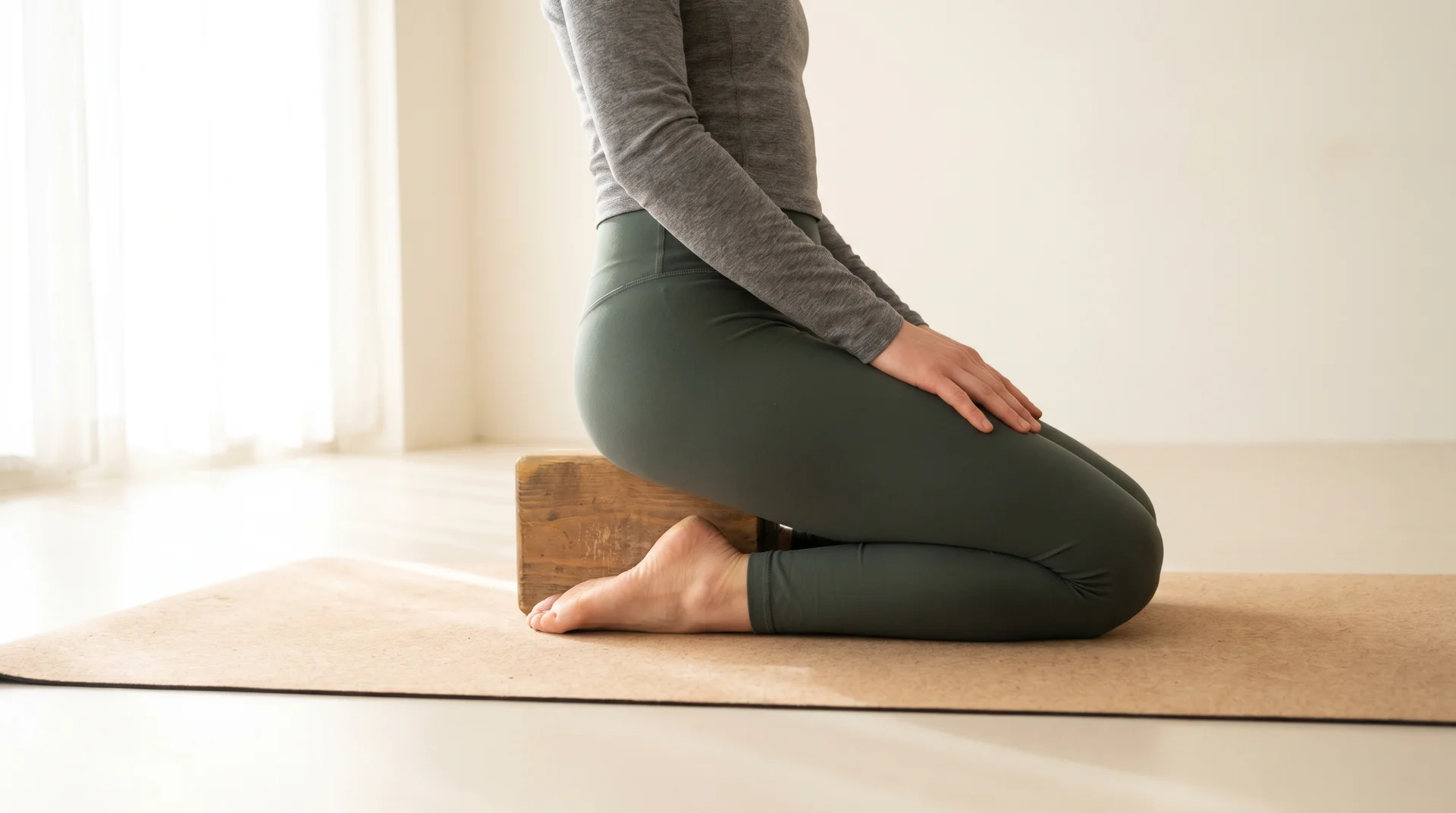
Place a yoga block or folded blanket between your heels and your sitting bones before you lower down. This lifts your hips slightly and takes pressure off your knees.
It is the safest starting point for beginners or anyone with tight ankles. You still get the spinal alignment and thigh stretch without forcing the full depth.
2. Wide-Knee Variation (Modified Virasana)
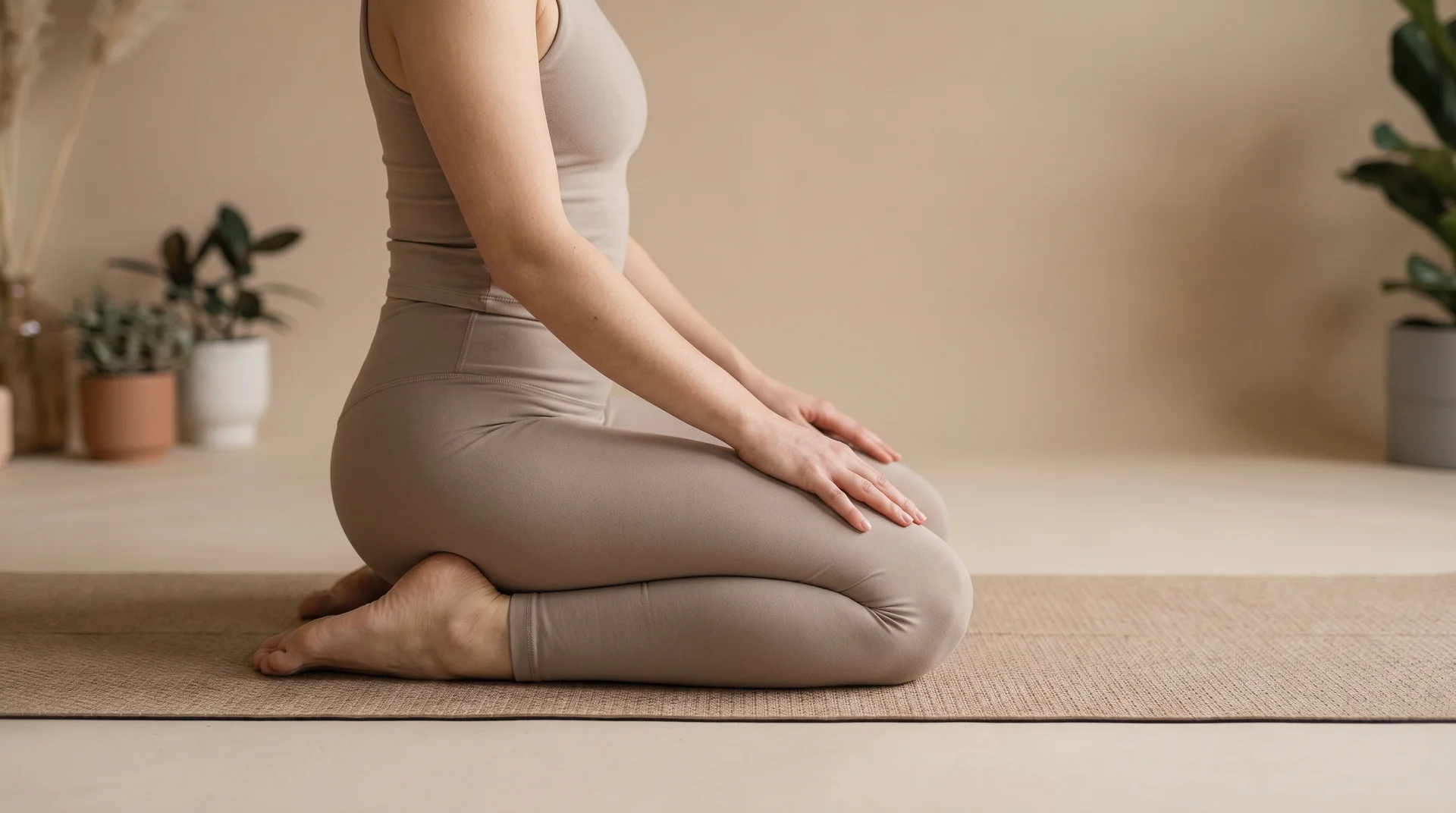
Keep your feet together, but move your knees apart to about hip-width or slightly wider. Your hips drop between your feet instead of on top of your heels. This version opens the inner groin and reduces the compression at the back of the knee. Many yoga beginners find this variation more comfortable than the traditional form.
3. Reclining Variation (Supta Virasana)
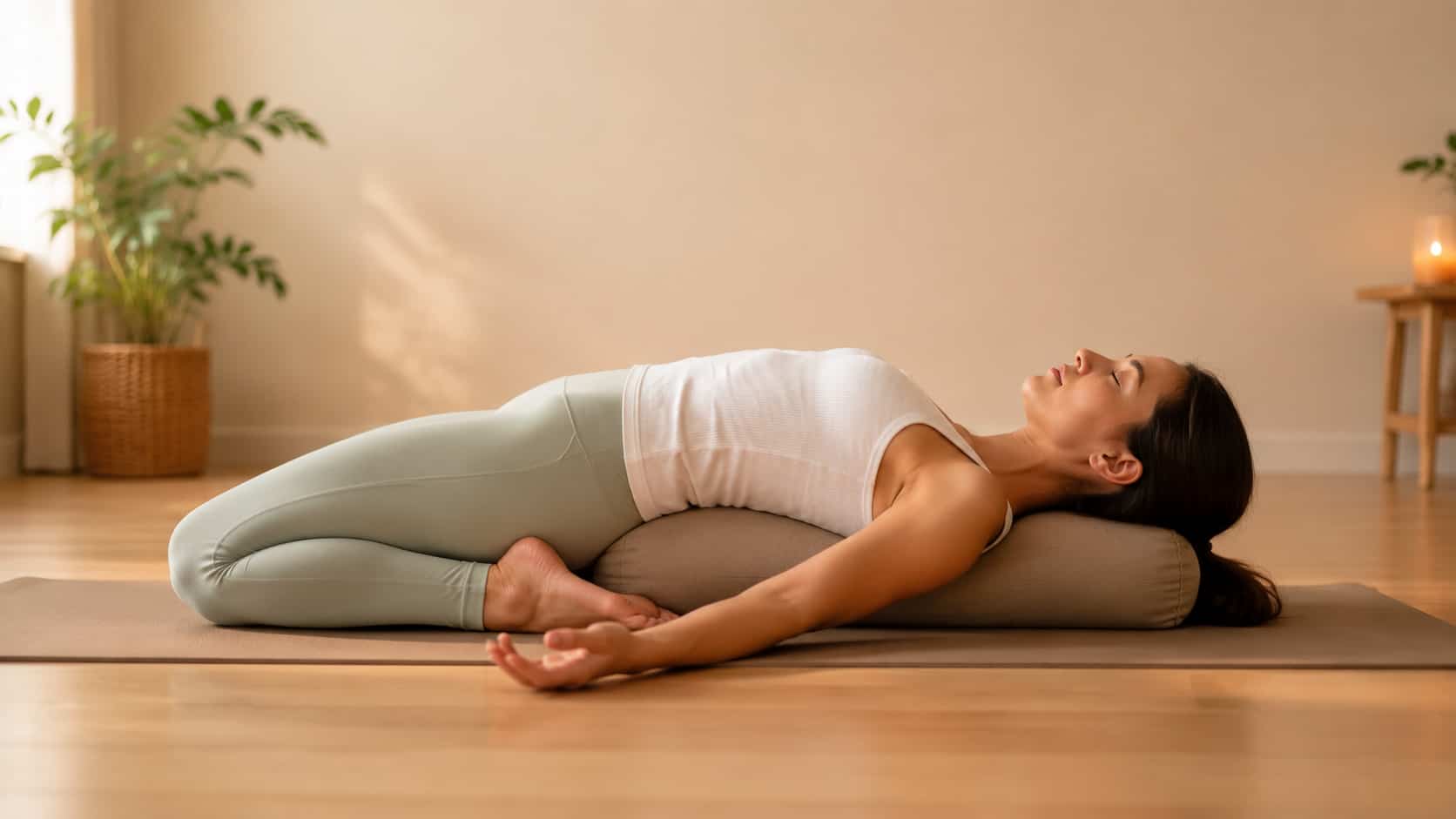
Once you are comfortable in the sitting position, slowly lower your back to the floor while keeping your legs folded underneath. This creates a deep stretch across the entire front of the thighs and the hip flexors.
Only try this if you can hold the basic sitting-on-legs pose for at least 3 minutes without discomfort. Place a bolster under your back if lying fully flat feels too intense.
4. Chair Variation
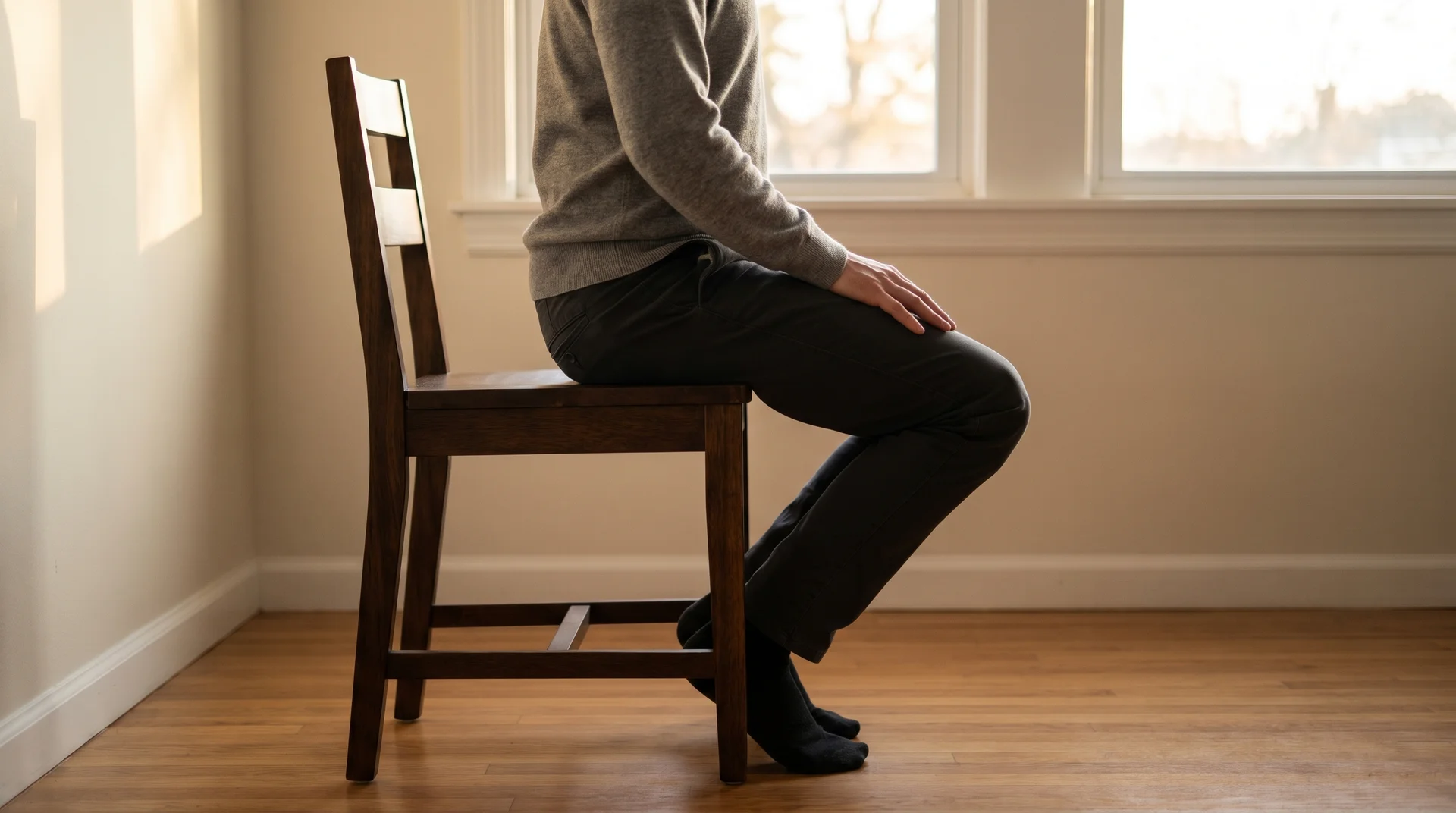
Sit on the edge of a firm chair and let your legs hang down. Tuck your feet back so your shins are angled and your weight shifts slightly forward onto your thighs. This is not the full pose, but it mimics the thigh stretch and spinal alignment for people who cannot kneel on the floor due to knee or ankle issues.
5. Sitting on Legs Pose with Arm Variation
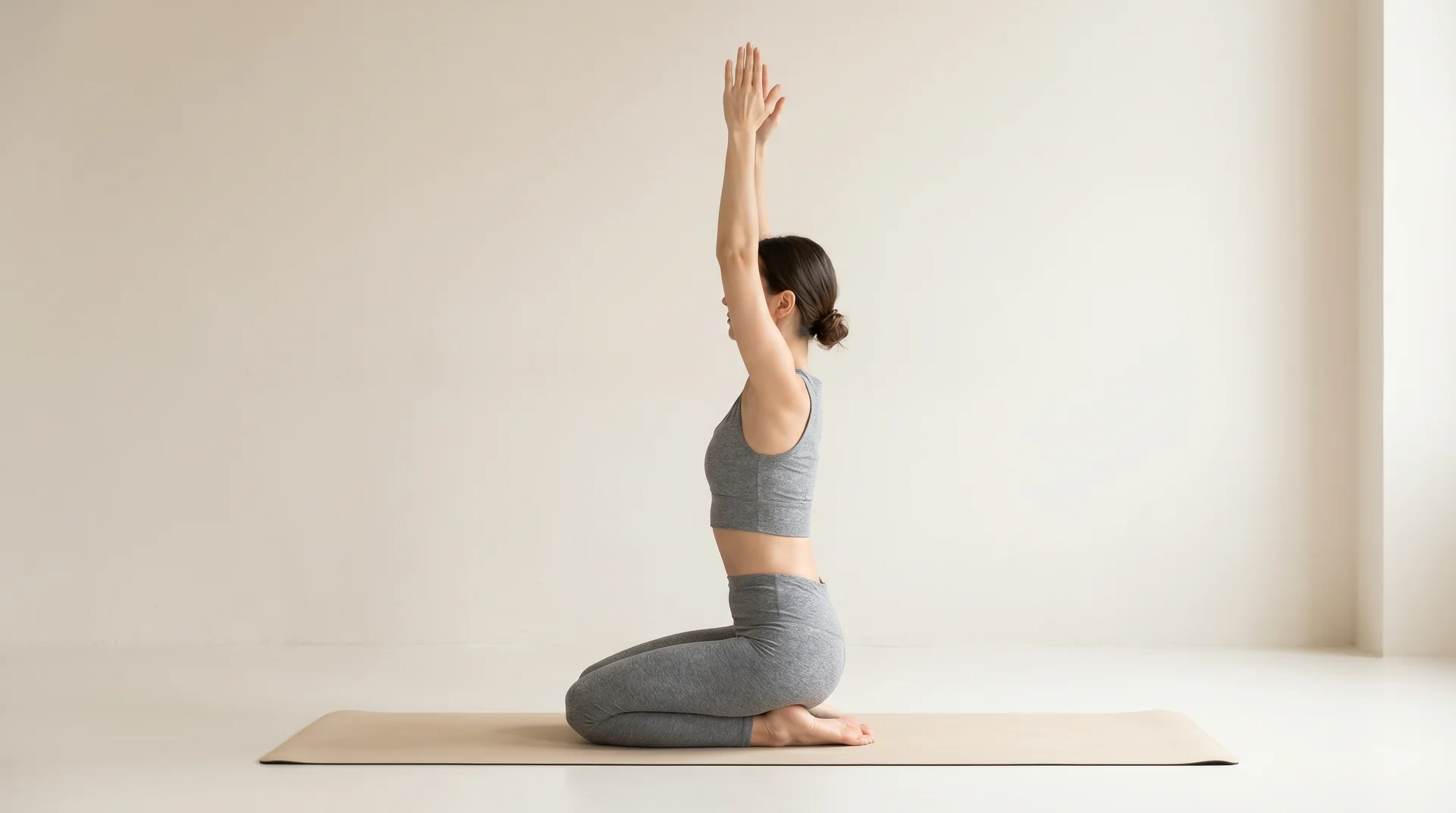
From the seated position, raise both arms overhead with your palms facing each other. Hold for five slow breaths.
This adds a shoulder and lat stretch to the lower-body position and is a good option for artists and for people who hunch over a desk or drawing table.
Who Should and Should Not Do This Pose
This pose works well for most people, but a few conditions make it worth skipping or modifying first.
Here is a clear breakdown of who this pose suits and who should hold off:
Who Should Do It:
- People who sit at a desk all day and want a low-effort floor stretch
- Artists and illustrators who spend long hours leaning over a drawing table
- Yoga beginners who want a simple seated base for meditation or breathing work
- Anyone looking to improve ankle flexibility gradually
- People who practice mindfulness or breathwork and need a stable, grounded position
- Athletes who want a passive quad stretch after training
Who Should Avoid It or Check with a Doctor First:
- Anyone with a current or recent knee injury, the full flexion puts direct pressure on the joint
- For people with ankle sprains or chronic ankle pain, the position compresses the ankle against the floor
- Those recovering from any lower leg surgery, speak to your doctor before trying this
- People with severe varicose veins in the lower leg, sustained compression may increase discomfort
- Anyone who feels sharp pain in the knee during the setup should stop immediately and choose the chair variation instead
How Long Should You Hold the Sitting-on-Legs Pose?
Beginners should start with one to two minutes and build from there. Most people find three to five minutes comfortable once their ankles and knees adjust to the position over a week or two.
Experienced practitioners can hold it for ten to fifteen minutes during meditation. If you feel tingling, numbness, or sharp pressure in your feet or knees at any point, come out of the pose slowly.
To exit safely, first lean forward onto your hands, lift your hips off your heels, then stretch your legs out in front of you before standing. Sitting up too fast can cause brief lightheadedness, so take your time.
Conclusion
The sitting-on-legs pose is one of the most useful floor positions you can add to your day. Artists get a reliable, multi-angle reference for their sketches.
Yoga students get a grounded, spine-friendly base for breathing and meditation. And anyone dealing with tight quads, stiff ankles, or a rounded lower back gets a simple fix that requires no gym or gear.
Start with one or two minutes, use a block if your hips do not reach your heels, and build from there. Keep exploring simple, body-friendly poses you can do at home with nothing but a mat and a wall.