An upper-body dumbbell workout trains your chest, shoulders, back, biceps, and triceps using only dumbbells. No machines. No cables. Just free weights and the right plan.
This guide covers exercises with exact sets, reps, rest times, and step-by-step instructions. Each one targets a specific muscle group.
You also get beginner and advanced routines, a guide to structuring your sessions, and answers to the most common questions people have before they start.
What You Need and How to Start
You need a pair of dumbbells, a small amount of floor space, and flat-soled shoes. A bench is helpful but not required. Warm up for 5 minutes before every session: arm circles, shoulder rolls, and 10 bodyweight push-ups. Always do compound exercises first (rows, presses), and isolation moves last (curls, kickbacks).
| Level | Weight | Goal Reps | Session Length |
|---|---|---|---|
| Beginner | 5 to 15 lbs | 10 to 12 | 30 to 40 min |
| Intermediate | 15 to 35 lbs | 8 to 12 | 45 to 60 min |
| Advanced | 35 lbs and above | 6 to 10 | 60 to 75 min |
15 Best Upper Body Dumbbell Exercises
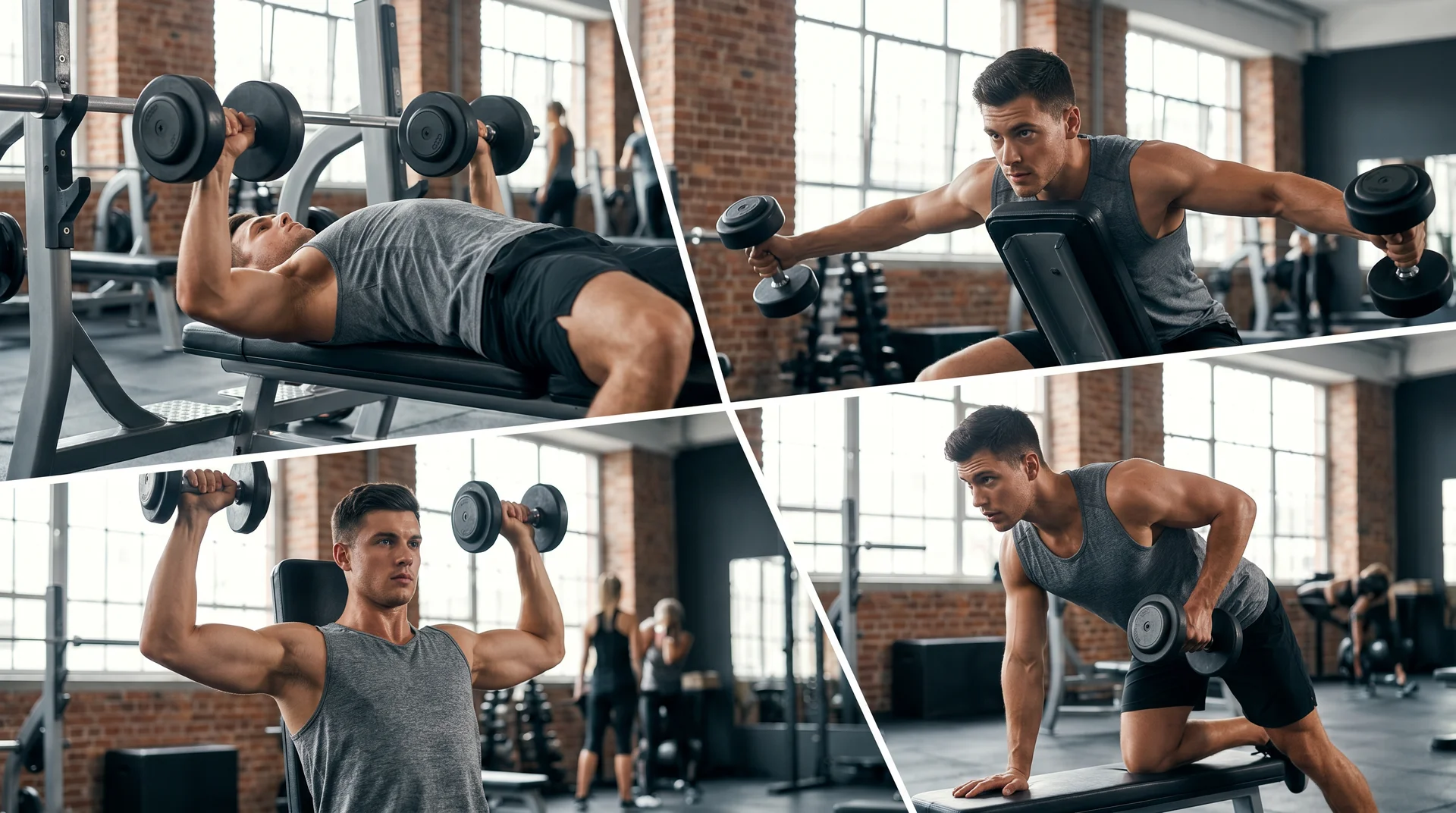
Below are upper-body dumbbell exercises grouped by muscle group. Each entry includes the target muscles, sets, reps, rest time, step-by-step instructions, and a common mistake to avoid.
Chest Exercises
1. Dumbbell Flat Bench Press
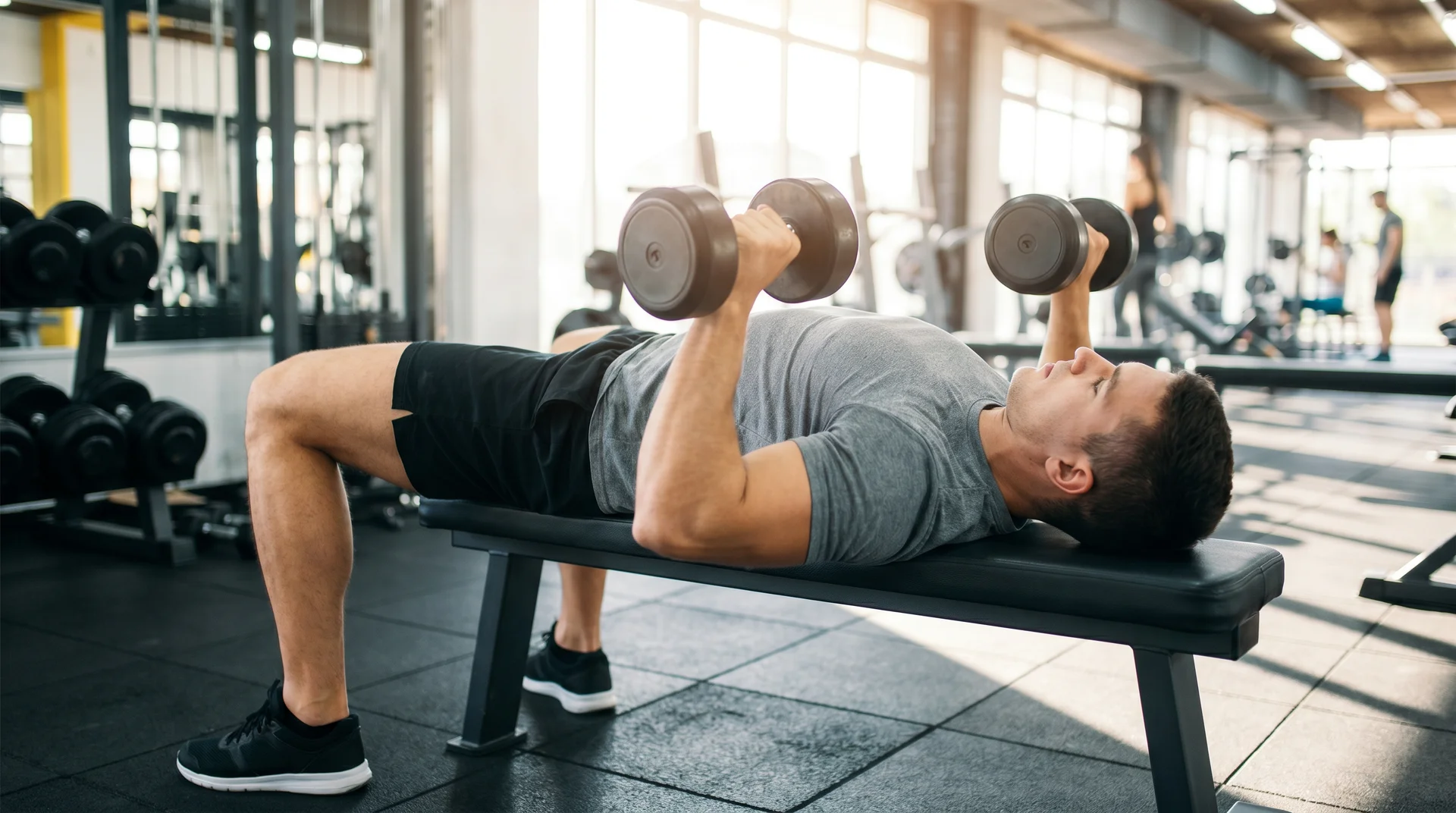
Target Muscles: Pectoralis major (middle chest), anterior deltoid, triceps brachii
Sets and Reps: 3 to 4 sets of 8 to 12 reps
Rest: 60 to 90 seconds between sets
Step-by-Step Instructions:
- Lie flat on a bench with your feet flat on the floor
- Hold one dumbbell in each hand at chest level with palms facing forward
- Keep your shoulder blades pulled together and pressed into the bench
- Press both dumbbells straight up until your arms are fully extended but not locked
- Lower the dumbbells slowly back to chest level, taking about 2 seconds on the way down
- Repeat for the target reps
Common Mistake: Letting your elbows flare out to 90 degrees puts excess stress on your shoulder joints. Keep your elbows at a 45 to 75 degree angle from your torso.
Pro Tip: Squeeze your chest at the top of each rep, then hold for 1 second. This increases muscle activation without adding any weight.
Who It’s Best For: All levels. The flat press is the single best chest exercise for overall size and strength.
2. Dumbbell Incline Press
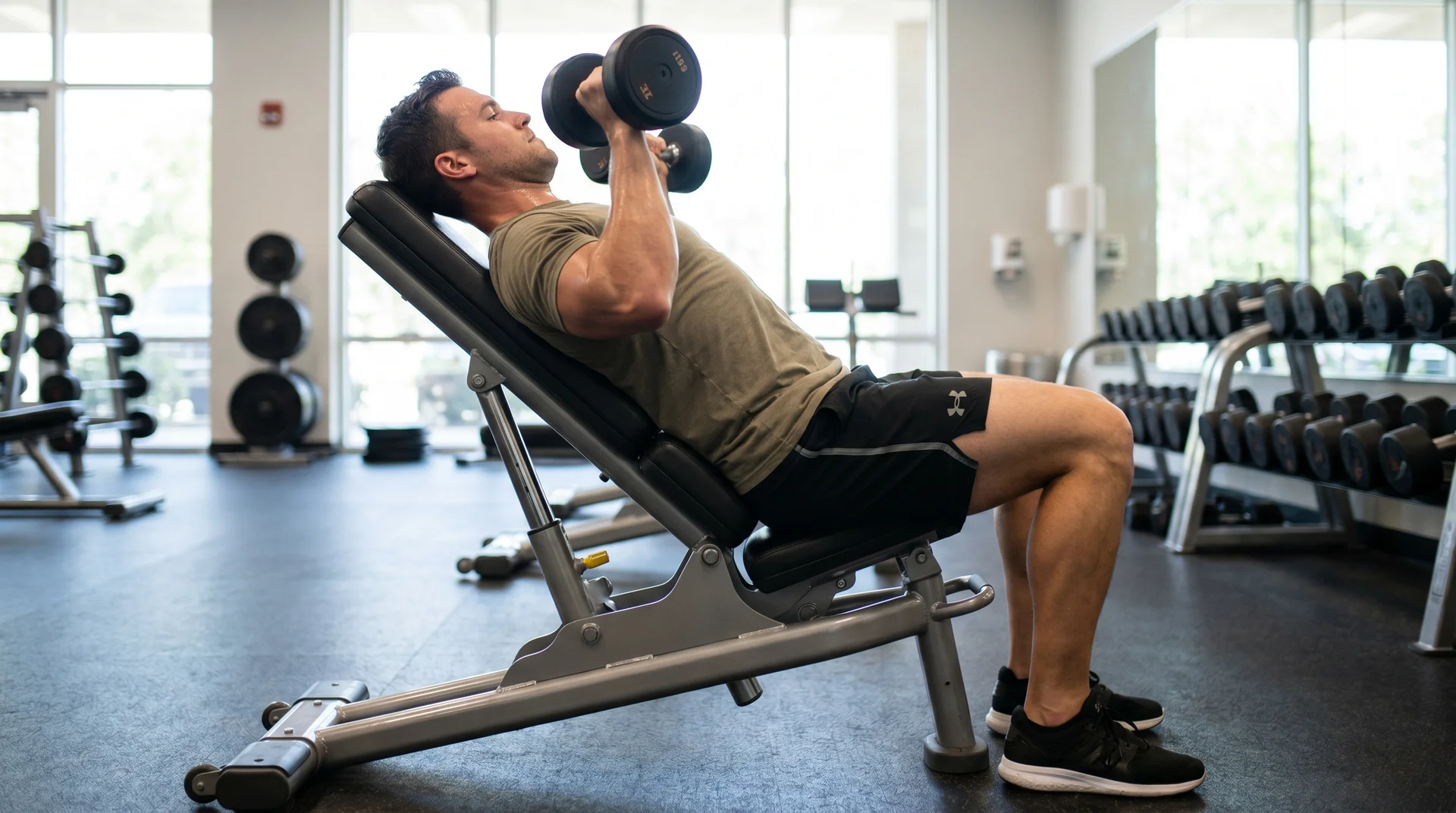
Target Muscles: Upper chest (clavicular head of pectoralis major), anterior deltoid, triceps
Sets and Reps: 3 sets of 10 to 12 reps
Rest: 60 to 90 seconds
Step-by-Step Instructions:
- Set a bench to a 30 to 45 degree incline
- Sit back on the bench and hold a dumbbell in each hand at shoulder height
- Keep your feet flat on the floor and your back pressed against the pad
- Press the dumbbells up and slightly inward so they meet at the top
- Lower them slowly back to shoulder level with control
- Repeat for the target reps
Common Mistake: Setting the incline too high (above 45 degrees) shifts the work from your upper chest to your front shoulders. Keep the angle moderate.
Pro Tip: Use a slightly lighter weight than your flat press. The incline angle puts your shoulder in a weaker position, so the muscle demand shifts.
Who It’s Best For: Anyone wanting to build a fuller, more defined upper chest. Great for intermediate lifters.
3. Dumbbell Chest Fly
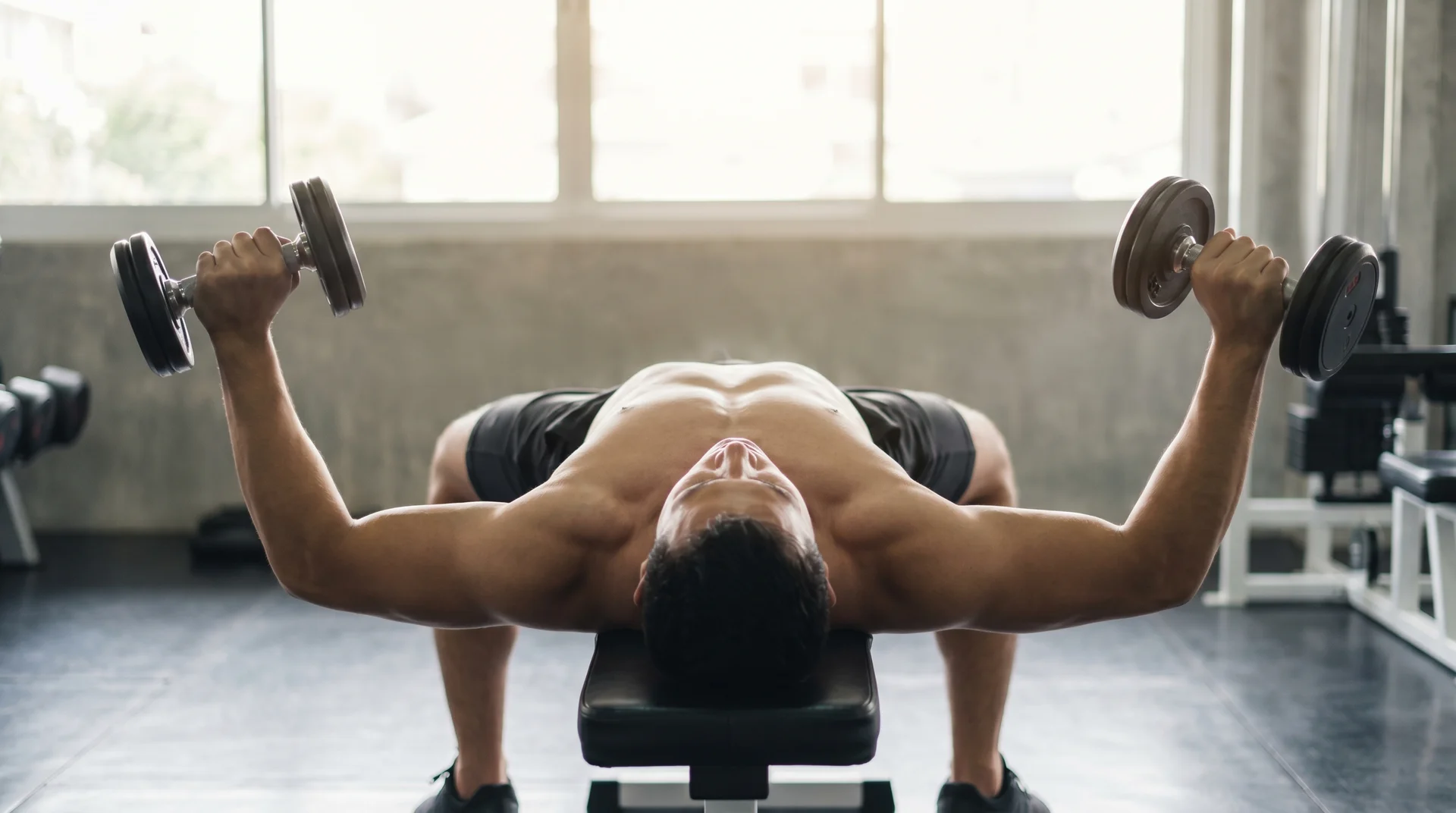
Target Muscles: Pectoralis major (stretch-focused), anterior deltoid
Sets and Reps: 3 sets of 12 to 15 reps
Rest: 60 seconds
Step-by-Step Instructions:
- Lie flat on a bench, holding one dumbbell in each hand
- Press the dumbbells up above your chest with palms facing each other
- With a slight bend in your elbows, open your arms out to the sides in a wide arc
- Lower until you feel a stretch across your chest. Do not go past a 90-degree angle at the shoulder
- Bring both arms back up in the same arc, squeezing your chest at the top
- Repeat for the target reps
Common Mistake: Using too much weight forces you to bend your elbows and turn the fly into a press. Keep the weight light enough to maintain the arc shape throughout.
Pro Tip: The stretch at the bottom is where chest growth happens. Control the lowering phase for 3 seconds.
Who It’s Best For: Intermediate and advanced lifters looking to add chest width and improve the inner chest definition.
4. Dumbbell Push-Up (Weighted)
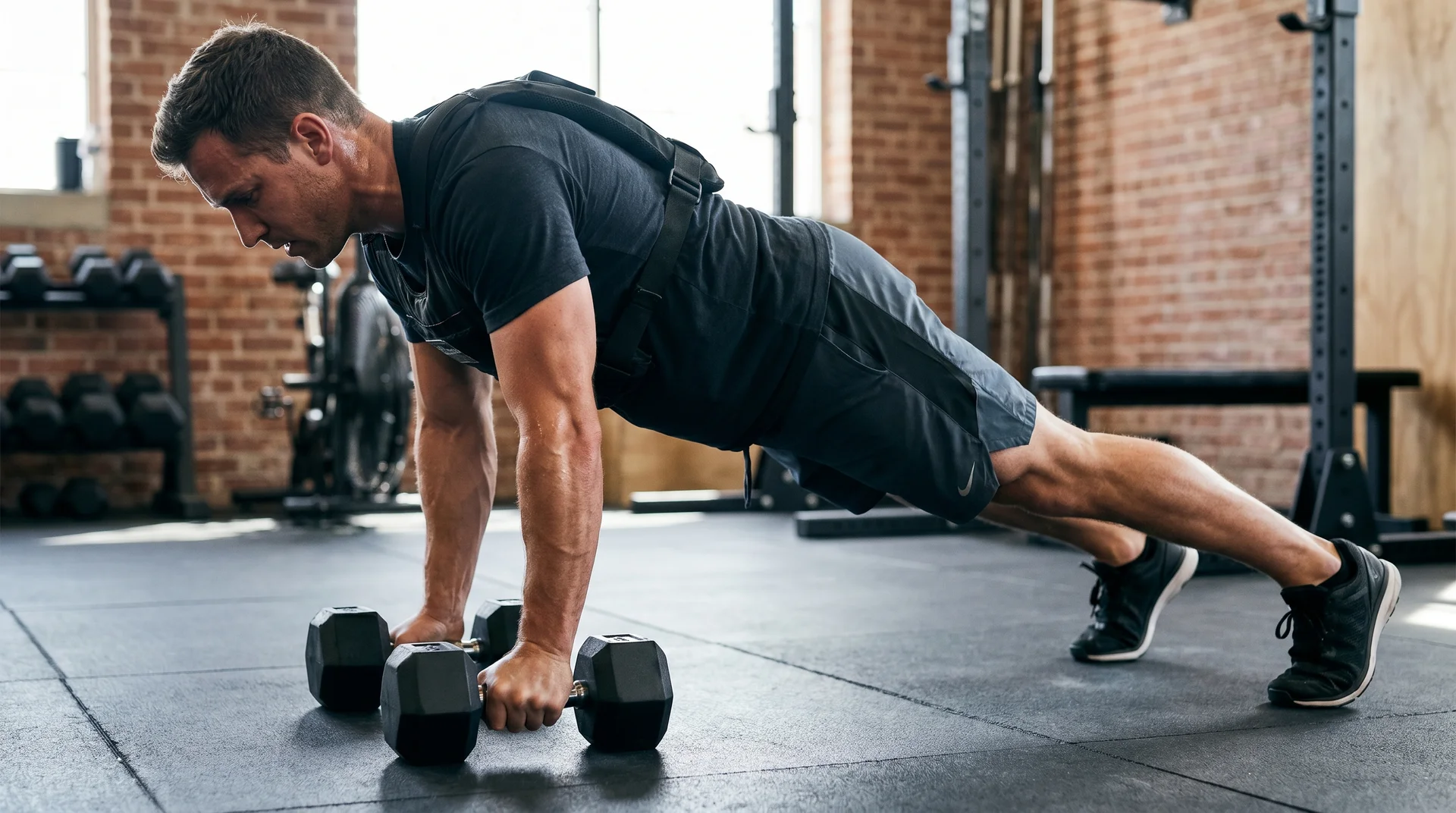
Target Muscles: Full chest, triceps, core, anterior deltoid
Sets and Reps: 3 sets of 10 to 15 reps
Rest: 60 seconds
Step-by-Step Instructions:
- Place two dumbbells on the floor parallel to each other, shoulder-width apart
- Get into a push-up position, gripping the dumbbell handles
- Keep your body in a straight line from head to heels. Engage your core
- Lower your chest toward the floor between the dumbbells, going slightly below hand level
- Press back up to the starting position
- Repeat for the target reps
Common Mistake: Letting your hips sag or rise up breaks the straight line your body should maintain. Keep your core tight throughout.
Pro Tip: The dumbbell handles allow a deeper range of motion than a flat push-up on the floor. Take advantage of that extra stretch.
Who It’s Best For: Great for all levels. Beginners can use lighter dumbbells. Advanced lifters can add a weight plate across their back.
Shoulder Exercises
5. Dumbbell Overhead Press
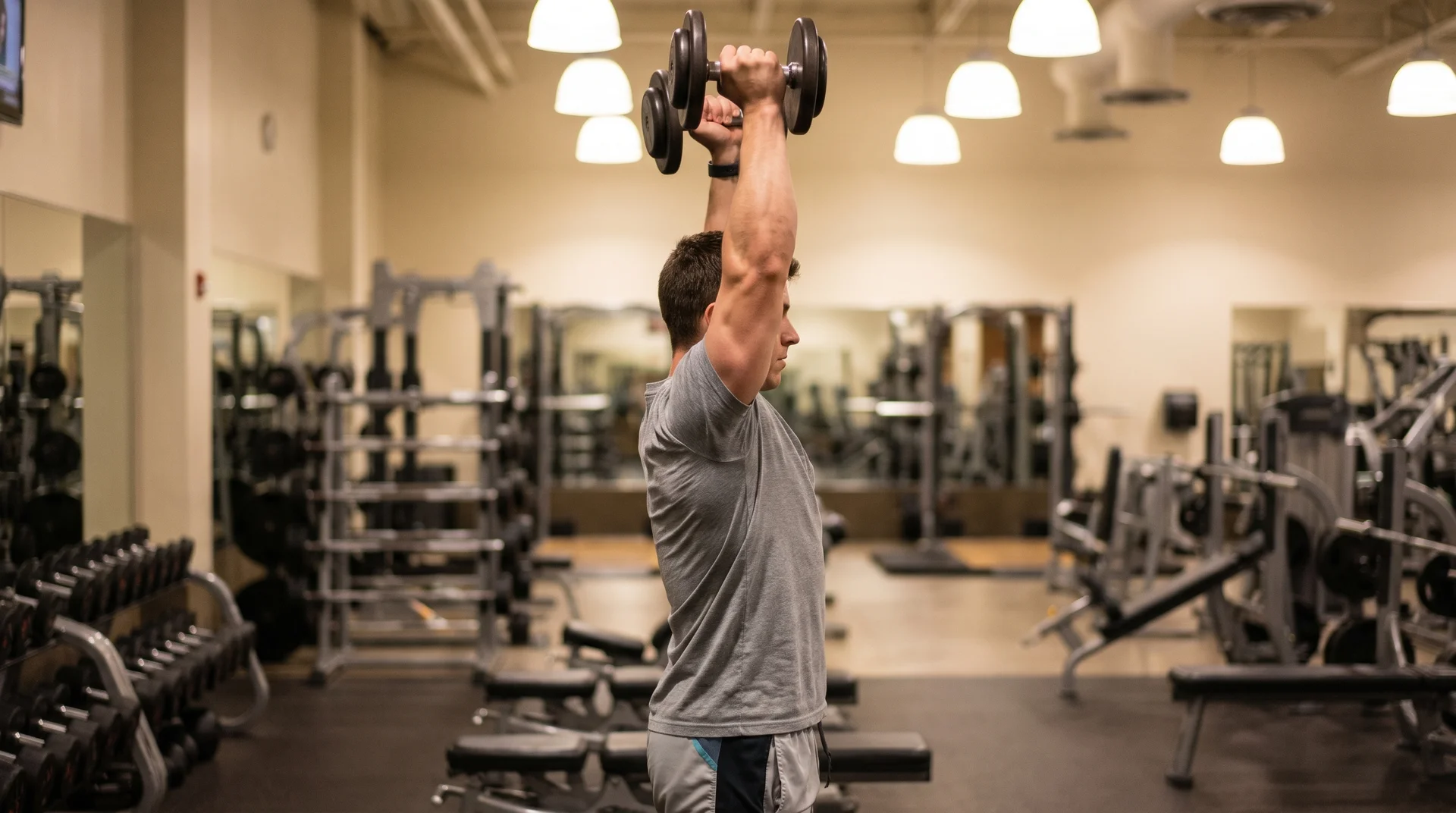
Target Muscles: All three deltoid heads (anterior, lateral, posterior), upper trapezius, triceps brachii
Sets and Reps: 3 to 4 sets of 8 to 10 reps
Rest: 90 seconds
Step-by-Step Instructions:
- Sit on a bench with back support or stand with feet shoulder-width apart
- Hold a dumbbell in each hand at shoulder height with palms facing forward
- Press both dumbbells straight up overhead until your arms are fully extended
- Do not let the weights touch at the top
- Lower them slowly back to shoulder height
- Repeat for the target reps
Common Mistake: Excessively arching your lower back when pressing overhead. This puts your spine in a risky position. Brace your core before each press.
Pro Tip: Seated pressing is safer for beginners. Standing pressing activates your core more but requires better body control.
Who It’s Best For: All levels. The overhead press is the most complete shoulder exercise available with dumbbells.
6. Dumbbell Lateral Raise
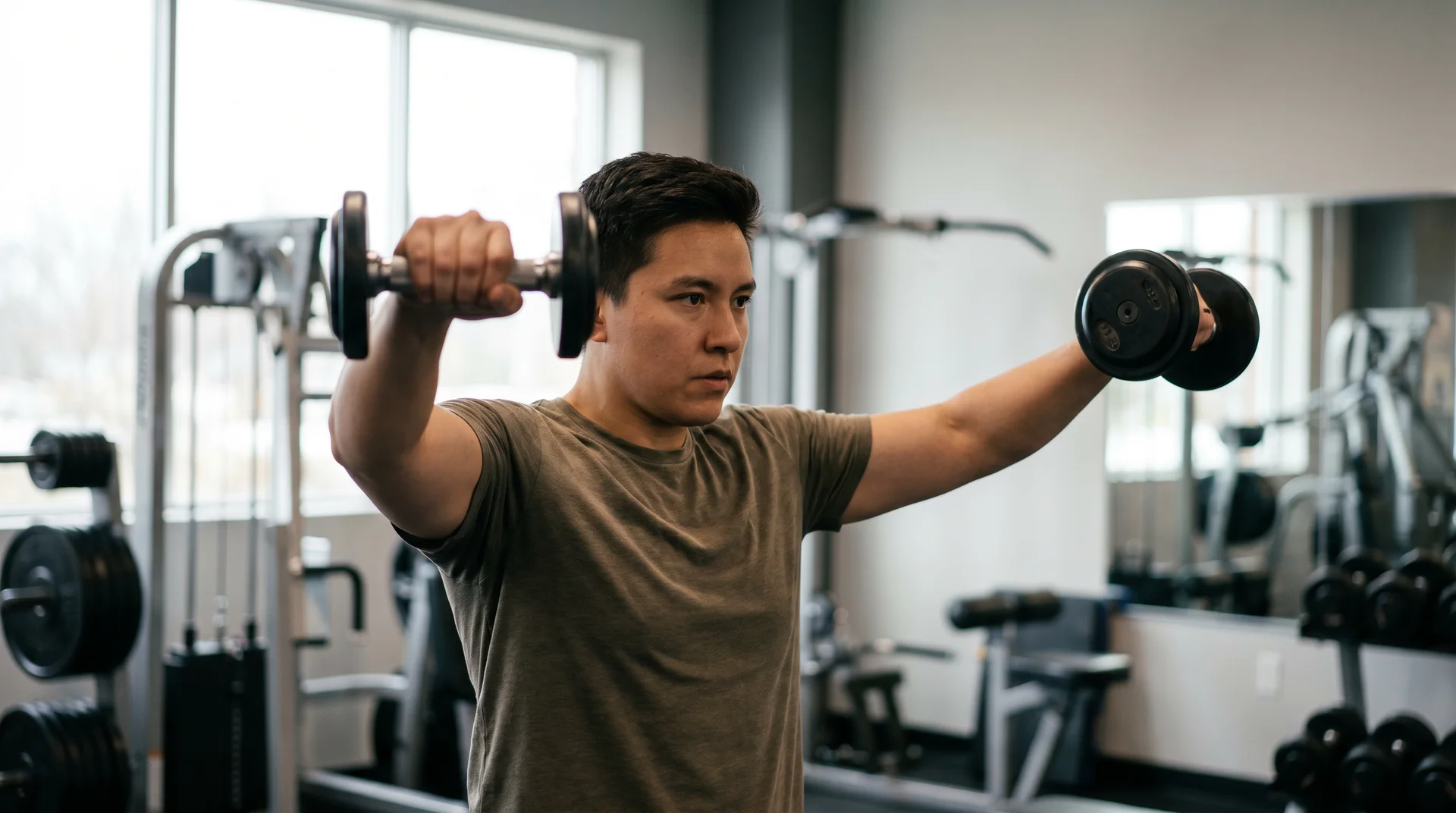
Target Muscles: Lateral deltoid (the side head of the shoulder)
Sets and Reps: 3 to 4 sets of 12 to 15 reps
Rest: 45 to 60 seconds
Step-by-Step Instructions:
- Stand with feet shoulder-width apart, holding a dumbbell in each hand at your sides
- Keep a very slight bend in your elbows throughout the movement
- Raise both arms out to the sides in a wide arc until they reach shoulder height
- Your palms should face down at the top. Tilt the dumbbell slightly as if pouring water from a jug
- Lower slowly back to the starting position, taking 2 to 3 seconds
- Repeat for the target reps
Common Mistake: Using momentum by swinging the dumbbells up. This removes the work from your lateral deltoid. If you need to swing, the weight is too heavy.
Pro Tip: The lateral raise builds shoulder width. It is one of the most important exercises for a broader-looking upper body.
Who It’s Best For: All levels. Use light weights. Even experienced lifters typically use 10 to 25 lbs on this exercise.
7. Dumbbell Front Raise
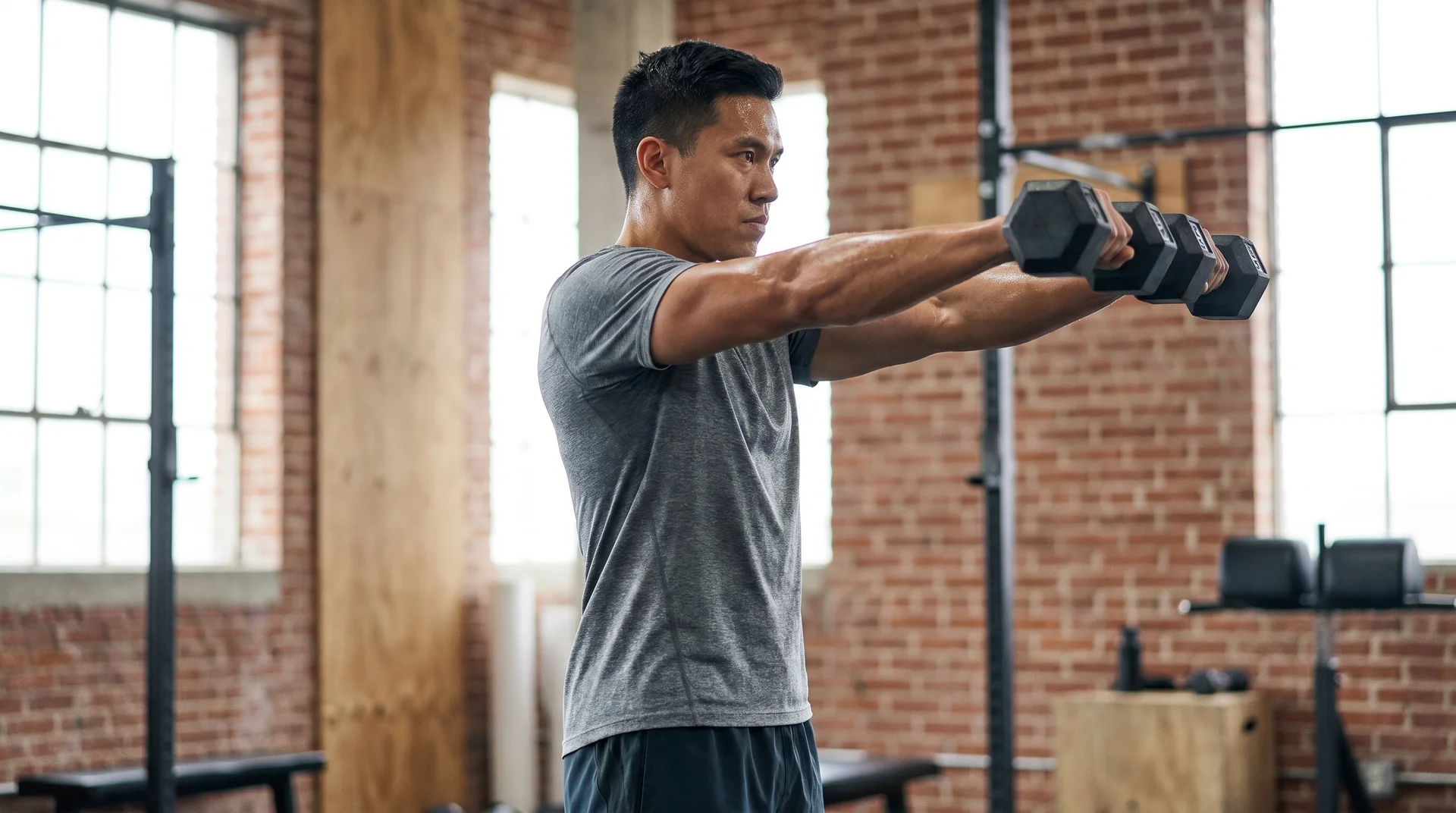
Target Muscles: Anterior deltoid (front head of the shoulder), upper chest
Sets and Reps: 3 sets of 12 reps
Rest: 45 to 60 seconds
Step-by-Step Instructions:
- Stand holding a dumbbell in each hand in front of your thighs, palms facing your body
- Keep your arms straight with just a very slight bend at the elbow
- Raise one arm forward and up until it reaches shoulder height
- Lower it back down with control
- Repeat with the other arm. Alternative for the full set
- You can also raise both arms at the same time for a more intense variation
Common Mistake: Raising the weight above shoulder height. Going higher does not add more muscle activation. It only increases shoulder joint stress.
Pro Tip: If you already do a lot of overhead pressing, your front delts may already be well-trained. Do not over-prioritize this exercise.
Who It’s Best For: Beginner to intermediate lifters who want balanced shoulder development across all three heads.
8. Dumbbell Rear Delt Fly
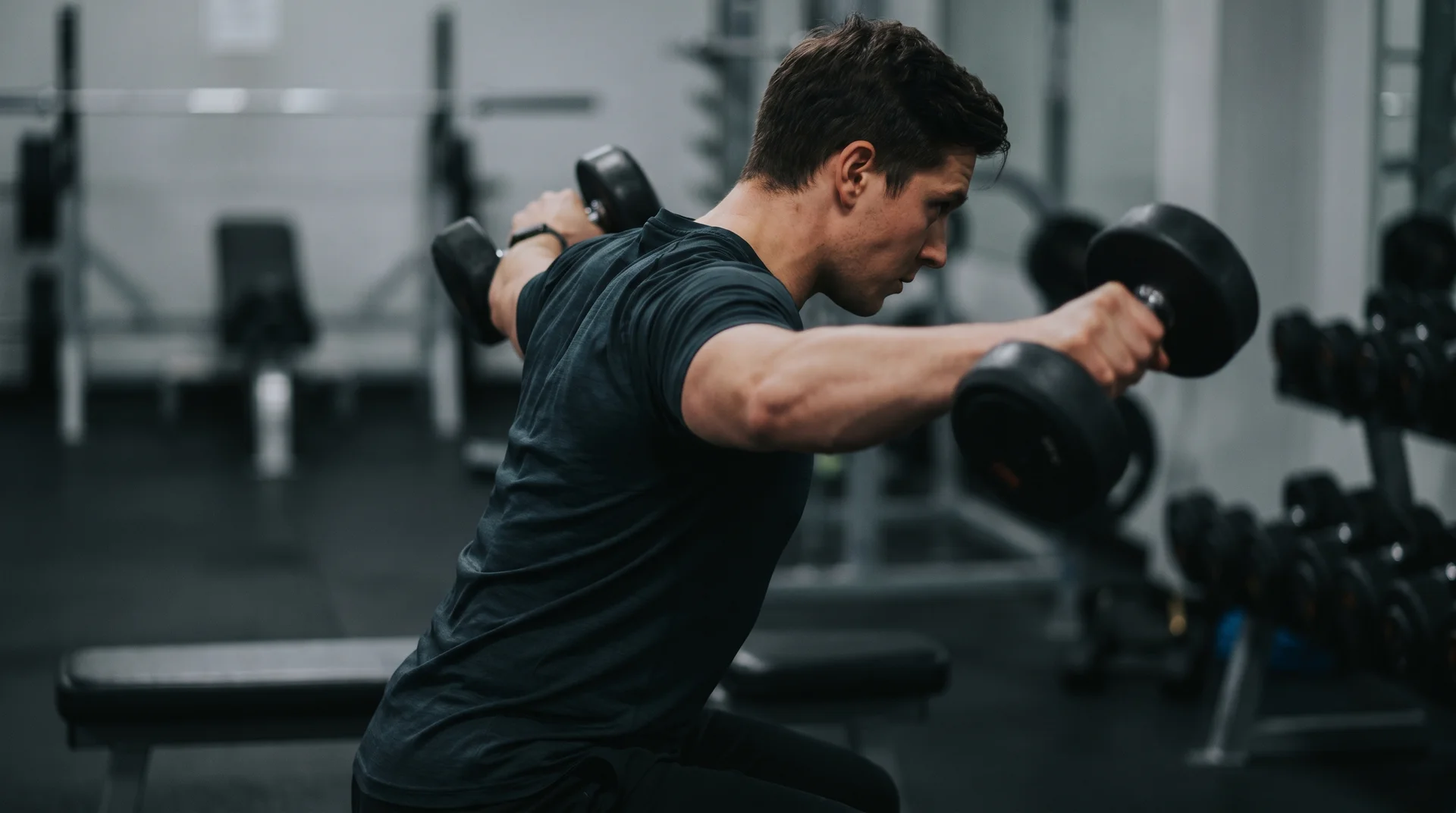
Target Muscles: Posterior deltoid (rear shoulder), rhomboids, middle trapezius
Sets and Reps: 3 sets of 12 to 15 reps
Rest: 60 seconds
Step-by-Step Instructions:
- Sit on the edge of a bench and hinge forward until your chest is almost on your thighs
- Hold a dumbbell in each hand with arms hanging below your chest, palms facing each other
- With a slight bend in your elbows, raise both arms out to the sides until they reach shoulder height
- Squeeze your rear delts and upper back at the top for one second
- Lower slowly back to the starting position
- Repeat for the target reps
Common Mistake: Bending your elbows too much during the movement. This shifts the work from your rear delts to your back. Keep the arms relatively straight.
Pro Tip: Most people neglect rear delt training. Weak rear delts cause rounded shoulders and a forward head posture. Make this a priority.
Who It’s Best For: All levels. Especially important for people who sit at a desk for long hours.
Back Exercises
9. Dumbbell Bent-Over Row
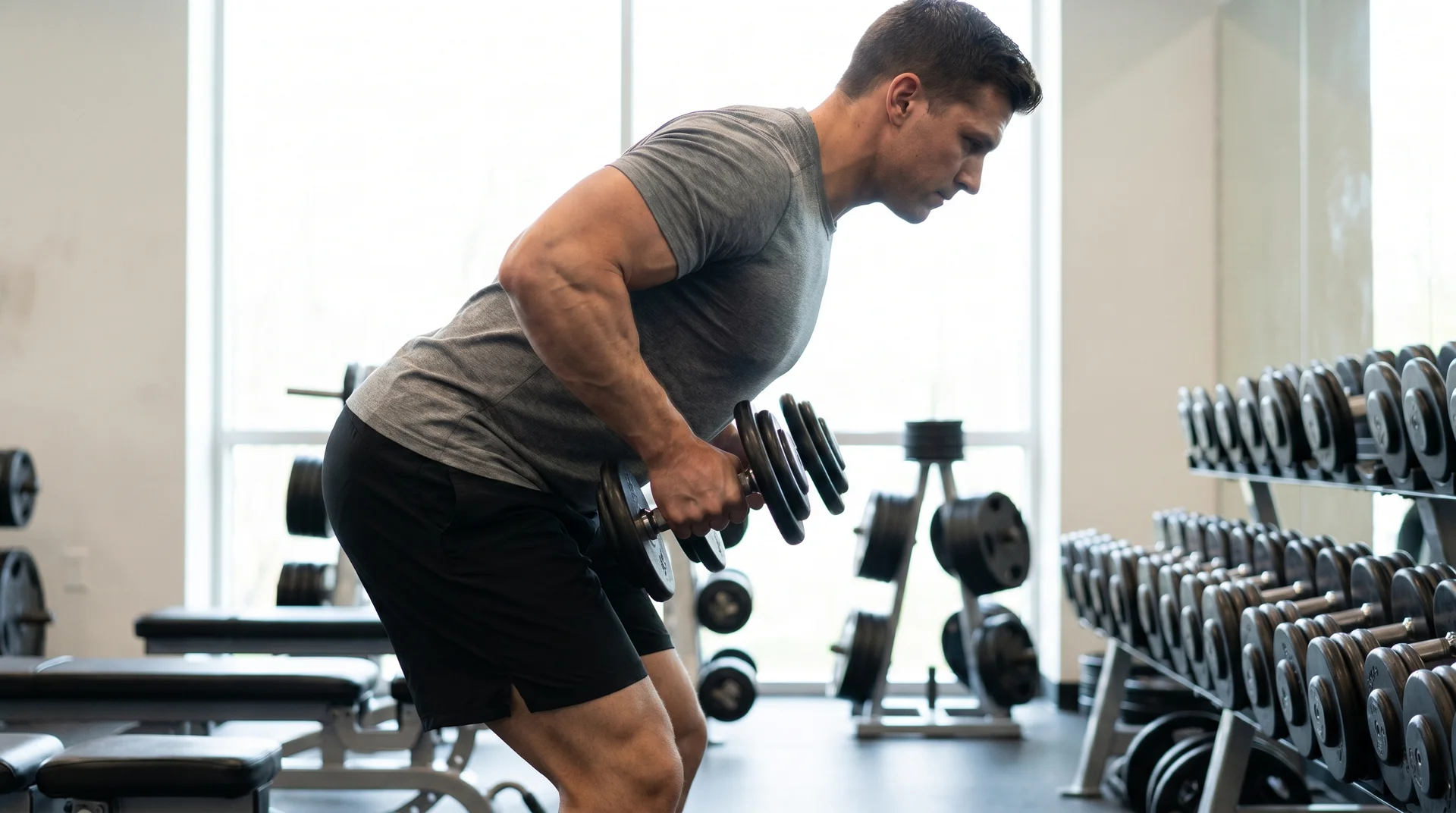
Target Muscles: Latissimus dorsi, rhomboids, rear deltoid, biceps brachii
Sets and Reps: 3 to 4 sets of 8 to 12 reps
Rest: 90 seconds
Step-by-Step Instructions:
- Stand with feet hip-width apart, holding a dumbbell in each hand
- Hinge at the hips until your torso is at about a 45-degree angle to the floor
- Let the dumbbells hang directly below your chest with arms fully extended
- Keep your back flat and your chest up throughout
- Pull both dumbbells up toward your lower ribcage, driving your elbows back and up
- Squeeze your shoulder blades together at the top
- Lower the dumbbells slowly back to the starting position
- Repeat for the target reps
Common Mistake: Rounding your lower back under the weight. This is a serious injury risk. If you cannot keep a flat back, reduce the weight.
Pro Tip: Think about pulling your elbows toward the ceiling rather than pulling the dumbbells up. This cue activates your back more effectively.
Who It’s Best For: All levels. The bent-over row is one of the best back-building exercises in any program.
10. Single-Arm Dumbbell Row
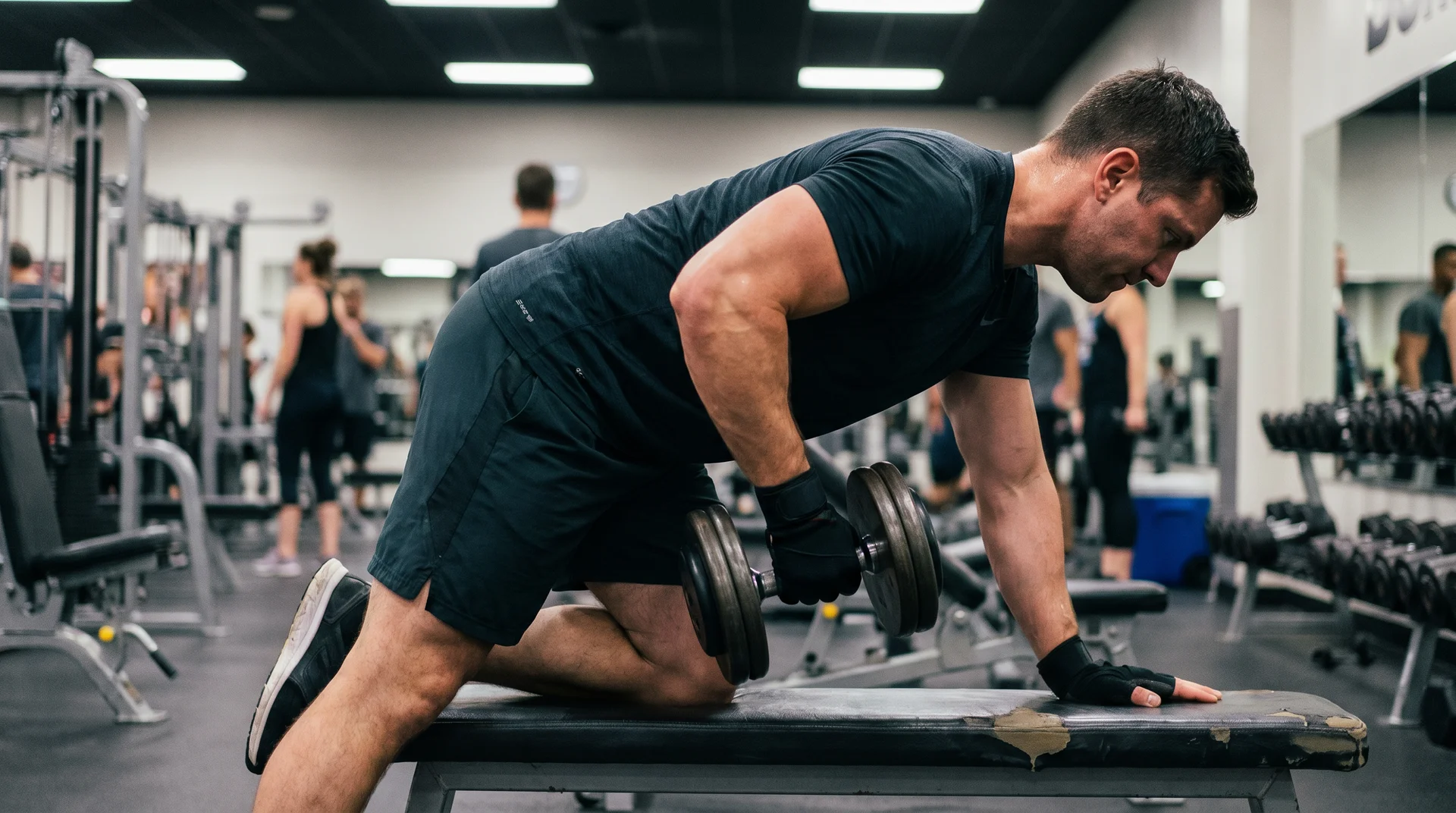
Target Muscles: Latissimus dorsi, rhomboids, lower trapezius, biceps brachii
Sets and Reps: 3 to 4 sets of 10 reps per side
Rest: 60 to 90 seconds
Step-by-Step Instructions:
- Place your left knee and left hand on a flat bench for support
- Hold a dumbbell in your right hand with your arm hanging straight down
- Keep your back flat and parallel to the floor
- Pull the dumbbell up toward your hip, driving your right elbow up and back
- Squeeze your right lat at the top for one second
- Lower the dumbbell slowly with full control
- Complete all reps on one side before switching
Common Mistake: Rotating your torso to lift the weight. This means your back muscles are not doing the work. Keep your hips and shoulders square to the bench.
Pro Tip: A longer range of motion means more muscle activation. Let the dumbbell travel fully down at the bottom of each rep before pulling again.
Who It’s Best For: All levels. The single-arm row lets you use a heavier weight than the two-arm version and trains each side independently.
11. Dumbbell Renegade Row
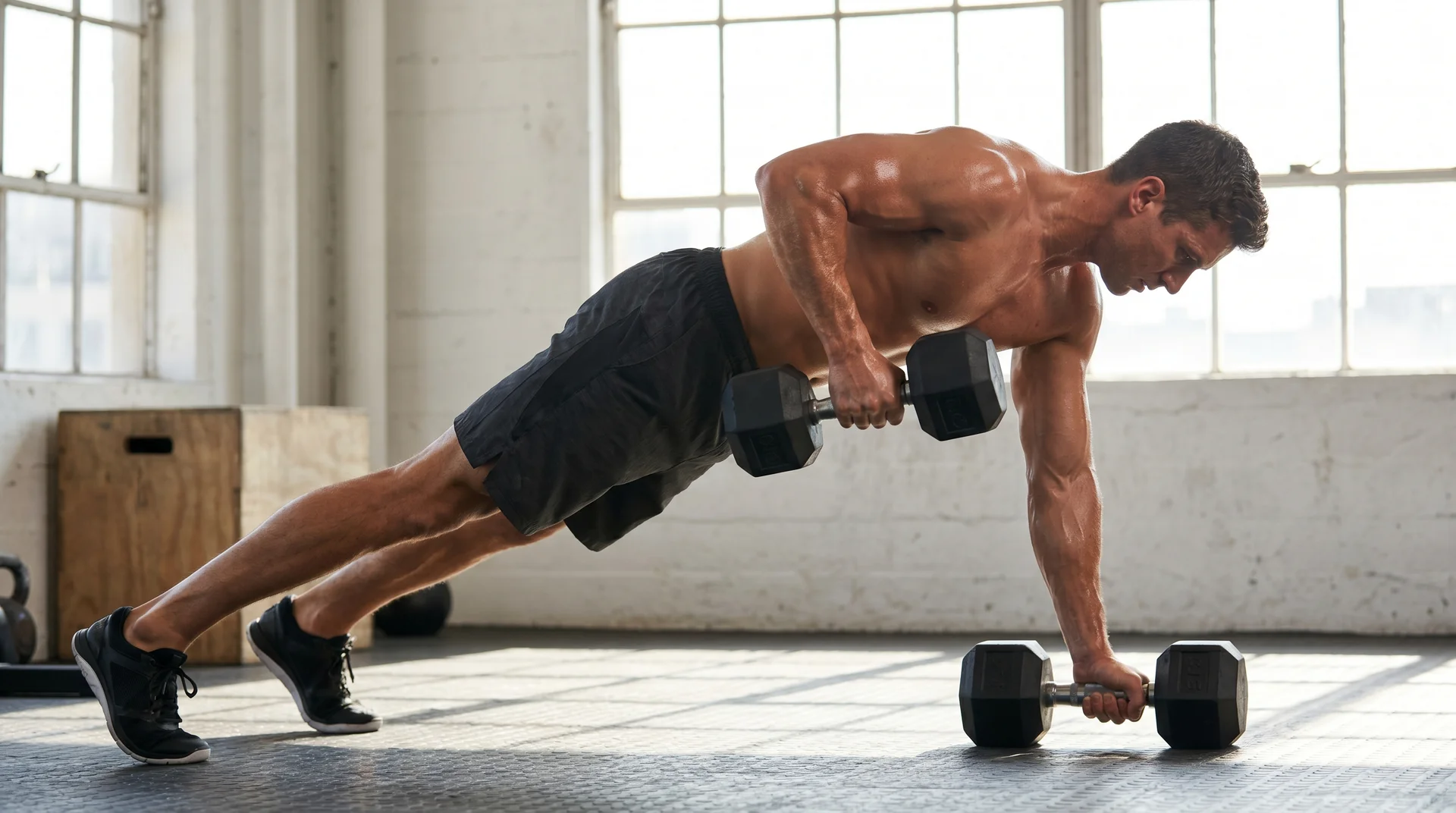
Target Muscles: Latissimus dorsi, core (transverse abdominis, obliques), shoulders, triceps
Sets and Reps: 3 sets of 8 to 10 reps per side
Rest: 90 seconds
Step-by-Step Instructions:
- Place two dumbbells on the floor shoulder-width apart
- Get into a push-up position, gripping both handles
- Keep your body in a straight line from head to heels
- Row one dumbbell up toward your hip while the other hand stays on the floor
- Lower it back down with control
- Repeat on the other side. That is one full rep
- Keep your hips as still as possible throughout
Common Mistake: Letting your hips rotate or twist as you row. This defeats the purpose of the exercise. The core challenge is the whole point.
Pro Tip: The wider your feet are placed, the more stable you will be. Start with a wider stance and narrow it as you get stronger.
Who It’s Best For: Intermediate to advanced lifters. This exercise demands both strength and core stability simultaneously.
Bicep Exercises
12. Dumbbell Bicep Curl
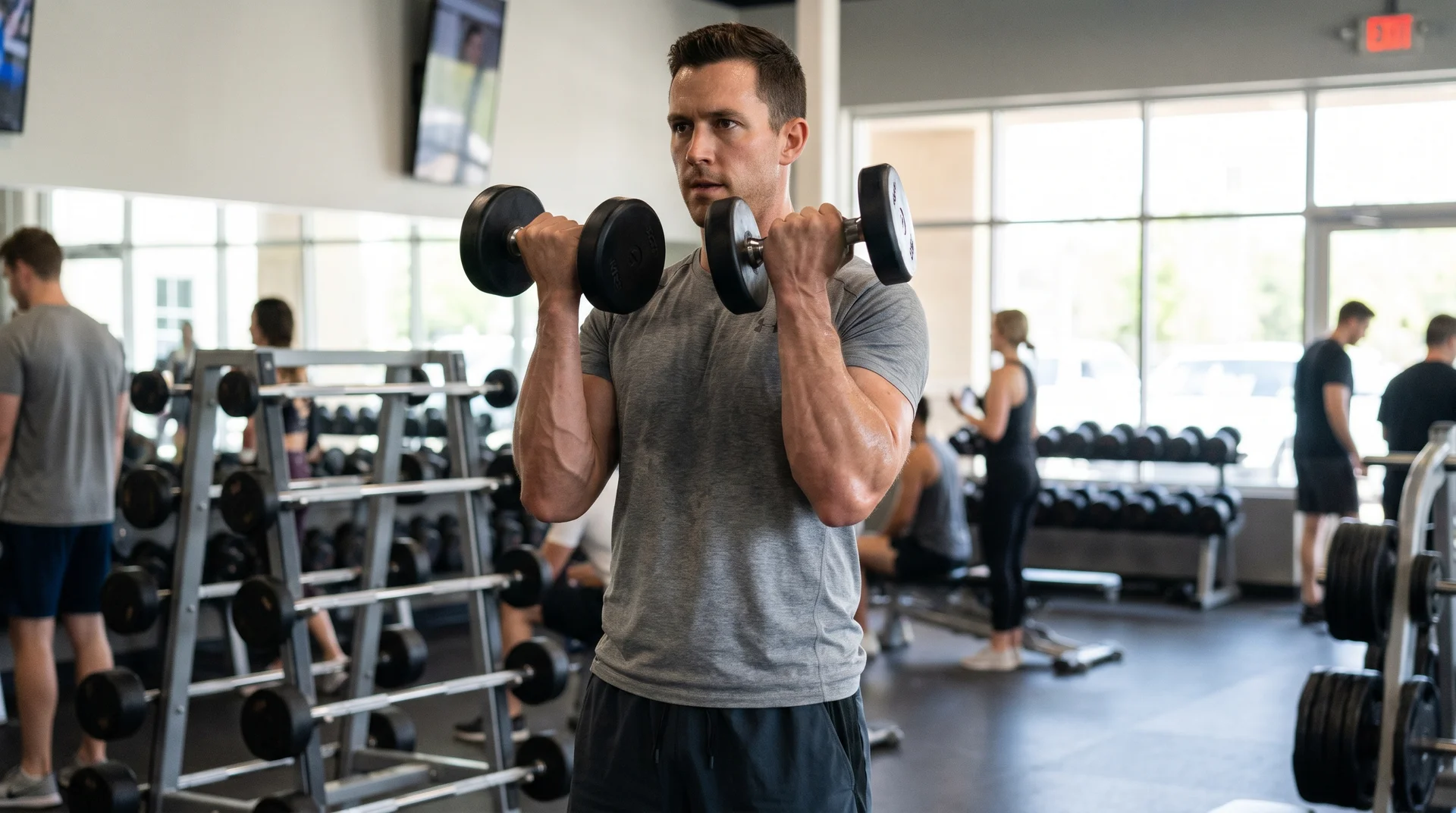
Target Muscles: Biceps brachii, brachialis (the muscle under the bicep)
Sets and Reps: 3 sets of 10 to 12 reps
Rest: 60 seconds
Step-by-Step Instructions:
- Stand holding a dumbbell in each hand with arms fully extended and palms facing forward
- Keep your elbows pinned to your sides throughout the movement
- Curl both dumbbells up toward your shoulders by bending at the elbow
- Squeeze your biceps hard at the top for one second
- Lower the dumbbells slowly back to the starting position over 2 to 3 seconds
- Repeat for the target reps
Common Mistake: Swinging your body back to lift the weight. This uses momentum instead of muscle. Go lighter and control every rep.
Pro Tip: The lowering phase builds as much muscle as the lifting phase. Do not let the weight drop. Control it down every single time.
Who It’s Best For: All levels. The standard dumbbell curl remains the most direct way to build bicep size and strength.
13. Dumbbell Hammer Curl
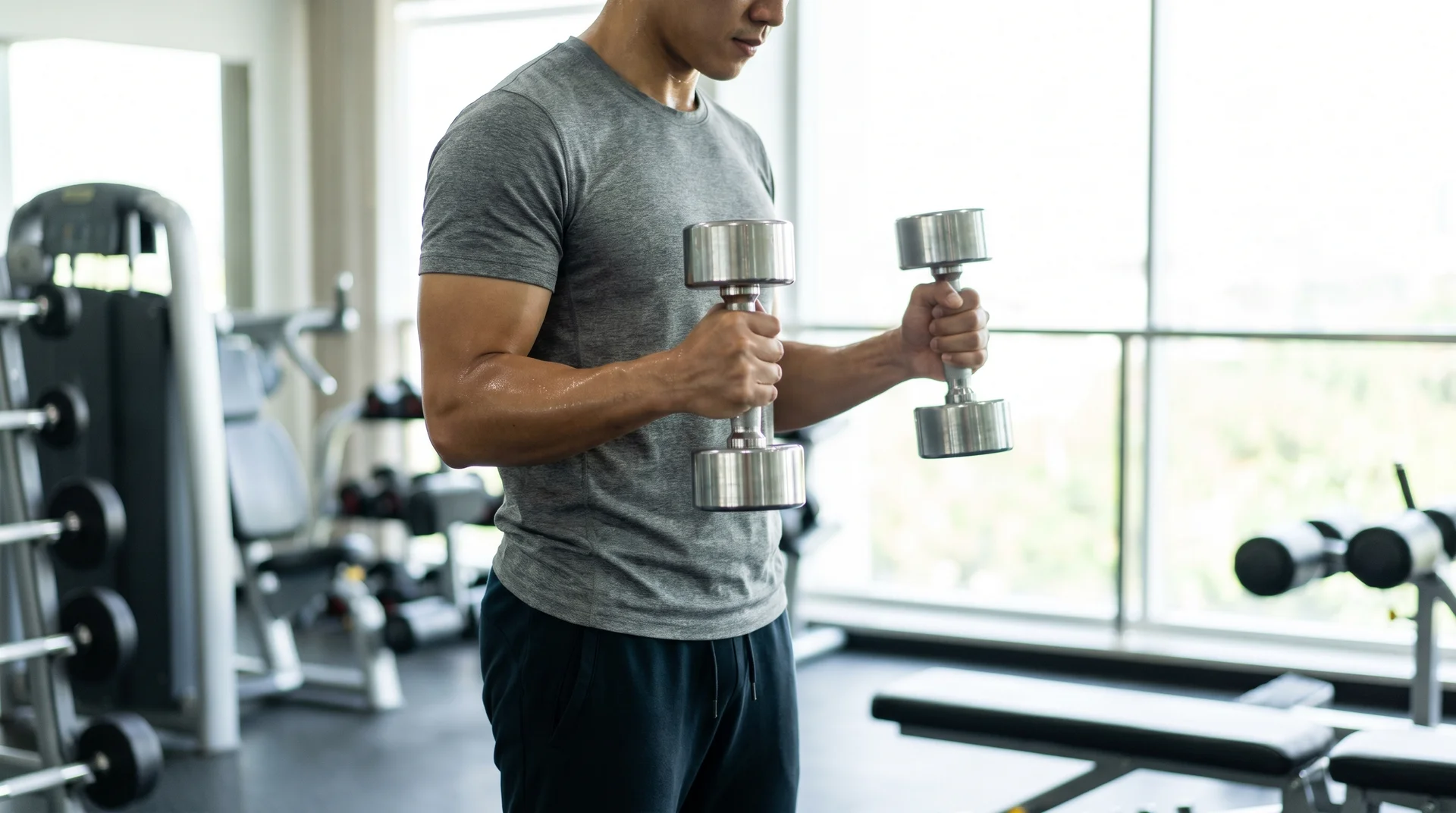
Target Muscles: Brachialis, brachioradialis, biceps brachii
Sets and Reps: 3 sets of 10 to 12 reps
Rest: 60 seconds
Step-by-Step Instructions:
- Stand holding a dumbbell in each hand with palms facing each other (neutral grip)
- Keep your elbows close to your sides and your upper arms stationary
- Curl both dumbbells upward without rotating your wrists
- Squeeze at the top for one second
- Lower slowly back to the starting position
- Repeat for the target reps
Common Mistake: Turning it into a standard curl by rotating your palms up. The neutral grip is what targets the brachialis specifically. Keep those palms facing inward.
Pro Tip: The brachialis sits under the bicep. When it grows, it pushes the bicep up, making your arm look bigger even from the front. This exercise is worth the effort.
Who It’s Best For: All levels. Hammer curls are especially useful for people who want thicker-looking arms, not just peak bicep height.
Tricep Exercises
14. Dumbbell Tricep Overhead Extension
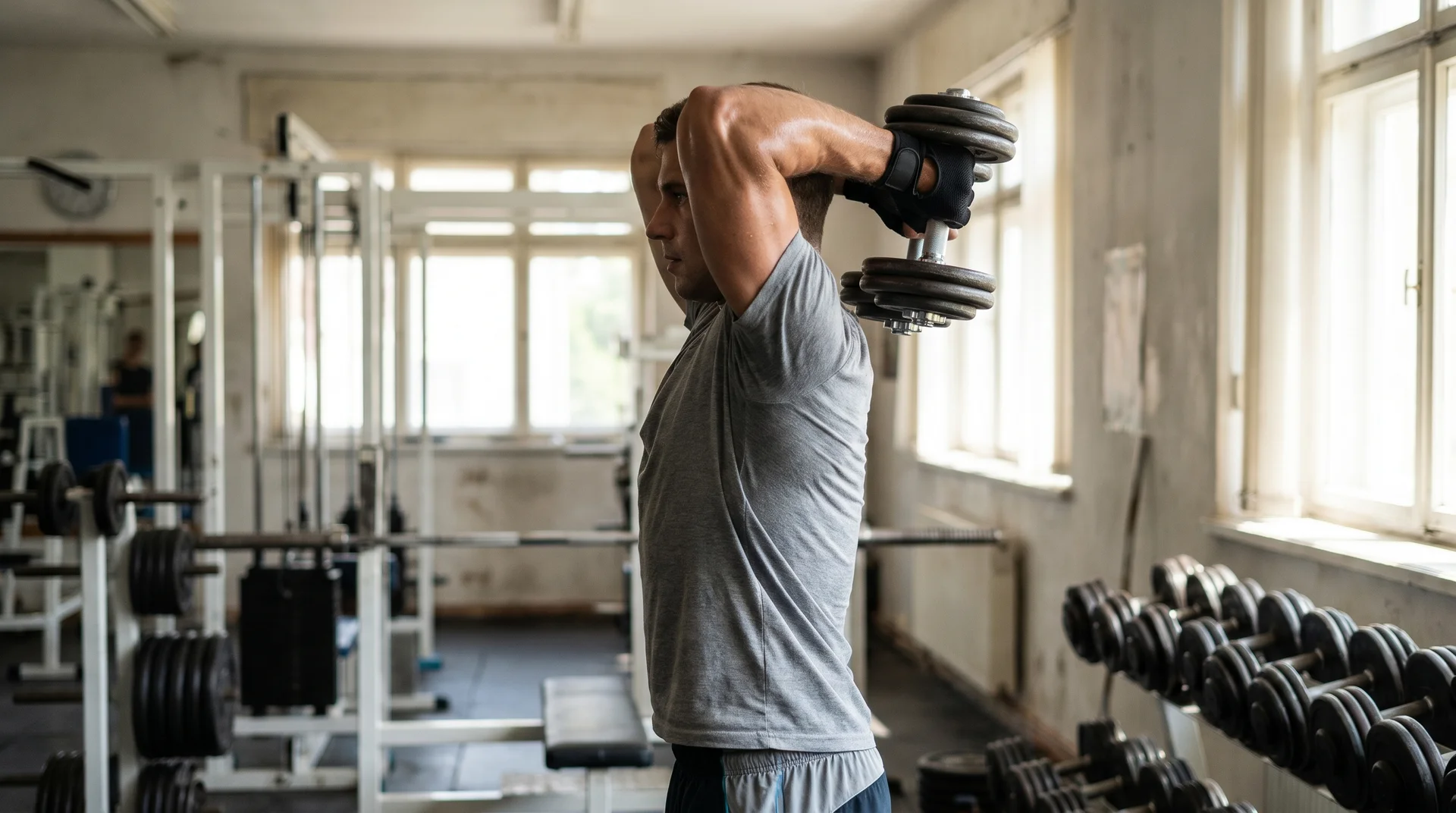
Target Muscles: Long head of triceps brachii (the largest of the three tricep heads)
Sets and Reps: 3 sets of 10 to 12 reps
Rest: 60 seconds
Step-by-Step Instructions:
- Sit on a bench or stand with feet shoulder-width apart
- Hold one dumbbell with both hands, gripping the upper weight plate
- Press the dumbbell overhead until your arms are fully extended
- Keeping your upper arms close to your head, slowly lower the dumbbell behind your head
- Lower until your elbows form roughly a 90-degree angle
- Press the dumbbell back up to the starting position
- Repeat for the target reps
Common Mistake: Letting your elbows flare out wide as you lower the weight. This reduces activation of the long head and stresses the elbow joint. Keep your elbows pointed forward.
Pro Tip: The overhead position fully stretches the long head of the tricep, which triggers more muscle growth than pressing movements alone.
Who It’s Best For: All levels. This is one of the few exercises that directly trains the long head of the tricep, which makes up the bulk of the muscle.
15. Dumbbell Tricep Kickback
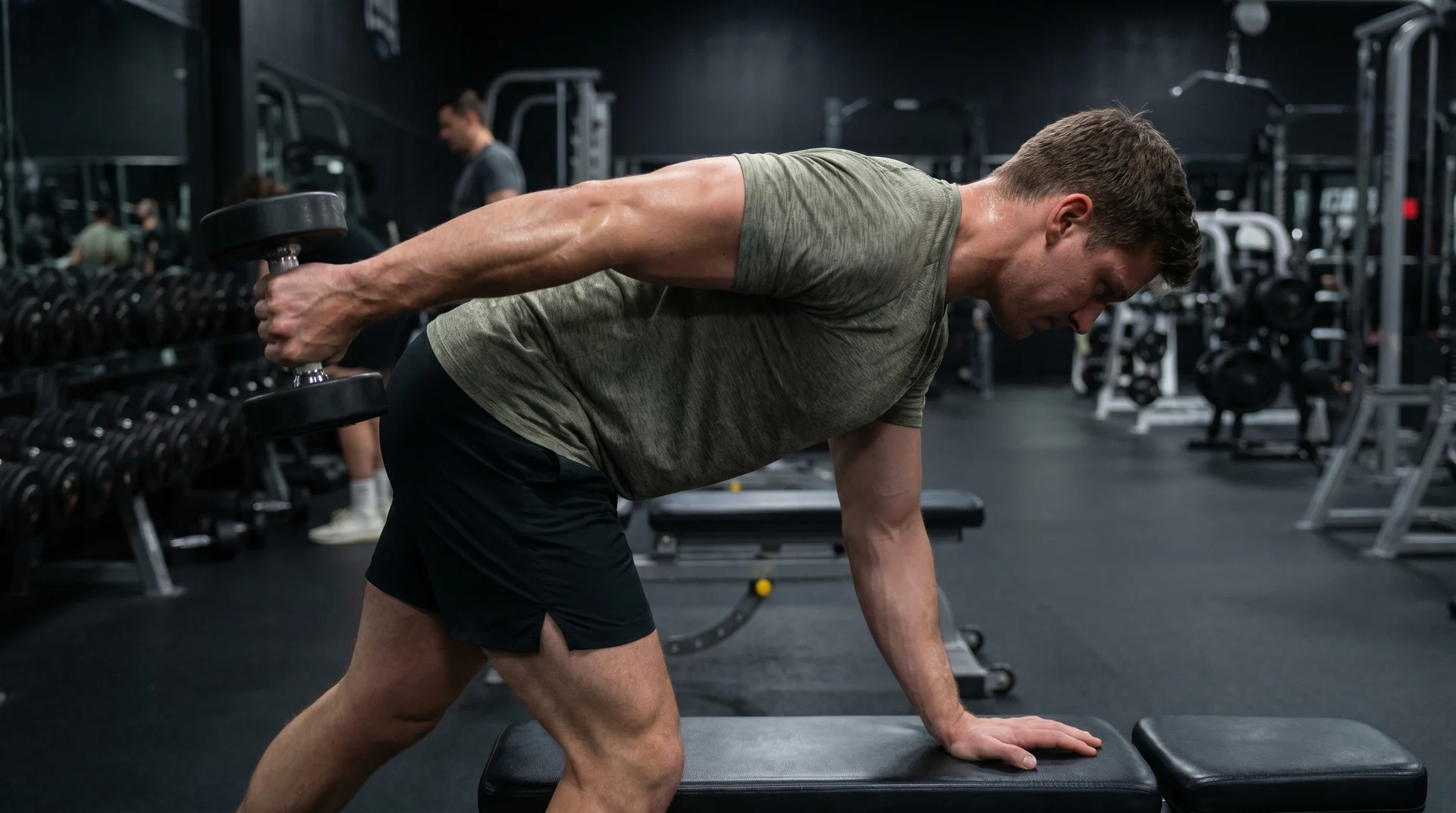
Target Muscles: Lateral and medial heads of triceps brachii
Sets and Reps: 3 sets of 12 to 15 reps per side
Rest: 45 to 60 seconds
Step-by-Step Instructions:
- Hold a dumbbell in your right hand and hinge forward at the hips until your torso is parallel to the floor
- Place your left hand on a bench or your left knee for support
- Bring your right upper arm up until it is parallel to the floor and pinned to your side
- From this position, extend your forearm back until your arm is fully straight
- Hold for one second at the top, squeezing your triceps
- Lower back to the 90-degree starting position with control
- Complete all reps on one side, then switch
Common Mistake: Letting your upper arm drop during the movement. Your upper arm must stay parallel to the floor the whole time. If it drops, the tricep is not under tension.
Pro Tip: Use a lightweight here. Even experienced lifters use 10-20 lbs on this exercise. Form matters far more than load.
Who It’s Best For: All levels. Works best as a finishing move at the end of your session when your triceps are already warmed up.
Final Notes
These upper-body dumbbell exercises give you everything you need to properly train your chest, shoulders, back, and arms.
Pick a routine that matches your level, log your weights each session, and gradually increase the load over time.
Results come from showing up consistently, not from doing more in one session. Start today, stay consistent, and explore more workout tips and routines to keep progressing.