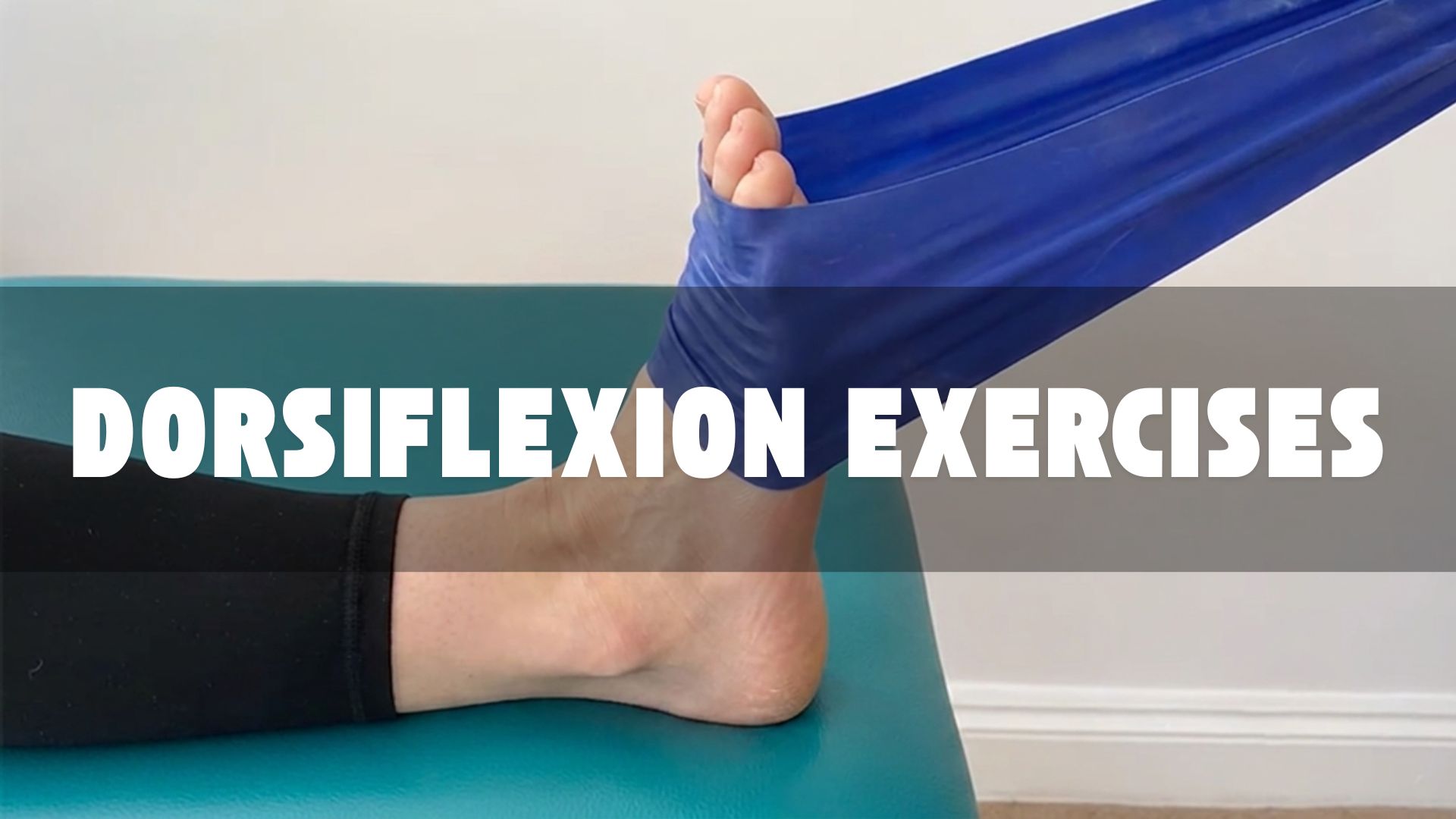
Your ankles do more work than you think. Every squat, every step, every run depends on how well they move. But most people never train them.
Poor dorsiflexion contributes to many common problems. Heels that lift during squats. Knee pain that keeps coming back. A stride that feels stiff no matter how much you stretch.
The good news is that dorsiflexion exercises fix this directly. They build ankle flexibility and strength together, so your movement actually improves.
This guide covers the best dorsiflexion exercises, how often to do them, and the mistakes that slow most people down.
What Are Dorsiflexion Exercises?
Dorsiflexion is the movement of pulling your foot upward toward your shin. It happens at the ankle joint and plays a direct role in how you move every day.
Dorsiflexion exercises train this movement pattern. They work the muscles along the front of your lower leg, including the tibialis anterior, the calf muscles, and the muscles around the ankle joint. These muscles control how your ankle bends and how much range you get with each step.
When dorsiflexion is limited, you feel it fast. Your squat depth drops. Your knees cave inward. Your walking gait shifts. Runners with poor ankle mobility put more stress on their knees and hips to compensate. Over time, that compensation leads to pain and injury.
Dorsiflexion exercises fix the root of the problem. They build ankle flexibility and strength at the same time, giving your body a stable base to move from.
Benefits of Dorsiflexion Exercises
Dorsiflexion exercises do more than stretch your ankles. They create real, functional change in how your body moves and holds up over time.
-
Improve Ankle Mobility: Regular dorsiflexion training increases the range of motion at your ankle joint. More mobility means your foot can move through a fuller arc during squats, lunges, and walking without compensation.
-
Increase Flexibility and Balance: As ankle flexibility grows, your body gets better at distributing weight evenly. This directly supports your balance and coordination on uneven surfaces.
-
Help With Squats and Walking: Limited ankle mobility forces your heels to rise during squats or shortens your stride while walking. Dorsiflexion work keeps your heels grounded and your movement pattern clean.
-
Reduce Injury Risk: Tight ankles shift stress to your knees, hips, and lower back. Strengthening and loosening the ankle joint protects the whole kinetic chain above it.
Best Dorsiflexion Exercises
Your ankle needs both flexibility and strength to move well. These seven dorsiflexion exercises target both, so you build range you can actually use.
1. Resistance Band Dorsiflexion
Video credit: Rehab Science
- Sit on the floor with your legs straight.
- Loop a resistance band around the ball of your foot and hold both ends.
- Pull your foot toward your shin against the band’s resistance, then slowly return.
This exercise directly strengthens the tibialis anterior. It is one of the most targeted ways to build active dorsiflexion strength without putting weight on the joint. Perform 3 sets of 15 reps per foot.
2. Heel Walks
Video credit: Travis Goyeneche
- Stand tall and lift both forefeet off the ground so you balance on your heels.
- Walk forward in this position for 20 to 30 steps.
- Heel walks engage the front of your lower leg and build the strength needed to maintain dorsiflexion in your foot.
They also challenge your balance and ankle stability at the same time. Add these at the start of your workout as a warm-up movement.
3. Toe Raises
Video credit: Katherine Coyner MD
- Stand with your feet flat on the floor, hip-width apart.
- Lift your toes and forefoot off the ground while keeping your heels down.
- Hold for two seconds at the top, then lower slowly.
Toe raises train the same muscles used during walking and running, particularly during the swing phase of your gait. They are simple, require no equipment, and can be done anywhere. Aim for 3 sets of 20 reps.
4. Knee-to-Wall Stretch
Video credit: Dr. Jess Harvey, Osteopath & Health Coach
- Stand facing a wall.
- Place one foot a few inches from the base.
- Drive your knee forward toward the wall while keeping your heel flat on the floor.
- Hold for two seconds, then return.
- Move your foot farther back as your range increases.
This stretch directly measures and improves ankle dorsiflexion range. It is one of the most used assessments in physical therapy for ankle mobility. Do 10 to 15 slow reps per side.
5. Banded Ankle Mobilization
Video credit: Squat University
- Place a resistance band low on a rack or fixed object.
- Loop the band around your ankle and step forward to create tension.
- Get into a lunge position with your banded foot forward.
- Drive your knee over your toes while the band pulls the ankle joint back.
This mobilizes the joint itself, not just the soft tissue. It helps restore normal ankle mechanics and is especially useful after injury or long periods of sitting. Do 10 to 15 reps per side.
6. Deep Squat Hold
Video credit: Strength Side
- Stand with feet shoulder-width apart and lower into a full squat.
- Keep your heels flat and your chest up.
- Hold the bottom position for 30 to 60 seconds.
- The deep squat hold places your ankles under sustained dorsiflexion.
This builds both flexibility and the strength to maintain it. Use a doorframe or suspension straps for support when starting out. Work up to holding it without assistance over time.
7. Slant Board Stretch
Video credit: Tom Morrison
- Stand on a slant board or wedge with your toes elevated and heels lower.
- Hold the position for 30 to 60 seconds per set.
The incline puts your calf and ankle into a sustained stretch that is difficult to replicate on flat ground. Slant board work is particularly useful for people who sit for long hours or have chronically tight calves. You can perform bodyweight squats on the board to add a strengthening component at the same time.
How Often Should You Do Dorsiflexion Exercises?
You do not need to train dorsiflexion every single day to see results. Three to four sessions per week is enough for most people starting out. Daily light stretching, like the knee-to-wall or deep squat hold, is fine, but give your strengthening work a rest day in between.
Results take time. Most people notice better ankle range within two to four weeks of consistent training. Structural changes in joint mobility can take eight to twelve weeks to fully develop. The key is showing up regularly, not pushing harder on fewer days.
If you are new to ankle mobility work, start with two sessions per week. Add one exercise per session and track how your range improves over time. Gradual progression keeps you consistent and lowers the chance of doing too much too soon.
Common Mistakes to Avoid While Doing Dorsiflexion Exercises
Small errors in approach add up fast. Here is what to watch for before you start and during training.
| Mistake | What Goes Wrong | What to Do Instead |
|---|---|---|
| Stretching too aggressively | Forcing the ankle past its current range tears soft tissue and causes soreness that sets you back | Stay at the edge of discomfort, not pain. Slow and steady range gains last longer |
| Ignoring strengthening work | Stretching alone creates passive flexibility without the muscle control to use it | Pair every stretching session with at least one strengthening movement like toe raises or resistance band work |
| Poor form during exercises | Letting the heel lift or the knee collapse inward trains bad movement patterns into the joint | Check your heel position on every rep, and keep your knee tracking over your second toe |
| Inconsistent mobility training | Skipping sessions for days at a time stalls progress because the joint tightens back up between workouts | Schedule dorsiflexion work the same way you schedule strength training, and treat it as part of your routine |
Most of these mistakes come from rushing the process. Dorsiflexion responds well to patience. Short, consistent sessions beat long, infrequent ones every time.
Conclusion
Dorsiflexion exercises are one of the most overlooked parts of training. But your ankles affect everything above them. Fix the ankle, and your squats, your stride, and your overall movement all get better.
You do not need a gym or special equipment to start. A resistance band, a wall, and a few minutes a day are enough to see real change over time.
Start with two or three exercises from this list. Practice them three times a week. Give it four weeks and notice how your body moves differently.
Have questions about which dorsiflexion exercises suit your fitness level best? Drop them in the comments below. We read everyone.