
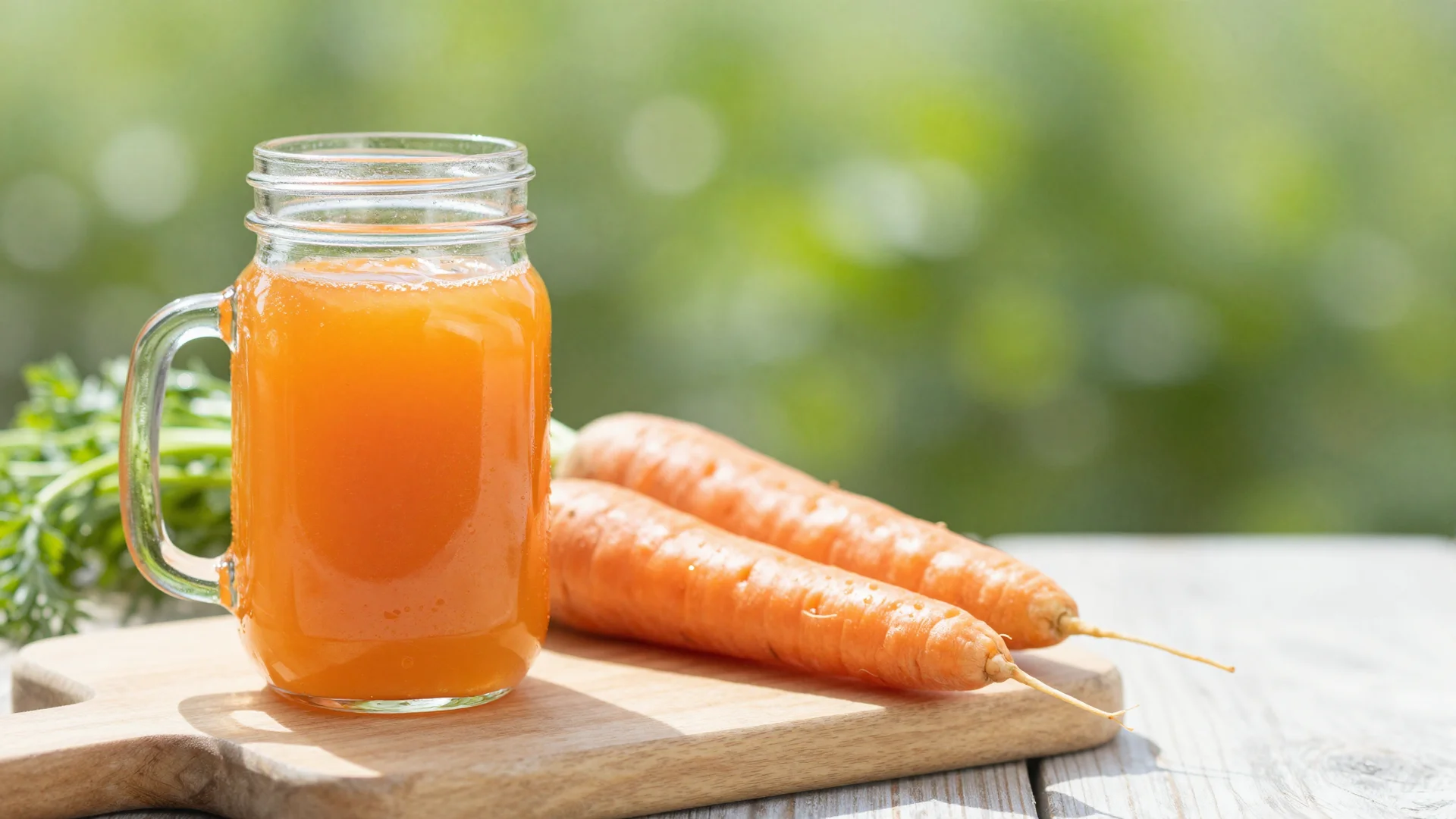
Carrot juice packs over 250% of your daily Vitamin A in a single cup, along with Vitamin C, potassium, beta-carotene, lutein, and folate, all under 100 calories.
The benefits of carrot juice go well beyond eye health. Your skin, liver, immune system, heart, and bones all respond to its regular intake. Drink too much, and it can even change your skin color.
This post covers science-backed carrot juice benefits, the carrot juice tan effect, four easy home recipes with direct video links, and what happens when you drink it every day.
Carrot Juice Nutrition Facts
One cup (240 ml) of fresh carrot juice delivers the following, according to the USDA FoodData Central:
| Nutrient | Amount per Cup | % Daily Value |
|---|---|---|
| Calories | 94 | — |
| Carbohydrates | 22g | 8% |
| Natural Sugars | 9g | — |
| Protein | 2g | 4% |
| Vitamin A (from beta-carotene) | 2,256 mcg | 251% |
| Vitamin C | 20mg | 22% |
| Vitamin K | 36mcg | 30% |
| Potassium | 689mg | 15% |
| Folate | 36mcg | 9% |
Source: USDA FoodData Central
12 Carrot Juice Benefits
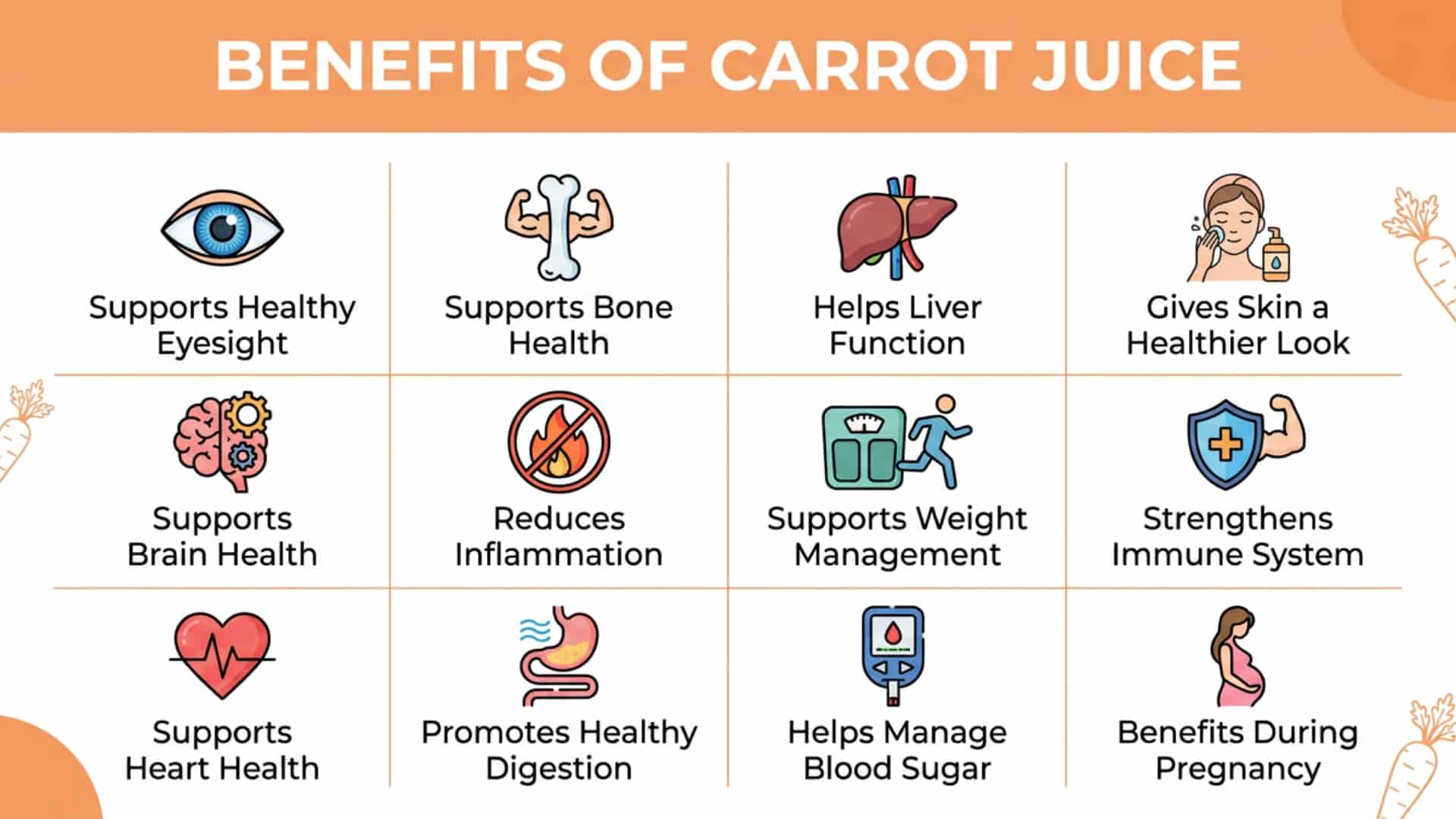
Carrot juice isn’t just refreshing, it’s packed with nutrients that support overall health. Let’s explore key benefits that make it a powerful addition to your diet.
1. Supports Healthy Eyesight
One cup of carrot juice provides over 250% of your daily Vitamin A requirement. Vitamin A maintains the cornea, supports night vision, and is the reason low intake causes night blindness.
Carrot juice also contains lutein and zeaxanthin, two compounds that sit in the eye’s macula and act as natural filters against blue light and UV damage.
Low Vitamin A is the leading cause of preventable blindness globally, according to the World Health Organization.
2. Gives Your Skin a Healthier Look
Vitamin C in carrot juice supports collagen production, which keeps skin firm and even. Beta-carotene acts as an antioxidant, reducing UV-related damage in skin cells.
Together, they contribute to a clearer skin tone and slower visible aging. Some people notice reduced dullness after a few weeks of consistent daily intake.
3. Strengthens Your Immune System
Vitamin A keeps mucous membranes in the nose, throat, and gut healthy, which are the body’s first physical barrier against bacteria and viruses.
Vitamin C supports white blood cell production and helps those cells work more effectively. The antioxidants in carrot juice also help reduce chronic low-grade inflammation, which, when left unchecked, quietly weakens the immune response.
4. Supports Heart Health
Potassium in carrot juice (689mg per cup) helps regulate blood pressure by counteracting sodium. Antioxidants reduce oxidative damage to artery walls, which is the process that leads to plaque buildup.
Carrot juice contains zero cholesterol, making it a clean fit for a heart-conscious daily diet.
5. Helps Your Liver Function Better
Beta-carotene and Vitamin C reduce oxidative stress on liver cells and support bile production, which helps the body digest dietary fats.
Carrot juice provides daily nutritional support for the liver, not as a treatment for liver conditions. Anyone with a diagnosed liver issue should speak with a doctor before making significant dietary changes.
6. Helps Manage Blood Sugar (In Moderation)
Carrot juice has a lower glycemic index than most fruit juices. Drinking it with a meal further slows sugar absorption.
Mixing it with low-sugar vegetables like cucumber or celery brings the overall sugar load down. People managing diabetes should keep portions to half a cup and pair it with food.
7. Supports Healthy Weight Management
At 94 calories per cup, carrot juice provides the body with essential nutrients without a high calorie cost. Its natural sweetness reduces cravings for higher-sugar packaged drinks.
It works best as a daily addition to meals, not as a meal replacement, since it lacks sufficient protein and calories to serve that purpose.
8. Supports Brain Health
Beta-carotene protects neurons from oxidative damage, which is linked to memory decline and cognitive aging. Lutein, also present in carrot juice, is associated with better memory and reasoning in research involving older adults.
As part of a diet rich in antioxidants, carrot juice contributes to the nutritional conditions that support long-term brain function.
9. Reduces Inflammation in the Body
Carrot juice contains polyacetylenes, natural compounds in the Apiaceae plant family with documented anti-inflammatory activity in laboratory research.
Combined with beta-carotene and Vitamin C, the overall anti-inflammatory effect is meaningful when consumed as part of a daily diet.
10. Supports Bone Health
Vitamin K in carrot juice (31% of the daily value per cup) is needed for osteocalcin, a protein that binds calcium to bones.
Without adequate Vitamin K, calcium cannot be used effectively in bone structure. Carrot juice also provides small amounts of calcium and phosphorus.
11. Promotes Healthy Digestion
Some soluble fiber remains in carrot juice after pressing, serving as a prebiotic that feeds beneficial gut bacteria.
Beta-carotene helps maintain the mucosal lining of the digestive tract, which controls nutrient absorption and protects the gut wall. Drinking it fresh in the morning supports a consistent daily digestive routine.
12. Benefits During Pregnancy
Carrot juice provides folate for fetal neural tube development, Vitamin A for fetal eye and skin development, and Vitamin C to support the mother’s immune function.
One cup per day is generally considered safe. Large daily amounts require medical guidance due to the high Vitamin A content. According to the NHS, excessive Vitamin A from any source during pregnancy should be avoided.
Does Carrot Juice Give You a Tan?
Yes, but not a real tan. Drinking large amounts of carrot juice regularly can give the skin an orange or golden tint, a condition called carotenemia.
It happens when beta-carotene builds up in the blood faster than the body converts it to Vitamin A, and it accumulates in the outer layers of the skin. It shows most on the palms, soles, and around the nose. It has nothing to do with melanin or UV exposure, so it does not work as a substitute for sun tanning.
It is completely harmless and fully reversible when intake is reduced. Most people who drink 1 cup per day do not notice visible skin changes. Carotenemia typically appears after several weeks of drinking multiple cups daily.
Carrot Juice vs. Raw Carrots: Which Is Better?
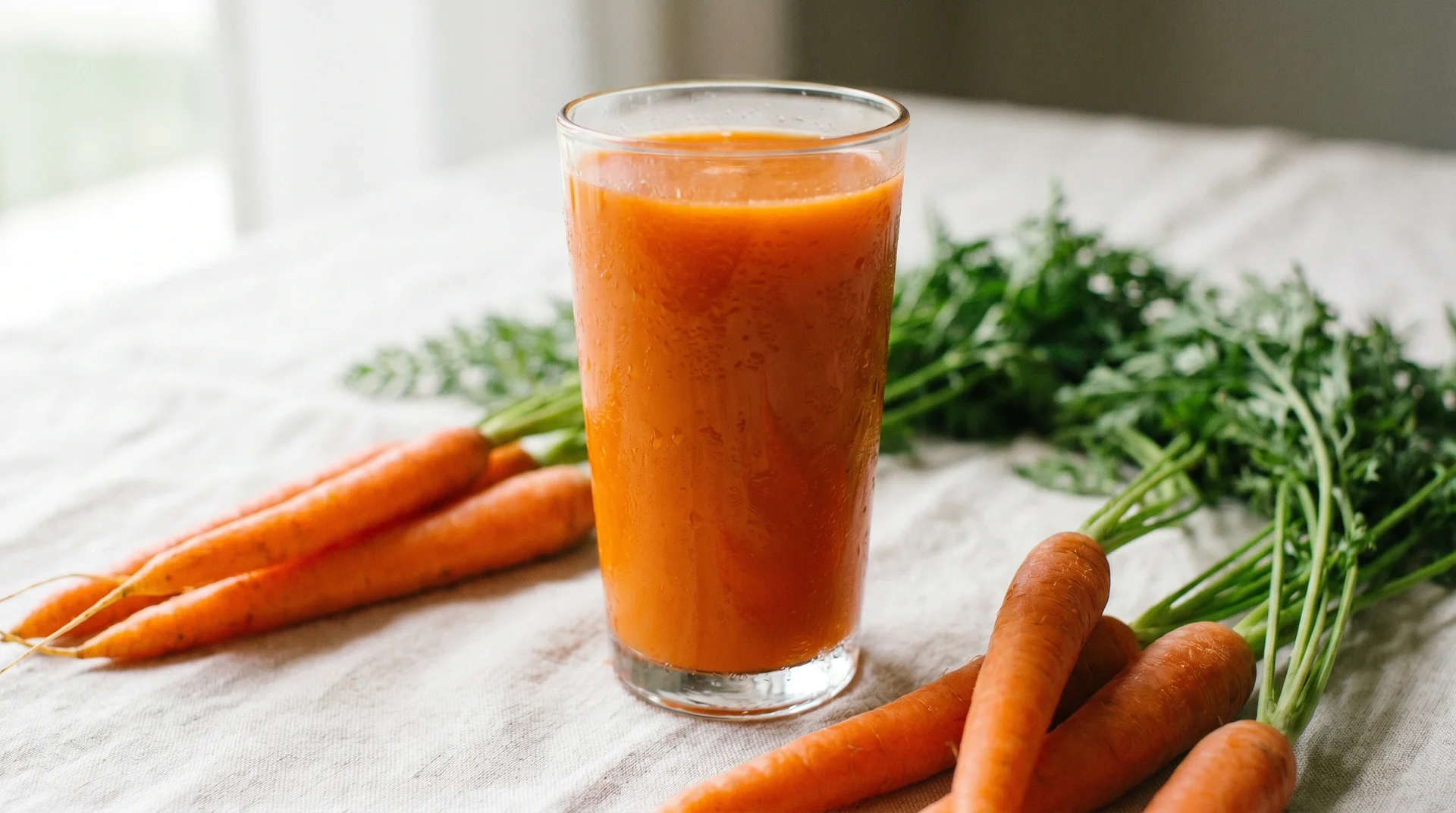
Both have their place in a healthy diet, and the right choice depends on what you need from them.
| Feature | Carrot Juice | Whole Carrots |
|---|---|---|
| Fiber | Very Low | High |
| Vitamin A | Very High | High |
| Blood Sugar Impact | Faster | Slower |
| Calories per cup | ~94 | ~52 |
| Feeling of fullness | Lower | Higher |
| Nutrient concentration | Higher per serving | Lower per serving |
Whole carrots win for blood sugar control and satiety. Carrot juice wins for fast nutrient delivery and daily ease. Including both in your diet is the most practical approach.
How Much Carrot Juice Should You Drink Per Day?
One cup (240 ml) per day is the amount that delivers real nutritional benefit without the risks that come with excess.
More than that, consistently over months increases the risk of carotenemia and pushes Vitamin A toward levels above the tolerable upper limit set by the NIH Office of Dietary Supplements.
If you are new to carrot juice, start with half a cup and build up over the first week. Morning on an empty stomach allows fast absorption. Drinking it with a meal is better for blood sugar management.
How to Make Carrot Juice at Home With Recipes
Making fresh carrot juice at home is simple and lets you control the flavor and nutrients. Here are a few easy recipes to get you started.
Recipe 1: Basic Plain Carrot Juice
Serves: 1 | Time: 5 minutes
Ingredients:
- 4 to 5 medium fresh carrots
Steps:
- Wash and scrub the carrots. Peel if preferred.
- Cut into pieces to fit your juicer chute or blender.
- Run through the juicer. If blending, add ¼ cup water, blend smooth, then strain.
- Pour and drink immediately.
Why this works: This is the purest form, no added sugar, no fruit, just carrots. You get the full beta-carotene and Vitamin A content without anything diluting or altering the glycemic profile. Best choice for people focused on eye health, liver support, or blood sugar management.
Watch on YouTube:Carrot Juice Recipe (Juicer Vs Blender)
Recipe 2: Carrot Ginger Lemon Juice
Serves: 1 | Time: 5 minutes
Ingredients:
- 4 large carrots
- 1-inch piece of fresh ginger (peeled)
- Juice of half a lemon
Steps:
- Wash and cut carrots and ginger into juicer-friendly pieces.
- Run both through the juicer together.
- Stir in the fresh lemon juice at the end.
- Serve over ice or at room temperature.
Why this works: Ginger reduces inflammation and supports digestion. Lemon adds Vitamin C and brightens the flavor without adding much sugar. This is the best option if you are drinking carrot juice for immune support or digestive health.
Watch on YouTube: Carrot, Lemon, and Ginger Juice
Recipe 3: Carrot, Apple, and Orange Juice
Serves: 1 | Time: 5 minutes
Ingredients:
- 3 medium carrots
- 1 medium apple (cored)
- 1 orange (peeled)
Steps:
- Cut all ingredients into pieces for your juicer or blender.
- Juice carrots and an apple first, then add the orange.
- Stir and serve immediately.
Why this works: Apple adds natural sweetness, making the juice easier to drink, especially for beginners. Orange raises the Vitamin C content further. This is the most beginner-friendly and family-friendly combination on the list.
Watch on YouTube: Carrot, Apple & Orange Smoothie
Recipe 4: Carrot Cucumber Celery Juice (Low Sugar)
Serves: 1 | Time: 5 minutes
Ingredients:
- 3 medium carrots
- 1 medium cucumber
- 2 stalks of celery
- Juice of half a lemon (optional)
Steps:
- Wash all vegetables under cold running water.
- Cut into pieces and juice together.
- Stir in lemon juice if using.
- Drink immediately.
Why this works: This is the lowest-sugar recipe here. Cucumber adds hydration with almost no sugar. Celery contributes potassium, magnesium, and a clean, savory flavor. Best for people managing blood sugar or for those who prefer a lighter, less-sweet juice.
Watch on YouTube: Carrot, Cucumber, and Celery juice
Side Effects of Carrot Juice
Carrot juice is safe for most people in reasonable amounts, but drinking too much over time comes with a few real downsides worth knowing before you start.
- Carotenemia (Orange Skin): The most common side effect of drinking large amounts. Beta-carotene deposits in the outer skin layer, causing a visible orange or yellow tint on the palms, soles, and nose area. Harmless and fully reversible when intake is reduced.
- Blood Sugar Spikes: Juicing removes most of the fiber from carrots, so the natural sugars are absorbed faster than from whole carrots. People with type 2 diabetes or insulin resistance should limit portions to half a cup and drink it with food.
- Vitamin A Toxicity: Unlikely at one cup per day, but drinking several cups daily for months can push Vitamin A above the tolerable upper limit. Symptoms include nausea, headache, and dizziness. This risk is far more common from high-dose supplements than from food. See NIH guidance on Vitamin A for full reference ranges.
- Digestive Discomfort: Some people experience bloating or loose stools in the first few days. Starting with half a cup and increasing slowly over a week resolves this for most people.
- Allergic Reactions: Carrot allergy is rare but real. People with birch pollen allergy may experience oral allergy syndrome, an itchy or tingling sensation in the mouth. Stop immediately and consult a doctor if this occurs.
- Medication Interactions: High Vitamin K content can interfere with warfarin and similar anticoagulant medications. Speak with your doctor before making carrot juice a daily habit if you take blood thinners.
What Happens If You Drink Carrot Juice Every Day?
In the first week, Vitamin A levels rise quickly, and some people notice a mild energy lift. By weeks two to four, skin starts to look clearer as Vitamin C consistently supports collagen production, and your immune system has a steady daily supply of both Vitamins A and C.
After one month, antioxidant levels in the blood are consistently higher, eye comfort may improve (particularly for those with prior low Vitamin A intake), and people drinking more than one cup daily often develop visible carotenemia on their palms.
Long-term, one cup per day is safe and beneficial for most healthy adults when paired with a balanced diet, adequate protein, and regular water intake. More than that, consistently over months increases the risk of Vitamin A buildup and carotenemia.
Final Thoughts
The carrot juice benefits are real and go far beyond what most people expect.
One cup per day gives your body consistent Vitamin A, Vitamin C, potassium, and antioxidants that support your eyes, skin, immunity, heart, liver, and bones.
The carrot juice tan effect is harmless and reversible at normal amounts.
Start with one fresh cup daily, pair it with a small amount of healthy fat for better absorption, and pick whichever recipe from this post fits your health goal.