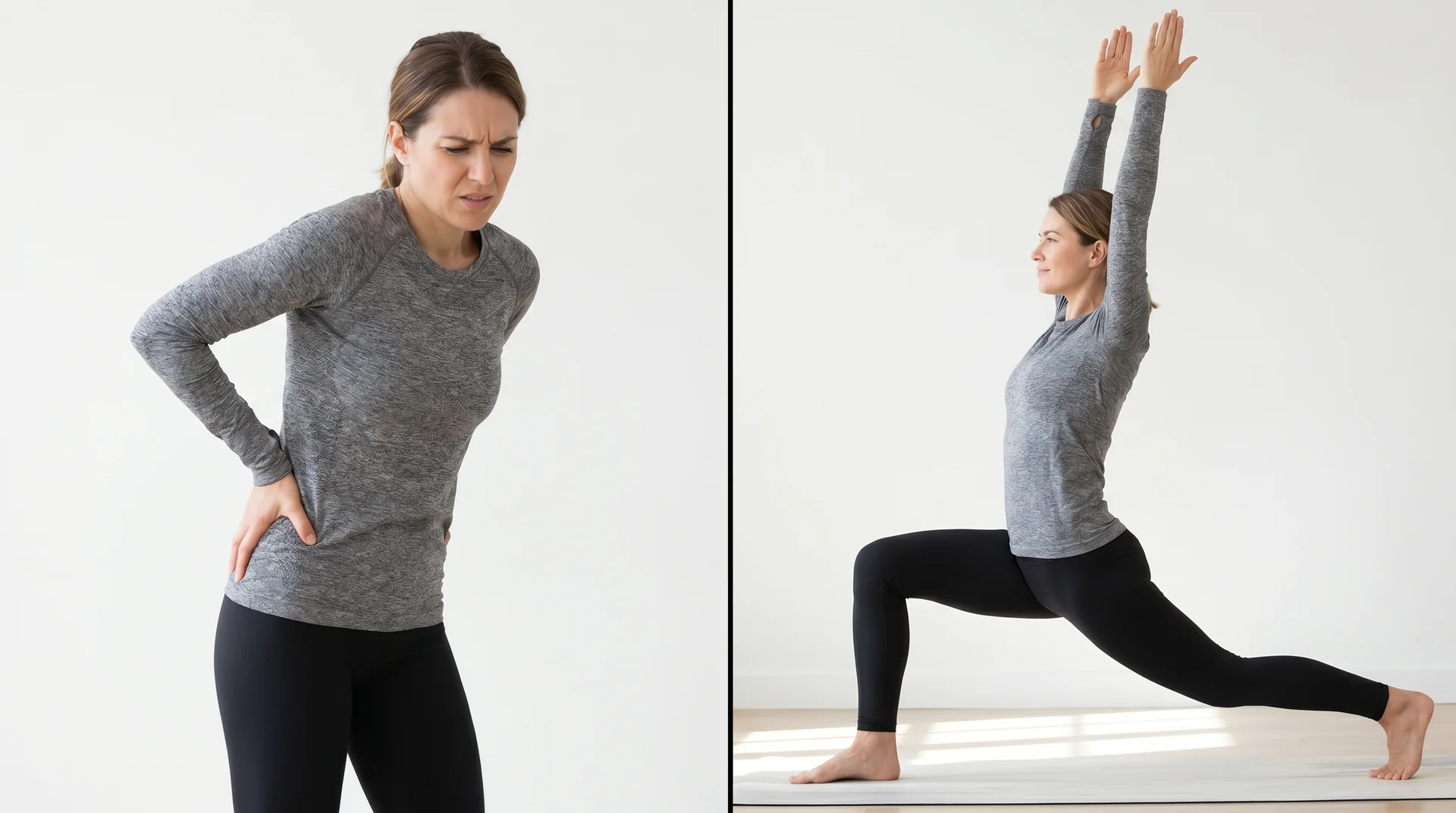
Hip pain doesn’t have to slow you down. It can show up after a long day at your desk, during a morning walk, or the moment you stand up from a chair.
Tight hips are one of the most common complaints people bring to physical therapists. With the right stretches, you can ease tightness, relieve pressure on your joints, and move more freely.
This guide walks you through effective stretches, each with simple step-by-step instructions, so you can start today.
What Causes Hip Pain?
Hip pain can come from several sources. Most of the time, tight or overworked muscles are the main problem, not a serious injury.
Here are the most common causes:
- Tight hip flexors: Long hours of sitting shorten the hip flexor muscles, pulling the pelvis forward and creating tension around the joint.
- Piriformis tightness: The piriformis muscle, located deep in the buttocks, can press on the sciatic nerve and cause pain that radiates down the leg.
- Hip bursitis: Inflammation of the fluid-filled sacs (bursae) around the hip joint leads to dull, aching pain in the outer hip.
- Muscle imbalances: When some muscles around the hip are weaker than others, the joint gets pulled out of alignment.
- Osteoarthritis: Gradual wear of the cartilage inside the joint causes stiffness and pain, especially in the morning.
- IT band tightness: A tight iliotibial band pulls on the outside of the hip and knee, causing both areas to ache.
Stretching addresses the most common of these causes, tightness and imbalance, which is why it works so well for most people.
11 Best Stretches for Hip Pain (Step-by-Step)
These stretches target the muscles that surround and support your hip joint, including the hip flexors, glutes, piriformis, IT band, and inner thighs. Work through them slowly. You should feel a gentle pull, never sharp pain.
Stretch 1: Supine Figure-4 Stretch (Piriformis Stretch)
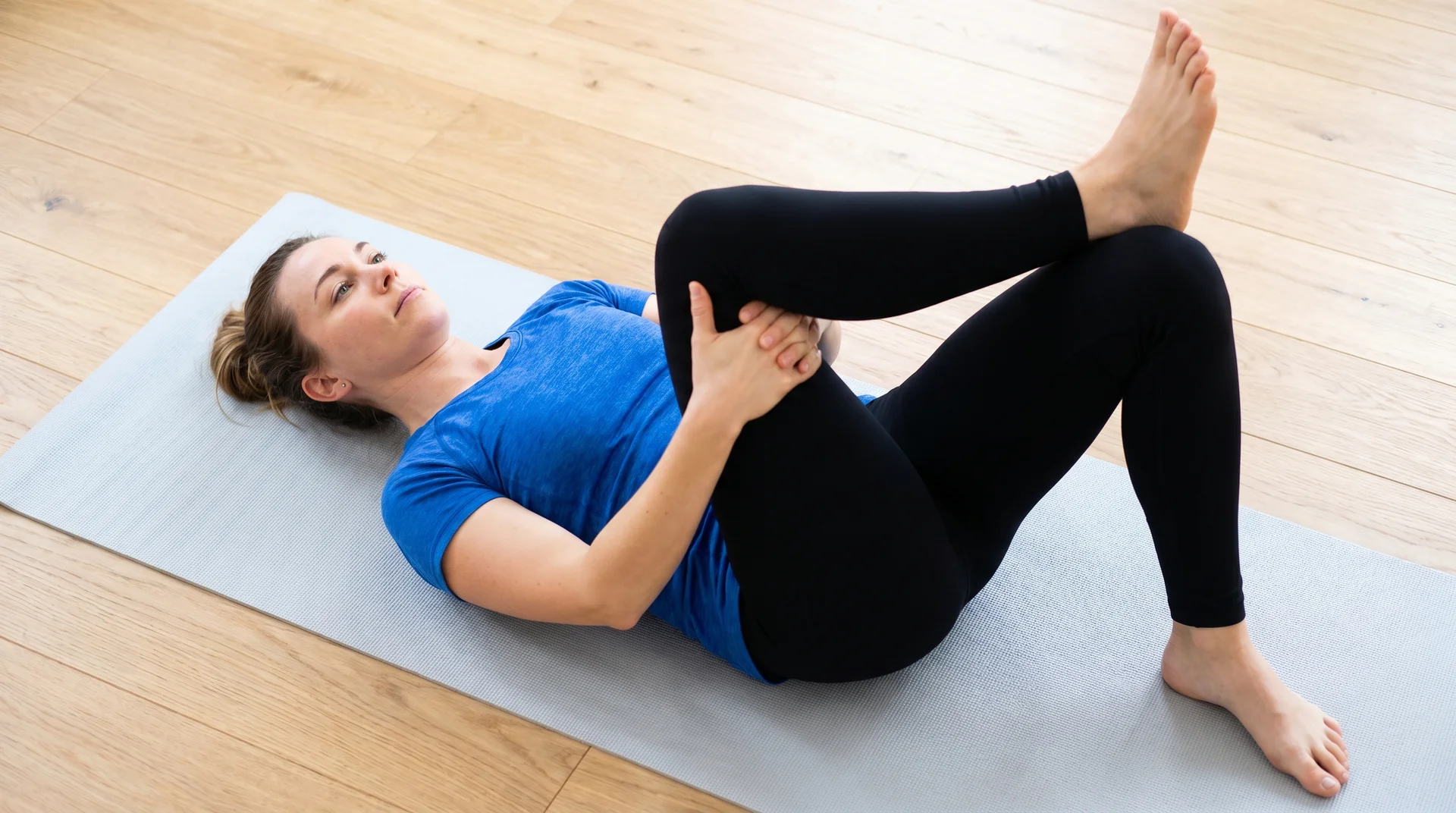
This stretch reaches the piriformis and outer hip muscles. It is one of the most recommended stretches for sciatic hip pain and deep joint tightness.
How to do it:
- Lie flat on your back with both knees bent and feet flat on the floor.
- Cross your right ankle over your left knee, forming a figure-4 shape.
- Flex your right foot to protect the knee joint.
- Slowly bring both legs toward your chest by holding the back of your left thigh.
- Hold for 30 to 45 seconds, then switch sides. Repeat 2 to 3 times per side.
Stretch 2: Low Lunge (Hip Flexor Stretch)
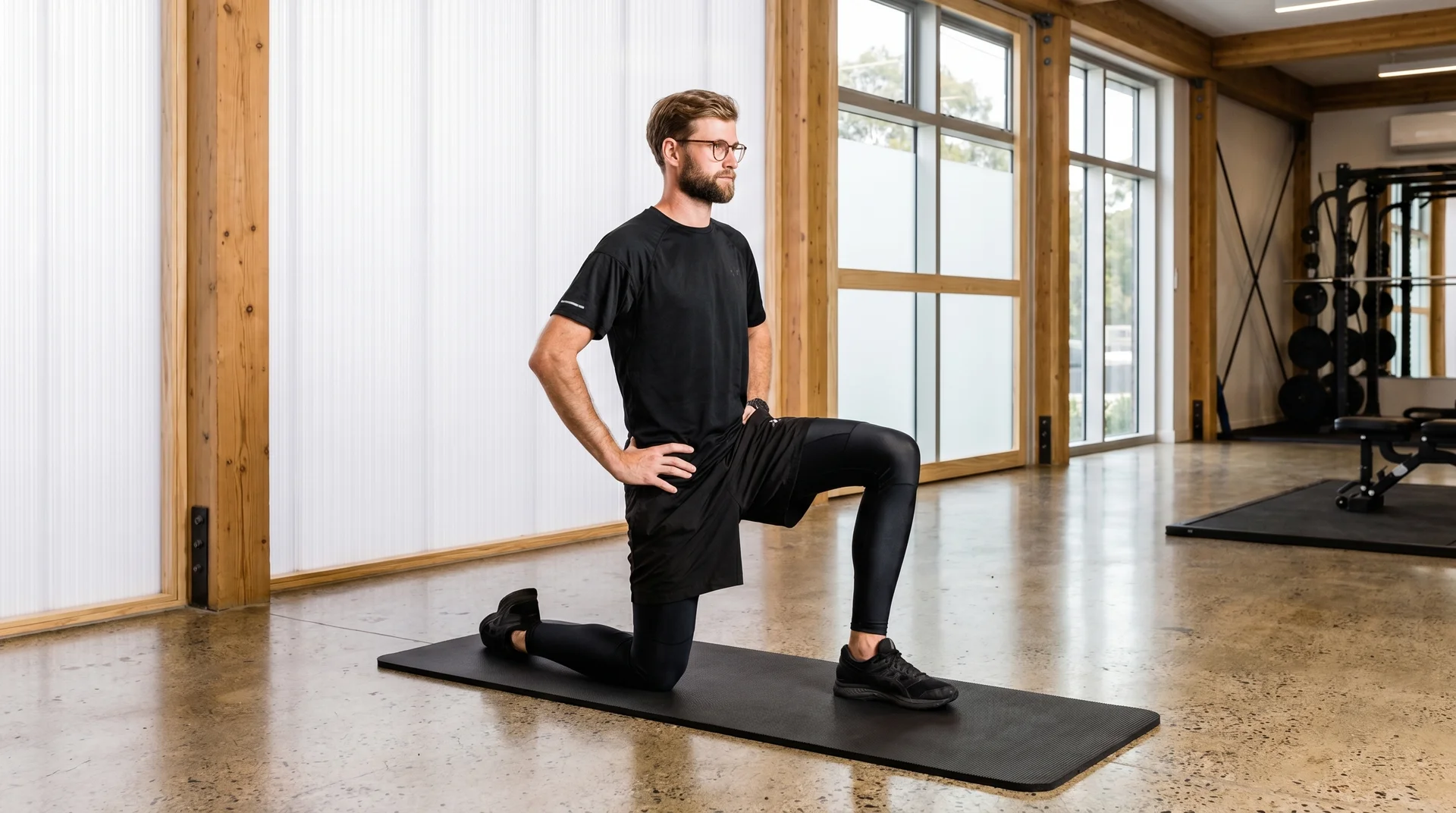
The low lunge directly targets the hip flexors, which tend to shorten significantly in people who sit for long hours.
How to do it:
- Start in a kneeling position with your right foot forward and your left knee on the ground.
- Shift your hips gently forward until you feel a stretch in the front of your left hip.
- Keep your torso upright and your front knee directly over your ankle.
- For a deeper stretch, raise both arms overhead and lengthen your spine.
- Hold for 30 to 45 seconds, then switch legs. Repeat 2 to 3 times per side.
Stretch 3: Butterfly Stretch (Seated Groin Stretch)
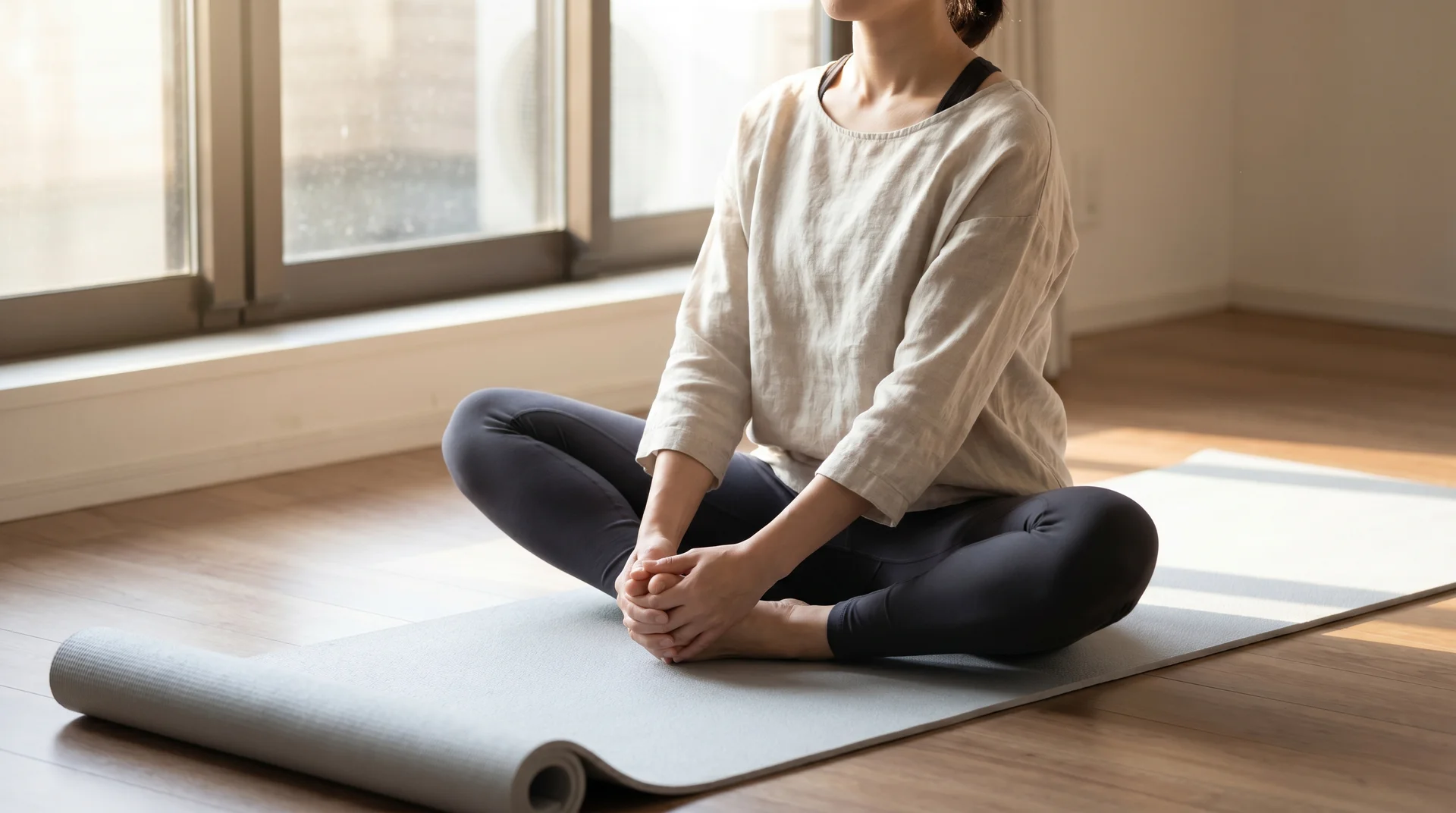
This is one of the best hip and lower back stretches for targeting the inner thigh and groin muscles, which often contribute to hip stiffness.
How to do it:
- Sit on the floor with your back straight and bring the soles of your feet together in front of you.
- Let your knees fall out to the sides naturally.
- Hold both feet with your hands and sit as tall as possible.
- Gently press your knees down toward the floor using your elbows.
- Hold for 30 to 45 seconds. Repeat 2 to 3 times.
Stretch 4: Pigeon Pose
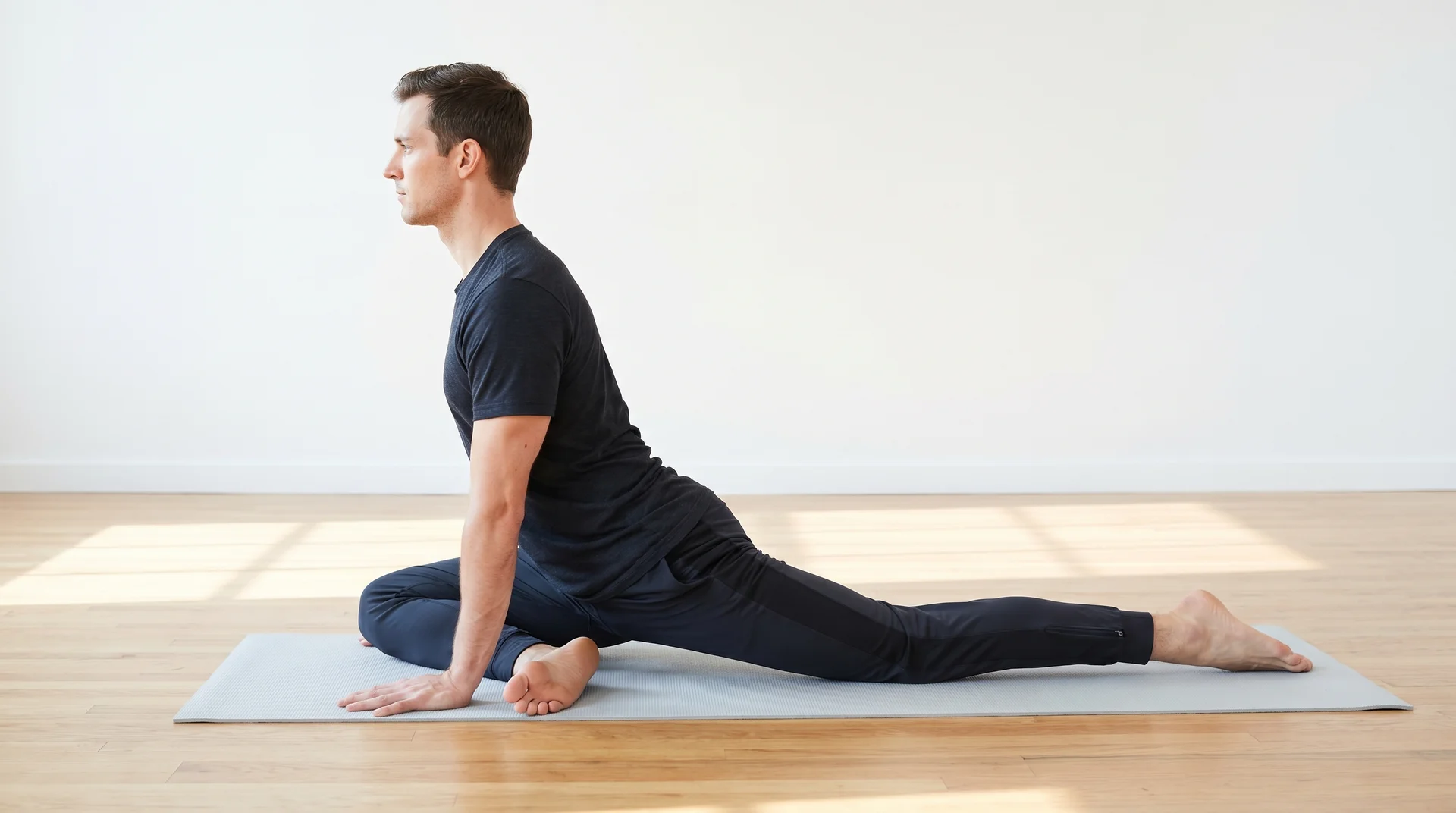
Pigeon pose is widely used in yoga and physical therapy for deep hip opener relief. It stretches the piriformis and the hip external rotators simultaneously.
How to do it:
- Start on all fours in a tabletop position.
- Bring your right knee forward and place it behind your right wrist. Extend your left leg straight behind you.
- Lower your hips toward the floor. Use a folded towel under your right hip if it does not reach the ground comfortably.
- Stay upright on your hands, or fold forward over your front leg for a deeper stretch.
- Hold for 45 to 60 seconds, then switch sides. Repeat 2 times per side.
Stretch 5: Standing Hip Flexor Stretch
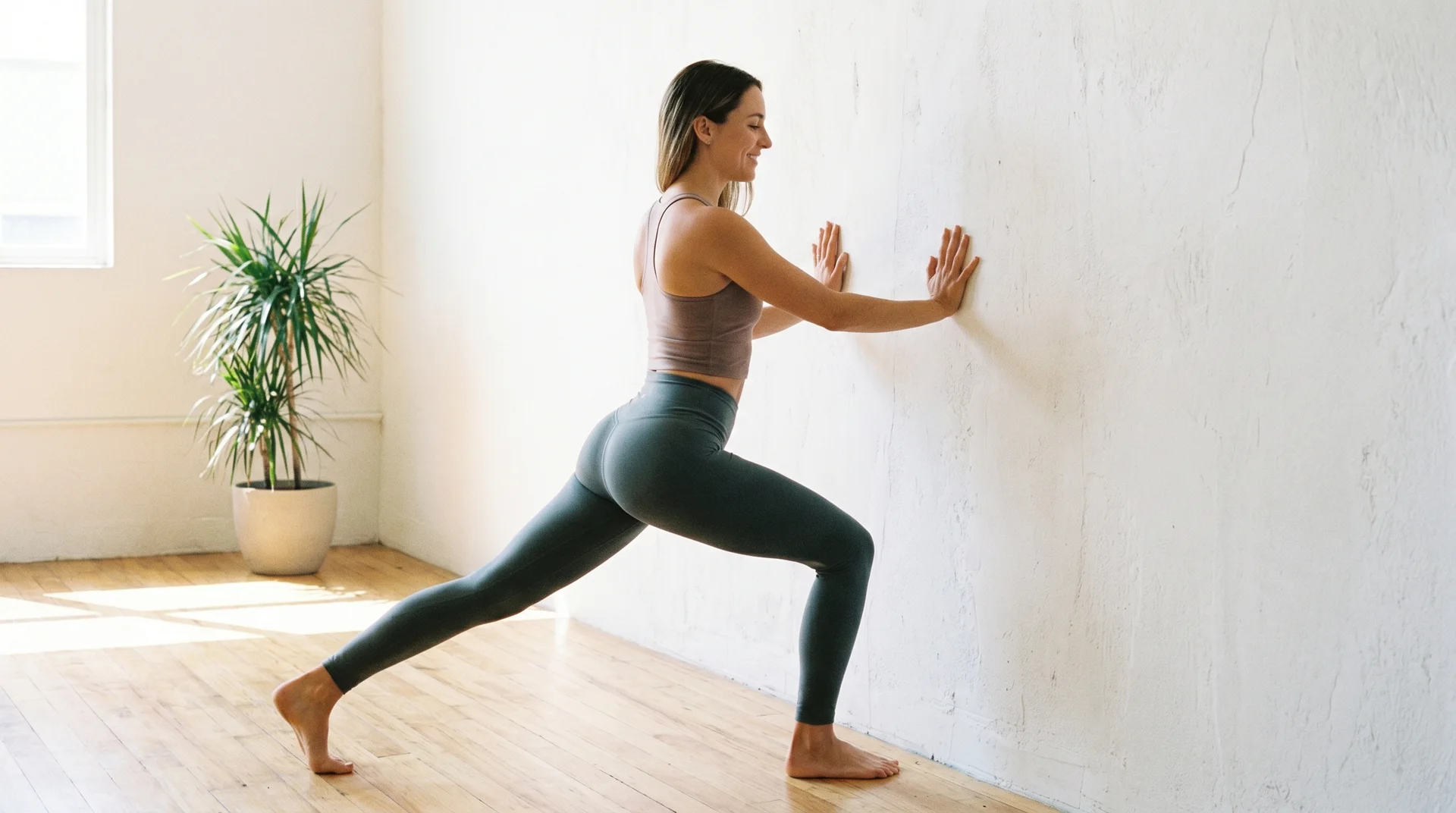
This standing version of the hip flexor stretch is ideal if getting down to the floor is uncomfortable. It delivers the same benefits with less pressure on the knees.
How to do it:
- Stand tall next to a wall or chair for balance support.
- Step your right foot forward into a slight lunge position.
- Squeeze your left glute and tuck your pelvis slightly under.
- You should feel a stretch in the front of your left hip.
- Hold for 30 seconds, then switch sides. Repeat 2 to 3 times per side.
Stretch 6: Knee-to-Chest Stretch
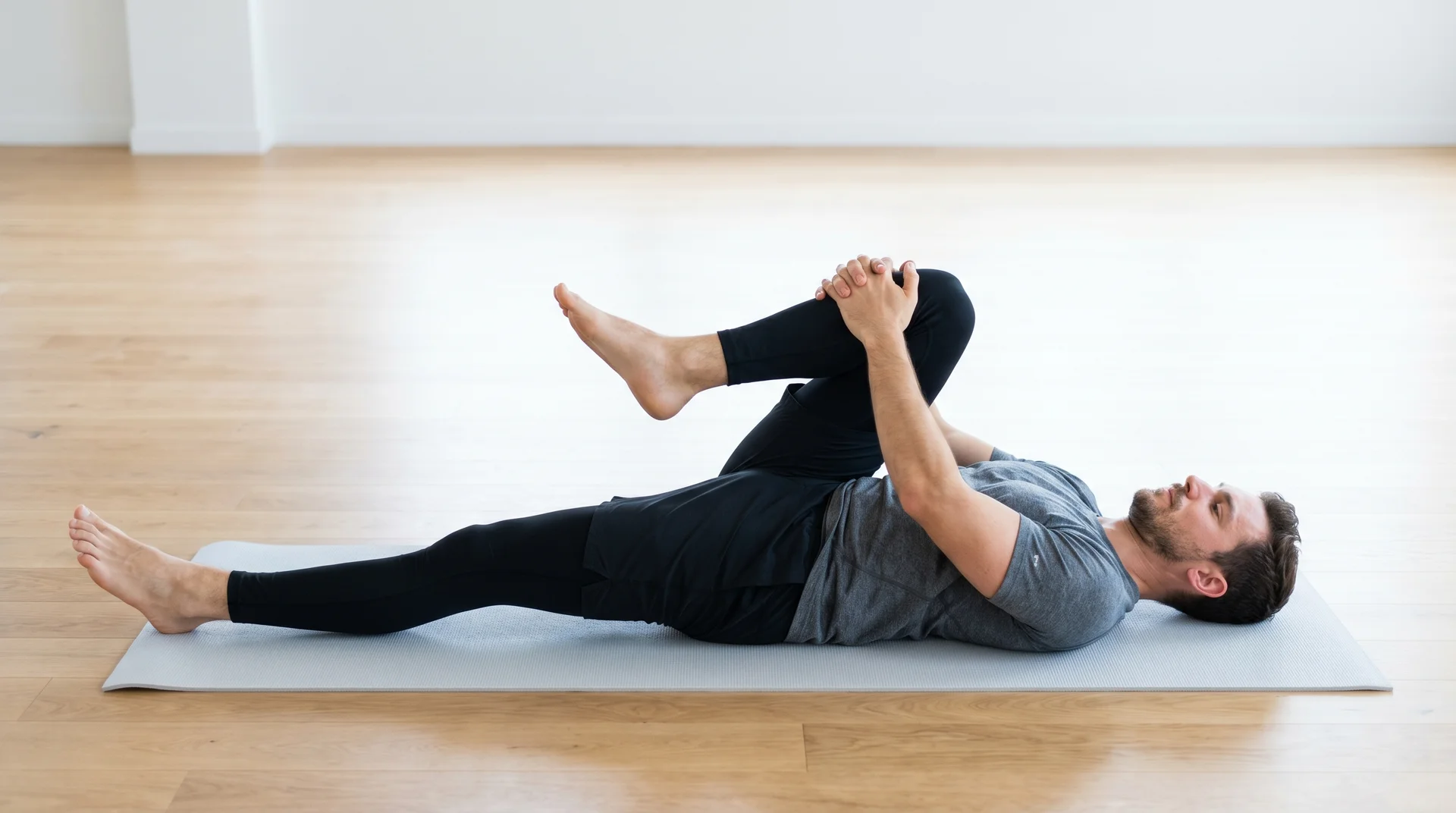
This simple stretch releases tension in the hip joint, lower back, and glutes. It is one of the gentlest and most accessible stretches for hip pain.
How to do it:
- Lie on your back with both legs straight.
- Bend your right knee and draw it toward your chest with both hands.
- Keep your left leg flat on the floor and your lower back pressed down.
- Pull the knee gently closer until you feel a comfortable stretch in the hip and glute.
- Hold for 30 to 45 seconds, then switch sides. Repeat 2 to 3 times per side.
Stretch 7: Seated Hip Stretch (Cross-Leg Stretch)
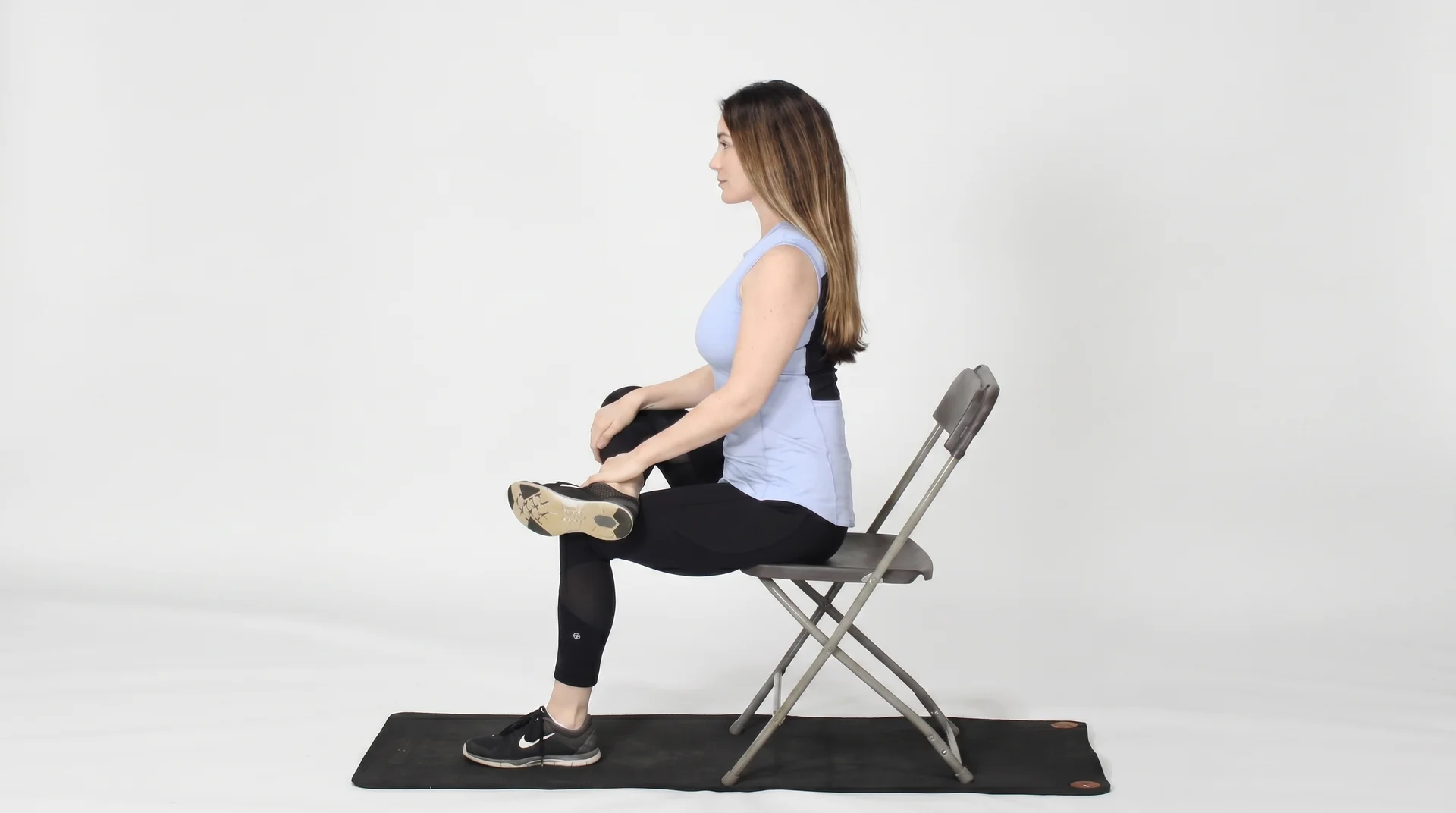
This stretch is easy to do in a chair, making it great for office workers dealing with hip tightness during the workday.
How to do it:
- Sit upright in a chair with both feet flat on the floor.
- Cross your right ankle over your left knee.
- Flex your right foot to protect the knee.
- Lean slightly forward from the hips, not the waist, while keeping your back straight.
- Hold for 30 to 45 seconds, then switch sides. Repeat 2 to 3 times per side.
Stretch 8: IT Band Stretch (Standing)
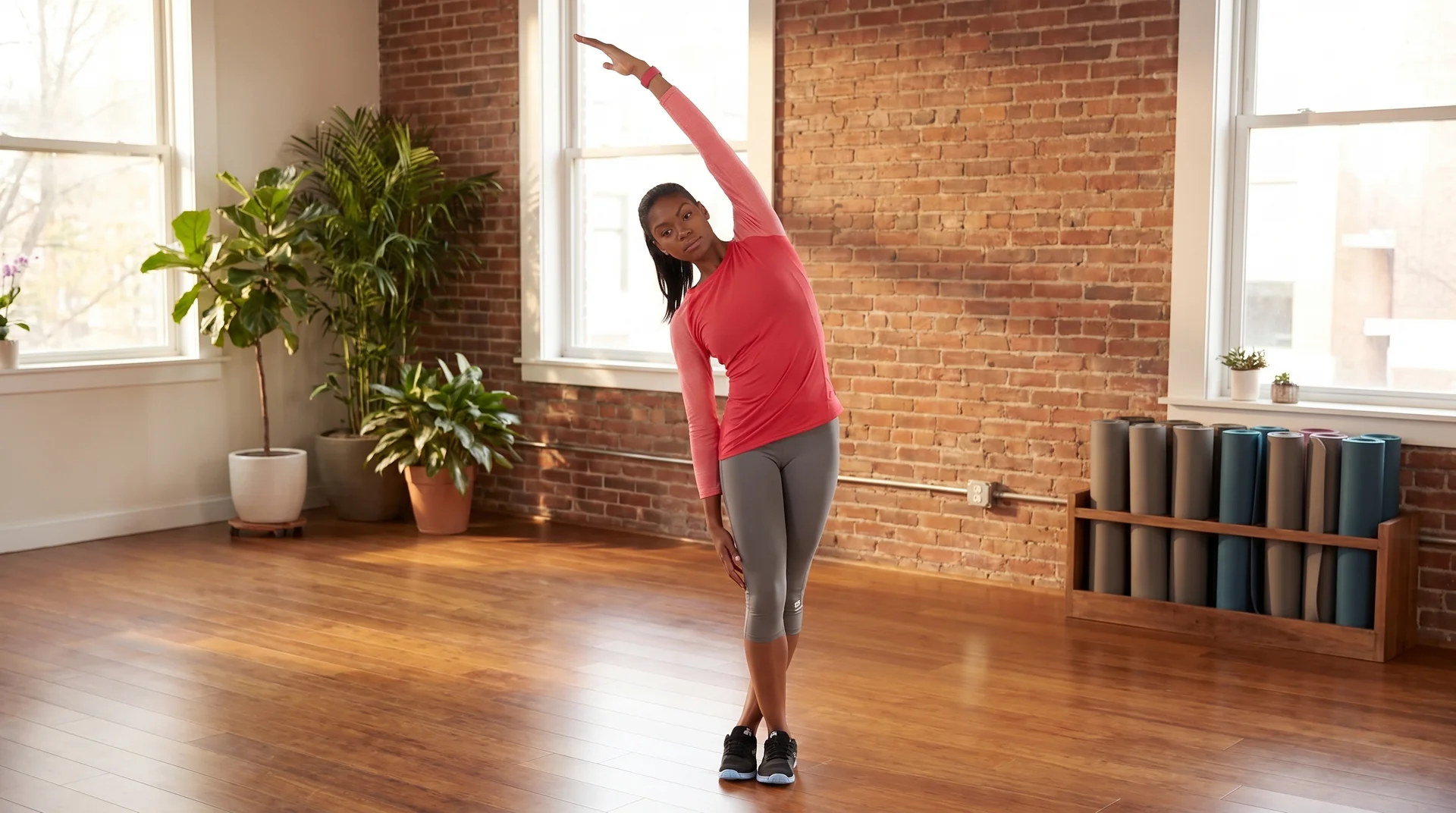
IT band tightness is a common source of outer hip pain. This standing stretch targets the iliotibial band along the side of the leg.
How to do it:
- Stand upright with feet together. Cross your right foot behind your left foot.
- Extend your right arm overhead and lean your torso to the left.
- You should feel a stretch running down the right side of your hip and thigh.
- Use a wall with your left hand for balance if needed.
- Hold for 30 seconds, then switch sides. Repeat 2 to 3 times per side.
Stretch 9: Hip Circles (Mobility Drill)
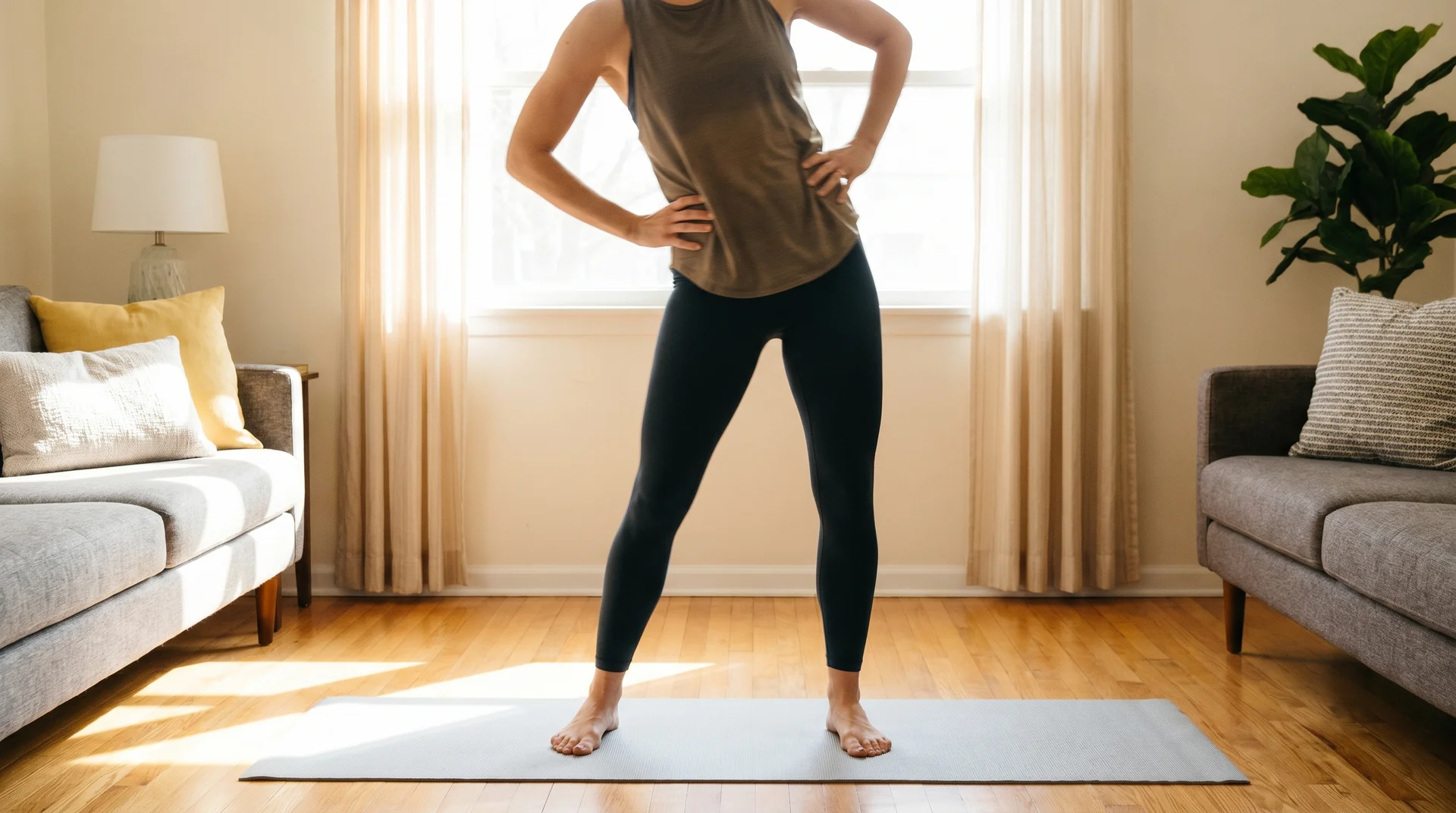
Hip circles are not a static stretch, they are a mobility drill that warms up the joint and improves range of motion. They work best as a warm-up before other stretches.
How to do it:
- Stand with feet hip-width apart and hands on your hips.
- Slowly rotate your hips in a wide circle clockwise.
- Keep your upper body relatively still and let the movement come from the hips.
- Complete 10 full circles, then reverse the direction.
- Do 2 to 3 sets in each direction.
Stretch 10: Lying Hip Rotation Stretch
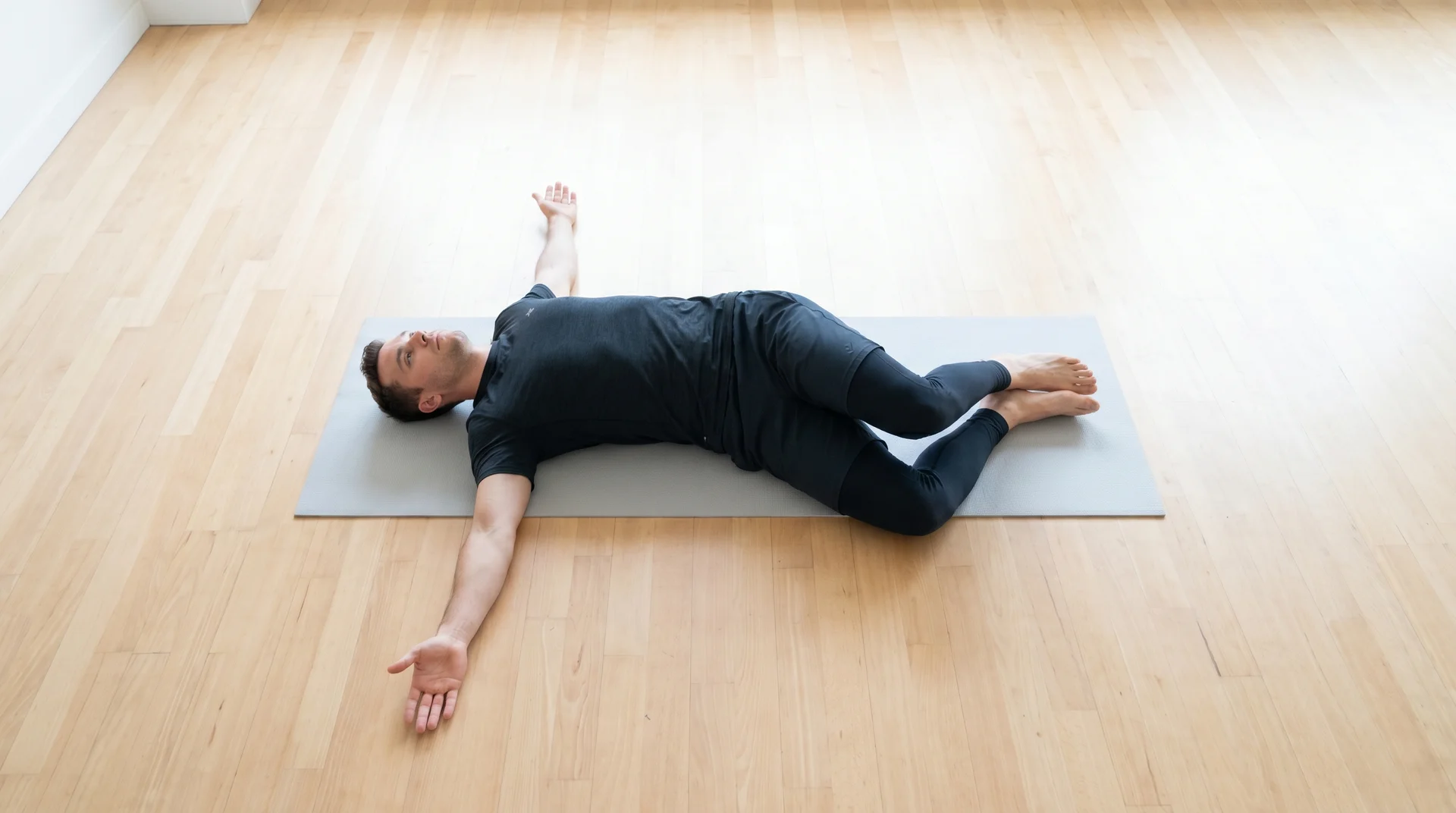
This gentle stretch improves internal hip rotation, which is often limited in people with chronic hip pain or arthritis.
How to do it:
- Lie on your back with knees bent and feet flat on the floor, hip-width apart.
- Let both knees fall slowly to the right side as far as comfortable.
- Keep your shoulders flat on the ground throughout the movement.
- Hold for 5 seconds, then bring knees back to center.
- Lower both knees to the left side. Repeat 10 times on each side.
Stretch 11: Child’s Pose (Extended)
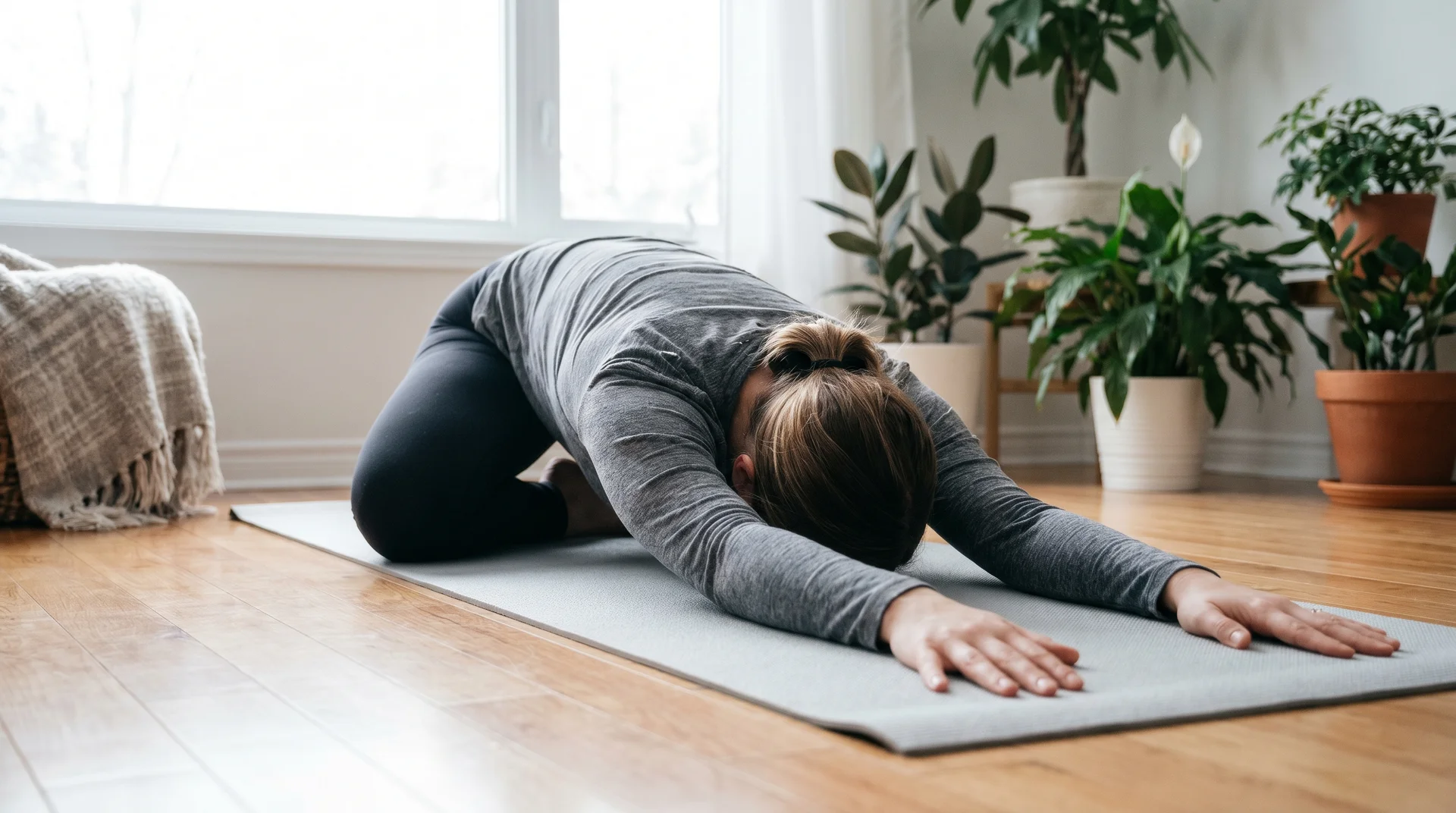
Child’s pose provides relief for both the hip and lower back at the same time. It is a calming, restorative stretch that works well at the end of any stretching session.
How to do it:
- Start on your hands and knees in a tabletop position.
- Push your hips back toward your heels, extending your arms forward on the floor.
- Let your forehead rest on the mat and breathe deeply.
- For a wider hip stretch, separate your knees to about mat-width apart.
- Hold for 45 to 60 seconds. Repeat 2 to 3 times.
Who Should Do These Hip Pain Stretches?
These stretches work well for people dealing with everyday hip tightness, mild joint stiffness, or discomfort linked to long periods of sitting.
They are suitable for adults of most fitness levels, including beginners. If you have a diagnosed hip injury, have recently had hip surgery, or experience sharp pain while stretching, check with your doctor or physical therapist before trying these.
Hip and Lower Back Stretches: How They Work Together
The hip and lower back are closely connected. Tight hip muscles pull on the pelvis, which shifts the lower spine out of its natural curve. That is why many people with hip pain also experience lower back aches, and vice versa.
Hip and lower back stretches, such as child’s pose and the knee-to-chest stretch, address both areas at the same time. The piriformis stretch and low lunge also relieve pressure that travels up into the lumbar spine.
If you deal with both hip and lower back discomfort, try pairing:
- Child’s pose + knee-to-chest stretch (for morning stiffness)
- Low lunge + pigeon pose (for after sitting long hours)
- Butterfly stretch + lying hip rotation (for general mobility maintenance)
Working these areas together gives you better results than addressing either one alone. According to the American Academy of Orthopedic Surgeons (AAOS), regular stretching and strengthening of the muscles around the hip are key to managing hip conditions and preventing flare-ups.
How Often Should You Stretch for Hip Pain?
Consistency matters more than intensity when it comes to hip stretching. Stretching once and expecting lasting results will not work. The muscles need regular, repeated lengthening before they stay relaxed.
Here is a simple frequency guide based on your situation:
| Situation | Recommended Frequency | Duration per Session |
|---|---|---|
| General stiffness from sitting | Daily | 10 to 15 minutes |
| Mild hip pain or tightness | 5 to 6 days per week | 15 to 20 minutes |
| Recovering from injury (cleared by doctor) | 3 to 4 days per week | 20 to 30 minutes |
| Hip osteoarthritis (mild) | Daily, low intensity | 10 to 15 minutes |
| Post-workout cooldown | After every session | 5 to 10 minutes |
| Maintenance (no active pain) | 3 to 4 days per week | 10 minutes |
The Mayo Clinic recommends holding each stretch for at least 30 seconds and repeating it two to three times to get the full benefit. Stretching when muscles are warm, after a short walk or light activity, also makes the session more effective.
When to See a Doctor?
Most hip tightness responds well to regular stretching within a few weeks.
See a doctor if your hip pain is severe, started after a fall or injury, does not improve after 2 to 3 weeks of stretching, comes with swelling or visible bruising, or wakes you up at night.
These could be signs of a fracture, labral tear, or another condition that needs medical assessment.
Conclusion
Hip pain affects how you move, sleep, and get through your day. The stretches for hip pain in this guide target the most common sources of tightness and discomfort, from tight hip flexors to a stiff piriformis.
They require no equipment, fit into any schedule, and can be done at home. Pair them with consistent practice, and you will notice a real difference in how your hips feel and move.
Start with two or three stretches that feel most accessible, build from there, and give your body the time it needs to respond.
Try this stretch today and notice how much more relaxed and flexible you feel after just a few minutes.
Frequently Asked Questions
Should You Stretch if Your Hip Hurts?
Yes, gentle stretching is generally safe and helpful for hip pain caused by muscle tightness. Avoid stretching if the pain is sharp, sudden, or follows an injury until a doctor clears you.
How to Tell if Hip Pain Is Muscular or Skeletal?
Muscular pain usually feels like a dull ache or tightness that improves with movement and stretching. Skeletal or joint pain tends to be deeper, more persistent, and often worsens with weight-bearing activity or after rest.
What Is a Red Flag for Hip Pain?
Red flags include pain after a fall, inability to bear weight, pain at night that wakes you up, visible deformity, or hip pain combined with fever. These need prompt medical evaluation.
How Do I Release Pain in My Hip?
The fastest way to release hip pain at home is gentle stretching, especially the figure-4, knee-to-chest, and low lunge stretches. Applying heat to the area before stretching can help loosen tight muscles.
What Sleeping Position Is Best for Hip Pain?
Sleeping on your back with a pillow under your knees is best for hip pain. If you sleep on your side, place a pillow between your knees to keep your hips aligned.