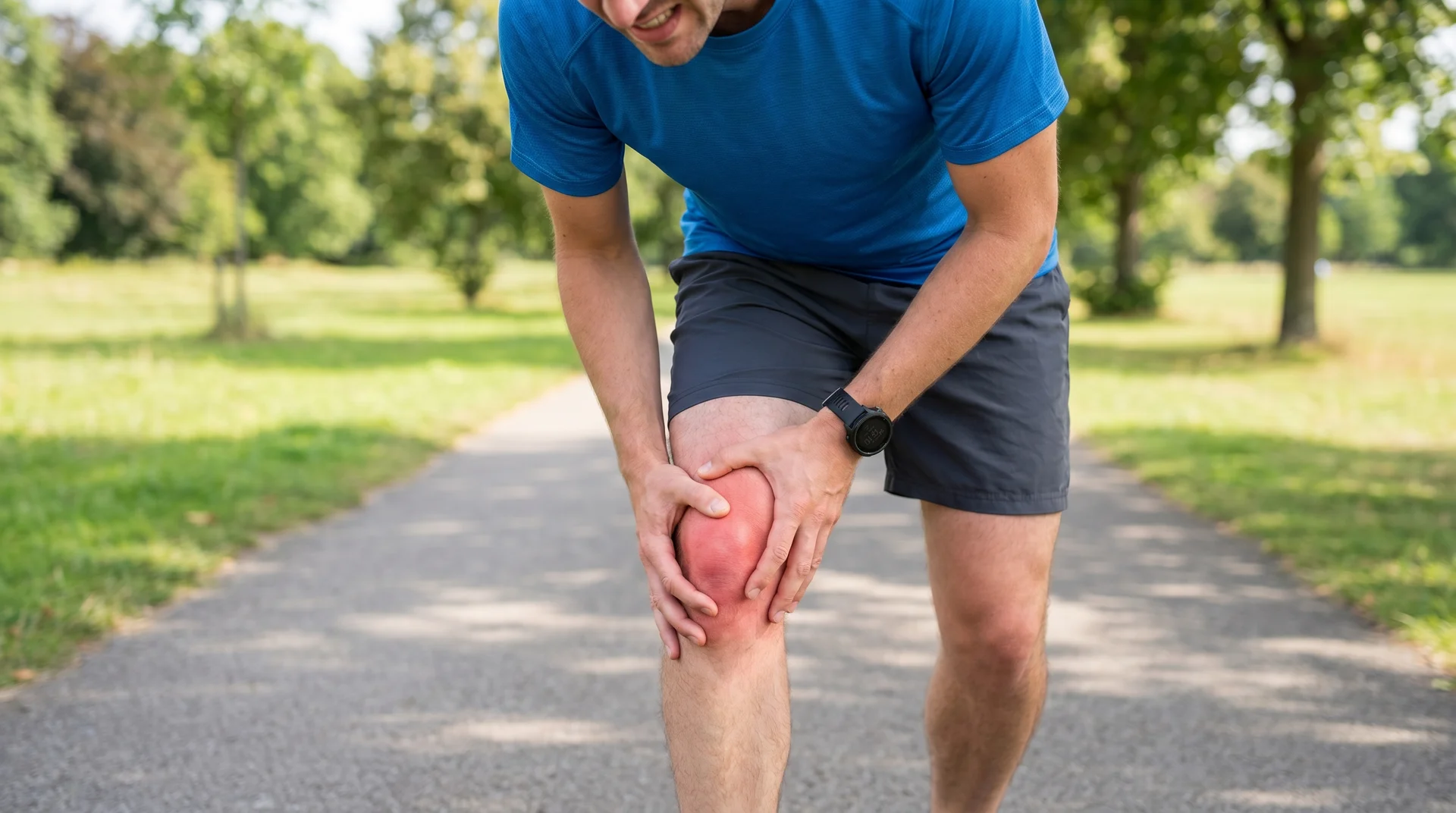
Knee pain stops more runners than bad weather ever will. You lace up, head out the door, and within a few miles, that familiar ache starts building right in your knee. It is deeply frustrating.
And the worst part? Most of it is completely preventable with the right approach. If you want to know how to prevent knee pain when running, this post is exactly what you need.
You will find practical methods, the best knee-strengthening exercises, tips to fix your running form, and the most common mistakes that leave far too many runners unable to finish their training.
Why Do My Knees Hurt When I Run?
Knee pain when running usually comes from one of four causes. Each one has a different location, trigger, and solution.
- Runner’s Knee (Patellofemoral Pain Syndrome): Pain at the front of the kneecap caused by the kneecap not tracking correctly, typically triggered by weak quads or adding mileage too fast.
- IT Band Syndrome: Sharp pain on the outer side of the knee caused by a tight iliotibial band rubbing against the joint, most common in runners with weak hips or those running on uneven surfaces.
- Patellar Tendinitis: Pain just below the kneecap in the patellar tendon, caused by repeated overloading from downhill running or speed work, combined with weak quad muscles.
- Weak Hips and Glutes: Weak hip and glute muscles allow the knee to cave inward with each stride, creating repeated misalignment that can build into pain over time.
All causes are mostly preventable. Identifying which one applies to you is the first step toward fixing it, and the methods in the next section address all of them directly.
According to the American Academy of Orthopaedic Surgeons, most running-related knee conditions respond well to targeted muscle strengthening and load management.
13 Ways to Prevent Knee Pain When Running
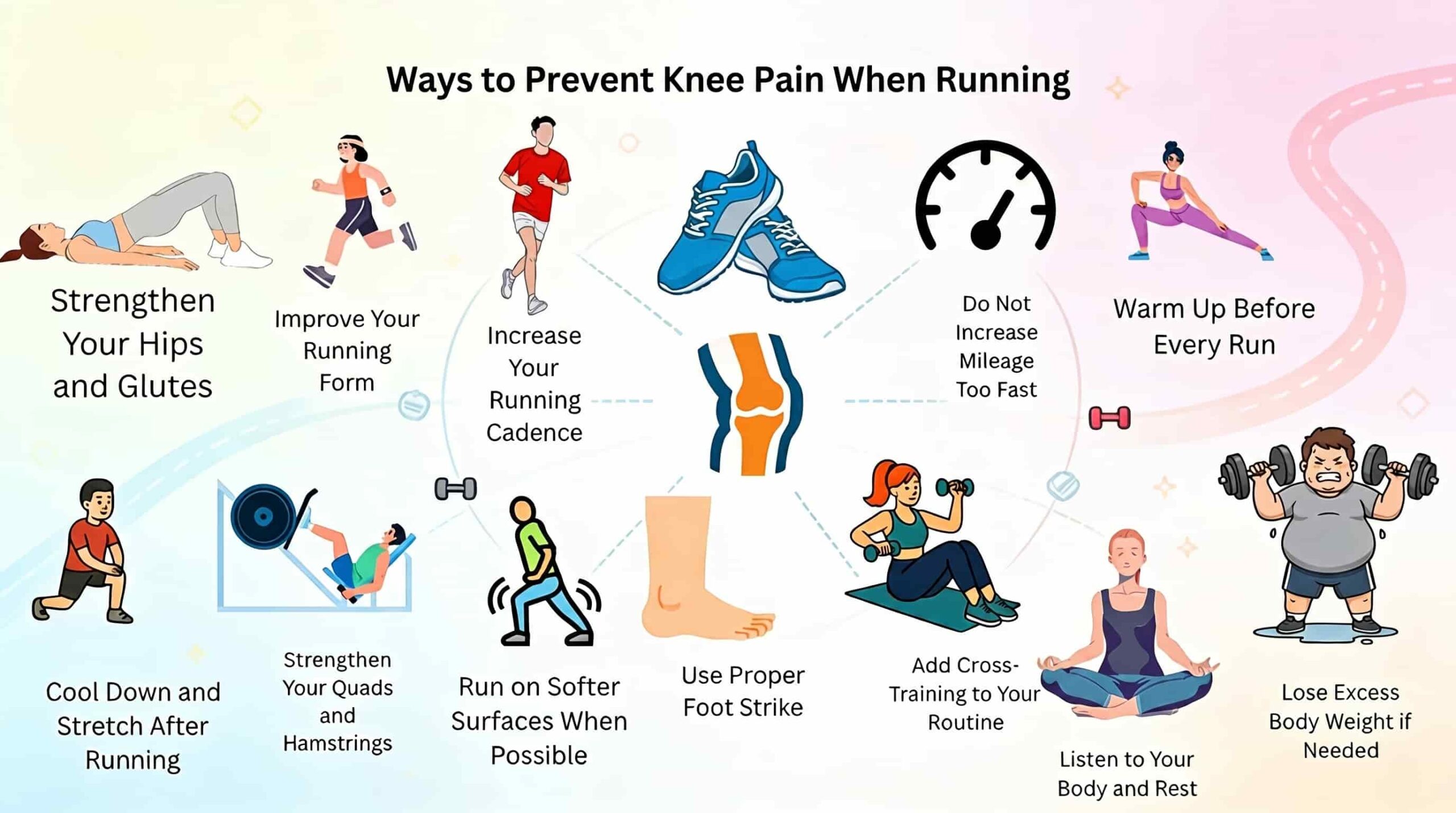
The causes above point to very specific solutions. Here are 13 methods that address those causes directly and give your knees a much better chance of staying pain-free through every run.
1. Strengthen Your Hips and Glutes
Strong hip and glute muscles keep the knee properly aligned through every stride. When those muscles are weak, the knee drops inward on impact, and that repeated stress builds into pain.
Add exercises like clamshells, hip bridges, and lateral band walks two to three times per week. This single habit prevents more knee injuries in runners than almost anything else.
2. Improve Your Running Form
Poor running form puts extra load on the knee joint with every step you take. The biggest mistake most runners make is overstriding, in which the foot lands far ahead of the body, transmitting a large force directly into the knee.
Keep your foot landing under your hips, lean slightly forward from the ankles, and keep your knees soft at landing. Film yourself running to spot breakdowns you cannot feel in the moment.
3. Increase Your Running Cadence
A higher running cadence reduces the impact force on your knees with each step. Most recreational runners take around 150 to 160 steps per minute, while 170 to 180 steps per minute is generally better for knee health.
Use a free metronome app or a GPS running watch to track this number. Increase gradually by five steps per minute each week rather than changing everything at once.
4. Choose the Right Running Shoes
The wrong shoes change how force travels through your foot and into your knee. A shoe that does not match your foot type can cause the foot to roll inward or outward, which pulls the knee out of alignment with each step.
Get a gait assessment at a specialty running store before your next purchase. It takes ten minutes and can save you months of knee trouble.
5. Do Not Increase Mileage Too Fast
Adding too much running distance too quickly is one of the leading causes of knee pain in runners. The general rule is to add no more than 10 percent to your total weekly distance at a time.
Your cardiovascular system adapts faster than your tendons and joints do. You might feel fine breathing-wise while your knees are quietly being overloaded with each extra mile.
6. Warm Up Before Every Run
Cold muscles do not absorb shock as well as warm ones, and that gap puts more load on the knee joint. A five-minute warm-up of leg swings, walking lunges, and high knees gets blood moving and prepares the joints for impact.
Do not skip this step even on short, easy runs. Five minutes before a run can prevent weeks of recovery after one.
7. Cool Down and Stretch After Running
Tight muscles pull on the knee joint over time and create pain that builds gradually without an obvious cause. After every run, spend five to ten minutes stretching your quads, hamstrings, calves, and hip flexors.
Hold each stretch for 20 to 30 seconds, breathing steadily throughout. Done consistently, this habit keeps the muscles around the knee from becoming a problem.
8. Strengthen Your Quads and Hamstrings
Your quad muscles control how the kneecap moves during the push and pull of running. When the quads are weak, the kneecap shifts slightly off its normal track, causing pain at the front of the knee.
Strong hamstrings also take the load off the knee joint during each stride. Add wall sits, straight-leg raises, and Romanian deadlifts to your weekly routine for results you will notice within four to six weeks.
9. Run on Softer Surfaces When Possible
Hard surfaces like concrete and asphalt send more impact force directly into your knees with every step. Softer options like grass, dirt trails, or rubberized tracks give the joints some natural cushioning.
You do not have to stop running on roads entirely. Mixing softer surfaces into your week gives your knees regular recovery from high-impact conditions.
10. Use Proper Foot Strike
Landing with your heel striking far out in front of your body is hard on the knee joint. A better landing puts your foot closer to under your center of mass, with a slight bend at the knee on contact.
This spreads the impact across more muscles rather than loading the knee directly. A midfoot strike generally places less stress on the knee than a heavy heel strike.
11. Add Cross-Training to Your Routine
Running daily without breaks puts your knees under repeated stress, leaving the tissues little time to recover. Cross-training with cycling, swimming, or yoga builds fitness while the knee joints get a break from impact.
One to two cross-training sessions per week is a solid and manageable target. You stay active without adding more load to already tired joints.
12. Listen to Your Body and Rest
Sharp knee pain during a run is a clear signal from your body, not something to push through. Runners who ignore early warning signs tend to end up with much longer recovery periods than those who catch it early.
Take one to two rest days when you notice knee discomfort building. Catching a problem early means a few days off. Ignoring it can mean months.
13. Lose Excess Body Weight if Needed
Each extra pound of body weight adds roughly three to four pounds of force on the knee with every running step. That adds up fast over the long run.
Gradual weight loss through a combination of running and a balanced eating plan reduces the daily load on the knee joint. This is not about hitting a perfect number. It is about reducing the stress your joints carry mile after mile.
Best Exercises to Prevent Knee Pain When Running
Strength training is one of the most direct ways to protect your knees from pain. These five exercises build the muscles runners most commonly neglect, and all of them can be done at home with no equipment.
1. Clamshells
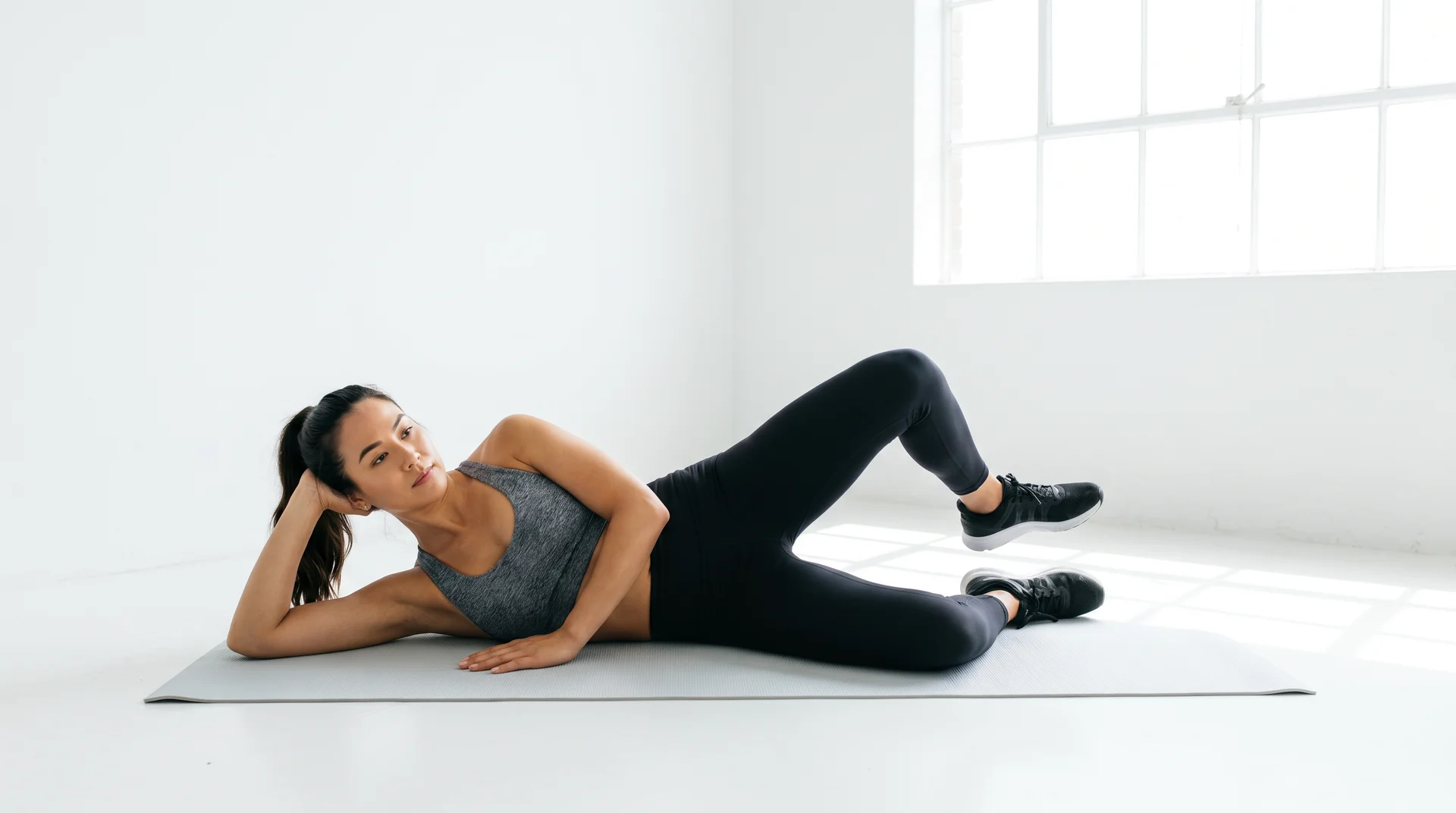
Clamshells build strength in the outer hip and glute muscles that control knee alignment during every running stride. They are low-impact, require no equipment, and can be done every day without recovery concerns.
How to do it:
- Lie on your side with your hips and knees bent at a 45-degree angle.
- Keep your feet stacked together and your hips level.
- Lift your top knee as high as you can without letting your pelvis rotate back.
- Hold for one second at the top.
- Lower your knee back down slowly. Do 3 sets of 15 reps per side.
2. Single-Leg Squats
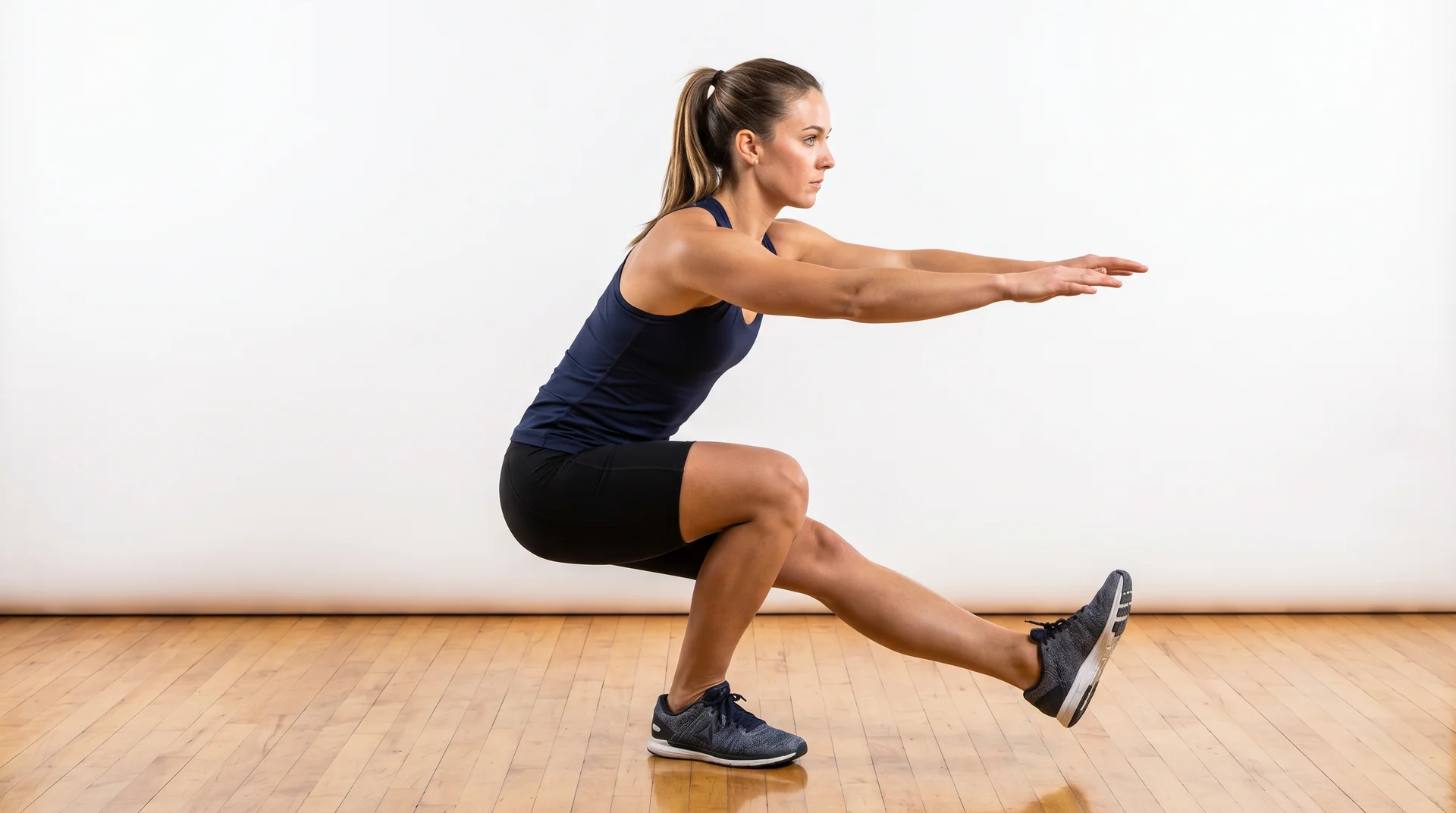
Single-leg squats train the quad, glute, and hip muscles at once while building the balance your knee needs during the single-leg loading of every running step. They also quickly show you which leg is weaker.
How to do it:
- Stand on one leg with your arms extended forward for balance.
- Push your hips back slightly and lower into a squat on that one leg.
- Keep your knee tracking directly over your second toe, not caving inward.
- Lower as far as you can with control, then push back up through the heel.
- Do 3 sets of 8 to 10 reps per leg.
3. Step-Ups
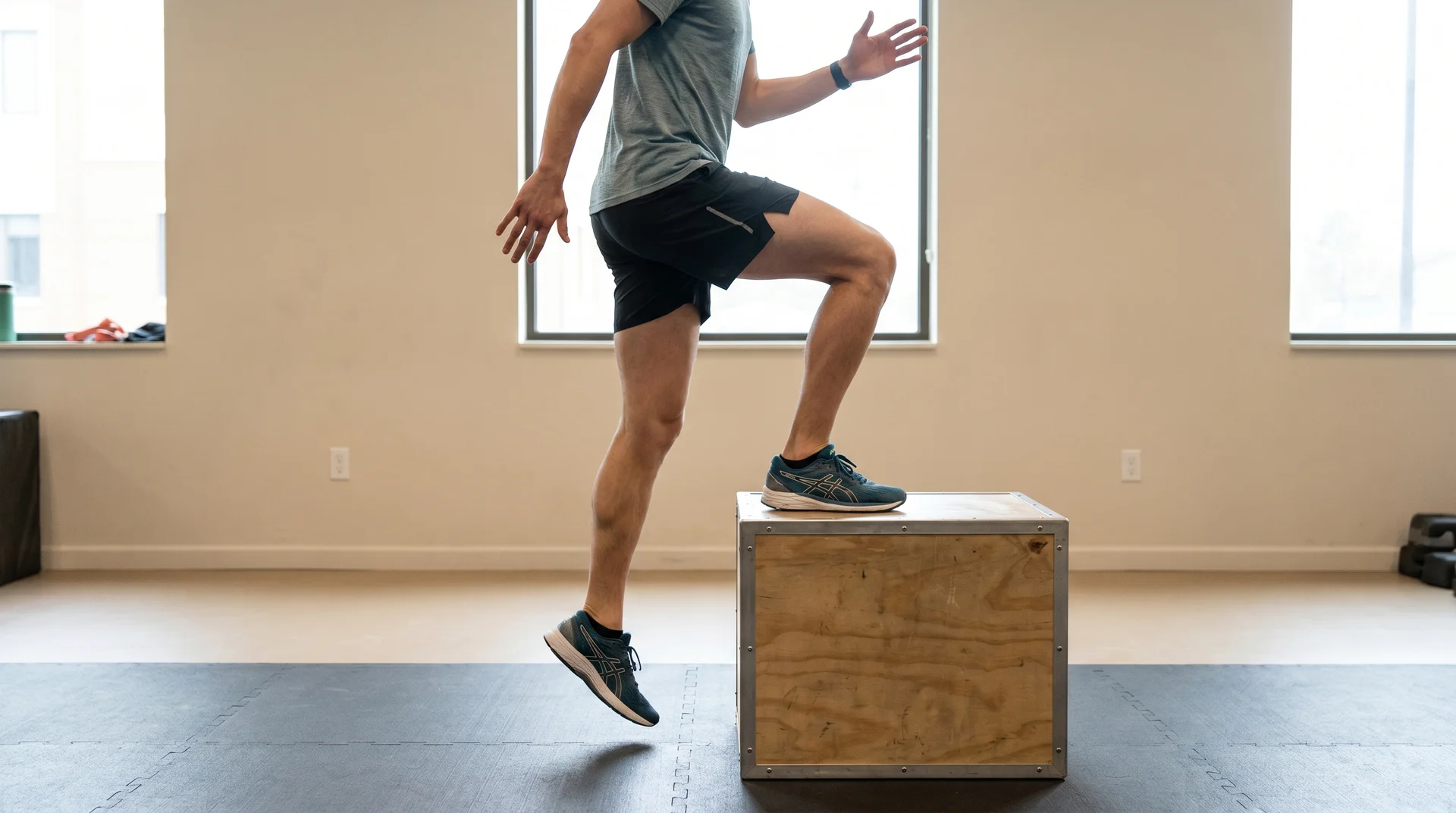
Step-ups strengthen the quads and glutes by closely mirroring the mechanics of running. They build the functional strength your knees count on with every stride.
How to do it:
- Stand facing a box, step, or stair at roughly knee height.
- Place one foot fully on the surface with your heel near the front edge.
- Drive through the heel of the raised foot to step up, bringing the other foot level.
- Step back down slowly, maintaining full control throughout the lowering phase.
- Do 3 sets of 12 reps per leg.
4. Hip Bridges
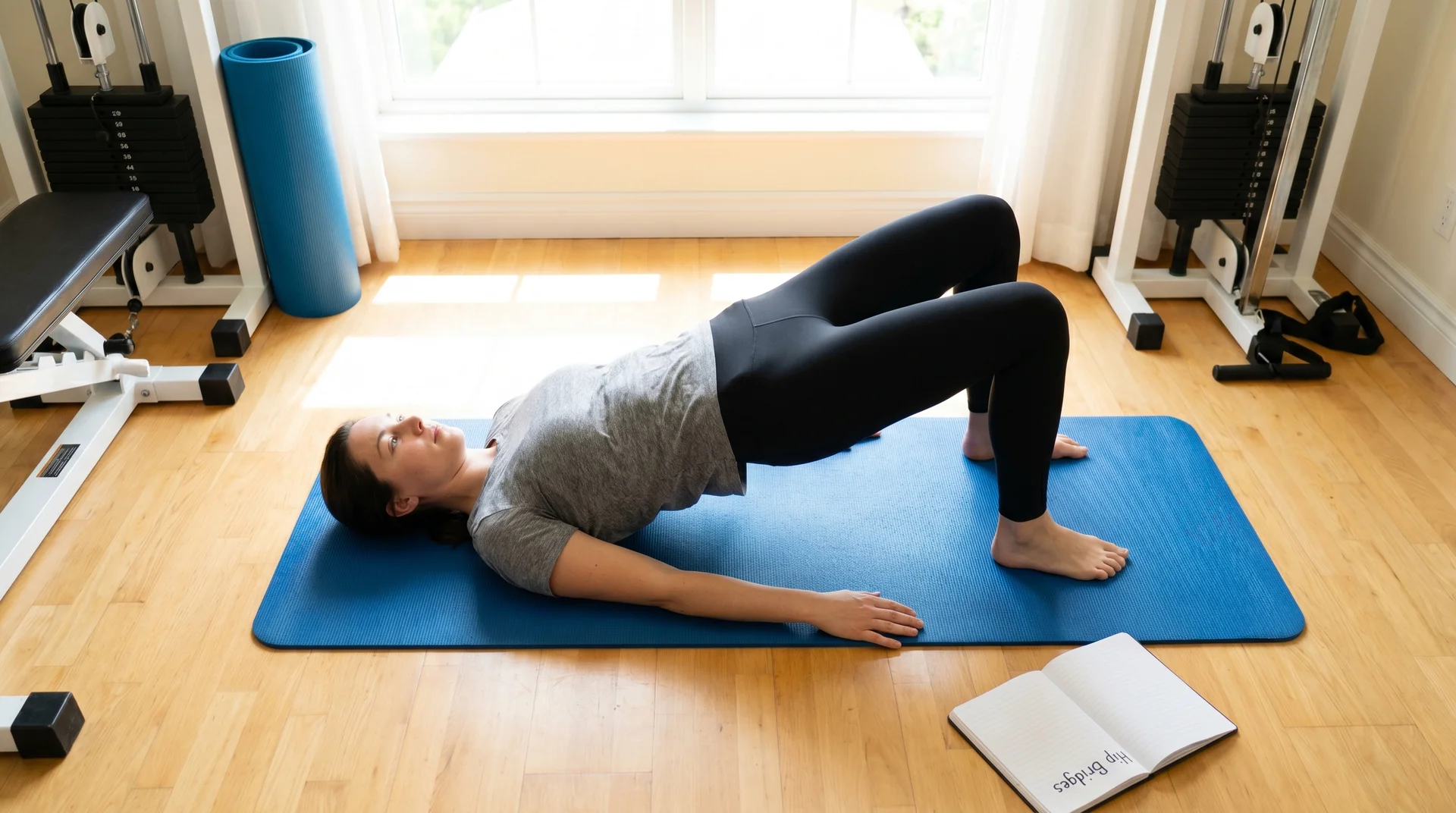
Hip bridges directly work the glutes and hamstrings, both of which take significant load off the knee joint when they are strong enough to do their job during a run.
How to do it:
- Lie on your back with your knees bent and your feet flat on the floor, hip-width apart.
- Press through your heels and lift your hips toward the ceiling.
- Squeeze your glutes firmly at the top, then hold for 2 seconds.
- Lower your hips back down slowly without letting them drop.
- Do 3 sets of 15 reps.
5. Straight-Leg Raises
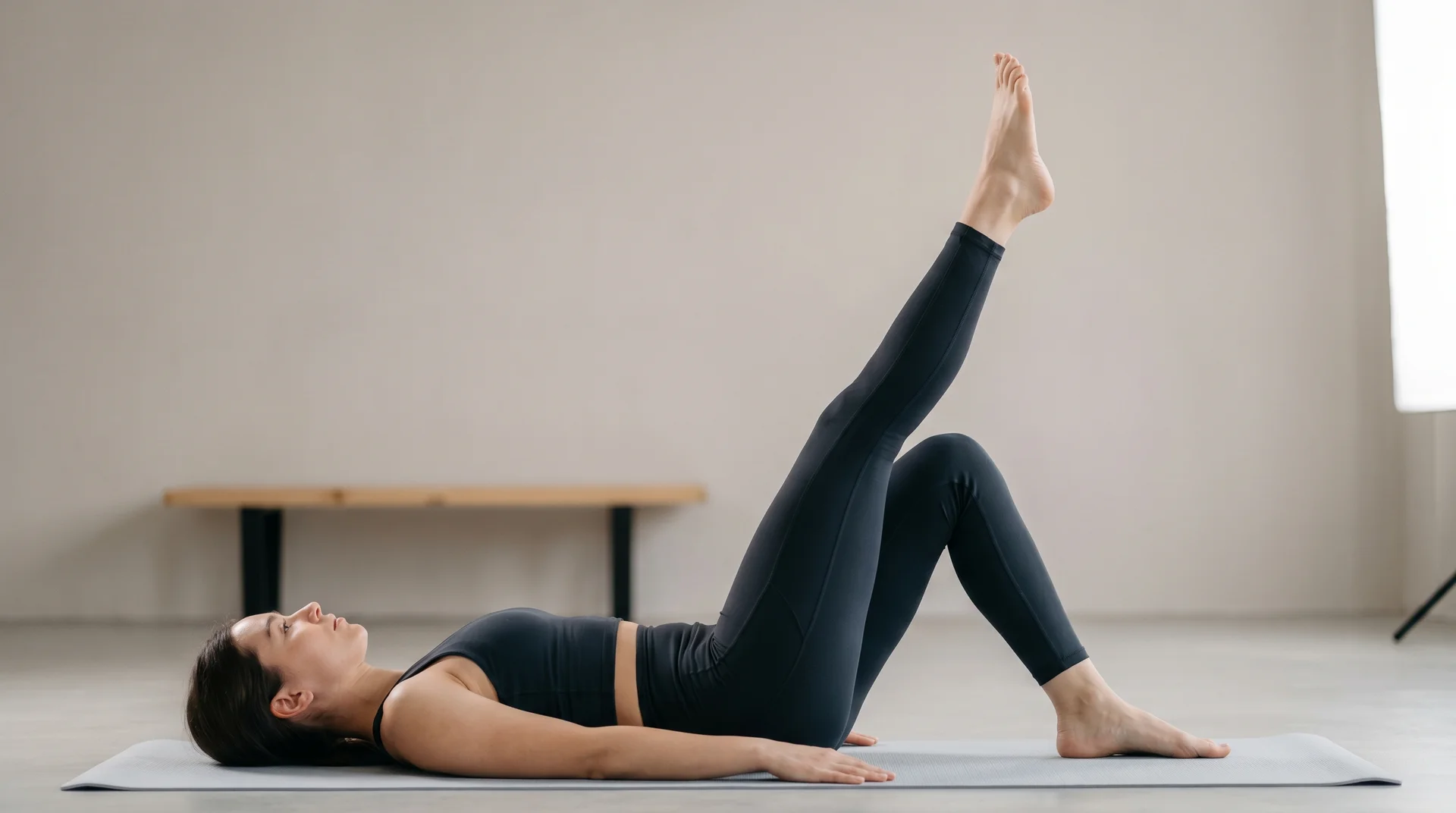
Straight-leg raises build quad strength without requiring any bending of the knee, making them a safe starting option even when the knee already feels tender.
How to do it:
- Lie flat on your back with one leg straight and the other bent, foot flat on the floor.
- Flex the foot of your straight leg so your toes point toward the ceiling.
- Lift that leg to roughly 45 degrees off the floor.
- Hold for two seconds at the top.
- Lower slowly back down. Do 3 sets of 15 reps per leg.
Running Habits That Damage Your Knees (And the Fix for Each)
Knee pain in runners rarely appears out of nowhere. It almost always traces back to specific habits repeated enough times to cause real damage. Here is a clear look at the most common ones and exactly what to do about them.
| Mistake | Why It Hurts | The Fix |
|---|---|---|
| Running through pain | Pain signals stress on the joint. Ignoring it makes it worse. | Rest 1 to 2 days at the first sign of knee discomfort. |
| Skipping the warm-up | Cold muscles absorb less shock and load the joint more. | 5 minutes of leg swings and lunges before every run. |
| Too much mileage too fast | Joints adapt more slowly than the lungs and heart do. | Increase weekly distance by no more than 10 percent at a time. |
| Wrong or worn-out shoes | Poor support alters how force is transmitted through the knee. | Replace every 300 to 500 miles and get a gait check done. |
| No strength training | Weak hips and quads leave the knee exposed on every step. | Add 2 targeted strength sessions to your weekly schedule. |
| Overstriding | Foot landing ahead of the body sends direct force into the knee. | Shorten your stride and aim to land under your hips. |
When to See a Doctor About Knee Pain While Running
Most knee pain from running gets better within a few weeks with rest, targeted strength work, and better training habits.
See a sports medicine doctor or physical therapist if the pain does not improve after one to two weeks of rest, if you notice visible swelling around the joint, if the knee feels unstable or gives way during normal walking, or if you hear a popping sensation during movement.
Pain that worsens with every run rather than settling down is also a clear signal to get a professional assessment before the problem becomes more serious.
The Mayo Clinic recommends seeking medical attention when knee pain is severe, accompanied by swelling, or connected to any loss of function.
Wrapping It Up
Knowing how to prevent knee pain when running comes down to a handful of consistent habits done right. Strengthen your hips and quads, fix your form, wear the right shoes, and build your mileage slowly.
Most runners avoid serious knee problems when they take these steps early enough. Your knees can handle a lot more than you think when the right muscles are strong and your overall training is smart.
Pick one tip from this post, try it on your very next run, and start building from there one step at a time.
Frequently Asked Questions
What Is a Runner’s Knee?
Runner’s knee is pain around the kneecap caused by the kneecap not tracking correctly over the knee joint during movement or exercise.
Why Can’t I Run without Knee Pain?
You likely have weak hip or quadriceps muscles, poor running form, or are increasing your distance faster than your joints can adapt to.
How Do I Make My Knees Stronger?
Do clamshells, hip bridges, step-ups, and single-leg squats two to three times per week to build the muscles that support and protect the knee joint.
What Does Runner’s Knee Feel Like?
It feels like a dull ache around the front or sides of the kneecap that worsens during running, going downstairs, or after sitting with bent knees for a long time.