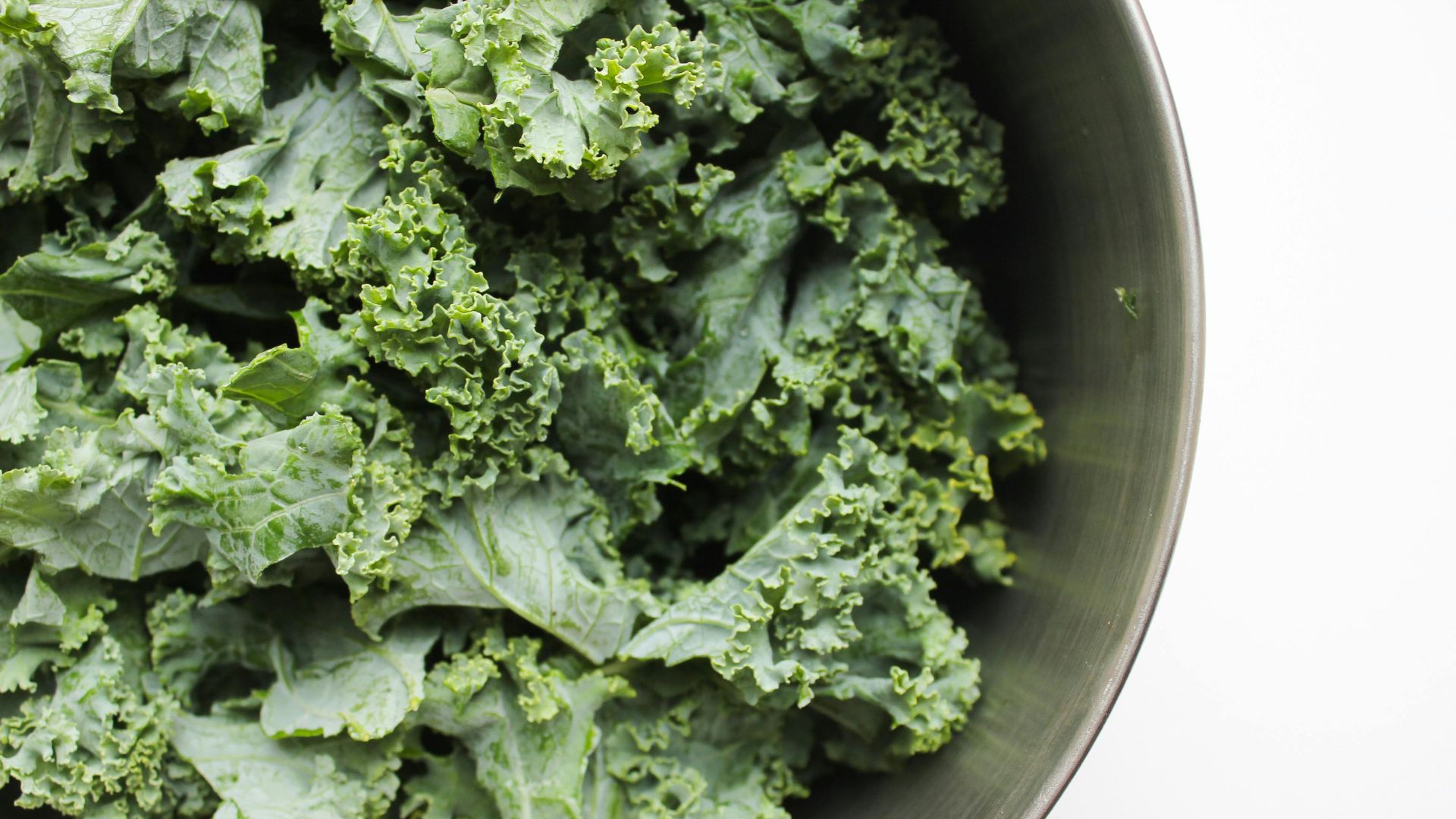
You eat well. You exercise. But one small green vegetable might be doing more for your body than you think.
Kale is one of the most nutrient-dense foods you can add to your plate. One cup gives you vitamins A, C, and K, plus fiber, calcium, and powerful antioxidants, all for just 34 calories. That is hard to beat.
The benefits of kale go well beyond good nutrition. It supports your heart, bones, eyes, gut, immune system, and weight, all at once. And the best part?
It is cheap, easy to find, and takes less than five minutes to add to any meal.
This guide covers everything you need to know, from what kale actually is to how to eat it and who should be careful with it.
What Is Kale?
Kale is a leafy green vegetable in the cabbage family. It is closely related to broccoli, Brussels sprouts, and collard greens.
You can find it in green, purple, or bluish-green colors. It has a slightly earthy flavor and grows in bunches with leaves fanning out from a central stem. Kale grows well in cool weather and tastes even better after the first frost.
Kale Nutritional Facts
One cup of raw kale (about 67g) packs a serious nutrient punch. Here is what you get:
| Nutrient | Amount Per Cup (Raw) |
|---|---|
| Calories | 34 kcal |
| Fiber | 1.3 g |
| Protein | 2.9 g |
| Vitamin A | 49.6 mcg |
| Vitamin C | 80.4 mg |
| Vitamin K | 82 mcg |
| Calcium | 90 mg |
| Potassium | 329 mg |
| Antioxidants | Quercetin, lutein, zeaxanthin |
Types of Kale
Not all kale looks or tastes the same. There are over 150 varieties, but these three are the ones you will most often find at the store.
- Curly Kale is the most common type. It has thick, frilly, bluish-green leaves with a bold, bitter flavor. It works great in soups, smoothies, and kale chips.
- Lacinato Kale is also called dinosaur kale or Tuscan kale. It has long, dark green, bumpy leaves. The flavor is milder and slightly nutty. It is one of the best types to eat raw.
- Red Russian Kale has flat, blue-green leaves with reddish-purple veins. It is the mildest and sweetest of the three. Its tender leaves work well in salads and as kale chips.
Each type brings its own flavor and texture to the table. Pick the one that fits how you like to cook.
7 Powerful Kale Benefits
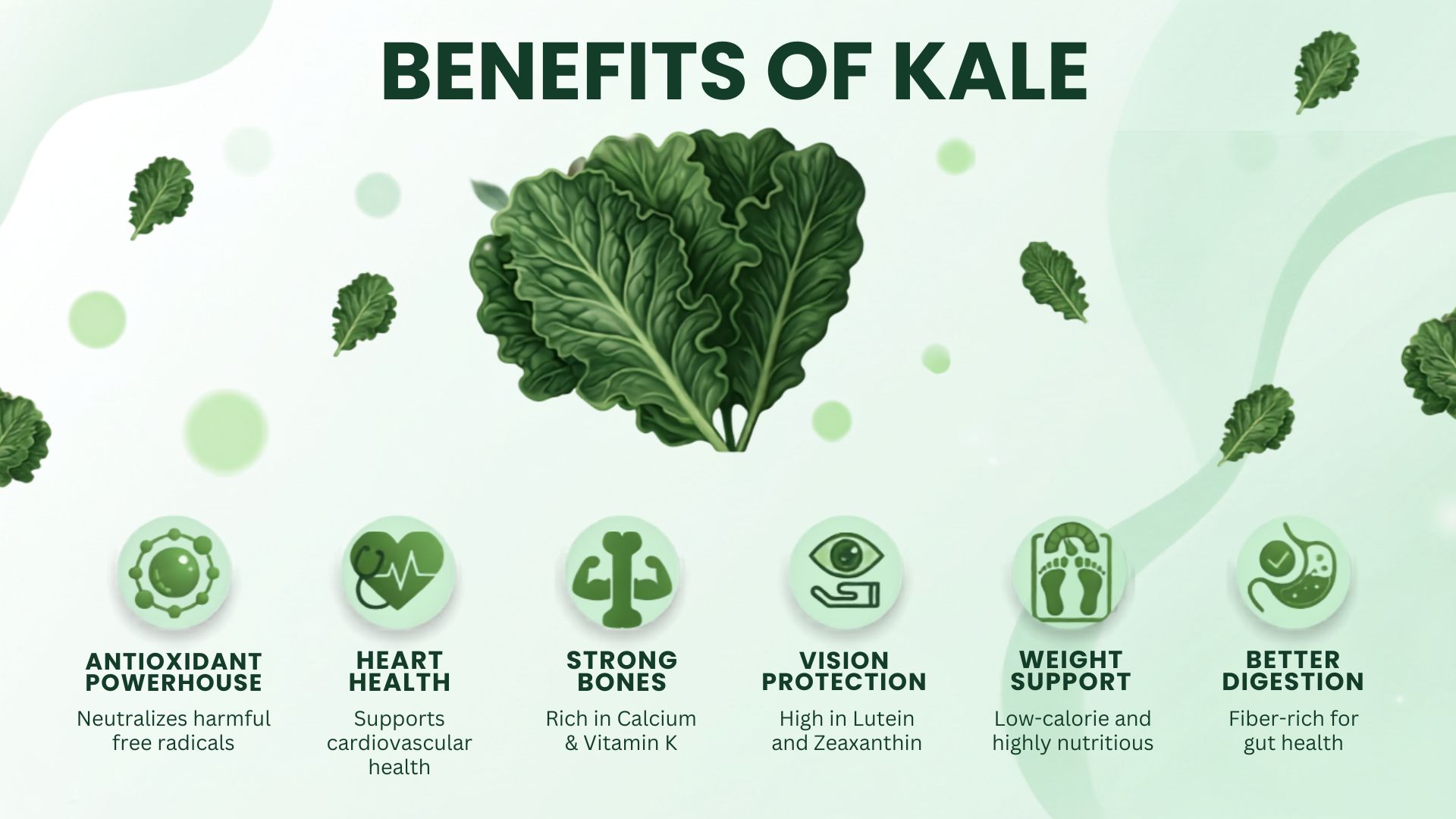
Kale is more than just a green leaf on your plate. It is loaded with vitamins, minerals, and plant compounds that your body actually uses. Here are seven solid reasons to eat more of it.
1. Rich in Antioxidants
Kale is packed with antioxidants like quercetin, kaempferol, lutein, and zeaxanthin. These compounds help protect your cells from oxidative stress.
Oxidative stress happens when free radicals build up faster than your body can clear them. Over time, this can raise the risk of conditions like heart disease and type 2 diabetes. Eating kale regularly gives your body the tools to fight back at the cell level.
Quick Fact: Kale also contains a natural sugar called sulfoquinovose. This compound feeds good gut bacteria, which adds a layer of protection that most people never connect to antioxidants.
2. Supports Heart Health
Kale contains fiber, potassium, and antioxidants that work together to support a healthy heart.
- Fiber binds to LDL cholesterol in the intestines and carries it out of the body before it enters the bloodstream.
- Potassium relaxes blood vessels and helps keep blood pressure in a healthy range.
- Antioxidants like quercetin and kaempferol protect arteries from oxidative damage, which lowers the risk of plaque buildup over time.
3. Helps Strengthen Bones
Kale gives you two key bone-building nutrients in one serving.
- Vitamin K helps transport calcium directly to the bones, adding strength and lowering the risk of fractures. One cup of raw kale provides over 67% of the daily recommended amount for adults.
- Calcium keeps bones dense and strong. If your body does not get enough from food, it pulls calcium from your bones instead, which weakens them over time. Kale is a solid plant-based source, especially for people who do not eat much dairy.
4. Supports Eye Health
Lutein and zeaxanthin are two carotenoids found in large amounts in kale. These are the only dietary antioxidants that collect directly in the retina and macula of the eye.
They filter out harmful blue light and shield eye cells from free radical damage. A diet rich in these compounds is linked to a lower risk of age-related macular degeneration and cataracts.
Kale also contains beta-carotene and vitamin C, both of which add further protection for your vision.
5. Helps With Weight Management
Kale is very low in calories but fills you up fast. One raw cup has around 34 calories, yet it contains fiber and water that add bulk to your meals. Foods with a low energy density, like kale, help you feel full without eating too many calories. The fiber in kale also slows digestion, which keeps hunger at bay longer after a meal.
Quick Fact: Kale has a low glycemic index. This means it does not cause sharp spikes in blood sugar, which helps control cravings and reduces the urge to snack between meals.
6. Supports Immune Function
Kale is a strong source of vitamin C, with one cup of raw kale providing around 80 mg. That is close to the full daily recommended amount for most adults.
- White blood cell production depends on vitamin C. These cells are your body’s first line of defense against infections and illness.
- The skin barrier’s strength is also supported by vitamin C. A healthy skin barrier keeps harmful bacteria and viruses from entering the body in the first place.
7. Improves Digestion
Kale contains both soluble and insoluble fiber, both of which play different roles in your gut.
- Insoluble fiber adds bulk to stool and keeps bowel movements regular, which helps prevent constipation.
- Soluble fiber acts as a prebiotic, feeding the beneficial bacteria in your gut and helping them grow and stay balanced.
- A human trial found that daily kale intake increased the presence of Bifidobacterium, a beneficial gut bacteria strain linked to better digestive health.
Best Ways to Add Kale to Your Diet
Kale is one of the easiest greens to work into your daily meals. You do not need fancy recipes or cooking skills. Here are five simple ways to get started.
Recipe #1: Add Kale to Smoothies
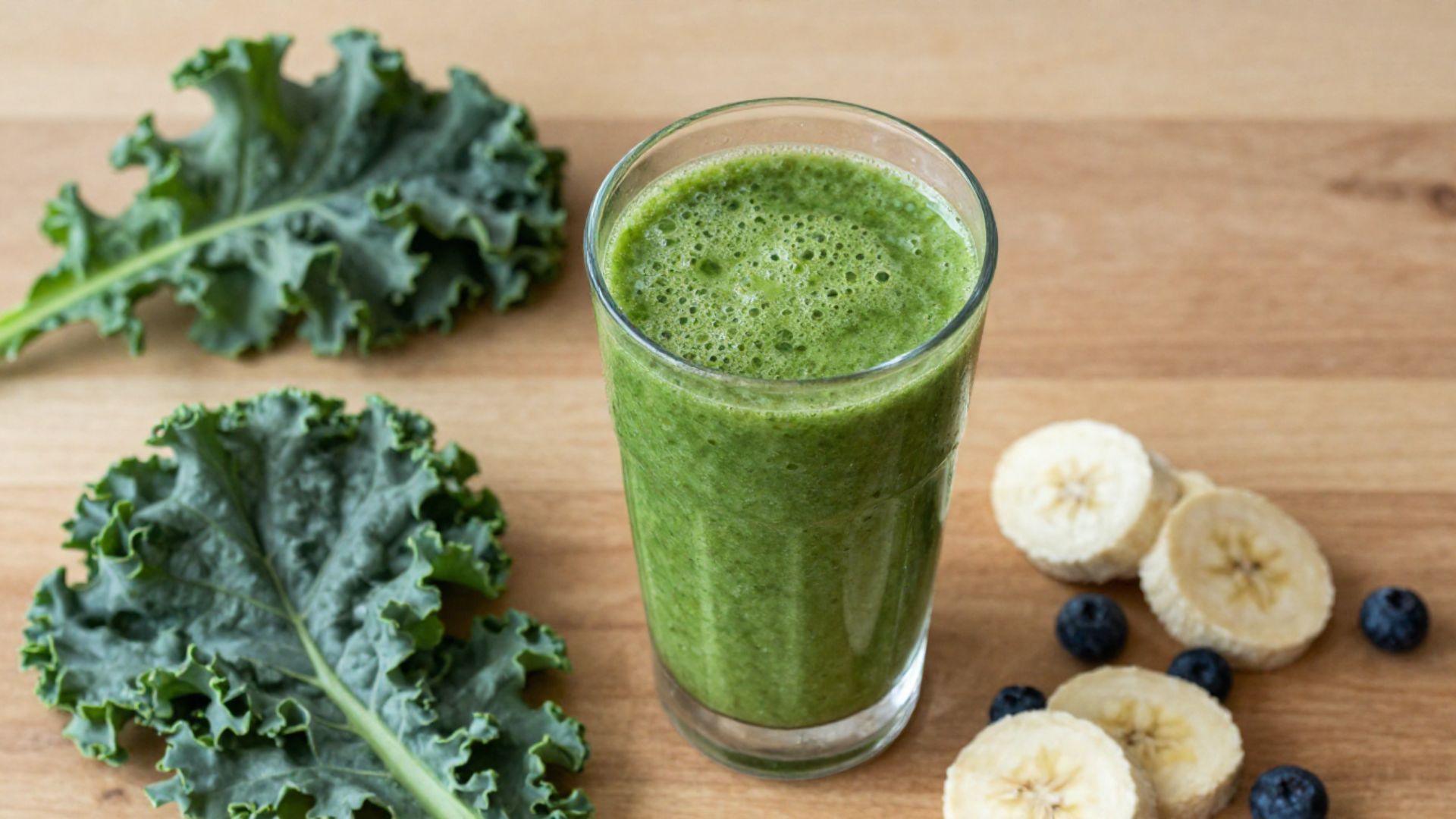
A kale smoothie is the fastest way to get your greens in the morning. The fruit masks the bitterness of kale completely, so you barely notice it is there.
| Calories | Protein | Fiber |
|---|---|---|
| ~244 kcal | 6 g | 6.3 g |
What you need:
- 1 cup raw kale (stems removed)
- 1 banana
- 1 cup pineapple chunks
- 1 cup almond milk
How to Make?
Step 1: Add kale and almond milk to the blender first.
Step 2: Blend until the kale is fully broken down, with no chunks remaining.
Step 3: Add banana and pineapple.
Step 4: Blend again until smooth and creamy.
Step 5: Pour into a glass and serve right away.
Recipe #2: Use Kale in Salads
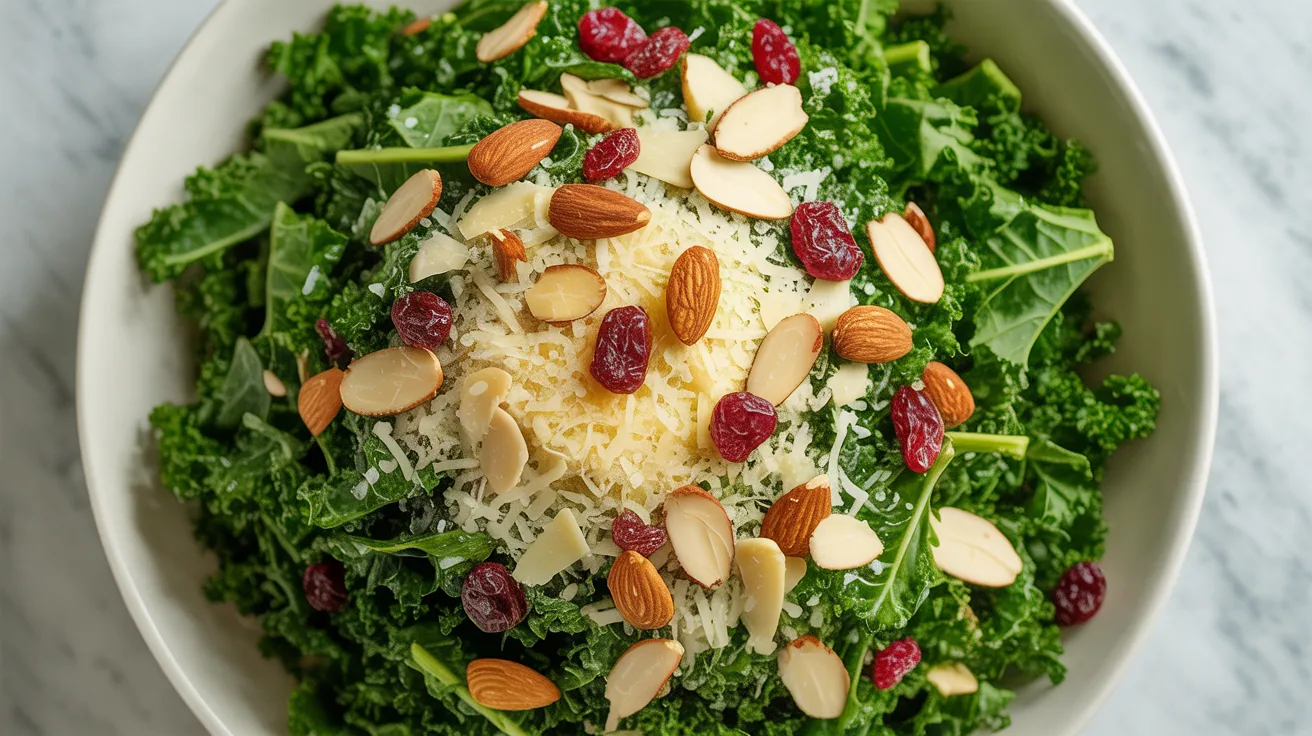
A massaged kale salad is far less bitter than raw kale straight from the bag. The massage softens the leaves, making them much easier to eat.
| Calories | Protein | Fiber |
|---|---|---|
| ~204 kcal | 6 g | 2 g |
What you need:
- 2 cups chopped kale
- 1 tbsp olive oil
- Juice of half a lemon
- 2 tbsp parmesan cheese
- 2 tbsp sliced almonds
- 2 tbsp dried cranberries
How to Make?
Step 1: Remove the stems from the kale and chop the leaves into bite-sized pieces.
Step 2: Place kale in a large bowl with olive oil and a pinch of salt.
Step 3: Massage the kale with your hands for 2 to 3 minutes until it softens slightly.
Step 4: Add lemon juice and toss well.
Step 5: Top with parmesan, almonds, and dried cranberries.
Step 6: Serve immediately or refrigerate for up to 2 days.
Recipe #3: Make Homemade Kale Chips
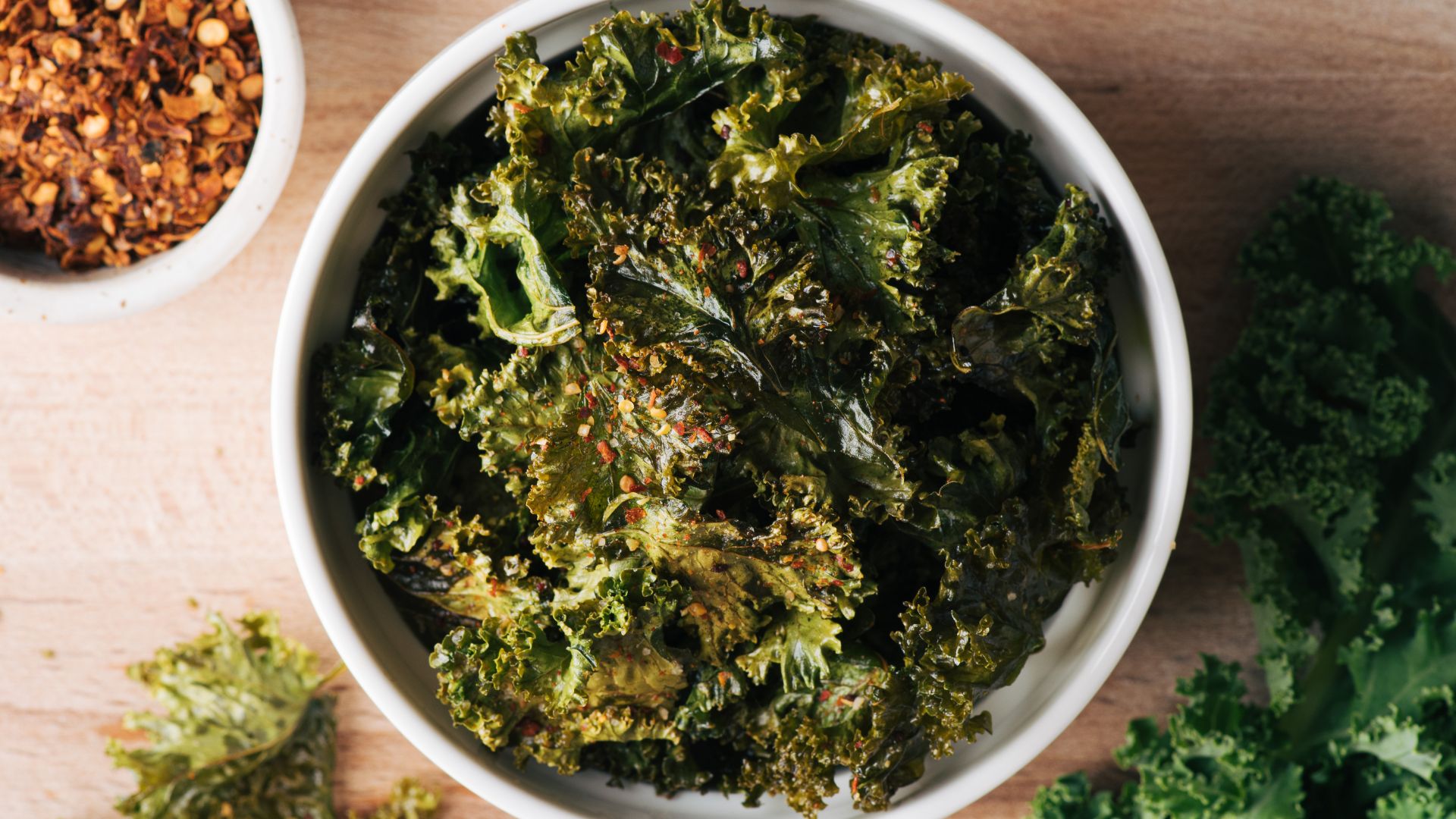
Kale chips are a crispy, low-calorie snack that is far better for you than regular potato chips. The key is to keep the leaves dry and use only enough oil.
| Calories | Protein | Fiber |
|---|---|---|
| ~85 kcal | 2 g | 3 g |
What you need:
- 2 cups curly kale (stems removed)
- 1 tbsp olive oil
- A pinch of sea salt
- Optional: garlic powder or nutritional yeast
How to Make?
Step 1: Preheat your oven to 300°F (150°C).
Step 2: Wash kale and dry it completely with a clean towel.
Step 3: Tear kale into chip-sized pieces and place in a bowl.
Step 4: Drizzle olive oil over the kale and massage lightly to coat each leaf.
Step 5: Spread in a single layer on a baking sheet.
Step 6: Bake for 10 minutes, then rotate the pan and continue baking for 5 to 8 minutes.
Step 7: Let cool for 5 minutes before eating. They crisp up as they cool.
Quick Fact: One whole batch of kale chips has about 85 to 100 calories. Seven regular potato chips alone can have around 150 calories.
Recipe #4: Add Kale to Soups and Stir-Fries
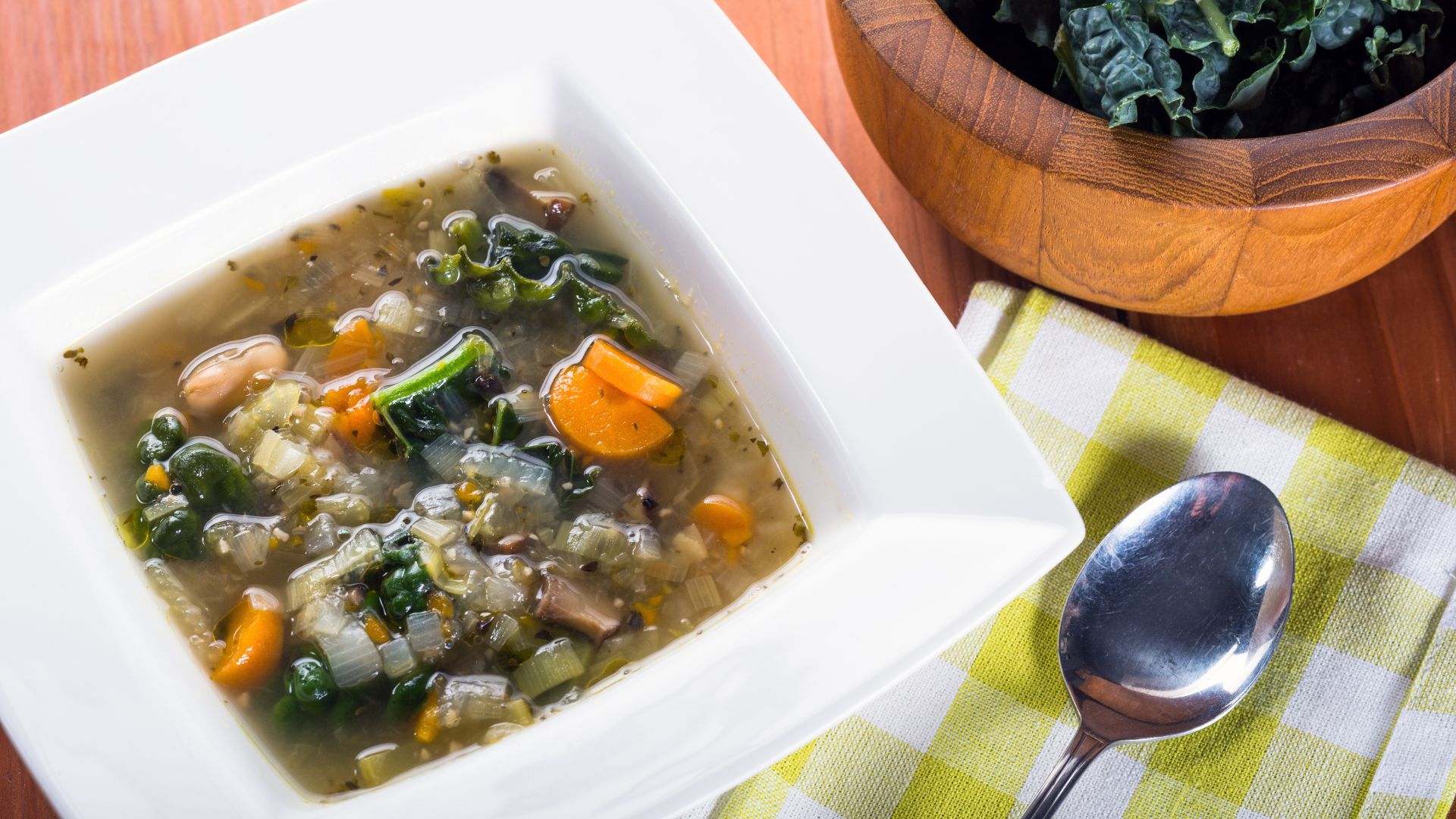
Kale holds up well in hot dishes. It wilts down quickly and adds a deep, earthy flavor to soups and stir-fries without going mushy.
| Calories | Protein | Fiber |
|---|---|---|
| ~148 kcal | 9 g | 7 g |
What you need:
- 2 cups kale (chopped into ribbons)
- 1 tbsp olive oil
- 1 onion (diced)
- 2 garlic cloves (minced)
- 2 cups vegetable broth
- 1 can cannellini beans
- Salt and pepper to taste
How to Make?
Step 1: Heat olive oil in a large pot over medium heat.
Step 2: Add onion and garlic. Cook for 4 to 5 minutes until soft.
Step 3: Pour in the vegetable broth and bring to a boil.
Step 4: Add the cannellini beans and stir well.
Step 5: Add kale ribbons and stir until wilted, about 3 to 4 minutes.
Step 6: Season with salt and pepper. Serve hot.
Recipe #5: Blend Kale Into Pasta and Rice Dishes
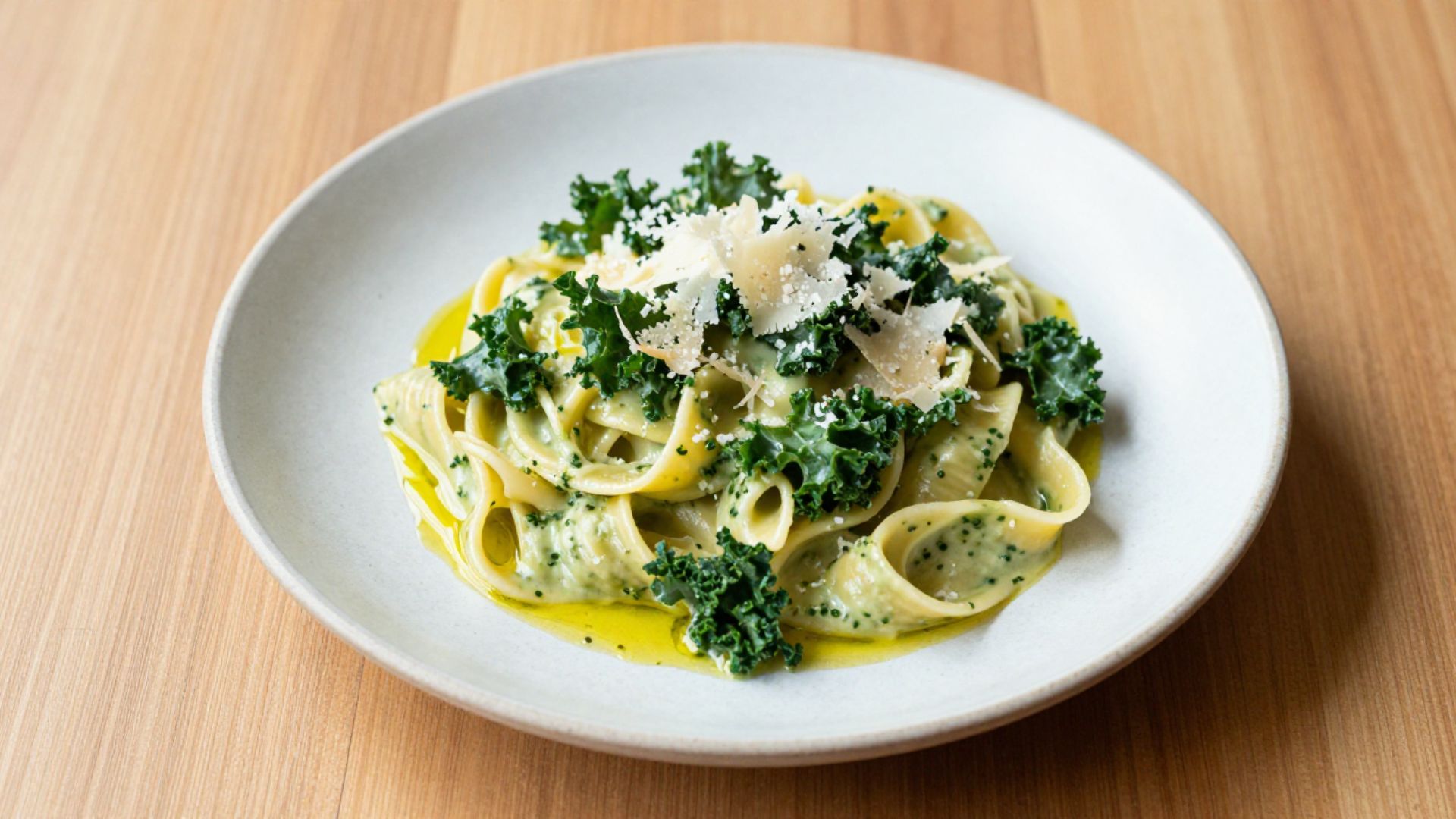
Adding kale to pasta is one of the easiest ways to get your greens without changing the flavor too much. It wilts right into the dish and blends with the sauce.
| Calories | Protein | Fiber |
|---|---|---|
| ~380 kcal | 19 g | 8 g |
What you need:
- 2 cups pasta (any type)
- 1 cup chopped kale
- 2 garlic cloves (sliced thin)
- 1 tbsp olive oil
- Juice of one lemon
- Salt and red pepper flakes to taste
- Parmesan to finish (optional)
How to Make?
Step 1: Cook pasta according to package instructions. Reserve ¼ cup of pasta water before draining.
Step 2: Heat olive oil in a skillet over medium heat.
Step 3: Add garlic and cook for 1 to 2 minutes until fragrant.
Step 4: Add kale to the skillet and stir until wilted, about 3 minutes.
Step 5: Add the cooked pasta and reserved pasta water to the skillet.
Step 6: Squeeze in lemon juice and toss everything together.
Step 7: Season with salt and red pepper flakes. Top with parmesan if desired.
Who Should Avoid Kale?
Kale is safe for most people. But for some, eating too much of it can cause problems. Here is who needs to be careful.
- People taking blood-thinning medications: Kale is high in vitamin K, which affects blood clotting. If you take warfarin or similar drugs, too much kale can reduce how well your medication works. Keep your intake consistent and check with your doctor first.
- Individuals with certain thyroid conditions: Kale contains goitrogens, compounds that can slow thyroid hormone production. People with an underactive thyroid should avoid eating large amounts of raw kale. Cooking kale breaks down most of these compounds.
- People sensitive to high-fiber foods: Too much kale at once can cause bloating, gas, and stomach discomfort, especially when eaten raw. Start with small amounts and build up gradually to let your gut adjust.
- Those with kidney-related dietary restrictions: Kale contains oxalates, which can increase the risk of calcium oxalate kidney stones in people already prone to them. If your doctor has you on a low-oxalate diet, ask how much kale is safe for you.
Conclusion
Kale benefits are real, and you do not need to overhaul your entire diet to get them. Start small. Toss a handful into your morning smoothie. Swap your regular salad greens for kale once a week. Bake a batch of chips on a Sunday.
Small changes add up fast. Your heart, bones, eyes, and gut will all feel the difference over time.
Kale works best as part of a varied, balanced diet. No single food does everything, but few come close to packing this much value into one cup.
So, are you already eating kale, or is this the nudge you needed to start? Drop your thoughts in the comments below. We would love to hear how you like to eat it.