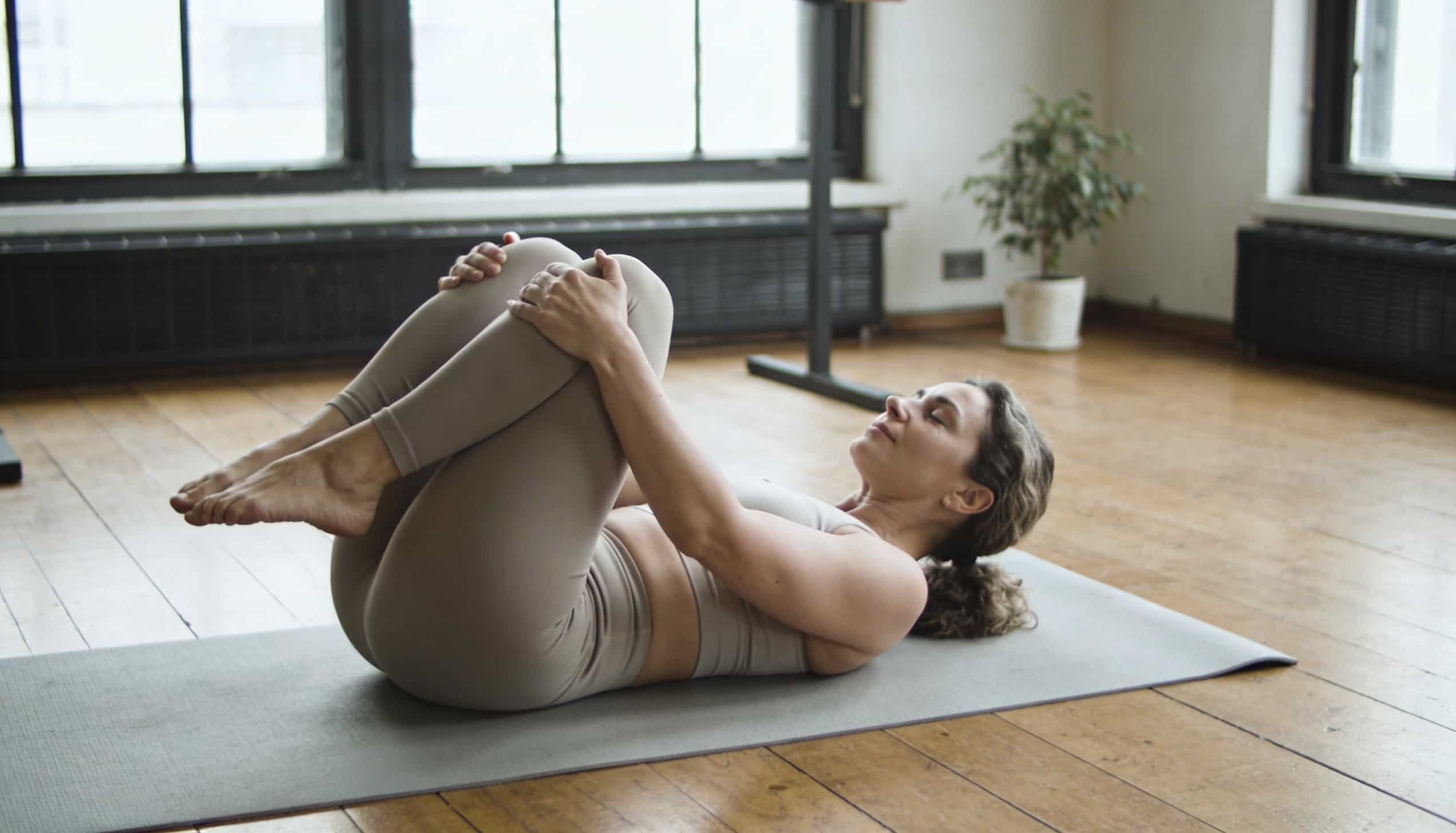
Sciatica occurs when the sciatic nerve becomes irritated or compressed, causing pain, tingling, numbness, or weakness that travels from the lower back down the leg. It can make everyday activities such as sitting, walking, and sleeping uncomfortable.
Pilates may help by strengthening the core, improving posture, and supporting better spinal alignment, which can reduce pressure on the nerve.
In this article, you’ll learn how Pilates can help with sciatica, the best exercises to try, movements to avoid, and tips for creating a safe and effective routine.
Can Pilates Help Sciatica?
Yes, Pilates can genuinely help with sciatica. It strengthens the deep core muscles that support the lumbar spine, reduces the compression on the sciatic nerve, improves hip flexibility, and corrects the postural imbalances that often trigger or worsen sciatica.
Unlike high-impact exercises that can aggravate the nerve, Pilates uses low-impact, controlled movements that help you build strength without adding extra stress on the spine.
A study published in the Journal of Bodywork and Movement Therapies found that core stabilization exercises, including Pilates-based movements, significantly reduced pain and improved function in patients with chronic low back pain and sciatica.
Top Pilates Moves for Sciatica and Lower Back Support
These Pilates moves directly target the muscles around your lower spine, hips, and glutes. Start with the gentler ones and build from there. Each exercise below includes clear steps and key things to keep in mind while doing it.
1. Pelvic Tilts
Video Credit: Canadian Chiropractic Guideline Initiative
Pelvic tilts are the foundation of Pilates for sciatica. They gently mobilize the lower spine and engage the deep abdominal muscles without straining the sciatic nerve.
Steps:
- Lie on your back with knees bent and feet flat on the floor, hip-width apart.
- Take a breath in. As you breathe out, gently press your lower back into the mat by tightening your abdominals.
- Hold for 3 to 5 seconds.
- Breathe in and return to the starting position.
- Repeat 10 to 15 times.
What to keep in mind: Keep the movement small and controlled. You are not lifting your hips. Your pelvis should barely move. Avoid holding your breath.
2. Knee-to-Chest Stretch
Video Credit: Children’s Hospital Colorado
This move releases tension in the lower back and gently stretches the piriformis, a key muscle that often compresses the sciatic nerve.
Steps:
- Lie on your back with both knees bent.
- Bring one knee slowly toward your chest using both hands.
- Hold for 20 to 30 seconds, breathing normally.
- Lower the leg slowly, then repeat on the other side.
- Do 3 repetitions per side.
What to keep in mind: Never pull the knee aggressively. If you feel a sharp shooting pain down your leg, stop and rest. Keep the opposite foot flat on the floor.
3. Supine Spinal Twist
Video Credit: Vive Health
This stretch targets the piriformis and the glutes. It creates gentle traction on the lower spine and can give fast relief from sciatic tension.
Steps:
- Lie on your back with knees bent.
- Let both knees fall slowly to one side while keeping your shoulders flat on the mat.
- Extend both arms out to the sides for support.
- Hold for 20 to 30 seconds, then bring knees back to center.
- Repeat on the other side. Do 2 to 3 rounds per side.
What to keep in mind: Do not force the knees to the floor. Let gravity do the work. Keep your shoulders grounded throughout the hold.
4. Cat-Cow Stretch
Video Credit: California Department of Public Health
Cat-Cow is a classic Pilates and yoga move that gently flexes and extends the spine rhythmically. It warms up the lumbar spine and reduces stiffness that contributes to sciatic nerve compression.
Steps:
- Start on all fours with your hands under your shoulders and knees under your hips.
- Breathe in as you drop your belly toward the floor, lifting your head and tailbone up (Cow).
- Breathe out as you round your spine toward the ceiling, tucking your chin and pelvis under (Cat).
- Move slowly and fluidly between the two positions.
- Repeat 10 times.
What to keep in mind: Move with your breath. Never rush through this exercise. If wrist pain is an issue, do this exercise on your fists or use a folded towel under your wrists.
5. Clamshell Exercise
Video Credit: Release Physical Therapy Washington DC
The clamshell strengthens the hip abductors and the gluteus medius. Weakness in these muscles directly contributes to sciatic nerve irritation. Strengthening them takes pressure off the lower back.
Steps:
- Lie on your side with hips and knees bent at a 45-degree angle, feet stacked together.
- Keep your feet touching as you raise your top knee upward like a clamshell opening.
- Raise only as high as you can without rotating your pelvis.
- Lower slowly. Do 12 to 15 reps per side.
What to keep in mind: Keep your core lightly engaged throughout. Do not let your hips rock back when you lift your knee. A resistance band around the thighs can be added once you build strength.
6. Leg Circles
Video Credit: HFE (Health and Fitness Education)
Leg circles build hip joint mobility and strengthen the muscles around the hip socket. Improved hip mobility reduces the pull on the lower back and sciatic nerve.
Steps:
- Lie on your back with one leg extended on the floor and the other leg raised toward the ceiling.
- Draw small circles with the raised leg, keeping the movement controlled.
- Do 5 circles in each direction.
- Lower the leg and switch sides.
What to keep in mind: Keep the circles small at first. Your lower back should remain in contact with the mat. If your back arches, lower the working leg slightly.
7. Bird Dog
Video Credit: Calixpert
Bird Dog builds spinal stability and strengthens the glutes and lower back simultaneously. It teaches your body to maintain a neutral spine during movement, which is exactly what sciatica patients need.
Steps:
- Start on all fours, hands under shoulders, knees under hips.
- Extend your right arm forward and your left leg back at the same time.
- Hold for 3 to 5 seconds, keeping your hips square.
- Return to center and switch sides.
- Do 8 to 10 reps per side.
What to keep in mind: Keep your spine completely flat. Do not let your lower back dip or your hips rotate. Move slowly. If you feel any sharp pain in your back or down your leg, stop.
8. Child’s Pose Into Thread the Needle
Video Credit: Pilates with Cassie
This combination of moves opens the hips, stretches the glutes and piriformis, and gently decompresses the lumbar spine. It is one of the most soothing Pilates moves for active sciatica pain.
Steps:
- Start in Child’s Pose: sit back on your heels, arms stretched forward on the mat.
- From there, slide your right arm under your left arm, lowering your right shoulder to the floor.
- Hold for 20 to 30 seconds.
- Return to Child’s Pose and repeat on the other side.
- Do 2 repetitions per side.
What to keep in mind: Breathe deeply in this position. Let your body relax into the stretch rather than forcing it. If your hips do not reach your heels, place a folded blanket between your thighs and calves for support.
How to Do These Pilates Exercises Safely
Always start on a firm, non-slip mat and wear comfortable clothing that allows free movement. Begin with the gentlest exercises first, especially pelvic tilts and knee-to-chest stretches, and never push through sharp or shooting pain down your leg.
Move slowly and with your breath. Aim for 3 sessions per week with at least one rest day in between. If you are in an active flare-up, limit your session to 10 to 15 minutes and skip any exercises that increase leg pain.
Consulting a physiotherapist or a certified Pilates instructor before starting is always a good idea, especially if your sciatica is severe or related to a diagnosed disc condition.
Other Helpful Practices to Pair With Pilates
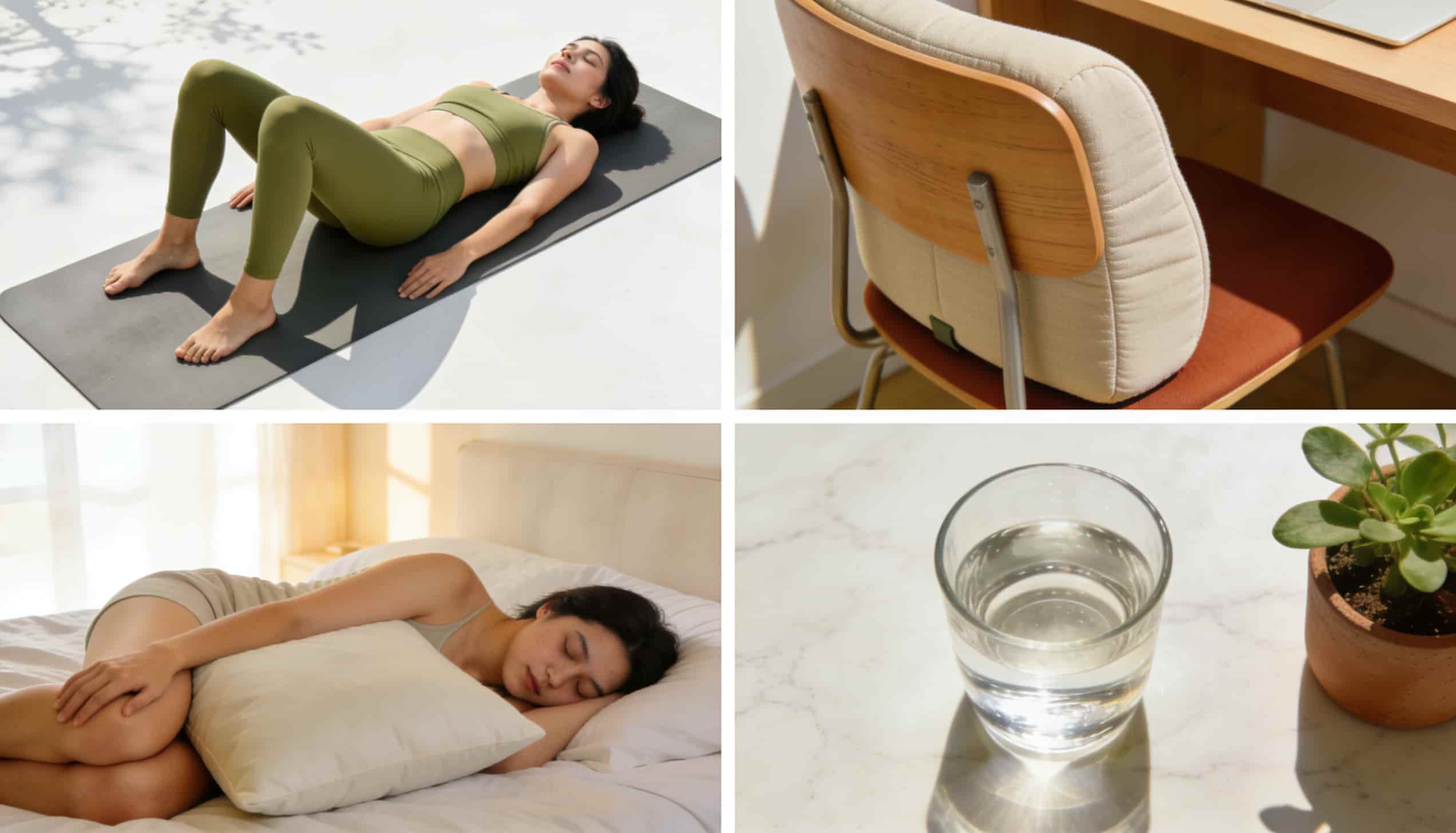
Pilates works even better when you combine it with other supportive habits. These additions help speed up recovery and keep the sciatic nerve from getting irritated again.
Yoga Poses for Sciatica That Work Well Alongside Pilates
Yoga poses for sciatica, such as Pigeon Pose, Reclined Figure-Four, and Supported Bridge, share many of the same benefits as Pilates for sciatica, including hip opening, spinal decompression, and piriformis release. Adding two to three yoga stretches after your Pilates session can extend your recovery time and improve flexibility faster.
- Pigeon Pose: Deeply stretches the piriformis and hip rotators
- Reclined Figure-Four (Supine Pigeon): A gentler alternative that targets the same area while lying flat
- Legs-Up-the-Wall: Reduces leg swelling and gently decompresses the lumbar spine
Lifestyle Changes That Speed Up Recovery
- Fix your sitting posture: Use a lumbar support cushion and avoid crossing your legs
- Take walking breaks: Sitting for more than 30 minutes at a time increases sciatic nerve pressure
- Sleep position: Sleeping on your side with a pillow between your knees keeps the spine aligned
- Heat therapy: Applying a warm pad to the lower back before Pilates helps relax the muscles around the sciatic nerve
- Stay hydrated: The spinal discs that cushion your vertebrae are largely made of water, so hydration supports disc health
When to See a Doctor Instead of Doing Pilates
Pilates is safe and helpful for most sciatica cases, but in some situations, you should seek medical attention before attempting any exercise.
See a doctor if your sciatica pain came on suddenly after an injury or accident, if you have numbness or weakness in both legs, if you are losing bladder or bowel control, or if your pain is severe and has not improved after 6 weeks of rest and light activity.
These symptoms can point to a serious spinal condition such as cauda equina syndrome or a significant disc herniation that needs medical or surgical management before any physical therapy begins.
Conclusion
Pilates for sciatica is one of the most effective, low-risk ways to manage nerve pain from the inside out.
It builds the strength your spine needs, releases the muscle tension that traps the sciatic nerve, and helps you move with less pain over time. The exercises in this guide are safe for beginners and can be done at home without any equipment.
Start slow, listen to your body, and stay consistent. Even three short sessions a week can produce real results within weeks.
If your pain is severe or getting worse, always speak with your doctor or a physiotherapist before starting any new exercise routine.
Frequently Asked Questions
Is Pilates good for L4 and L5?
Yes. Pilates is well-suited for L4-L5 issues because it strengthens the deep core and multifidus muscles that directly support those spinal segments, reducing disc pressure and nerve irritation.
Can people with Ehlers-Danlos Syndrome do Pilates?
Yes, but with modifications. People with hypermobile Ehlers-Danlos Syndrome (hEDS) need to avoid overstretching and focus on controlled strengthening movements rather than flexibility work.
Which parent passes down EDS?
Ehlers-Danlos Syndrome is typically inherited in an autosomal dominant pattern, meaning it can be passed down from either parent. One copy of the altered gene from either the mother or father is enough to cause the condition in most types.
Who should not do reformer Pilates?
People with acute disc herniation, recent spinal surgery, severe osteoporosis, unstable fractures, advanced pregnancy, or uncontrolled blood pressure should get medical clearance before trying reformer Pilates.