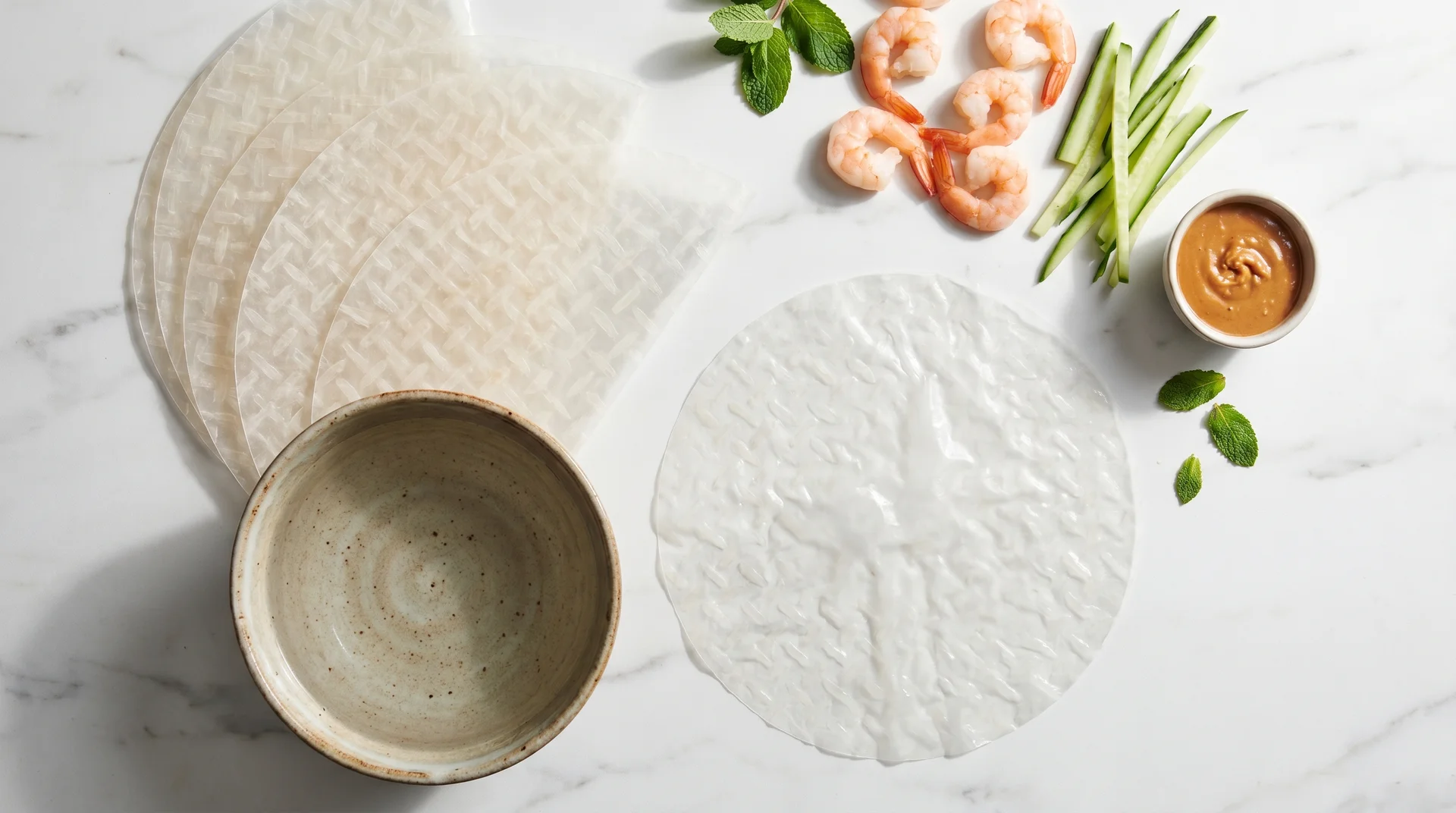
Rice paper, known in Vietnam as bánh tráng, has been a staple of Vietnamese cooking for centuries. It is the wrapper behind gỏi cuốn, the fresh spring roll that has become one of the most recognized dishes in Vietnamese cuisine worldwide.
You will find it in most Asian grocery stores today. Thin, neutral, and naturally gluten-free, it is used for everything from fresh rolls to grilled street snacks.
But how does it stack up nutritionally? Here is the full picture.
How Many Carbs Are in Rice Paper?
One standard rice paper sheet has 7 to 12 grams of total carbohydrates, depending on the sheet size and brand.
A small 16 cm sheet carries about 4 to 8 grams of carbs. A standard 22 cm sheet, the most common size, holds 7 to 12 grams. A large 28 cm sheet can push past 13-17 grams. Soaking the sheet in water does not change these numbers. Water adds zero carbs or calories.
Full Rice Paper Nutrition Facts
Values below are per one standard rice paper sheet, approximately 22 cm and 11g dry weight.
| Nutrient | Per Sheet (~11g) | % Daily Value |
|---|---|---|
| Calories | 35–50 kcal | 2–2.5% |
| Total Carbohydrates | 7–12g | 3–4% |
| Net Carbohydrates | 7–12g | — |
| Dietary Fiber | 0–0.5g | 0–2% |
| Total Sugar | 0–0.5g | — |
| Total Fat | 0–0.1g | 0% |
| Saturated Fat | 0g | 0% |
| Protein | 0.3–1g | 1% |
| Sodium | 10–50mg | 0.5–2% |
| Cholesterol | 0mg | 0% |
| Calcium | 2–5mg | 0.2% |
| Iron | 0–0.1mg | 0.5% |
| Potassium | 7–10mg | 0.1% |
| Vitamin D | 0 | 0% |
| Vitamin C | 0 | 0% |
Rice paper is almost entirely carbohydrates. Fat is zero. Protein is negligible. The filling is where all the real nutrition comes from.
On the glycemic index: A GI of 61-65 puts rice paper in the moderate range. It raises blood sugar faster than brown rice or whole-grain bread, but slower than white bread. Pairing each roll with protein, healthy fat, and vegetables significantly slows that effect.
On sodium: Values vary across brands. Shirakiku lists about 7.5mg per sheet. Banh Trang lists closer to 58mg. Always check your label.
Source:USDA FoodData Central
What Are Rice Paper Wrappers Made Of?
Most rice paper wrappers are made from just four ingredients: rice flour, tapioca starch, water, and salt.
- Rice flour is the base. It gives the sheet its neutral, starchy character.
- Tapioca starch improves flexibility. More tapioca means a chewier, more translucent sheet that holds together once filled.
- Water is added to the batter before the sheets are steamed and dried.
- Salt is added in small amounts for a faint seasoning.
The batter is steamed into thin layers, traditionally on cloth stretched over simmering water. Once cooked, the sheets are dried until stiff and brittle. A 5- to 10-second soak in warm water brings them back to soft, pliable, and ready to roll.
One thing to check on the label: rice flour should be listed first. Sheets made mostly from tapioca are very thin and tear easily, especially if you are just getting started with rolling.
How Rice Paper Compares to Other Wrappers
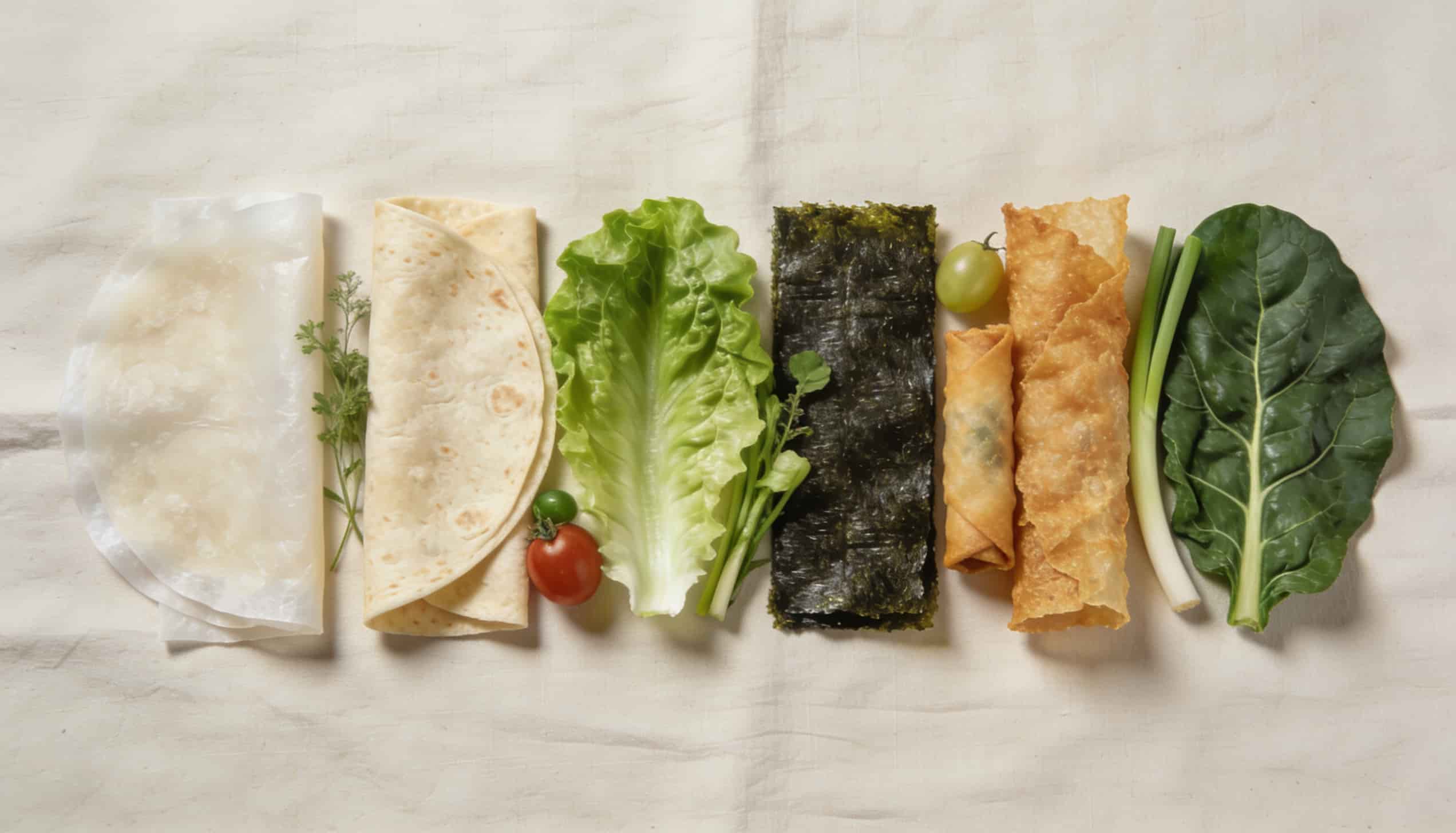
Rice paper sits in the middle of the wrapper spectrum. It has fewer carbs and calories than flour tortillas. It has far more carbs than lettuce or nori. Here is how all the common options compare.
| Wrapper | Serving | Calories | Total Carbs | Fiber | Fat | Gluten-Free |
|---|---|---|---|---|---|---|
| Rice paper (22 cm) | 1 sheet (~11g) | 35–50 | 7–12g | <0.5g | 0g | Yes |
| Flour tortilla (medium) | 1 piece (~45g) | 130–150 | 22–26g | 1g | 3g | No |
| Whole wheat tortilla | 1 piece (~45g) | 120–140 | 20–24g | 3g | 2.5g | No |
| Butter lettuce leaf | 1 large leaf (~15g) | 3 | <1g | 0.3g | 0g | Yes |
| Nori sheet | 1 sheet (~3g) | 10 | 1g | 0.3g | 0.1g | Yes |
| Fried spring roll wrapper | 1 wrapper (~25g) | 80–110 | 10–14g | 0.5g | 4–7g | No |
| Collard green leaf | 1 large leaf (~35g) | 12 | 1.5g | 1g | 0.1g | Yes |
Rice paper Vs. flour tortilla: Rice paper has roughly half the carbs and almost no fat. A clear step down in calories if that is your goal.
Rice paper Vs. lettuce wraps: Lettuce wins on carbs by a long stretch. Under 1 gram versus up to 12 grams. The trade-off is that lettuce tears more easily and holds less filling securely.
Rice paper Vs. Fried spring roll wrappers: Similar carb count, but fried wrappers absorb 4 to 7 grams of fat during cooking. Fresh rice paper rolls skip that fat entirely.
Rice paper Vs. Nori: Nori is the lowest-carb option here. About 1 gram per sheet. If you are strictly controlling carbs, nori is the better wrapper. Rice paper has a milder flavor and softer texture, which works better for fresh vegetable rolls.
Rice Paper Roll Calories by Filling
The wrapper alone tells you very little about a finished roll. What you put inside changes the calorie count, the carb count, and how full you actually feel. Here is how four common filling styles break down.
1. The Classic Vietnamese Roll
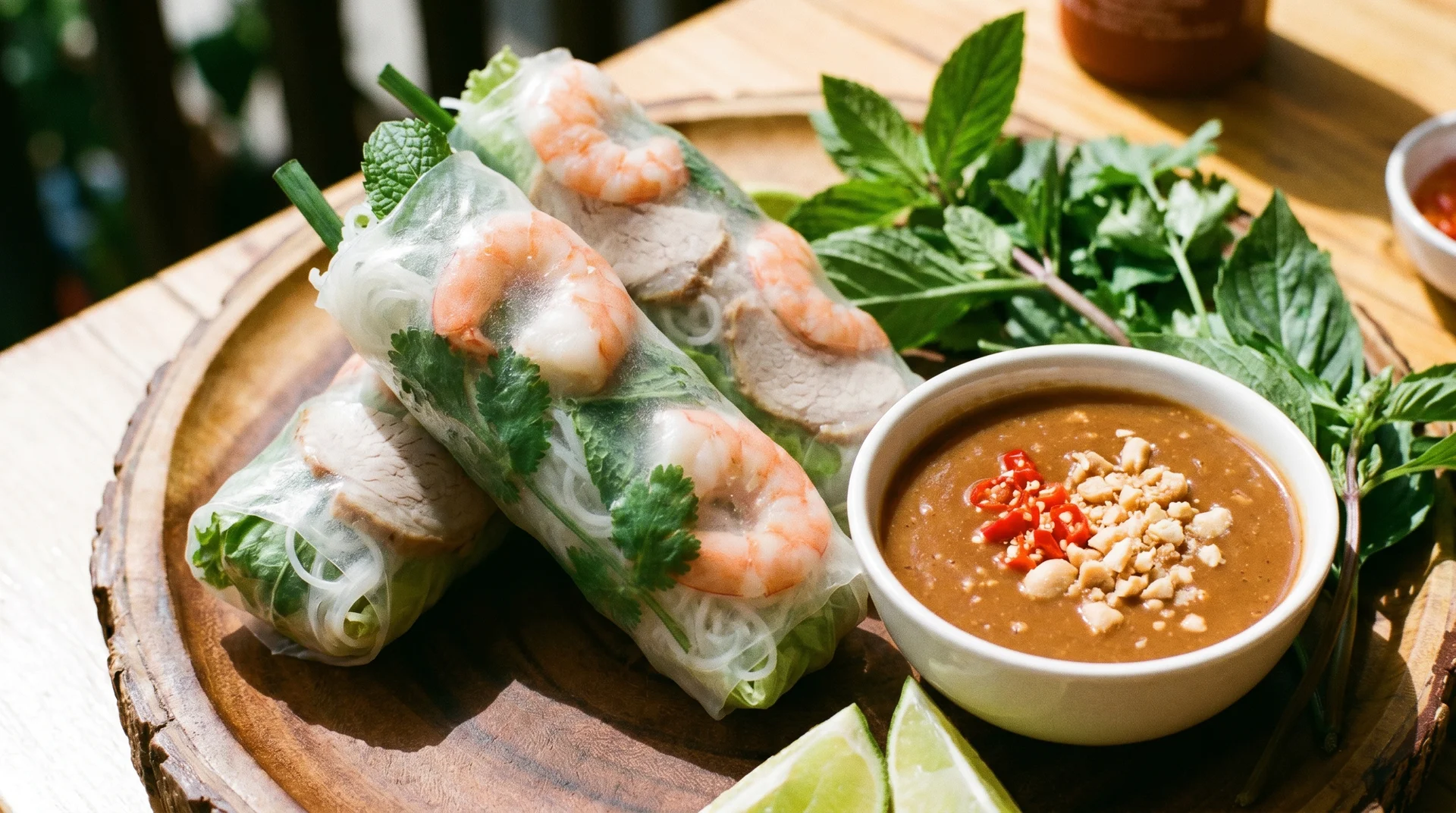
Shrimp or pork, rice vermicelli, lettuce, mint, cucumber, bean sprouts. This is the most popular style. It is balanced and satisfying, but the rice noodles add a second carb source on top of the wrapper.
| Component | Calories | Carbs |
|---|---|---|
| 1 rice paper sheet (22 cm) | ~40 | ~9g |
| 30g cooked rice vermicelli | ~45 | ~10g |
| 3–4 cooked shrimp | ~30 | 0g |
| Lettuce, herbs, vegetables | ~10 | ~2g |
| Total per roll | ~125 | ~21g |
2. The Protein-Forward Roll
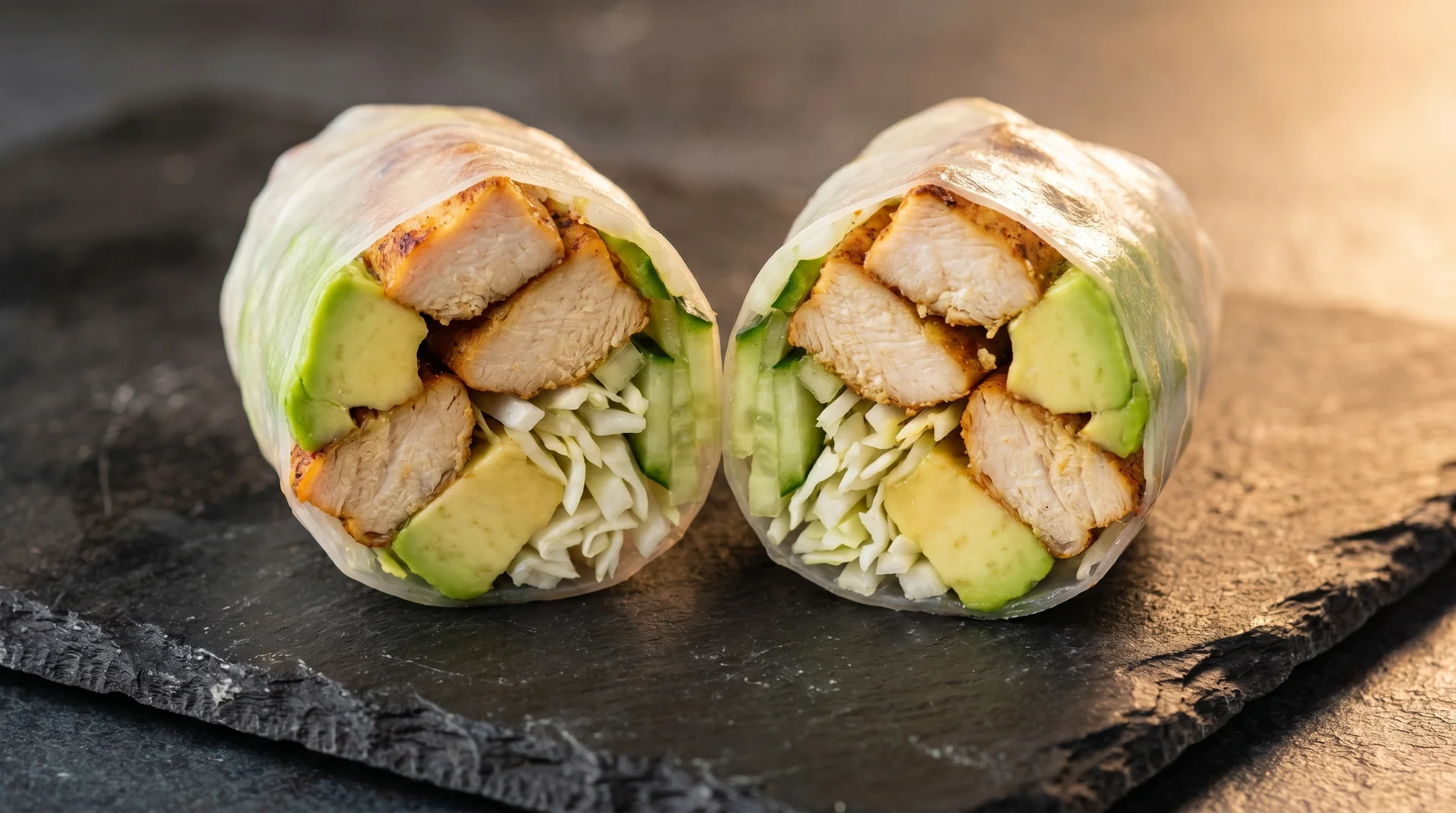
Grilled chicken or tofu, avocado, cucumber, shredded cabbage, no noodles. Skipping the noodles cuts the carb count noticeably and makes the roll feel more filling from protein and fat instead.
| Component | Calories | Carbs |
|---|---|---|
| 1 rice paper sheet (22 cm) | ~40 | ~9g |
| 60g grilled chicken | ~90 | 0g |
| ¼ avocado | ~60 | ~1g |
| Cucumber and cabbage | ~10 | ~2g |
| Total per roll | ~200 | ~12g |
3. The Veggie-Only Roll
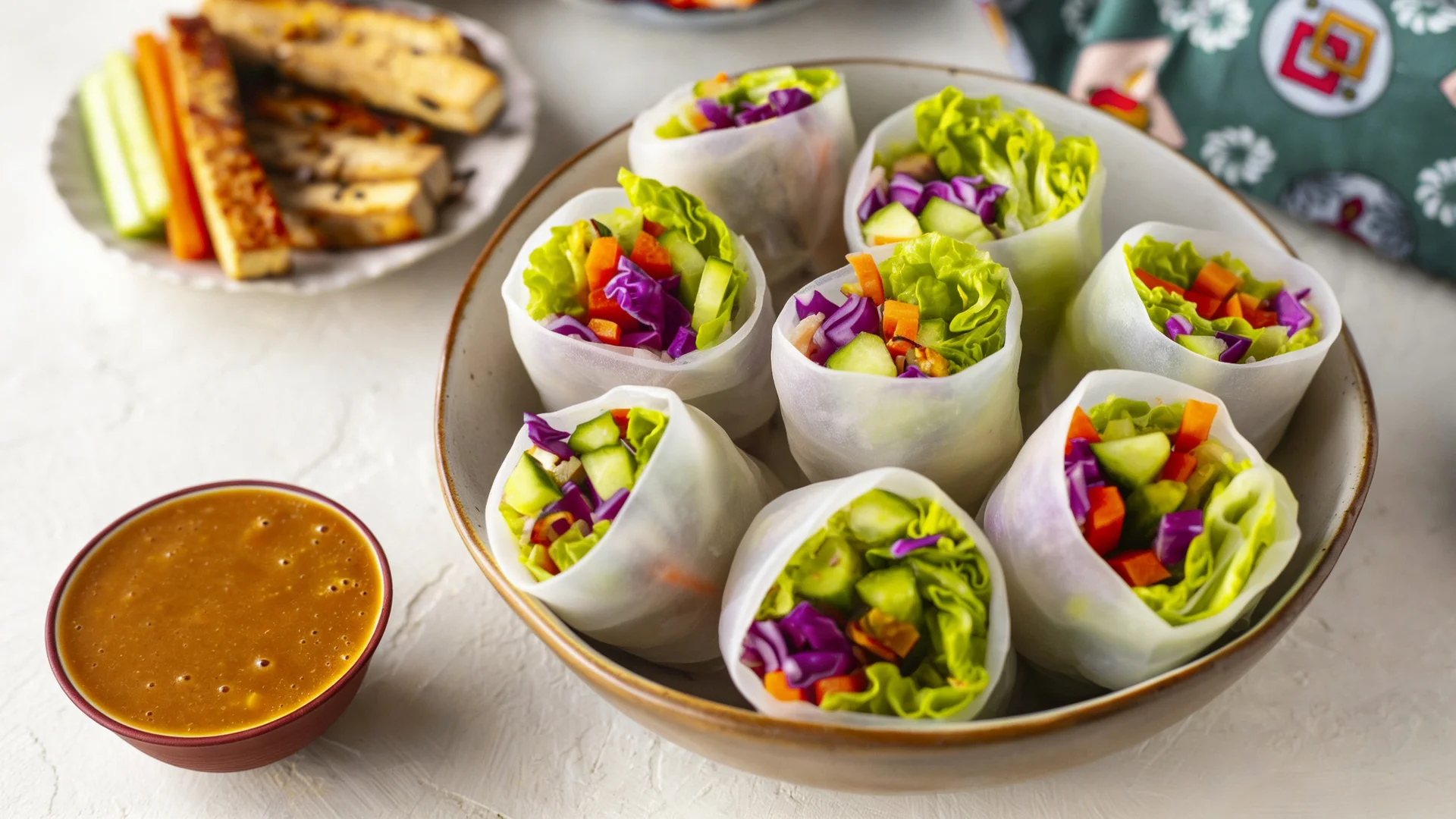
Carrots, cucumber, red pepper, lettuce, bean sprouts, avocado. Light on calories, but also light on protein. Good as a snack or side. Add edamame or a hard-boiled egg to the filling if you want it to hold you longer.
| Component | Calories | Carbs |
|---|---|---|
| 1 rice paper sheet (22 cm) | ~40 | ~9g |
| Mixed vegetables (~80g) | ~30 | ~5g |
| ¼ avocado | ~60 | ~1g |
| Total per roll | ~130 | ~15g |
4. The High-Carb Roll (What Adds Up Fast)
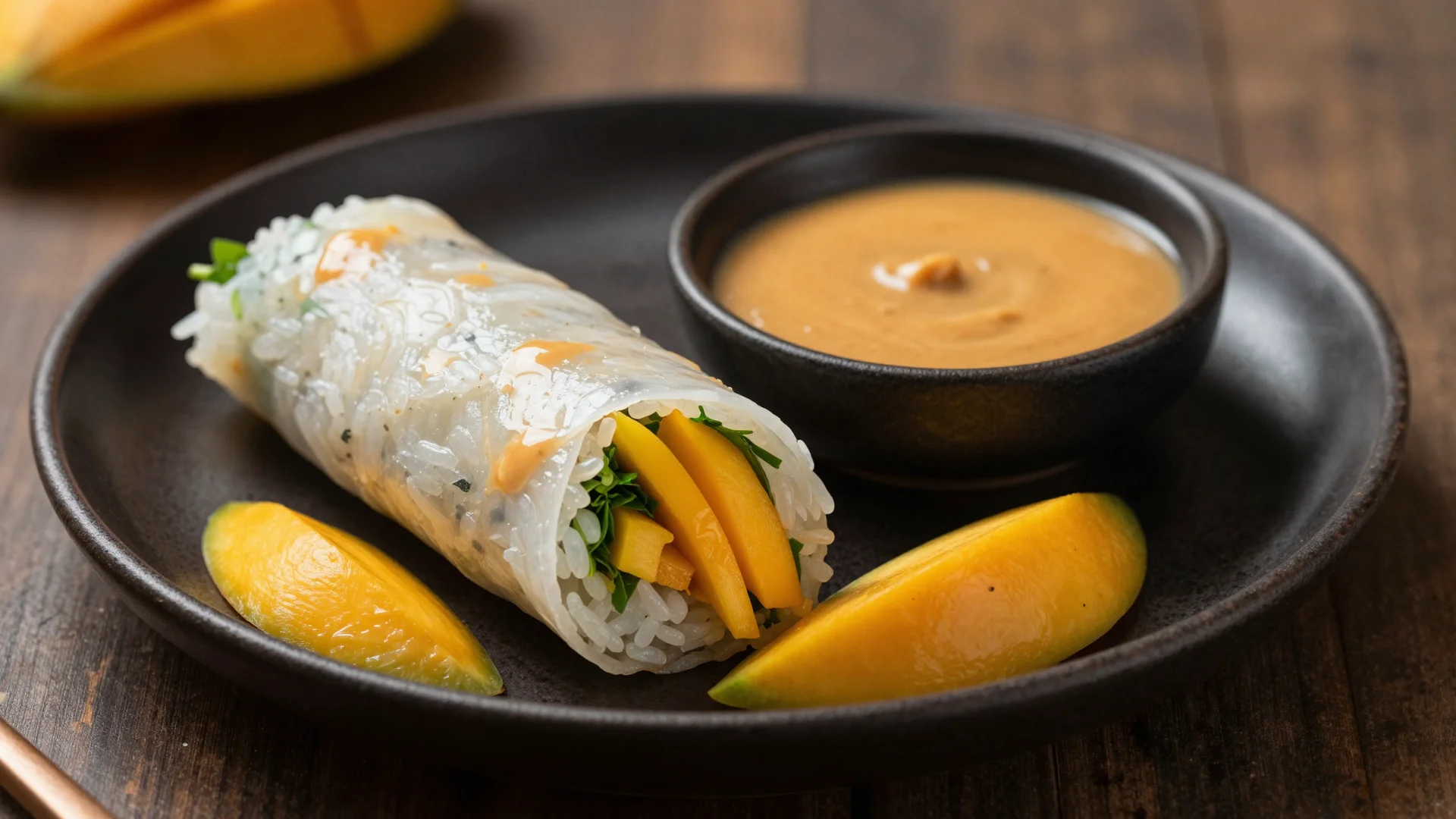
Rice vermicelli, mango slices, and peanut sauce on the side. Each of these is a reasonable ingredient on its own. Together, they stack carbs quickly, and most people do not realize how much the sauce contributes.
| Component | Calories | Carbs |
|---|---|---|
| 1 rice paper sheet (22 cm) | ~40 | ~9g |
| 40g rice vermicelli | ~60 | ~13g |
| ½ cup mango slices | ~50 | ~12g |
| 2 tbsp peanut sauce | ~100 | ~6g |
| Total per roll + sauce | ~250 | ~40g |
Two of these rolls with sauce brings you to roughly 500 calories and 80 grams of carbs. Not a problem if that fits your day, but very easy to undercount.
Is Rice Paper Good for Weight Loss?
Rice paper can fit a weight-loss plan. The wrapper itself is very low in fat and only has 35 to 50 calories per sheet. That is significantly lighter than bread, flour tortillas, or fried wrappers.
The challenge is that rice paper is mostly refined carbohydrates with very little fiber or protein. It does not keep you full on its own. Two to three rolls filled with lean protein and vegetables can make a genuinely satisfying, lower-calorie meal. Load them with rice noodles, sweet sauces, and mango, and the total climbs fast.
Treat the filling as the main source of nutrition. The wrapper just holds it together.
Is Rice Paper Gluten-Free?
Yes. Standard rice paper is naturally gluten-free. The ingredients, rice flour, tapioca starch, water, and salt, contain no wheat, barley, or rye.
If you have celiac disease (not just mild gluten sensitivity), check the label for a certified gluten-free seal. Some brands are produced in facilities that also process wheat. When ordering rice paper rolls at a restaurant, always confirm the sauce and preparation method, as some dipping sauces contain soy sauce made with wheat.
Does Rice Paper Fit a Low-Carb or Keto Diet?
Strict keto (under 20g net carbs per day): One standard sheet uses up 7-12 grams of your daily net carb budget before you add any filling. Two rolls can knock you out of ketosis if the rest of your day is not perfectly managed.
Moderate low-carb (50 to 100g carbs per day): One or two rolls with protein-heavy, noodle-free fillings can work. Keep the sauce simple.
Is rice paper keto-friendly? No. One sheet has 7-12 grams of net carbs. That is a large share of the 20 to 50 gram daily limit for strict keto. Better keto alternatives include large lettuce leaves, nori sheets, and collard green wraps, all of which carry under 2 grams of carbs per piece.
How to Track Rice Paper Macros Accurately
Weigh the dry sheet. Most apps and databases use dry weight. Weigh before soaking for the most accurate number.
Use your specific brand label. Generic database entries vary. Three Ladies lists about 9.5g carbs per standard sheet. Shirakiku lists about 4.25g per smaller sheet. The brand matters.
Log each sheet separately. Three rolls means three sheet entries.
Count your dipping sauce. Sweet chili sauce has about 9g of carbs per tablespoon. Hoisin has about 7g per tablespoon. Peanut sauce runs 5-8g per 2 tablespoons. A few generous spoonfuls can add 20 or more grams to your total without you noticing.
Good apps for tracking: Cronometer, MyFitnessPal, or search directly at fdc.nal.usda.gov.
Conclusion
Rice paper is a low-fat, naturally gluten-free wrapper. But the carbs in rice paper are real, and they add up faster than most people expect, especially once noodles and sauce enter the picture.
Two rolls filled with lean protein and fresh vegetables can be a light, balanced meal. Three rolls loaded with vermicelli and sweet chili sauce can add up to 80 grams of carbs before you blink.
Now that you have the full picture, the choice is yours. Drop your favorite filling combination in the comments.