
Your neck was not built to carry the weight of a tilted head for hours every day. Yet that is exactly what happens each time you look down at a phone, laptop, or tablet for long periods.
The pain that follows has a name: tech neck. It often starts with a stiff neck, shoulder tension, or a dull ache after screen time. Over time, these symptoms can worsen and become harder to manage.
This article covers what tech neck is, its causes, and every symptom you need to know about.
What Is Tech Neck?
Tech neck is a condition in which the muscles, joints, and discs in the cervical spine are strained from holding the head in a forward or downward position for long periods, most commonly while using phones, tablets, computers, or other screens.
The human head weighs roughly 10 to 12 pounds in a neutral position, but when it tilts forward even 15 degrees, the load on the neck increases to about 27 pounds. At 60 degrees of forward tilt, that pressure reaches up to 60 pounds.
That added strain, repeated daily, is what leads to the neck pain, stiffness, and other physical symptoms that define this condition.
What Causes Tech Neck?
Screen use alone does not cause tech neck. The way your head and neck are positioned while using that screen is what creates the strain. Here are the main causes:
- Forward head posture while using screens: When your ears shift forward past your shoulders, the cervical spine takes on far more load than it was built to handle. This is the single most common driver of tech neck.
- Looking down at a phone held below eye level: Holding your phone in your lap or at chest height forces the neck to bend at a steep angle. Over hours and days, this repeated position tightens the muscles at the back of the neck.
- Slouching at a desk or laptop: Slouching causes the upper back to round and the head to push forward. The neck then works overtime to hold the head up, leading to muscle fatigue and joint stress.
- No rest breaks during long screen sessions: The neck muscles need recovery time. Sitting in one position for hours without breaks means those muscles stay contracted and under load for too long.
- Weak neck and upper back muscles: When the muscles that support proper posture are weak, the body relies on passive structures, such as joints and ligaments, to hold the head up. This speeds up the strain.
- Poor workstation setup: A monitor that sits too low, a chair without proper support, or a laptop used flat on a table all put the neck in a poor position for hours at a time.
Tech Neck Symptoms You Should Know
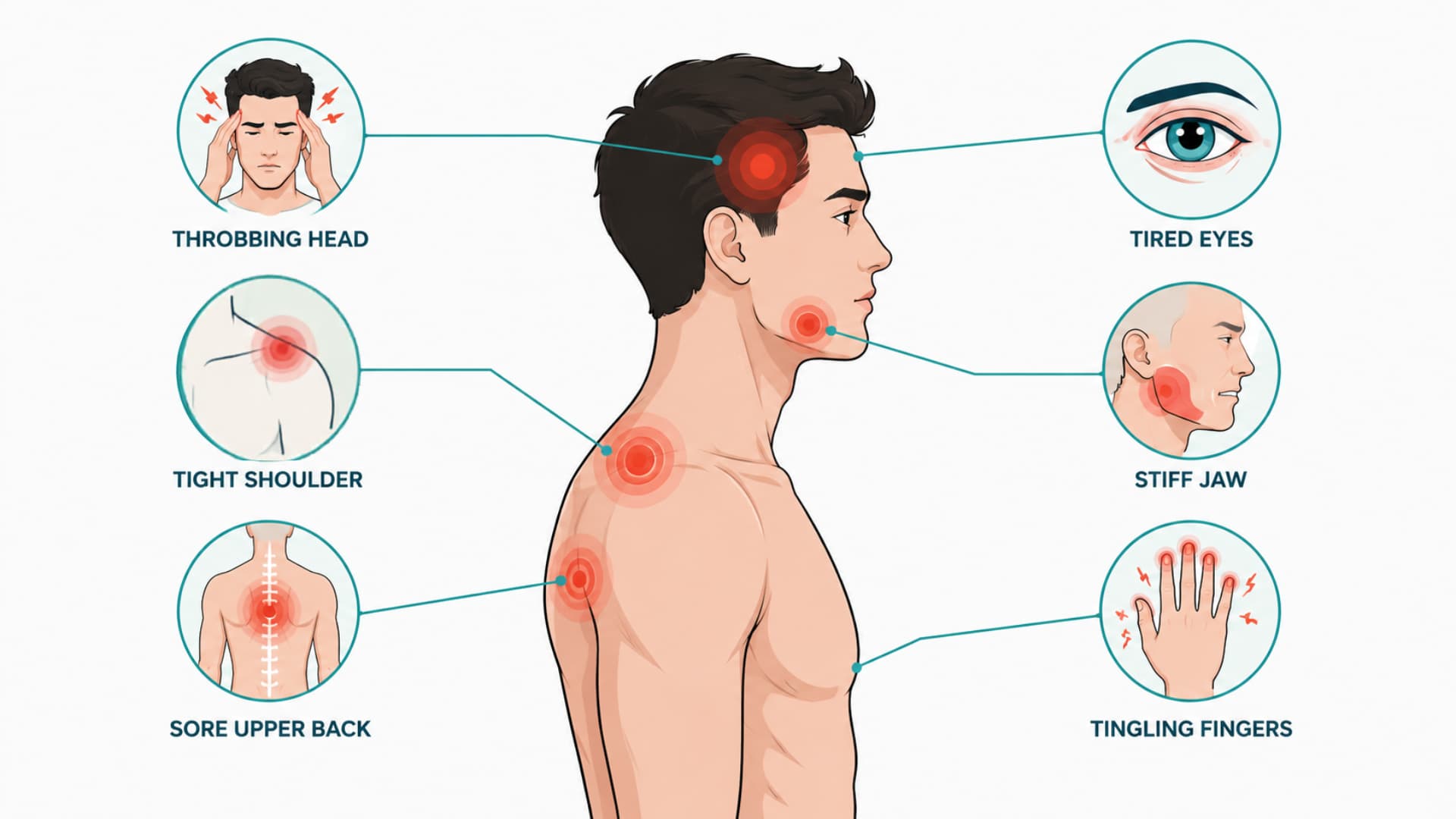
Tech neck does not announce itself loudly at first. The symptoms tend to build gradually, and most people attribute them to stress or tiredness before they consider their posture. Below are the most common tech neck symptoms to watch for.
1. Neck Pain and Stiffness
Neck pain is the most reported symptom of tech neck. It usually appears at the base of the neck or in the mid-cervical region and can feel like a dull ache, a tight pulling sensation, or a burning soreness.
Stiffness often shows up first thing in the morning or after a long stretch of screen time. Turning the head from side to side may feel limited, uncomfortable, or both.
2. Shoulder and Upper Back Pain
The trapezius muscles, which run from the base of the skull down to the mid-back and across both shoulders, carry much of the tension that tech neck creates.
When the neck is strained, that tension does not stay in one place. It spreads into the shoulders and upper back, causing a heavy, tight feeling across the top of the shoulders and tender knots between the shoulder blades.
3. Headaches at the Base of the Skull
Headaches are one of the less obvious but very common tech neck symptoms. These are called cervicogenic headaches because they originate from the cervical spine and surrounding muscles.
They typically start at the base of the skull and move forward toward the forehead, temples, or behind the eyes. Many people mistake them for tension headaches or migraines. A clear pattern to watch for: the headaches tend to get worse the longer the screen session lasts.
4. Numbness or Tingling in the Arms and Hands
When the cervical spine is compressed, or the neck nerves are irritated by long-term forward-head posture, the signals can travel down the arm.
This produces a pins-and-needles feeling, numbness in the fingers, or a weak grip in one or both hands. This is a more serious tech neck symptom and needs medical attention. It can indicate nerve compression that goes beyond a simple muscle strain.
5. Eye Strain and Jaw Pain
The muscles of the neck connect closely to the muscles of the face, jaw, and the area around the eyes. When the neck is under constant strain, those surrounding areas feel it too.
Eye strain from long screen sessions and neck tension often appear together. Some people also notice jaw tightness or a clicking jaw, which can be linked to the muscle tension running up from the neck into the head.
6. Fatigue in the Neck and Shoulder Muscles
When the neck muscles have to work harder than normal to hold up a tilted head all day, they tire out. This shows up as a heavy, worn-out sensation in the neck and shoulders, often arriving in the late afternoon.
Individuals who sit at desks all day experience this kind of fatigue regularly without realizing that their posture during screen time is the reason.
Early Warning Signs vs. Serious Symptoms
Not every neck ache means something is wrong at a deeper level. Knowing which symptoms are early signals and which ones need medical care can make a real difference in how quickly you get the right help.
The table below breaks down what to look for and how seriously to take each sign.
| Symptom | Early Warning Sign | Serious — See a Doctor |
|---|---|---|
| Neck pain after screen use | Mild ache that goes away with rest | Pain that lasts more than 2 to 3 weeks |
| Shoulder tightness | Soreness that improves with stretching | Persistent tightness that does not ease |
| Headaches | Occasional, mild, linked to long screen sessions | Frequent or severe headaches that do not improve |
| Arm sensation | None or very mild occasional discomfort | Numbness, tingling, or weakness in arms or hands |
| Morning stiffness | Mild, clears up within an hour | Stiffness that stays throughout the day |
| Sleep disruption | Occasional discomfort at night | Pain severe enough to regularly interrupt sleep |
| Neck movement | Slight tightness when turning the head | Noticeable loss of range of motion |
How to Check If You Have Tech Neck
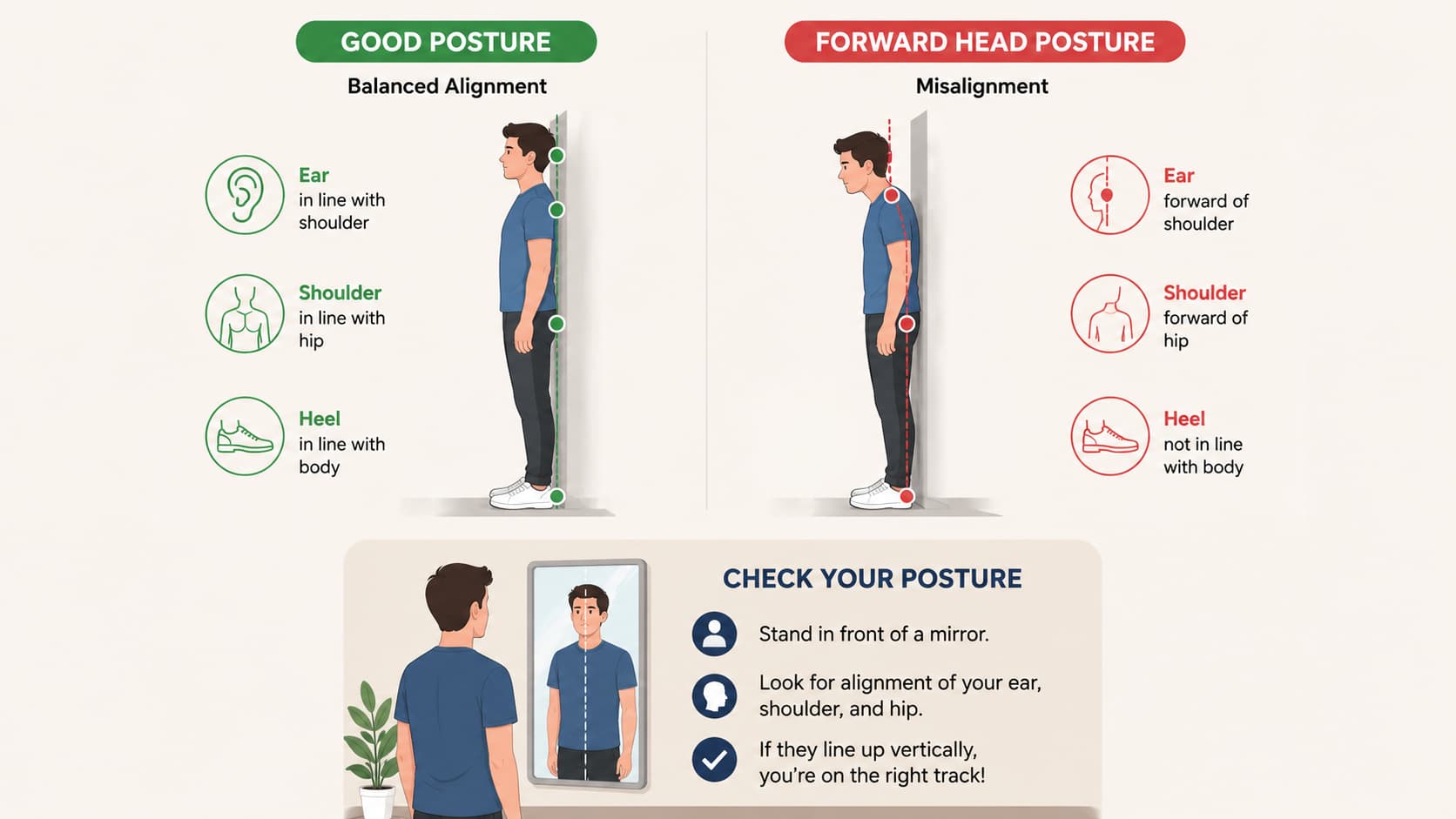
A quick and easy way to check at home is the wall test. Stand with your back flat against a wall and let your heels, shoulder blades, and the back of your head all make contact with the wall at the same time.
If your head does not reach the wall naturally without effort, that is a clear sign of forward head posture.
Adding a few targeted tech neck stretches to your daily routine at this point can help loosen the tight cervical muscles before the strain builds further.
You can also check in a mirror from the side: your ear should line up directly above your shoulder in a neutral standing position.
If your ear sits noticeably in front of your shoulder, your head is being carried too far forward. Pair these checks with a simple pattern observation: if your neck pain consistently gets worse during or after screen use and improves when you step away and rest, tech neck is a very likely cause.
Conclusion
Tech neck symptoms are the body’s way of saying the neck is under too much strain for too long. The neck pain, stiffness, shoulder tightness, and headaches are not random.
They are direct signals from an overloaded cervical spine. Catching these signs early gives you the best chance to stop them from getting worse.
The changes that help most, like adjusting your posture, setting up your screen at the right height, and taking regular breaks, are not complicated.
By recognizing the signs early and making simple adjustments to daily habits, you can protect your neck, improve comfort, and prevent symptoms from becoming a long-term problem.
Frequently Asked Questions
What is the fastest way to get rid of tech neck?
Rest, gentle neck stretches, and correcting your screen position give the fastest relief. Applying heat and taking frequent movement breaks can also help ease muscle tension more quickly.
How long does it take for tech neck to go away?
Mild cases improve in a few days. Persistent cases can take 4 to 6 weeks with consistent care. Recovery is usually faster when posture habits are corrected early.
How to test for tech neck?
Stand with your back against a wall. If your head does not naturally touch it, you likely have forward head posture. You may also notice your chin jutting forward when viewed from the side.
How painful is tech neck?
It ranges from a mild dull ache to sharp, burning pain that spreads into the shoulders and head. The severity often depends on how long the condition has been present.
Which symptom of tech neck goes unnoticed?
Jaw tightness and arm tingling are the most overlooked. Most people never connect them to neck posture. Mild dizziness and upper back fatigue can also be subtle warning signs.