
Most people think of communication as just words. But in yogic tradition, how you speak, what you hold back, and even the tightness in your neck all connect to one energy center: the throat chakra.
This fifth chakra sits at the base of the throat and governs your ability to express yourself clearly and honestly. When it flows freely, words come with ease. When it closes down, silence takes over in the worst moments.
This post covers what the throat chakra is, what its color signals, the symptoms of blockage to watch for, and practical ways to bring it back into balance.
What Is the Throat Chakra?
The throat chakra, known in Sanskrit as Vishuddha (meaning “pure” or “purification”), is the fifth of seven chakras in the body.
It sits at the center of the throat and serves as the energy center for communication, self-expression, and truth.
When this chakra is open and balanced, you speak with clarity, listen without defensiveness, and share your honest thoughts without fear holding you back.
Throat Chakra Color: What Blue Means and Why It Matters
The throat chakra color is a bright sky blue, often described as turquoise or cerulean. Here is what that color represents:
- Sky blue signals clarity, calm, and honest speech.
- A vivid, clear blue points to an open, balanced throat chakra.
- A dull or muddy blue may suggest a blockage or long-held suppression.
- Blue is linked to trust and open communication. Research from the University of Rochester connects blue hues to feelings of calm and openness in human psychology.
- This is why blue crystals, blue foods, and wearing blue tones are often used in throat chakra healing.
Throat Chakra vs. Other Chakras: Key Differences

Each of the seven chakras serves a distinct purpose and covers a different part of your physical and emotional life. The throat chakra stands out because it sits between the heart (feeling) and the third eye (thinking), turning inner experience into outer expression.
| Chakra | Sanskrit Name | Location | Color | Main Focus |
|---|---|---|---|---|
| Root | Muladhara | Base of spine | Red | Safety, survival |
| Sacral | Svadhisthana | Below navel | Orange | Creativity, emotion |
| Solar Plexus | Manipura | Above navel | Yellow | Confidence, personal power |
| Heart | Anahata | Center of chest | Green | Love, connection |
| Throat | Vishuddha | Center of throat | Blue | Communication, truth |
| Third Eye | Ajna | Forehead | Indigo | Intuition, inner clarity |
| Crown | Sahasrara | Top of head | Violet/White | Awareness, higher connection |
Where Is the Throat Chakra Located in the Body?
The throat chakra sits at the center of the neck, at the level of the throat. It covers the throat, neck, jaw, mouth, tongue, ears, and thyroid gland.
Because of this physical reach, an imbalanced throat chakra can show up as tension or discomfort in these very same areas, from jaw tightness and neck stiffness to a recurring sore throat or thyroid irregularities.
What Does the Throat Chakra Control?
The throat chakra touches far more of your daily life than most people expect. It shapes how you speak, create, listen, and set limits with others.
- Speech and communication: It governs how clearly and confidently you put your thoughts into words.
- Active listening: A balanced throat chakra makes you a better listener. You hear what is actually being said, not just what you expect to hear.
- Creative expression: Writing, singing, painting, and other forms of creative output all connect to this energy center.
- Personal limits: The throat chakra supports your ability to say no firmly and without guilt.
- Honest self-expression: It shapes whether you say your real truth or what you think others want to hear.
- The thyroid gland: The thyroid sits within the throat chakra’s physical area. The Cleveland Clinic notes that the thyroid directly regulates metabolism and multiple body functions, which is why thyroid health and throat chakra balance are often discussed together.
- Ears and hearing: The ability to truly process what others say, not just hear sound, also falls under this chakra’s territory.
Throat Chakra Blockage Symptoms

Throat chakra blockage symptoms can appear in your body, your emotions, and your behavior. Some people notice the physical signs first. Others feel it in their relationships long before their throat gives them trouble.
Physical Symptoms
- Frequent sore throats with no clear medical cause
- A hoarse, weak, or strained voice
- Jaw clenching or TMJ discomfort
- Neck and shoulder stiffness
- Recurring coughs or constant throat clearing
- Thyroid imbalances (overactive or underactive)
- Ear ringing or sensitivity to sound
Emotional and Behavioral Symptoms
- Fear of speaking in groups or in public
- Going silent when you have something real to say
- Difficulty expressing feelings to people you are close to
- Feeling misunderstood again and again
- Struggling to hold personal limits or say no
- Keeping things to yourself even when openness would help
Signs of an Overactive Throat Chakra
- Interrupting others or talking over them regularly
- Speaking with harshness or bluntness that pushes people away
- Sharing private information about others
- Using words to control or wear others down
Note: Physical symptoms that do not clear up need a medical professional. Chakra work supports overall wellbeing but does not replace proper healthcare.
What Causes a Throat Chakra Blockage?
A blocked throat chakra rarely appears out of nowhere. It tends to build slowly through repeated experiences where speaking felt dangerous, unwelcome, or pointless.
- Childhood criticism: Being told your voice was too much, too loud, or simply wrong.
- Emotional suppression: Holding feelings back for years to keep the peace with others.
- Past trauma: Situations where speaking up brought punishment, shame, or rejection.
- Chronic stress: Ongoing tension in the neck and jaw often mirrors long-held emotional tightness.
- Unhealthy relationships: Spaces where honest communication was unsafe or consistently dismissed.
- Fear of saying the wrong thing: A perfectionism around words so strong that silence feels safer.
How to Open and Balance the Throat Chakra
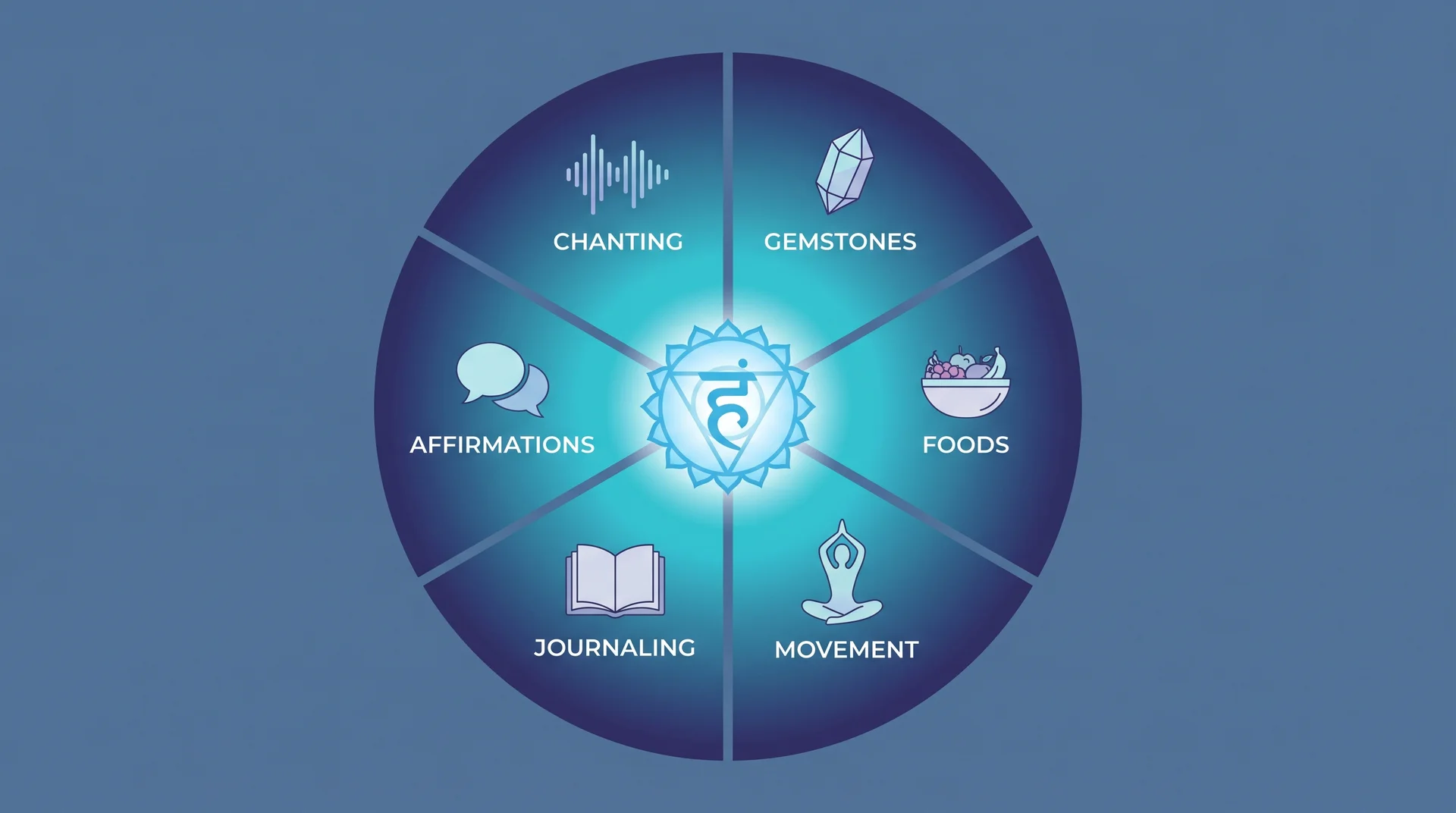
Working on the throat chakra does not need to be complicated. Small, repeated practices tend to work better than one big effort. Start with what feels natural and build from there.
1. Sound and Chanting (Seed Mantra: HAM)
The seed mantra for the throat chakra is HAM, pronounced like “hum.” Sitting quietly and repeating this sound directs attention to the throat area and helps move stuck energy.
Even humming to a song you love can serve a similar purpose. Try chanting HAM for five to ten minutes during a morning meditation and pay attention to how your throat and jaw feel afterward.
2. Crystals for the Throat Chakra
Blue crystals are the most commonly used stones for this energy center. Aquamarine supports calm, clear speech. Blue lace agate is gentle and helps ease anxiety around communication.
Lapis lazuli links to truth and honest expression. Sodalite supports self-confidence in speaking. Hold these during meditation, wear them, or keep them at your desk during hard conversations.
3. Foods That Support the Throat Chakra
Blue and purple foods connect to the throat chakra’s color energy. Blueberries, blackberries, purple grapes, and figs are good options to add to your meals.
Warm herbal teas, especially chamomile and peppermint, soothe the throat directly. Honey and lemon support the physical throat. Soups and warm broths are also comforting and nourishing for this area of the body.
4. Yoga Poses That Help
Poses that open or stretch the neck and throat work best for this chakra. Fish Pose (Matsyasana) stretches the front of the throat and chest.
Camel Pose (Ustrasana) opens the throat and heart area at the same time. Shoulder Stand (Sarvangasana) directly stimulates the thyroid region.
Lion’s Breath (Simhasana) releases stored tension in the jaw and throat through a forceful exhale with the mouth open, eyes wide, and tongue extended.
5. Journaling and Speaking Practices
Free writing for five to ten minutes each morning, without stopping to edit or correct, is one of the most direct ways to clear this chakra. The goal is to let words come without judgment.
Speaking affirmations aloud trains your body and mind to feel safe using your voice. Regular, honest conversation with a trusted person, even in small doses, builds the same kind of openness over time.
Throat Chakra Affirmations
Affirmations work best when spoken out loud with intention rather than repeated silently in your head. Saying them before a hard conversation, in the morning, or whenever you feel yourself going quiet can help reset your relationship with your own voice.
- “I speak my truth clearly and with care.”
- “My voice is worth hearing.”
- “I communicate with confidence and ease.”
- “I listen as openly as I speak.”
- “I say what I mean, and I mean what I say.”
- “I release the habit of holding my words back.”
- “Honest expression comes naturally to me.”
- “I am safe to speak.”
- “I share my thoughts without fear.”
- “My words carry kindness and truth.”
Final Thoughts
The throat chakra does more than manage your words. It holds your confidence, your truth, and your ability to show up honestly in every conversation.
When it runs well, you speak without second-guessing yourself. When it slows down, you feel it in your body and your relationships.
The satisfactory news is that small, consistent daily practices can make a real difference over time. Chanting, journaling, blue crystals, and even the right foods all support the balance of the throat chakra.
Start with one practice. Give it time. Your voice matters, and so does the energy behind it. Let it flow freely.
Frequently Asked Questions
What Trauma Blocks the Throat Chakra?
Being silenced, shamed for speaking, or criticized repeatedly, especially in childhood or close relationships, is most commonly linked to throat chakra blockages. Any experience where using your voice felt unsafe can leave a lasting effect on this energy center.
What Emotions Are Stored in The Throat Chakra?
Fear of judgment, unspoken grief, suppressed anger, and needs that were never voiced tend to gather here. When these emotions stay held in for long periods, the throat chakra begins to close.
How Do I Tell if My Throat Chakra Is Blocked?
Look for a fear of speaking your truth, a weak or tense voice, frequent sore throats, jaw tightness, and a recurring pattern of staying silent when honesty is needed. These are the most telling signs.
Which Chakra Holds Trauma?
The root chakra (Muladhara) is most commonly associated with stored trauma because it governs survival and safety. The throat chakra, more specifically, holds the trauma of suppressed or silenced expression.
Which Chakra Is Blocked by Grief?
Grief most often settles in the heart chakra (Anahata), which governs love, loss, and emotional bonds. When grief goes unspoken for too long, it can also affect the throat chakra.