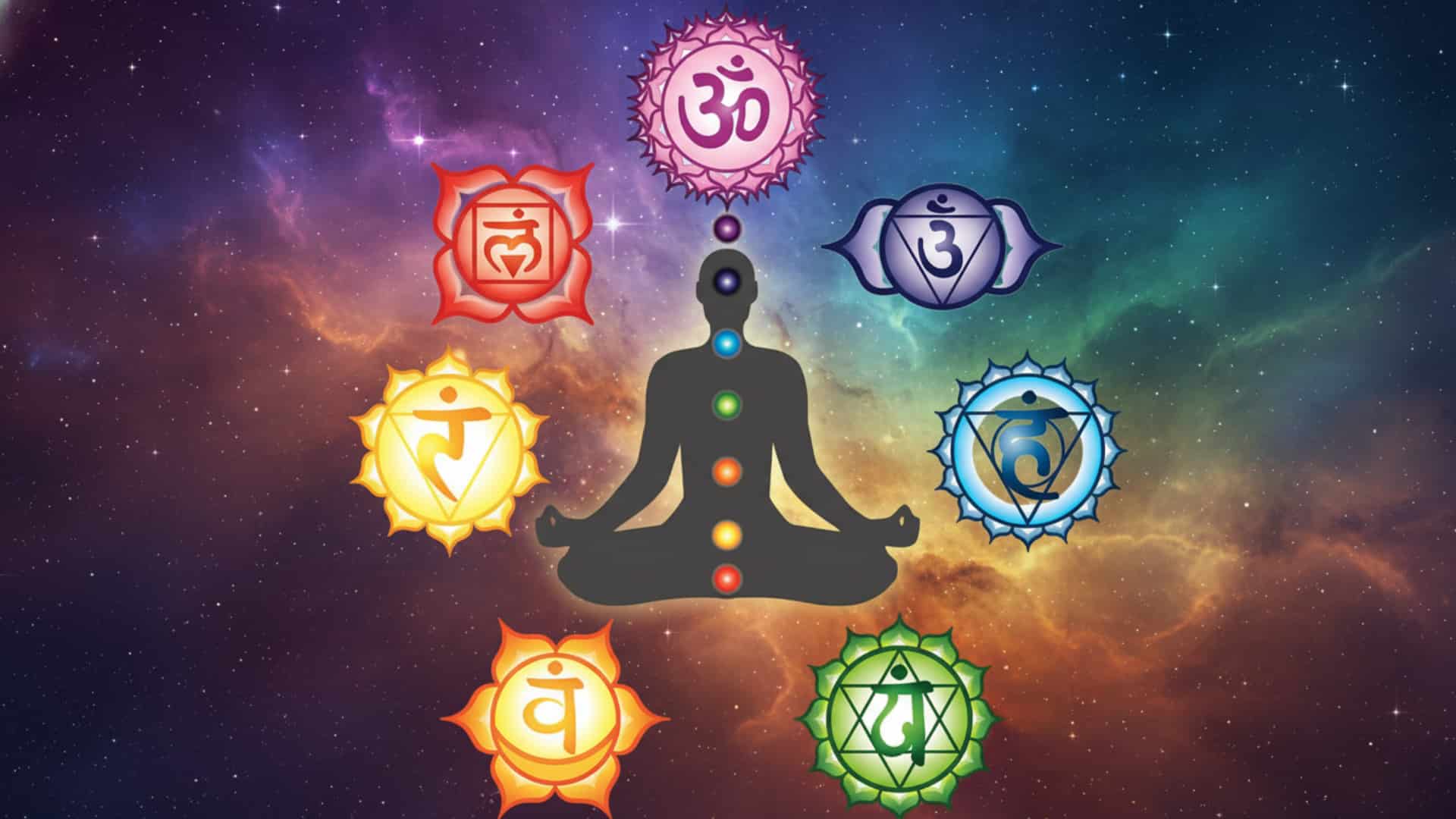
You have seen them on yoga mats, tattoos, and crystal sets. But do you know what chakra symbols actually say? Each shape, color, and petal in these symbols was chosen with intention, not for decoration.
The root chakra’s four petals mean something specific. So does the crown chakra’s thousand.
This post walks through all seven chakra symbols, explains the geometry, and the significance behind each one, helping you understand what these ancient designs truly convey.
What Are Chakra Symbols?
Chakra symbols are circular diagrams used in Hindu and yogic traditions to represent the seven major energy centers in the human body.
The word “chakra” comes from Sanskrit and means “wheel” or “disc,” referring to the spinning nature of these energy points.
Each symbol includes a lotus flower, geometric shapes, and Sanskrit letters, all carrying specific meanings about the energy that the chakra holds.
They are used in meditation, yoga, and healing practices to help focus the mind on each center.
The Sacred Geometry Behind Chakra Symbols
These symbols are not random art. They come from a system of spiritual geometry rooted in Tantric and yogic philosophy.
Key elements you will find in most chakra symbols:
- Lotus petals: The petal count is not decorative. Each number corresponds to the number of energy channels (nadis) that converge at that chakra point. More petals mean more channels and more complex energy activity.
- The circle: Represents wholeness, cycles, and the connection between all living things.
- Squares: Linked to the earth element. They represent structure, stability, and the physical world.
- Upward triangle: Represents energy rising toward spiritual awareness.
- Downward triangle: Draws energy toward the earth or the body. In some chakras, it holds a specific element.
- Sanskrit syllables (bija mantras): Each petal often carries a seed sound connected to a specific energy vibration at that center.
Two terms worth knowing before going further:
A mandala (Sanskrit for “circle”) is a spiritual diagram used to represent the universe or a deity’s energy field.
A yantra (Sanskrit for “instrument for holding”) is a visual tool used during meditation to still the mind. Every chakra symbol functions as both a mandala of that energy center’s cosmic place and a yantra you can focus on during practice.
The 7 Chakra Symbols Explained
Each of the seven chakra symbols tells a specific story. The shapes are not interchangeable, the petal counts are not estimates, and the colors are not chosen for visual appeal. Here is what each symbol includes and what it means.
Chakra Symbols Quick Reference Chart
| Chakra | Sanskrit Name | Color | Petal Count | Element | Governs |
|---|---|---|---|---|---|
| Root | Muladhara | Red | 4 | Earth | Safety, grounding |
| Sacral | Svadhisthana | Orange | 6 | Water | Creativity, emotion |
| Solar Plexus | Manipura | Yellow | 10 | Fire | Confidence, will |
| Heart | Anahata | Green | 12 | Air | Love, compassion |
| Throat | Vishuddha | Blue | 16 | Space | Communication, truth |
| Third Eye | Ajna | Indigo | 2 | Light | Intuition, insight |
| Crown | Sahasrara | Violet or White | 1,000 (infinite) | Consciousness | Spiritual connection |
1. Root Chakra Symbol: Muladhara
Color: Red
Location: Base of the spine
Sanskrit meaning: “Mula” means root. “Adhara” means support or base.
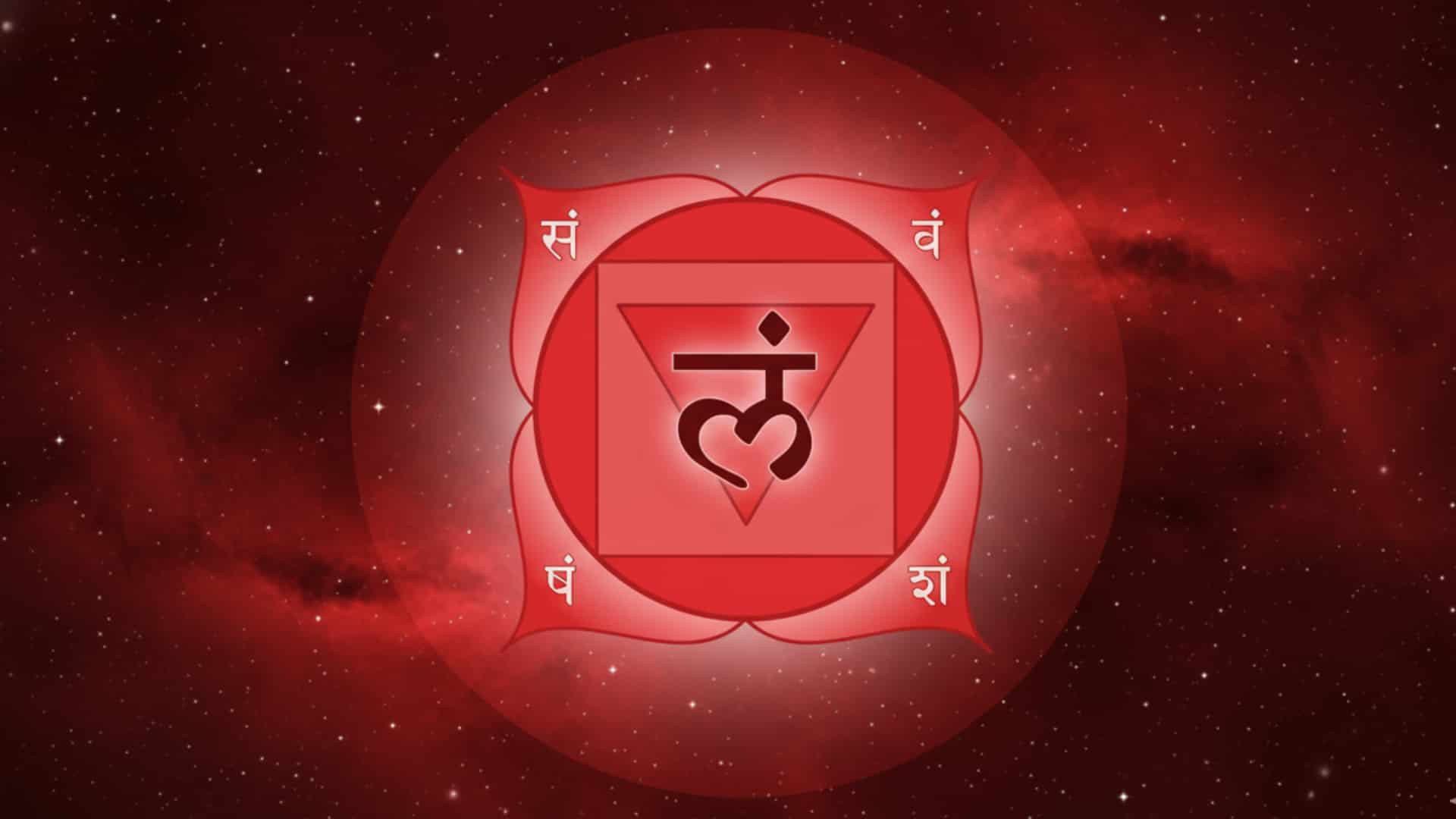
The Muladhara symbol is a four-petaled lotus with a square at the center. Inside the square sits a downward-pointing triangle, and inside that, a small Shiva lingam shape.
The four petals represent four mental states tied to this energy center: mind, intellect, consciousness, and ego. The square reflects the earth element, pointing to stability and physical structure. The downward-pointing triangle connects energy to the earth, grounding the body to the physical world.
This chakra governs safety, survival, and your most basic sense of belonging in your body and in the world.
2. Sacral Chakra Symbol: Svadhisthana
Color: Orange
Location: Just below the navel
Sanskrit meaning: “Sva” means self. “Adhisthana” means dwelling place, the seat of the self.
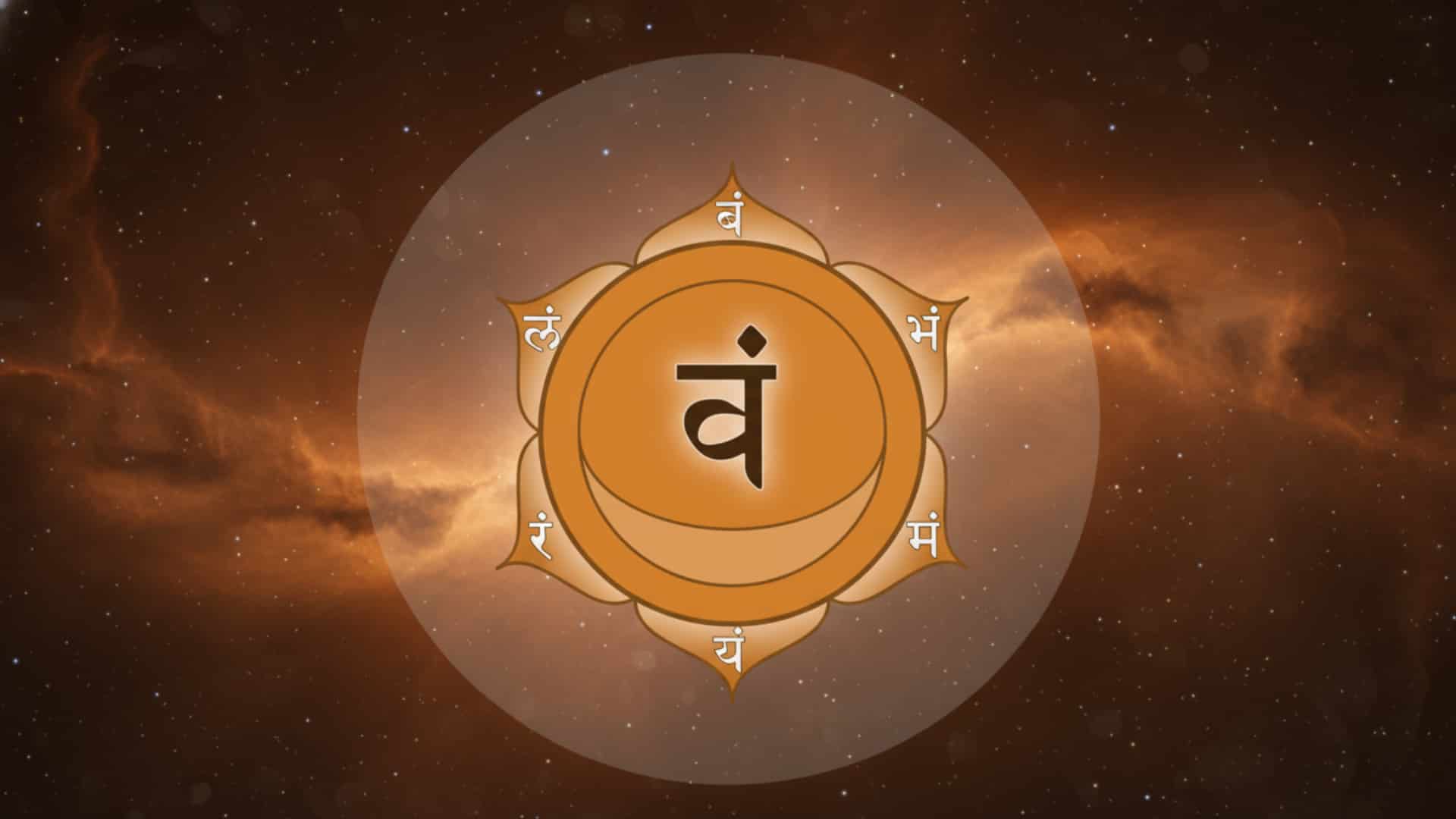
The Svadhisthana symbol is a six-petaled lotus with a circle inside it. Within that circle sits a crescent moon. The six petals represent six qualities this chakra works to move beyond: anger, hatred, jealousy, cruelty, desire, and pride.
The circle represents water, the element of this chakra. Water is fluid, emotional, and shaped by what contains it. The crescent moon connects to lunar cycles and the natural rhythm of emotions.
This chakra governs creativity, sexuality, emotional expression, and the capacity to feel pleasure without guilt.
3. Solar Plexus Chakra Symbol: Manipura
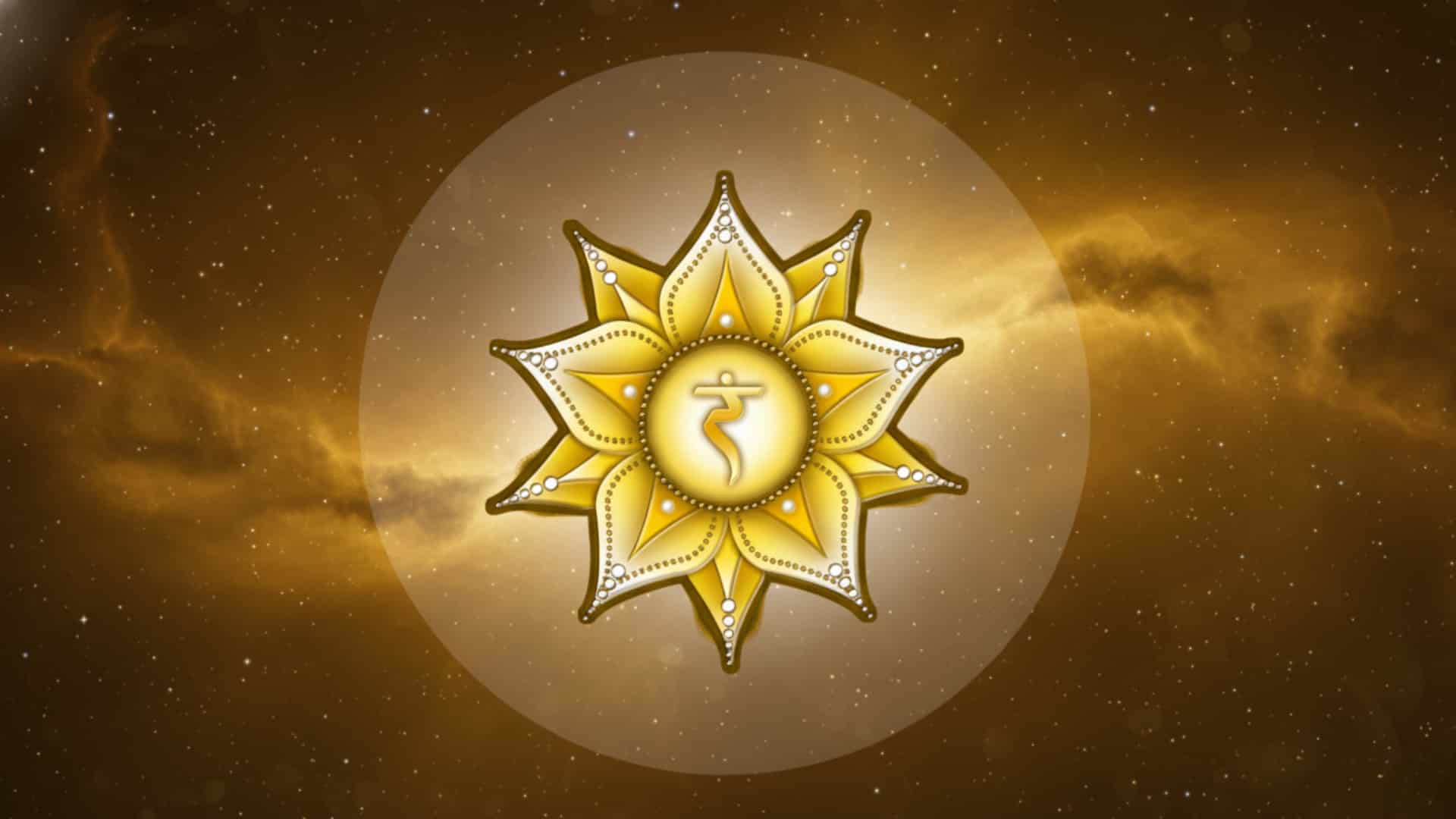
Color: Yellow
Location: Upper abdomen, around the navel area
Sanskrit meaning: “Mani” means jewel. “Pura” means city, city of jewels.
The Manipura symbol is a ten-petaled lotus with an inverted triangle at its center. The ten petals represent ten pranas, specific life forces that govern different functions in the body.
The inverted triangle represents the fire element, the dominant element of this chakra. Fire here is not destructive. It fuels drive, identity, and the ability to act.
Some versions of this symbol show small T-shapes on the sides of the triangle; these are called “gates” in traditional texts and represent the directing of that fire energy. This chakra governs confidence, willpower, personal identity, and the ability to follow through.
4. Heart Chakra Symbol: Anahata
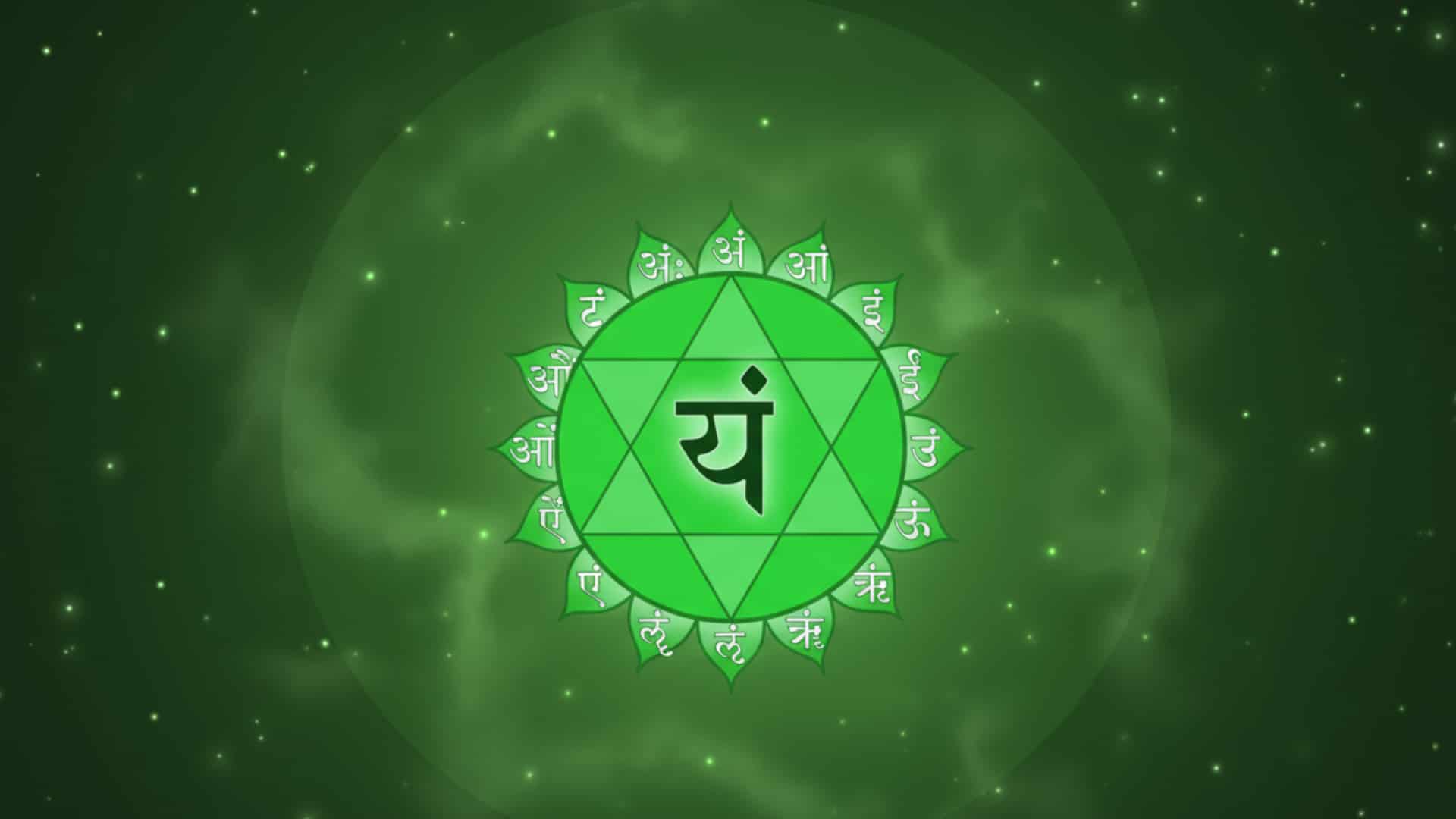
Color: Green (secondary: pink)
Location: Center of the chest
Sanskrit meaning: “Anahata” means “unstruck” or “unbeaten”, referring to a sound that exists without two things striking each other, the sound of pure consciousness.
The Anahata symbol is a twelve-petaled lotus with two intersecting triangles at the center, forming a six-pointed star. The twelve petals represent twelve divine qualities, joy, peace, love, harmony, empathy, understanding, purity, clarity, compassion, unity, forgiveness, and kindness.
One triangle points upward (spiritual energy rising), and the other points downward (earthly energy rising). Together, they show the meeting of heaven and earth, balance, which is exactly what the heart chakra is about.
Green is the traditional and primary color of the heart chakra in classical yogic texts. Pink is a secondary color used in many modern Western practices, often to represent self-love or romantic love specifically.
Both are technically correct, green for the full range of compassionate energy, pink for its gentler, more personal expression. This chakra governs love, emotional healing, empathy, and connection.
5. Throat Chakra Symbol: Vishuddha
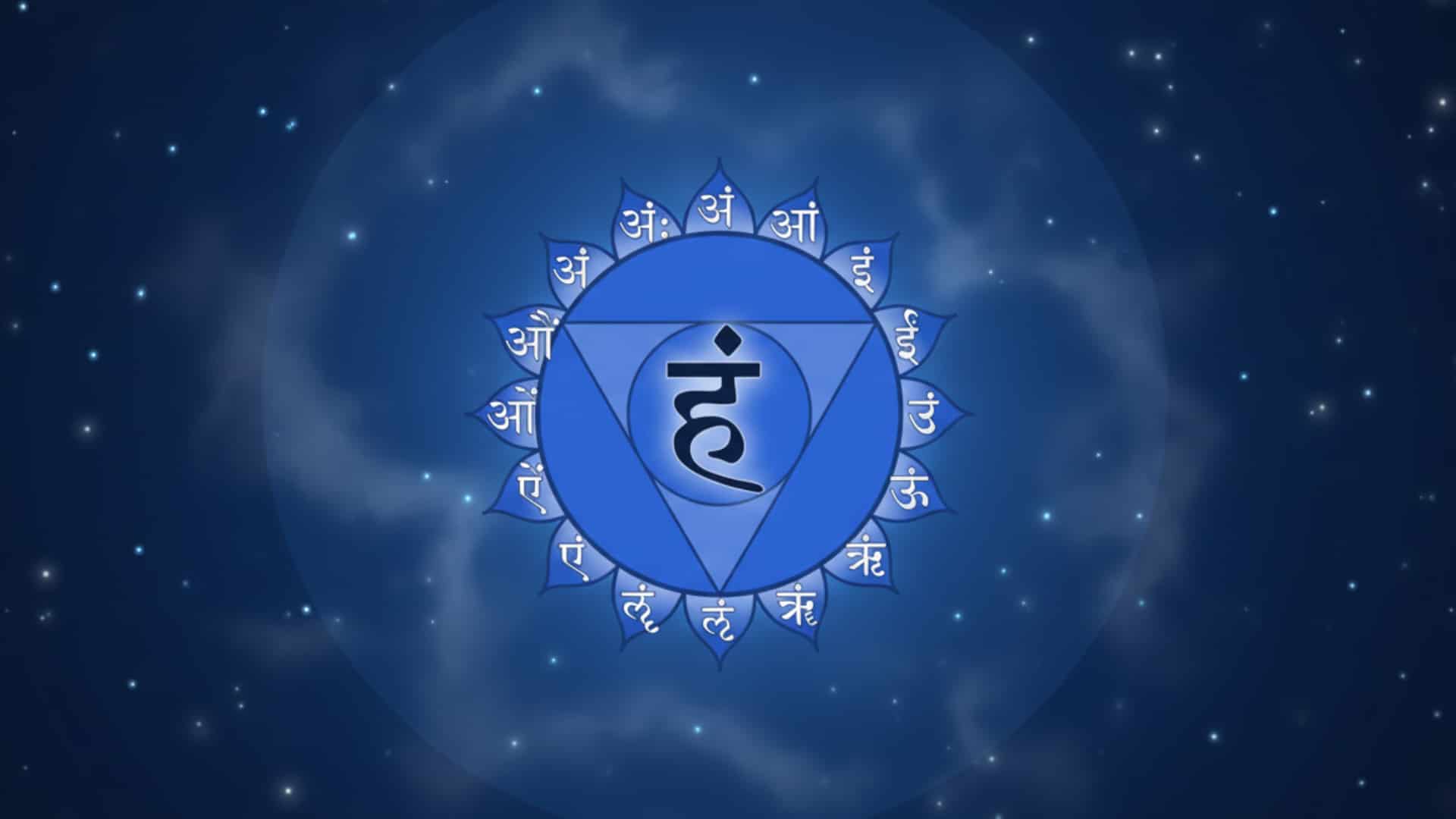
Color: Blue (light blue or turquoise)
Location: Base of the throat
Sanskrit meaning: “Vishuddha” means “especially pure” or “purification.”
The Vishuddha symbol is a sixteen-petaled lotus with a downward-pointing triangle inside a circle at its center.
The sixteen petals directly correspond to the sixteen Sanskrit vowels, linking this chakra to sound, speech, and the full range of vocal expression.
The downward-pointing triangle holds the space element (akasha), which makes sense: sound needs space to travel. The circle within the triangle represents the full moon, purity, and completeness of expression.
The throat chakra governs communication, truth-telling, listening, and the ability to express your inner world in words.
6. Third Eye Chakra Symbol: Ajna
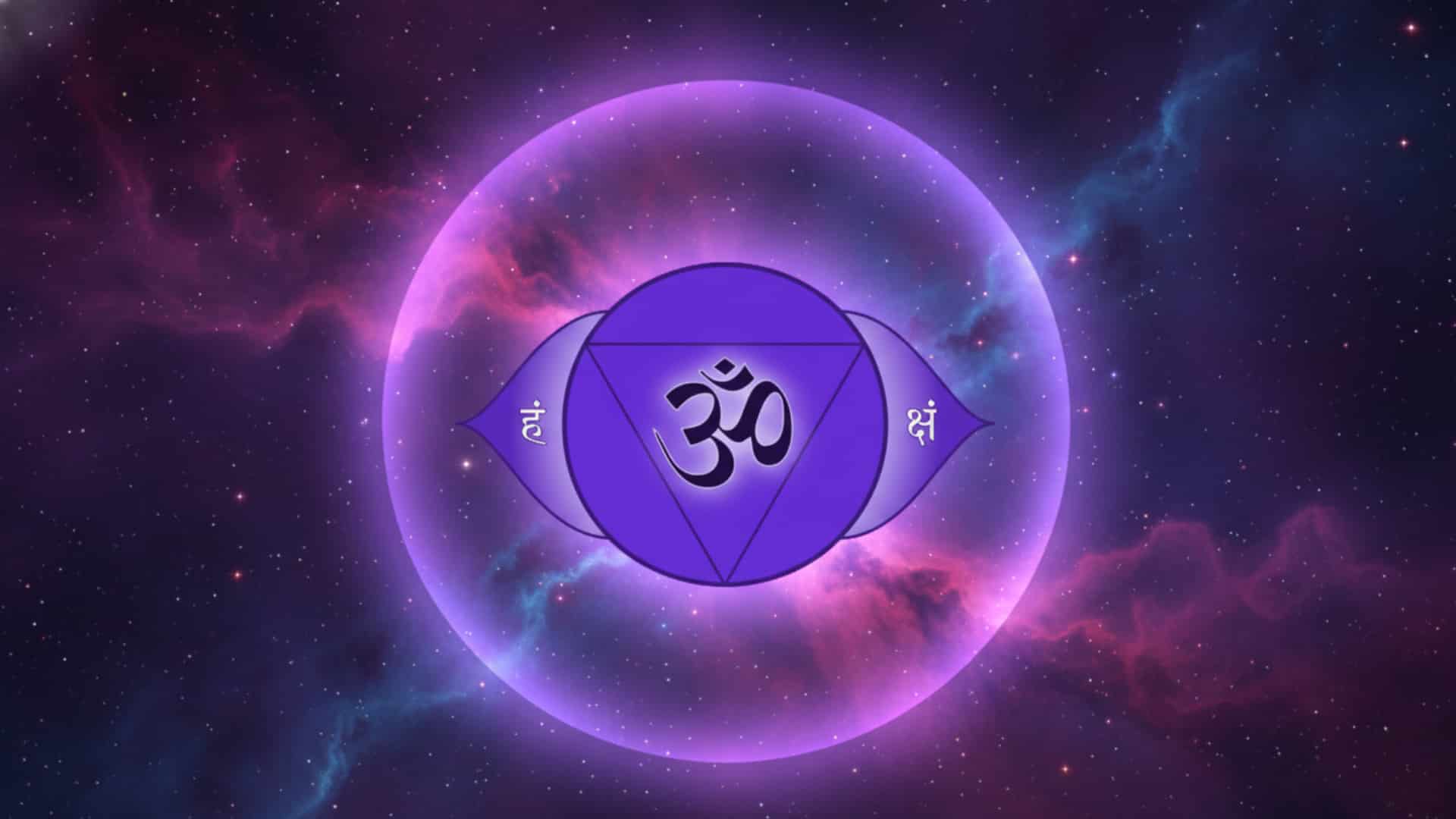
Color: Indigo
Location: Between the eyebrows
Sanskrit meaning: “Ajna” means “command” or “to perceive.”
The Ajna symbol is the most minimal of all seven, a two-petaled lotus with a circle containing a downward-pointing triangle at its center.
The Sanskrit syllable Om (AUM) often appears within the triangle. Why only two petals when every other symbol has more? The two petals represent the two main energy channels of the body, Ida (lunar, feminine) and Pingala (solar, masculine).
These two channels run alongside the spine and converge here, at the third eye. They do not need many petals because, at this point, duality itself is beginning to collapse.
The Om symbol inside the triangle represents the primordial sound, the vibration underlying all of existence. This chakra governs intuition, perception beyond the physical, spiritual clarity, and inner vision.
7. Crown Chakra Symbol: Sahasrara
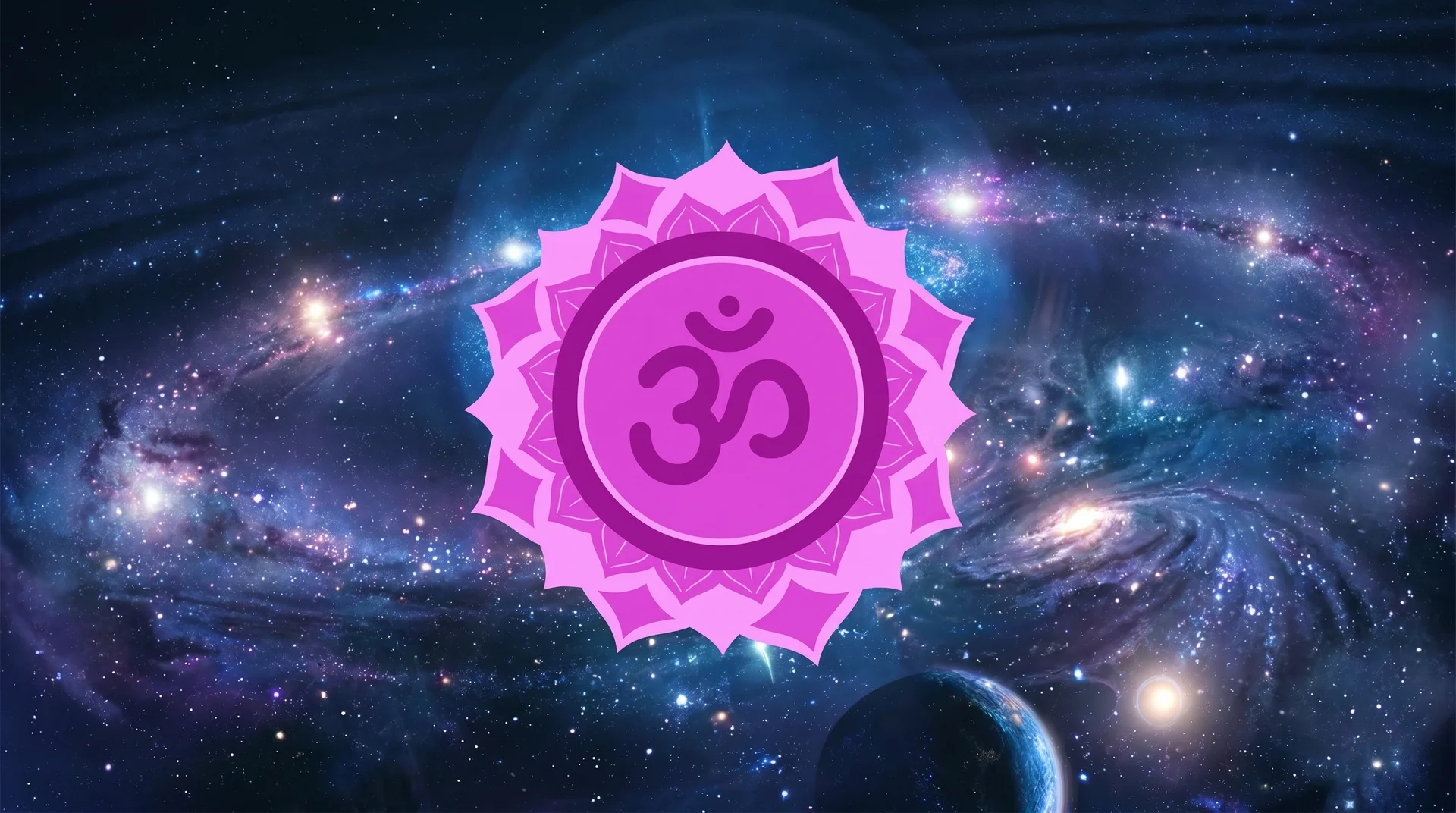
Color: Violet or White
Location: Top of the head, extending slightly above it
Sanskrit meaning: “Sahasra” means thousand. “Ara” means petals. The name translates to “thousand-petaled.”
The Sahasrara is the most distinct chakra symbol of all seven. It shows a thousand-petaled lotus, drawn as concentric rings of petals radiating outward like a crown or a sun.
There is no geometric element at the center, no square, no triangle, no crescent moon. Just open space or a circle of light. That absence is intentional. Every other chakra symbol has a defined element at its core because each one governs something specific in the material or energetic body.
The crown chakra is beyond the elements. It represents pure consciousness, formless, boundless, beyond category.
The “thousand” petal count is worth noting. In the Vedic tradition, “thousand” often denotes infinity rather than a literal 1,000. The Sahasrara is the only chakra symbol whose petal count signals something without limit.
How to Balance Your Chakras?
Knowing the chakra symbols is useful. Knowing how to work with them is where the real shift happens. The most direct way to balance your chakras is through focused meditation on each symbol.
Choose the chakra that feels most relevant to what you are working through. If you feel anxious or unsafe, start with the root. If relationships feel difficult, start with the heart. Sit quietly, hold the image of the symbol in your mind or in front of you, and focus on its color and shape for 5 to 10 minutes.
This practice, called trataka in yogic tradition, builds concentration and connects the mind to that specific energy center.
You can also support chakra balance through breath, sound (chanting the seed mantra for each chakra), movement, and time spent outdoors, particularly for the lower three chakras. No single technique works for everyone. The goal is consistency, not perfection.
Final Thoughts
Chakra symbols are not just visual patterns. Each one carries specific information: the petal count, the geometric shape, the color, and the element, all pointing to what that energy center holds and how it functions.
Understanding them changes how you use them. You stop seeing a pretty logo and start reading a language. Start with one symbol that feels relevant to you right now. Sit with it during meditation. Notice what shifts.
If you want to keep learning, explore what color the crown chakra is, how the sacred geometry connects to the body, and how your own energy tells you which chakra needs attention first.
Frequently Asked Questions
What chakra is related to vertigo?
Vertigo is linked to the crown chakra (Sahasrara) and third eye chakra (Ajna), both of which govern balance and the nervous system. When either is blocked or overactive, dizziness and disorientation are common physical signs.
Which chakra is for constipation?
Constipation is connected to the root chakra (Muladhara), which governs the lower abdomen and elimination system. When this chakra is blocked, often from stress, fear, or feeling unsafe, the digestive system tends to slow down or tighten.
Who cannot wear a 7 chakra bracelet?
There are no medical restrictions. However, people who are highly sensitive to energy sometimes find wearing all seven chakra stones at once overstimulating.
How to unblock all 7 chakras?
Daily breathwork, yoga, meditation, and spending time in nature support the whole chakra system — working one chakra at a time is most effective.